Reginald L. Goodwin's Posts (3124)

Sort by

Matter, Antimatter, Supercomputing...

Brookhaven National Laboratory

UPTON, NY — An international collaboration of scientists has reported a landmark calculation of the decay process of a kaon into two pions, using breakthrough techniques on some of the world’s fastest supercomputers. This is the same subatomic particle decay explored in a 1964 Nobel Prize-winning experiment performed at the U.S. Department of Energy’s Brookhaven National Laboratory (BNL), which revealed the first experimental evidence of charge-parity (CP) violation — a lack of symmetry between particles and their corresponding antiparticles that may hold the answer to the question “Why are we made of matter and not antimatter?”


The new research — reported online in Physical Review Letters March 30, 2012 — helps nail down the exact process of kaon decay, and is also inspiring the development of a new generation of supercomputers that will allow the next step in this research.


BNL: Supercomputing the Difference between Matter and Antimatter
Read more…

Lifting All Boats...

A&T-UNCG Nanoscience-Nanoengineering Consortium

The aphorism "a rising tide lifts all boats" is associated with the idea that improvements in the general economy will benefit all participants in that economy, and that economic policy, particularly government economic policy, should therefore focus on the general macroeconomic environment first and foremost. The phrase is attributed to John F Kennedy Wikipedia
 

Watch Monday, April 2, 2012 on PBS. See more from NC Now.


Admittedly biased; tremendously blessed.
December '84, Engineering Physics graduate - Aggie Pride!
 

A&T-UNCG Joint School of Nanoscience and Nanoengineering

Read more…
Credit: PhysicsWorld

...thank Einstein (though reluctant to have contributed to its creation), preceding him James Clerk Maxwell,  Michael Faraday, Gustav Kirchoff, Ludwig Boltzmann, Henrich Hertz, Max Planck; contemporaries Enrico Fermi, Leo Szilard and Max Born who coined "Zur Quantenmechanik" in a 1924 paper, the inimitable Richard Feynman, and any physicist or engineer that has studied, used and designed with quantum mechanics since. Smiley

Any oversight is an error on my part.

Researchers in California have developed a system that can rapidly determine the size of an earthquake and the extent of its impacts within a fault zone, including its potential for triggering a devastating tsunami. The researchers have used the system – which is based on GPS measurements – to accurately model two historic earthquakes in Japan and northern Mexico.
 

The 2011 Japanese earthquake disaster showed that the first few minutes after an earthquake are critical. When the Tōhoku earthquake struck, it took geophysicists more than 20 min to compute that the earthquake was magnitude 9.0 on the Richter scale. Had the authorities known the full extent of the earthquake sooner, it would have given them valuable time to activate early-warning systems to help prepare people for the large tsunami that would inevitably follow.
Read more…

Sowing The Wind...


Hosea 8:7 NKJV - They sow the wind, And reap the whirlwind. The stalk has no bud; It shall never produce meal. If it should produce, Aliens would swallow it up.
Credit: LiveScience

ATLANTA — The United States is at risk of ceding its leadership in science, a number of physicists agreed Monday (April 2), though there was less of a consensus on a clear solution to the problem.


Five physicists shared their worries about America's scientific future during a panel discussion here at the April 2012 meeting of the American Physics Society, saying that governmental funding for science research is in crisis, and not enough U.S. students graduate with degrees in science, technology, engineering and math.


"There are some facts and figures that are very disturbing, which show the United States might be losing ground in science and discovery, whereas other countries are gaining," Pushpa Bhat, a physicist at Illinois' Fermi Accelerator National Laboratory (Fermilab), said at a press conference preceding the panel. "We can't sit back and watch."


Bhat lamented the lack of cutting-edge physics facilities in this country. While many of the world's best instruments and experiments, such as Fermilab's Tevatron particle accelerator, used to be housed here, that frontier has moved elsewhere. For example, the world's largest atom smasher, the Large Hadron Collider, is located at the CERN lab in Switzerland, while Illinois' Tevatron has shut down.

Not to sound Cassandra (my wife's name, though lovely, Apollo has given her no gift of prophesy), but I see our dilemma as "a trifecta of three Ds":

  • Deification of market forces - Libertarianism, Neoliberalism, Outsourcing - in all aspects of public life

  •  Devaluation of a well-rounded education curriculum - PE for non-athletes, music helping math scores, art/poetry helping reading comprehension, the discontinuation of learning how-to write in script (texting now dominate) - for standardized testing that teaches life's answers are a, b, c, d, or e (all of the above)

  • Disingenuous manipulation of The First Amendment for political gain

Science, Technology, Engineering, Mathematics: This has historically been the source of wealth since Sputnik. It focused our country to become a technological behemoth before culture wars became dominant. I fear our short-sightedness is a national Attention Deficit Deficiency, a result of our instant access to information, sound-bite dominated media, text messaging, 140-character limits that does not encourage reflection on what we do now, and how it affects the future.


Live Science: Crisis for US Science Is Looming, Physicists Warn
APS: See article "Endangered Physics Department Saved,"middle of page

Read more…

My Two Cents So Far...


Education: What are your plans for the ascendance of nanotechnology in the United States? Do you have a comprehensive plan similar to the concentration of American education vis-à-vis the post-“Sputnik moment” of the 1960s – 70s?

Space: Do you understand the Fibonacci sequence, and how it would possibly be used in the Search for Extraterrestrial Intelligence?


Submit yours: ScienceDebatedotorg2012

Read more…

Life Imitates Art...

Hermes debued at Austin Convention Center during National Instruments' Week 2011

Then...

S.T.A.R. Labs, is a fictional research facility, and comic book organization appearing in titles published by DC Comics. It first appeared in Superman #246 (December 1971) and was created by Cary Bates and Rich Buckler.

S.T.A.R. The Scientific and Technological Advanced Research Laboratories was founded by a scientist named Robert Meersman, who wanted a nationwide chain of research laboratories unconnected to the government or any business interests. He succeeded not only on a national scale, but an international one as well: S.T.A.R. Labs currently maintains facilities in Canada, Europe, Australia, and Japan as well as in the United States, with the total number of facilities numbering between twenty and thirty at last recorded count. (Wiki)


Space Transport and Recovery Systems, LLC (STAR Systems) is a startup aerospace venture dedicated to providing affordable access to space with the Hermes spacecraft: a suborbital space shuttle for everyone, built on the premise that anyone should be able to take a trip into space without spending their life savings. By combining the latest commercially available advances in materials science and hardware with over 60 years of lessons learned in aerospace technology and a “build-a-little, test-a-lot” mantra, STAR Systems is poised to provide lower cost, high frequency access to suborbital space on-demand for space tourists, academia and technology developers. Come join us for the ride, the sky is no longer the limit! (see link below)


Hermes was the herald, or messenger, of the gods to humans, sharing this role with Iris. A patron of boundaries and the travelers who cross them, he was the protector of shepherds and cowherds, thieves, orators and wit, literature and poets, athletics and sports, weights and measures, invention, and of commerce in general. (Wiki)


Link: HermesSpace
Space.com: Mini Space Shuttle Looks for Online Donors

Read more…

Captain Kirk Was Right...


There is a widely held view in the astronomical community that unmanned robotic space vehicles are, and will always be, more efficient explorers of planetary surfaces than astronauts (e.g. Coates, 2001; Clements 2009; Rees 2011). Partly this is due to a common assumption that robotic exploration is cheaper than human exploration (although, as we shall see, this isn't necessarily true if like is compared with like), and partly from the expectation that continued developments in technology will relentlessly increase the capability, and reduce the size and cost, of robotic missions to the point that human exploration will not be able to compete. I will argue below that the experience of human exploration during the Apollo missions, more recent field analogue studies, and trends in robotic space exploration actually all point to exactly the opposite conclusion.
"To boldly go where no man has gone before." TOS, images wiki

Physics arXiv:
Dispelling the myth of robotic efficiency: why human space exploration will tell us more about the Solar System than will robotic exploration alone,
Ian A. Crawford, Department of Earth and Planetary Sciences, Birkbeck College London

Read more…

Dr. Krauss Schools Santorum...


...at least, it's a far less salacious result of "The Google."
 

Dr. Lawrence Krauss is a Theoretical Physicist and Foundation Professor and Director of the Origins Initiative, Co-Director of the Cosmology Initiative, School of Earth and Space Exploration, BEYOND Center, Department of Physics at Arizona State University, and author of popular physics books like The Physics of Star Trek. This is a noble, balanced attempt at a dialogue of understanding.

Some of the incredible things in this presentation that I saw:


- 50% of US adults know the earth orbits the sun! (Really? Just 50%!)

- Science is fundamentally immoral (Evil Mad Scientist), and therefore must be wrong.

- Slide: Bad Theology!..a disservice to all people of faith to imply that it is better for our children to remain ignorant of the world than to risk the possibility that knowledge may undermine their faith! (0:22:03)

For political points, there's been a marketing campaign to "teach the controversy"; "teach both sides" as if a great debate still exists.

I am part of a community of faith. For my own family and the Diaspora in general, it was the most efficient means to organize in the aftermath of Emancipation. In some churches (not the one I currently participate), there's a certain orthodoxy that must be accepted, and any deviation is almost attacked...literally. I recall an email exchange between myself and a minister - regarding that I'd read, understood and agreed with "Origin of the Species" and that I did not disagree that the universe was 13.7 billion years old - that wound up in her sermon! I obviously no longer participate in that group.

A 2004 article on National Geographic notes: "In a 1997 survey in the science journal Nature, 40 percent of U.S. scientists said they believe in God—not just a creator, but a God to whom one can pray in expectation of an answer. That is the same percentage of scientists who were believers when the survey was taken 80 years earlier."


Being a scientist, technologist, engineer or mathematician (S.T.E.M. nerd), means you're versed and skilled in The Scientific Method. In a laboratory and workplace that reflects the diversity of humanity, that is the one unifying truth that must be adhered to to get work accomplished.


I am still waiting for a political debate where the questions are moderated by a S.T.E.M. panel. A true "no-spin zone." The answers and outcome would be, in Spock's words, "fascinating."


Any knowledge that undermines a personal faith, is in the end, no faith at all...

Read more…

Big Science...


Comment: There will be more than enough work to do, if we're not short-sighted in how we prepare for it. There are more than enough problems to keep us busy, if we're not afraid solutions will disturb our personal dogmas. We cannot change the past, the only one sure thing we can determine is the future: ours, our country's and the world's.

The world may be in the midst of an economic downturn, yet that has not stopped scientists from planning a whole host of next-generation “big-science” facilities as well as governments pledging billions of euros to build them over the next 10–15 years.


From the ITER fusion experiment currently under construction in Cadarache, France, to the European Spallation Source in Lund, Sweden, the coming decade look to be a boon for researchers seeking new subatomic particles that exist for only a fraction of a second or studying events that occur on the femtosecond timescale.


Physics World: The Challenges of 'big science'; Big-Science Supplement

Read more…

Nanofrig...

Credit: Physics World


...and, it's NOT an "April Fool's" joke!


Researchers in Belgium have drawn up plans for an electronic "nanorefrigerator" device that is driven by high-energy photons, and so could potentially be directly powered by the Sun. The device consists of two electrodes, one of which is cooled by replacing hot electrons with cool ones via photon absorption. While this is definitely not the first system that applies the "cooling by heating" concept, it is the first that can be applied for a nanosized device, with no moving parts or electrical input, allowing a lower temperature to be achieved at the nanoscale.


Cooling with heat is not a new idea – the simplest description of the concept would be "sweating" or more scientifically evaporative cooling. While physicists have been using coherent laser light to cool gasses since the 1980s, a theoretical method for cooling a quantum system with noncoherent light, by using an "optomechanical device", was proposed only last year.


Physics World: 'Nanorefrigerator' is cooled using sunlight
Read more…

The Queen of Science...

Discover Magazine

1 The median score for college-bound seniors on the math section of the SAT in 2011 is about 510 out of 800. So right there is proof that there are lots of unsolved math problems.

2 The great 19th-century mathematician Carl Friedrich Gauss called his field “the queen of sciences.”

3 If math is a queen, she’s the White Queen from Alice in Wonderland, who bragged that she believed “as many as six impossible things before breakfast.” (No surprise that Lewis Carroll also wrote about plane algebraic geometry.)

4 For example, the Navier-Stokes equations are used all the time to approximate turbulent fluid flows around aircraft and in the bloodstream, but the math behind them still isn’t understood.

5 And the oddest bits of math often turn out to be useful. Quaternions, which can describe the rotation of 3-D objects, were discovered in 1843. They were considered beautiful but useless until 1985, when computer scientists applied them to rendering digital animation.
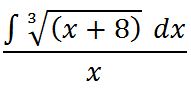

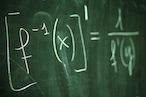
My favorite Calculus problem:


More at the link below:

Discover Magazine: 20 Things You Didn't Know About...Math

Read more…

R-E-S-P-E-C-T...

PhDComicsdotcom

EURODOC: Recognising doctoral candidates as professional employees rather than students is one way of doing this. At the moment, only Denmark, Norway, Sweden and the Netherlands give those working towards a PhD in Europe this status. For PhD candidates in these countries, their employee status benefits both them and their employer. The employee gets job benefits such as social security rights, access to personnel health care and internal internet systems (one candidate on a short term contractor we spoke to was not able to access the intranet because she was not a proper employee) while the employer gets a more productive and involved employee, who has a stake in the successful performance of the research institution. Treating PhDs as equals from the get-go means that further down the line, these highly motivated employees should be more likely to continue in research.

I'm sure postdocs with school bills would agree!

New Scientist Big Wide World: Make PhDs employees not students
Read more…

NOT Angry Birds...


SCIENCE MAG: The U.S. Defense Advanced Research Projects Agency and the Office of Naval Research are investing millions of dollars into so-called micro air vehicles and nano air vehicles, as well as basic research into how birds and insects fly. While the theory of airflow over a flapping wing remains surprisingly rudimentary, humans are now making significant progress in understanding how to fly, control, and land flapping-wing aircraft.
Read more…

Snow Flake Physics...

A MULTIFACETED PROBLEM: Realistically simulating the growth of snowflakes has proved a huge challenge. Above, two examples of faceted snowflake structures.
Image: Barrett/Garcke/Nürnberg

Scientists as far back as Johannes Kepler have pondered the mystery of snowflakes: Their formation requires subtle physics that to this day is not well understood. Even a small change in temperature or humidity can radically alter the shape and size of a snowflake, making it notoriously difficult to model these ice crystals on a computer. But after a flurry of attempts by several scientists, a team of mathematicians has for the first time succeeded in simulating a panoply of snowflake shapes using basic conservation laws, such as preserving the number of water molecules in the air.


Kind of late for this article, but it was a very mild winter in the northeast. To next winter:

1000 Awesome Things


Scientific American: Snowflake Growth Successfully Modeled from Physical Laws

Read more…

So Free...

Trimming uncertainty. Results of climate simulations that best match observations since 1960 (those depicted in darker shades of blue) suggest that global average temperature in 2050 will be between 1.4°C and 3°C warmer than the global average measured between 1961 and 1990.

Credit: D. J. Rowlands et al., Nature Geoscience, Advanced Online Publication (25 March)


By 2050, global average temperature could be between 1.4°C and 3°C warmer than it was just a couple of decades ago, according to a new study that seeks to address the largest sources of uncertainty in current climate models. That's substantially higher than estimates produced by other climate analyses, suggesting that Earth's climate could warm much more quickly than previously thought.


Many factors affect global and regional climate, including planet-warming "greenhouse" gases, solar activity, light-scattering atmospheric pollutants, and heat transfer among the land, sea, and air, to name just a few. There are so many influences to consider that it makes determining the effect of any one factor—despite years and sometimes decades of measurements—difficult.

 
The Internet as we know it: started as a project by the so-called, forewarned "military-industrial-complex" (DARPA). Think of a wagon wheel: most military communications for command, control, communications and countermeasures (C3CM*) had the headquarters element in the center, and/or two hours rear of the "forward edge of the battle area" (FEBA). Hence, we and the Soviets had a "hub-spoke" wagon wheel configuration to our [then] C3CM, thus finding out where ours or the Soviet's HQ was was a matter of espionage; nuking it out of existence presented...problems.
 
Away with hub-spoke! DARPA's solution was a "spider's web" where destroying one base had nothing to do with your overall communications. There would be an alternate route to get word to your battle field elements; you'd never be "radio silent" i.e. without communication. It started quite humble: big, bulky (and, ugly) Zenith computers on puke-green screens with the equivalent communication of what teens now do with their thumbs almost at a whim - texting. This, along with FORTRAN on key punched, computer index cards that you had to have in the right order, or you'd just be starting over (ugh - you can tell this used to be the source of engineering nightmares), I'm glad it is a part of our distant history.
 
The first commercial user sold to the public was Netscape as a browser, soon followed by AOL (yes, people still use it), followed by others...
 
Judging from the commentary at the foot of the article, the science is once again "poo-poohed" by loud opinions to the contrary. That will be picked up and broadcast as the "doubt" as in evolution in the classroom "teaching the controversy."
 
Senior Master Sergeant Roland S. Wilkins was one of my AFJROTC instructors at North Forsyth High School in Winston-Salem, NC. He was fond of a quote that at the time many of us couldn't quite understand. It's clearer now in the age of the Internet, blogs, tweets and sound bites cum "news":
 
"We're going to become 'so free,' we're not going to be able to do anything."


* Now: Command, Control, Communications, Computers and Intelligence - C4I.


AAAS Science Mag: Earth Warming Faster Than Expected

Read more…