Reginald L. Goodwin's Posts (3126)

Sort by

Slippin' Into Darkness...


I was slippin' into darkness, yeah

When i heard my mother say

You've been slippin' into darkness

Oh oh oh oh

Pretty soon, you're gonna pay.

Yeah, yeah.

WAR, 70s funk band
National Research Council


US research universities face serious decline unless the federal government, states, and industry take action to ensure adequate, stable funding in the next decade, says a new report by the National Research Council. Universities must work harder to contain costs, enhance productivity, and improve educational pathways for students to careers both within and outside academia, the report says.

Written by a 21-member committee chaired by Bank of America chairman Charles Holliday Jr., the report responds to a request from Congress to recommend 10 actions that the nation should take in the next five to 10 years to maintain top-quality US research institutions. Among those steps, the committee urged, was that of doubling the budgets of NSF, the Department of Energy’s Office of Science, and NIST that was called for in the 2007 America Competes Act. But for fiscal 2013, the administration requested just a 4.8% increase for NSF, and a 2.4% increase for DOE’s Office of Science. Only the relatively tiny NIST R&D programs got the magnitude of increase needed to keep it on a doubling trajectory.


While federal funding for research has flattened or declined since onset of the recession, state funding for research universities has plunged by 25% to 50%, the committee found. Tuition increases at both private and public universities are threatening to put college education out of reach for many. At the same time, other countries have increased their R&D funding and are pouring significant resources into developing their own research institutions, patterned after US universities.
Read more…

Seeding Greatness...

Credit @ link below

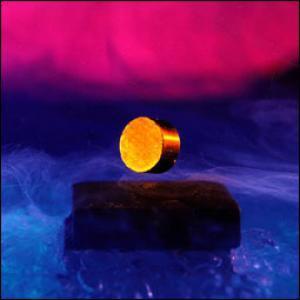
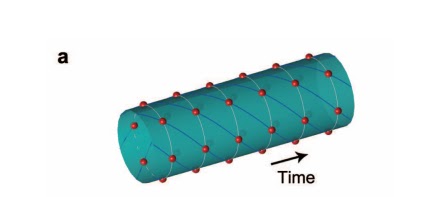
TECHNOLOGY REVIEW: A couple of months back, we looked at the notion of time crystals, an idea put forward by Nobel-prize winning physicist Frank Wilczek and his pal Al Shapere.

These guys examined the fundamental properties of ordinary spatial crystals and asked why similar objects couldn't exist in the dimension of time instead.

One of the basic properties of spatial crystals is that they form when a system drops to its lowest possible energy state. They are not the result of adding energy to a system, but of taking it away. All of it.

Another basic property is that when these objects reach their lowest energy configuration, their symmetry breaks down. Instead of being the same in all directions, like the laws of physics, these objects become the same in only a few directions. It is this symmetry-breaking and the periodic structure it produces that defines crystals.


Wilczek and Shapere persuasively argued that there's no reason why similar periodic structures couldn't exist in time. And they said that finding them would give physicists a new way to study the process of symmetry-breaking and the laws of physics behind it.


There was just one problem, however. These guys hadn't worked out how to build a time crystal.

That changes today with the work of Tongcang Li at the University of California, Berkeley and a few buddies who say they've worked out how to do it. These guys say they know how to create an object in its lowest energy state that shows periodic structure both in space and time--a space-time crystal.
I had the pleasure of meeting Tongcang Li just before his PhD dissertation defense under Mark Raizen. This obviously builds on his research with the Raizen Group. This is amazing!


Physics arXiv: Space-time crystals of trapped ions

Read more…

Physics First-Agreed!...

Partnering Organizations

Physics is a gateway course for post-secondary study in science, medicine, and engineering, as well as an essential component in the formation of students’ scientific literacy. Physics classes hone thinking skills. An understanding of physics leads to a better understanding of other science disciplines. Physics classes help polish the skills needed to score well on the SAT and ACT. College recruiters recognize the value of taking high school physics. College success for virtually all science, computing, engineering, and premedical majors depends in part on passing physics. The job market for people with skills in physics is strong. Knowledge of physics is helpful for understanding the arts, politics, history, and culture.

Currently only 25% of Black and Hispanic high school students take any course in physics[1]. Thus many do not even get to the gateway. The availability of physics as a course for high school students is not equitably distributed throughout the United States. While some schools provide physics for all who wish to take it, a more common scenario, particularly for urban schools, is limited availability[2]. The existence of policies that restrict science opportunities for secondary students results in diminished outcomes in terms of scientific proficiency, and lack of diversity in the STEM professions.

First: before chemistry, before biology - it will aid in understanding, and build a solid foundation, even if participants don't pursue STEM careers.


Vector: National Alliance of Black Educators Endorses Physics First

Read more…

http://100yss.org/


There's also a Sci-Fi Symposium. Astronaut Mae Jemison, M.D. is chair.


100 Year Starship invites you to participate in the journey of a lifetime! On this mission, everyone has a seat – Thought leaders, experts, trendsetters, space advocates and space enthusiasts, international space agencies, established businesses and start-ups, financiers and entrepreneurs, governmental and non-governmental agencies, universities and private industries, including entertainment, medicine, education, the arts and athletics – and, of course, the general public. You are all invited to join us on a journey to improve our world today as we explore the challenge, benefits, potentially enabling technologies, strategies and awesome potential of interstellar flight to another solar (star) system.

From exotic propulsion systems, exoplanets and “where do we go?” to the social, economic and cultural considerations of “why or should we go?” there’s a technical or academic session just for you. In addition, workshops, classes, networking venues, the Expo, entertainment, celebrities, speakers and guests will enhance your experience and ensure that you have an opportunity to consider and contribute to the wide range of space and related topics needed to chart the research, design, development, policy, outreach and aspirational activities from which long-distance space travel will be generated.


Dear Friend,

We are pleased to invite you to submit to the “Call for Papers” the upcoming 100 Year StarshipTM 2012 Public Symposium to be held in Houston Texas on September 13 – 16, 2012.
 
The 100 Year StarshipTM (100YSSTM) considers broad and in-depth public engagement critical to accomplishing human interstellar flight within the next 100 years. The 100YSSTM Public Symposium is central to gathering and sharing knowledge, aspirations, capabilities, as well as building advocacy, imagination and momentum.  During the symposium space experts will participate in a platform for cutting-edge research, space enthusiasts will expand their knowledge, and the public will be engaged by an interactive exposition. 
 
The Symposium’s technical session issues this open call to individuals and organizations from all disciplines—amateur and professional—to contribute to understanding, developing and building the solutions needed for successful interstellar flight.
 
The 2012 Symposium’s theme, Transition to Transformation...The Journey Begins, acknowledges the accomplishments of space exploration to date and calls for authors to consider what changes are needed in how we currently envision and “do space” to truly push forward humanity’s journey to another star. Papers should focus upon those transformative ideas and processes within each track—science, technology and paradigms— that facilitate the breakthroughs in space exploration.There are four technical tracks at the Symposium and a series of special sessions as described in the 2012 100YSS Call for Papers
 
Papers accepted will be included in the 100YSS 2012 Symposium Proceedings.  Papers selected presented individually or as part of a panel as decided by each Track Chair. The Abstract Submission Deadline is June 30, 2012.  Authors whose papers have been submitted for presentation will be notified by July 29; and final papers must be submitted by August 17th.
 
If you have any questions, please contact the 2012 Symposium Technical Chair, Dr. Richard Obousy at richard.obousy@100YSS.org. We look forward to your participation in our symposium and hope that you will submit a paper.
Sincerely,

Mae Jemison, M.D.
Chair, 100YSS Symposium                                               
                                                                 
Richard Obousy, Ph.D.
Technical Chair, 100 YSS Symposium
Read more…

Afire and Brimstone...


Yes, cynicism is the stuff of skeptics, and skeptics tend not to write articles associating the physics community being "afire" - on fire; aflame; ablaze; eager and excited - about anything. Not to say they are not...
Wireddotcom

OK, I'll give you "eager and excited." But trust me: your eager and excited is not the typical labs' "eager and excited." I assume "keenly interesting data" would not sell good copy, nor take public interests off the NBA finals or the latest singing/dance off.

Kevin Durant needs about 10 - 20 lbs to contest LeBron, or any other man mountain's 60 lb advantage. That's just physics...

Postman's commentary (link to book follows) is described as a "21st century description in the 20th century." Published in 1985 - post the Orwell demarcation - cable news with CNN was just five years old. The Internet (not mentioned) was Zenith computer screens - big and bulky - sending the equivalent of what a teen can do with their thumbs and text messaging. There was no Facebook, Twitter, and blogging would have been the equivalent of exposing your diary to the world, of telling a freezing caveman about fire - Prometheus.

And: if there was such a thing as "reality TV," its impact was not as great as a book.


“We were keeping our eye on 1984. When the year came and the prophecy didn't, thoughtful Americans sang softly in praise of themselves. The roots of liberal democracy had held. Wherever else the terror had happened, we, at least, had not been visited by Orwellian nightmares.

But we had forgotten that alongside Orwell's dark vision, there was another - slightly older, slightly less well known, equally chilling: Aldous Huxley's Brave New World. Contrary to common belief even among the educated, Huxley and Orwell did not prophesy the same thing. Orwell warns that we will be overcome by an externally imposed oppression. But in Huxley's vision, no Big Brother is required to deprive people of their autonomy, maturity and history. As he saw it, people will come to love their oppression, to adore the technologies that undo their capacities to think.

What Orwell feared were those who would ban books. What Huxley feared was that there would be no reason to ban a book, for there would be no one who wanted to read one. Orwell feared those who would deprive us of information. Huxley feared those who would give us so much that we would be reduced to passivity and egoism. Orwell feared that the truth would be concealed from us. Huxley feared the truth would be drowned in a sea of irrelevance. Orwell feared we would become a captive culture. Huxley feared we would become a trivial culture, preoccupied with some equivalent of the feelies, the orgy porgy, and the centrifugal bumblepuppy. As Huxley remarked in Brave New World Revisited, the civil libertarians and rationalists who are ever on the alert to oppose tyranny "failed to take into account man's almost infinite appetite for distractions". In 1984, Huxley added, people are controlled by inflicting pain. In Brave New World, they are controlled by inflicting pleasure. In short, Orwell feared that what we hate will ruin us. Huxley feared that what we love will ruin us.

This book is about the possibility that Huxley, not Orwell, was right.”

From ― Neil Postman, Amusing Ourselves to Death: Public Discourse in the Age of Show Business
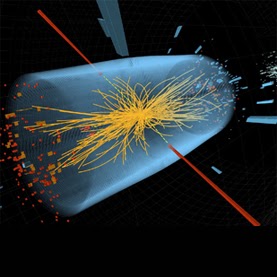
Wired: Physics Community Afire With Rumors of Higgs Boson Discovery

Read more…

Neuromorphic Chip...


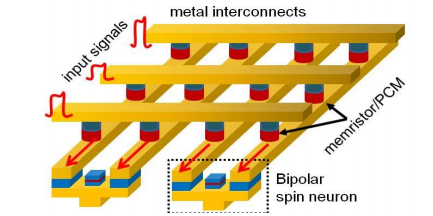
So the race is on to develop a different kind of chip that more accurately mimics the way the brain works. So-called neuromorphic chips must be built from devices that behave like neurons—in other words they transmit and respond to information sent in spikes rather than in a continously varying voltage.
Credit: Technology Review

ABSTRACT: We present a design-scheme for ultra-low power neuromorphic hardware using emerging spin-devices. We propose device models for 'neuron', based on lateral spin valves that constitute of nano-magnets connected through metal-channels. Such magneto-metallic neurons can operate at ultra-low terminal voltage of ~20 mV, resulting in small computation energy. Use of domain wall magnets as programmable 'synapse' and as 'integrating-neurons' is proposed. Magnetic tunnel junctions are employed for interfacing the spin-neurons with charge-based devices like CMOS, for large-scale networks. Device-circuit co-simulation-framework is used for simulating such hybrid designs, in order to evaluate system-level performance. We present the design of different classes of neuromorphic architectures using the proposed scheme that can be suitable for different applications like, analog-data-sensing, data-conversion, cognitive-computing, associative memory, programmable-logic and analog and digital signal processing. We show that the spin-based neuromorphic designs can achieve 15X-300X lower computation energy for these applications, as compared to state of art CMOS designs.


Physics arXiv: Proposal for Neuromorphic Hardware Using Spin Devices

Read more…

What The Frack?...

Original Credit: GreadBeyond on Flickr

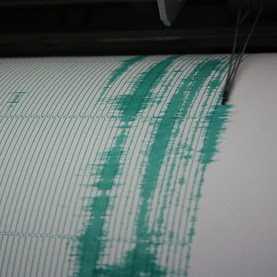
Geologists and politicians have been arguing for several years about whether hydraulic fracturing of shale to release natural gas can cause earthquakes. Finally, a comprehensive study released today by the National Research Council has settled the question: yes, fracking can. The number of earthquakes linked to fracking operations is very small, however; many more temblors are linked to conventional oil and natural gas extraction.


Furthermore, the greatest risk of earthquakes due to fracking does not come from drilling into deep shale or cracking it with pressurized water and chemicals. Rather, it comes from pumping the wastewater from those operations back down into deep sandstone or other formations for permanent disposal, instead of storing it in tanks or open ponds at the surface. In January, wastewater injection was blamed for earthquakes that had just occurred in Youngstown, Ohio, on Christmas Eve and again on New Year's Eve, measuring 2.7 and 4.0 on the Richter scale, respectively. Wastewater injection is also commonly used during conventional oil and gas production.


The epicenter of last year's earthquake my family felt in New York was a mining operation in Virginia.


Things that make you go...hmm.


Scientific American:
Fracking Can Cause Earthquakes, but So Can Oil and Gas Extraction

Read more…

Nutty, But Safe...

Credit: The Offbeat Drummer

Physicist Richard Feynman helped create the atomic bomb, shared a Nobel Prize for his work on quantum electrodynamics, and helped figure out the source of the space shuttle Challenger explosion.


But he was also subject to scrutiny by the U.S. Federal Bureau of Investigation, as it sought to uncover communist sympathizers during the 1950s.


The FBI began keeping an eye on Feynman after other members of the Manhattan Project, which built the first atomic bomb, turned out to be Soviet spies, including Klaus Fuchs, the project's primary physicist. The documents, 361 pages, record statement after statement from the physicist's friends and colleagues, mostly praising Feynman for his brilliance, trustworthiness and loyalty to the country.


Like I said: nutty, but safe.


MSNBC Science: FBI Files on Feynman Released

Read more…

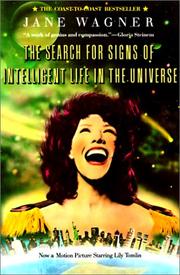
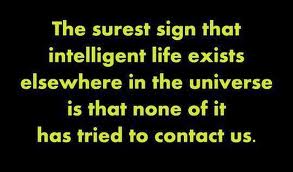
Signs of Intelligent Life...

OpenLibrarydotorg

U.S. Reps. Rush Holt and Rodney Frelinghuysen visited the Princeton Plasma Physics Laboratory this morning [13 June 2012] to announce that the U.S. House of Representatives has passed legislation to restore $76 million in funding for fusion energy research.


The funding, which supports the Princeton Plasma Physics Lab and other energy research laboratories, was not included in President Obama’s fiscal year 2013 budget request. Without the funding, the lab would face major cutbacks on research projects and staff reductions of up to 100 people, including scientists, engineers, and lab technicians.


“Fusion research is key to America’s energy future, and we are proud to have this important work in New Jersey,” said Holt, who was the assistant director of the lab before his election to Congress. “If you look around us today, you’ll see workers in lab coats, workers in suits, and workers in jeans and hardhats — in other words, a broad cross-section of the New Jersey workforce. All of these jobs, and all of their crucial research, are placed at risk by efforts to cut basic research.”

Helps to have friends/Physics PhDs (Rep Holt) in high places. He is the only one of two trained in physics, with respect to other congressional representatives and senators, few have backgrounds in the sciences. That may explain a lot of inane decisions from the bubble universe/echo chamber called "The Hill."

Smiley


Link to article: Planet Princeton

Read more…

Ray Palmer's Realm...


Quantum computers are still years away, but a trio of theorists has already figured out at least one talent they may have. According to the theorists, including one from the National Institute of Standards and Technology (NIST), physicists might one day use quantum computers to study the inner workings of the universe in ways that are far beyond the reach of even the most powerful conventional supercomputers.


DC Wiki: Ray Palmer
NIST: Quantum Computers Will Be Able to Simulate Particle Collisions

Read more…

Better Than Penny...

Not better in the sense of person: Penny as a character seems quite fun and likable.
Better I mean as role model, breaking away from the "traditional" assignments women are forced by societal expectations to kowtow to, sometimes deliberately steered from study in and mastering technical areas because somewhere along the way some idiot brainwashed a budding scientist or engineer with what was "proper" and "ladylike," similar to the Neanderthals that would rather them barefoot, pregnant and out of competition in the workforce. OK, off my soapbox now...Smiley
Loading the player ...
Read more…

Creative Obfuscation...

SapientUniversedotcom

The aide (Karl Rove) said that guys like me were "in what we call the reality-based community," which he defined as people who "believe that solutions emerge from your judicious study of discernible reality." I nodded and murmured something about enlightenment principles and empiricism. He cut me off. "That's not the way the world really works anymore." He continued "We're an empire now, and when we act, we create our own reality. And while you're studying that reality—judiciously, as you will—we'll act again, creating other new realities, which you can study too, and that's how things will sort out. We're history's actors ... and you, all of you, will be left to just study what we do."
Ron Suskind, NYT article, 2004

So, it is with heavy hearts we discern the truth: science is no cure for the made up mind, be it climate change, death panels or birth certificates, facts are for wimps and the dimension Rod Serling narrated on has become a functionality:

"There is a fifth dimension, beyond that which is known to man. It is a dimension as vast as space and as timeless as infinity. It is the middle ground between light and shadow, between science and superstition."

Welcome to the USA: we create our own realities and act on them as if they were true. Engaging in creative obfuscation, we make faith a lie and lies its charleton pimp: never clear on the facts, but Paul Bunyan tellers of tall myths; reinforcing our worldviews only with those we agree with; only opening our mouths to bark the latest sound bite. It's no wonder as a nation we're falling behind in STEM careers; it's no wonder our children's attention spans are short: modeled after our adult Twittering own, with the lifespan of dung heap fleas.

Could we even agree - now in the 21st century - to disagree as well as Sam and Ralph?
Read more…

Udacity...

Brian Coxall - Theses on the Open Humanities

Audacity: 1.The willingness to take bold risks: "her audacity came in handy during our most recent emergency."

From the web site: "We believe university-level education can be both high quality and low cost. Using the economics of the Internet, we've connected some of the greatest teachers to hundreds of thousands of students all over the world.

"Udacity was founded by three roboticists who believed much of the educational value of their university classes could be offered online. A few weeks later, over 160,000 students in more than 190 countries enrolled in our first class, "Introduction to Artificial Intelligence..."


Udacity: Courses

Read more…