Reginald L. Goodwin's Posts (3125)

Sort by

Wolf at the Door

Wolf tumblr blog

“My testimony today makes clear that sequestration, especially if accompanied by a year-long CR [continuing resolution], would be devastating to DoD -- just as it would to every other affected Federal agency. The difference is that, today, these devastating events are no longer distant problems. The wolf is at the door.” So warned Deputy Secretary of Defense Ashton Carter at a recent Senate Appropriations Committee hearing focusing on the impacts of automatic budget reductions on civilian and defense departments and agencies. Unless Congress and the Administration reach a new agreement the cuts will occur on March 1.


The following is what is now known:


National Science Foundation:
In a February 4 letter to Mikulski, NSF Director Subra Suresh wrote:


“The required levels of cuts to our programmatic investments would cause a reduction of nearly 1,000 research grants, impacting nearly 12,000 people supported by NSF, including professors, K-12 teachers, graduate students, undergraduates, K-12 students, and technicians.”


“Major Research Equipment and Facilities Construction funding at $160 million or less in FY 2013 will result in the termination of approximately $35 million in contracts and agreements to industry for work in progress on major facilities for environmental and oceanographic research. This would directly lead to layoffs of dozens of direct scientific and technical staff, with larger impacts at supplier companies. In addition, out year costs of these projects would increase by tens of millions because of delays in the construction schedule.” [Note that the current and requested budget for this program is approximately $196 million.]


American Institute of Physics: The Wolf is at the Door

Read more…

I Audes...


Probably as Brigade Commander of my hometown and county, I was given the "I Dare You" Award. Inspired by William H. Danforth, founder of the Ralston, Purina Company, it was given to students to inspire "responsibility and leadership." The award was a handsomely bound leather book. After reading it, I was supposed to give it away.
  1. To think. Critical thinking is defined as "the intellectually disciplined process of actively and skillfully conceptualizing, applying, analyzing, synthesizing, and/or evaluating information gathered from, or generated by, observation, experience, reflection, reasoning, or communication, as a guide to belief and action. In its exemplary form, it is based on universal intellectual values that transcend subject matter divisions: clarity, accuracy, precision, consistency, relevance, sound evidence, good reasons, depth, breadth, and fairness."
  2. To help your teachers. Lord knows, they're trying to help you, they're literally betting many times, putting their faces on Facebook, Twitter feeds, news sites and blogs that their districts can't fire all of them at once, and pass assigned standardized tests. Frankly, the standardized tests they drill you on isn't what they went to school for, or qualified to do: they want to teach their subjects. That's why they studied them; qualified to teach them.
  3. To help yourselves. Every generation has a symbol of rebellion: pomade grease and leather jackets (50's); Afros, bell bottoms, hippy style and mini skirts (60's); more minis, leotards, wide collared polyester suits, disco (70's); more leotards, leggings, and dance wear, valley girl, preppy, Miami Vice, big jewelry, track suits and heavy metal (80's), more preppy, more hippy, more leggings, grunge look, punk, pastel and hip hop (90's)...you get the idea. This is not an inclusive list, by far. Like your parents and grandparents before you, this too shall pass. You'll get older, get responsible, get hopefully a child when you and your mate are ready by mature age, financially, emotionally...and, you'll have to go to work.
  4. To educate yourselves. That seems a restatement of #1, but it's not. Education is: "the act, or process of educating"; "the knowledge and development resulting from an education process." It is sharpened with critical thinking, as you might ask: "how does all this standardized testing eventually get me a job?" "Where are the jobs?" "Are they coming back?" "What kind of citizen is this curriculum preparing me to be?"

Eventually, I'll stop blogging. I'll either be too old, or too dead (and Zombies usually don't blog). This world will be yours, and STEM - science, technology, engineering and mathematics - will be central to your lives in ways I can only imagine. For time and giants before you have tackled mountains like the Civil War, Women's Suffrage, Women's Rights, Voting Rights et al. Time's arrow goes ever forward. And our survival as a species will depend of a diverse group, and that group is you, if you're younger than my 1/2 Century in age, and reading this.

You'll have to define what it means to be human - literally, as the economies of the 50's, 60's, 70's, 80's, 90's are in our past, and entropy prevents backwards time travel, sadly. There will be new problems of climate, food supply, economics, politics, wars and rumors of wars. They will not be insurmountable: you can solve them.

I audes...I dare you...for you.
Read more…

Chelyabinsk...


TECHNOLOGY REVIEW: On 15 February at 0920 local time, a huge fireball raced across the skies above the Chelyabinsk region of Russia. This meteorite then exploded creating a shock wave that injured more than 1000 people.


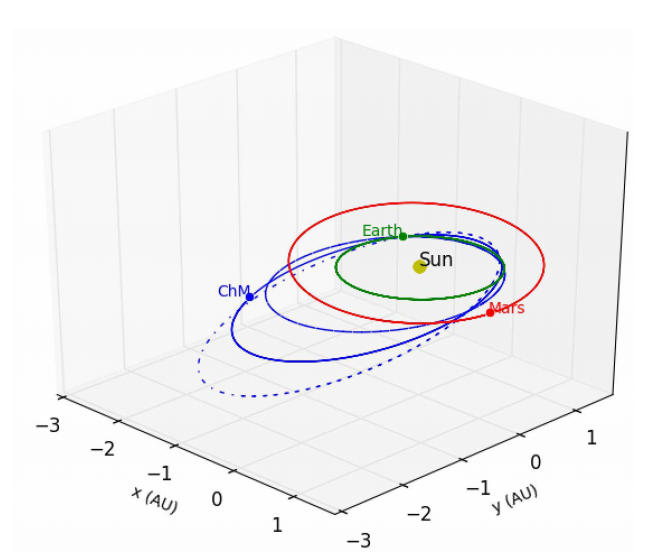
Today, Jorge Zuluaga and Ignacio Ferrin at the University of Antioquia in Medellin, Colombia, take this approach a step further by reconstructing the meteorite’s original orbit around the Sun. 

Calculating the rock’s orbit around the Sun is a more complicated affair. This depends on six critical parameters which must all be estimated from the data. Most of these are related to the point at which the meteorite becomes bright enough to cast a noticeable shadow in the videos, its ‘brightening point’. They include the meteorite’s height, elevation and azimuth at this point as well as the longitude and latitude on the Earth’s surface below. The velocity is also crucial. 

“According to our estimations, the Chelyabinski meteor started to brighten up when it was between 32 and 47 km up in the atmosphere,” say Zuluaga and Ferrin, who estimate the velocity at between 13 km/s and 19 km/s relative to Earth.

Their conclusion is that the Chelyabinsk meteorite is from a family of rocks that cross Earth’s orbit called Apollo asteroids.

These are well known Earth-crossers. Astronomers have seen over 240 that are larger than 1 km but believe there must be more than 2000 others of similar size out there.

Smaller Earth crossers are even more common. The sobering news is that astronomers think there are some 80 million about the same size as the one that hit Russia.


Physics arXiv: A preliminary reconstruction of the orbit of the Chelyabinsk Meteoroid

Read more…

Dr. Barry C. Johnson, PhD...

IDEXX

Dr. Johnson worked in Austin, Texas for a time, and I had the distinct honor of meeting him. He was one of nine African American Vice Presidents I featured during Motorola's Black History Month celebrations. He used one of my products - D54H - as test vehicle for something that's now quite common in the industry: manufacture on 300mm (12") wafers. At the time, standard was 4 - 8" wafers. That was in the microelectronics era, or when gate feature sizes were measured in micrometers or microns in measure. I was not on that high-powered team (PhDs only), but they showed that boules could be pulled, sliced and processed in that circumference. Nanotechnology is acknowledgement of the current feature size in nanometers (10-9 meters) in direct adherence to the predictions of Moore's Law, and the multi-functionality we enjoy one cell phones, flat screens, etc.

The industry is now currently working on 450mm (18"), or "pizza sized" wafers. As we shrink smaller, the increase in area allows more product to be shipped and purchased, thereby increasing profitability.

BUSINESSWEEK: Dr. Barry C. Johnson, Ph.D. served as the Dean of the College of Engineering for Villanova University from August 2002 to March 2006. Dr. Johnson served as Senior Vice President and Chief Technology Officer of Honeywell International Inc. in Morristown, NJ. from July 2000 to April 2002. He served as a Corporate Vice President of Motorola, Inc. and Chief Technology Officer for its Semiconductor Product Sector in Tempe, AZ. He joined Motorola in 1976 and held a variety ... of technology, product development and operations leadership positions during his 16 year career with Motorola, Inc. Dr. Johnson served as a Professor of Electrical and Computer Engineering at the University of Arizona, and serve a three-year stint as a Senior Research Fellow at E. I. DuPont & Co. He serves as the Chairman of the Board of Verisae, Inc. He has been a Director of Rockwell Automation Inc., since September 7, 2005. Dr. Johnson has been a Director of Cytec Industries Inc. since August 13, 2003. He has been a Director of Idexx Laboratories Inc., since March 2006. He serves as a Director of Cytec Engineered Materials Inc. He served as a Member of Advisory Board at Plextronics, Inc. He serves as a member of the National Academy of Engineering in 2000 and the first U.S. citizen to be elected to the Fraunhofer Society in 1999, Germany's prestigious applied research organization in 1999. He is an inventor named on seven U.S. Patents. He is the recipient of numerous professional honors. He has been awarded eight patents and has authored over sixty technical papers. Dr. Johnson studied Ph.D. and M.S. degrees in metallurgical engineering and materials science from Carnegie-Mellon University and a B.S. degree in Mechanical Engineering from Villanova University.
Read more…

About That Death Star...


The proposal, which was announced by press release and press conference, comes from cosmologist Philip Lubin of the University of California at Santa Barbara and engineer Gary Hughes of California Polytechnic State University. Calling it a Death Star immediately makes the idea sound both sexy and goofy. The researchers use the term Directed Energy Solar Targeting of Asteroids and exploRation (DE-STAR), which isn’t much better. Setting aside the name, though, the idea is interesting.

Lubin and Hughes envision building a scalable, phased array, space-based laser system, powered by large solar panels. Solar power is abundant and uninterrupted in space; developing large, lightweight photovoltaic arrays would be a useful technology for future space stations or power-hungry scientific experiments. Laser beams could be useful for characterizing the composition of near-earth asteroids, and for conducting experiments on how laser heating or laser vaporization could alter an asteroid’s orbit. And phased arrays are an intriguing way to create a steerable light beam from a flat surface without turning it.


Discovery: The Case for Building a Death Star

Read more…

Free Within Ourselves...


One of the most promising of the young Negro poets said to me once, "I want to be a poet--not a Negro poet," meaning, I believe, "I want to write like a white poet"; meaning subconsciously, "I would like to be a white poet"; meaning behind that, "I would like to be white." And I was sorry the young man said that, for no great poet has ever been afraid of being himself. And I doubted then that, with his desire to run away spiritually from his race, this boy would ever be a great poet. But this is the mountain standing in the way of any true Negro art in America--this urge within the race toward whiteness, the desire to pour racial individuality into the mold of American standardization, and to be as little Negro and as much American as possible.

[Last sentence]: We build our temples for tomorrow, as strong as we know how, and we stand on top of the mountain, 'free within ourselves.'

More at: The Negro Artist and the Racial Mountain, Langston Hughes
1926, The Nation, Courtesy of University of Illinois English Department

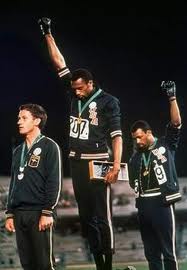
Tommie Smith, John Carlos, '68 Olympic Games

We will remember the humanity, glory and suffering of our ancestors, and honor the struggle of our elders. We will strive to bring new values and new life to our people.

We will have peace and harmony among us. We will be loving; sharing, and creative. We will work, study and listen so we may learn; so we may teach.

We will cultivate self-reliance. We will struggle to resurrect and unify our homeland. We will raise many children for our nation. We will have discipline, patience, devotion and courage.

We will live as models to provide new direction for our people. We will be free and self-determining.

We are African People…We will win!!!

The African Pledge and photo from: Black Science Fiction Society

Read more…

The Makers...


Benjamin Banneker was born in 1731 just outside of Baltimore, Maryland, the son of a slave. His grandfather had been a member of a royal family in Africa and was wise in agricultural endeavors.His father, Robert, was an African slave who purchased his freedom and his mother, Mary, was the daughter of a freed African slave and an English woman. As a young man, he was allowed to enroll in a school run by Quakers and excelled in his studies, particularly in mathematics. Soon, he had progressed beyond the capabilities of his teacher and would often make up his own math problems in order to solve them.


One day his family was introduced to a man named Josef Levi who owned a watch. Young Benjamin was so fascinated by the object that Mr. Levi gave it to him to keep, explaining how it worked. Over the course of the next few days, Benjamin repeatedly took the watch apart and then put it back together. After borrowing a book on geometry and another on Isaac Newton's Principia (laws of motion) he made plans to build a larger version of the watch, mimicking a picture he had seen of a clock. After two years of designing the clock and carving each piece by hand, including the gears, Banneker had successfully created the first clock ever built in the United States. For the next thirty years, the clock kept perfect time.

Thomas Jennings was the first African American to receive a patent, on March 3, 1821 (U.S. patent3306x). Thomas Jennings' patent was for a dry-cleaning process called "dry scouring". The first money Thomas Jennings earned from his patent was spent on the legal fees (my polite way of saying enough money to purchase) necessary to liberate his family out of slavery and support the abolitionist cause.

Inventor, electrical engineer, and business executive Jesse E. Russell, Sr. was born on April 26, 1948 in Nolensville, Tennessee to Mary Louise Russell and Charles Albert Russell. He was raised in inner-city Nashville along with his ten siblings. In 1972, Russell received his B.S. degree in electrical engineering from Tennessee State University. As a top honor student, Russell became the first African American to be hired directly from a Historically Black College and University (HBCU) by AT&T Bell Laboratories. The following year, he earned his M. S. degree in electrical engineering from Stanford University.

After the completion of his education, Russell continued to work at Bell Laboratories as a pioneer in the field of cellular and wireless communications. In 1988, Russell led the first team from Bell Laboratories to introduce digital cellular technology in the United States. He was a leader in communication technology in cellular devices and some of his patents include the “Base Station for Mobile Radio Telecommunications Systems,” (1992), the “Mobile Data Telephone,” (1993), and the “Wireless Communication Base Station” (1998). Russell held numerous posts while employed at AT&T, including director of the AT&T Cellular Telecommunication Laboratory and chief technical officer for the Network Wireless Systems Business Unit.

Site: Black Inventor Museum Online

Read more…

LEED and Green...


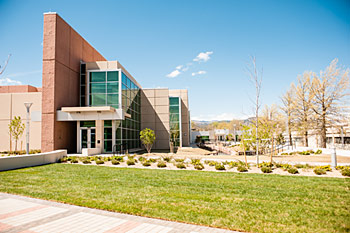
The Precision Measurement Laboratory at the NIST facility in Boulder, Colo., has been awarded LEED Gold certification.
Credit: Copyright Christina Kiffney Photography

The new Precision Measurement Laboratory (PML) at the National Institute of Standards and Technology (NIST) campus in Boulder, Colo., has received LEED Gold certification.


LEED (Leadership in Energy and Environmental Design) provides third-party verification of green buildings. Among their benefits, LEED-certified buildings are designed to lower operating costs, reduce waste, conserve energy and water and reduce 'greenhouse gas' emissions.


The PML, which opened last year,* achieved this distinction despite the need to meet many special requirements for its research mission. Stringent controls of the internal environment are required for precision measurements with lasers, atomic clocks and nanotechnology. For instance, mechanical equipment takes in outdoor air and provides filtration, heating and cooling, and humidity control. Air quality is maintained through the use of low-odor adhesives, sealants and paints, and carpet and floor materials that minimize release of chemicals and gases.


NIST: Green and Gold: NIST Boulder’s New Laboratory Achieves LEED Gold Certification

Read more…

Stealth Nanoparticles...


By binding to an immune system cell's receptor (grey), a man-made component (yellow) of a protein could prevent the body from getting rid of a therapeutic nanoparticle. DIEGO PANTANO


Small man-made peptides can help to sneak drug-bearing nanobeads past the ever-vigilant immune system, a group of US researchers has found.

To work effectively, drugs and imaging agents need to get to the diseased cells or tumours where they’re needed most. Although scientists are developing nanoparticles that help to deliver drugs to the right place, all therapeutic molecules face a deadly foe — the immune system. Its macrophages are designed to spot any intruding molecules in the blood and destroy them in a process called phagocytosis.

Researchers at the University of Pennsylvania in Philadelphia have now found a way to stop macrophages from destroying drug-bearing nanoparticles. They have designed and made a small segment of a crucial membrane protein called CD47, which is recognized by macrophages as being safe. This means that molecules that contain CD47 can get past macrophages and into blood cells.

Nature: Stealth nanoparticles sneak past immune system’s defences

Read more…

What You Need...

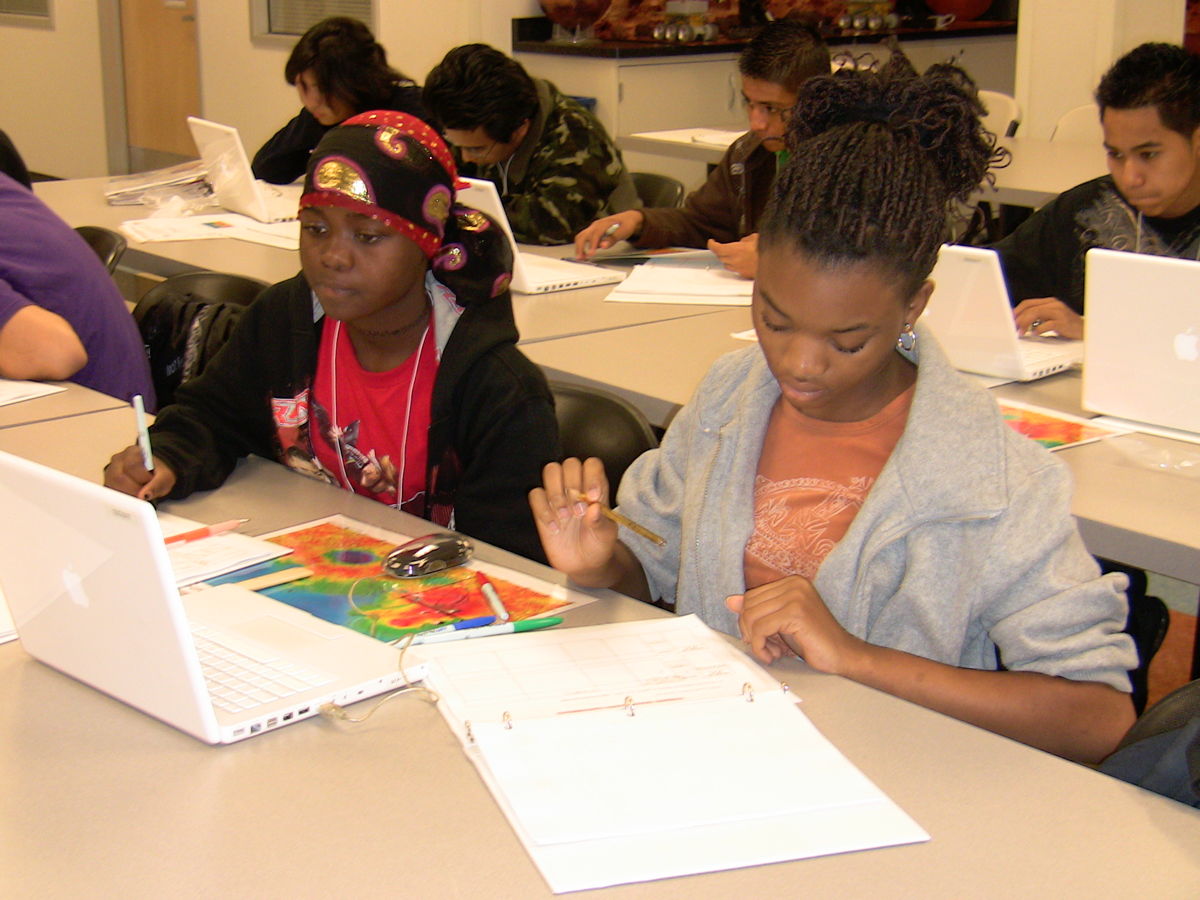
Students participating in the Mars Student Imaging Project work directly with data they requested from the THEMIS instrument on board NASA's Mars Odyssey satellite.
CREDIT: Arizona State University Mars Education Program


Post title inspired and courtesy of the Watts Prophets.


A project that puts middle and high school students in charge of an instrument on NASA's Mars Odyssey orbiter received a top prize from the journal Science today (Feb. 21).


The journal recognized the Mars Student Imaging Project, which allows young scientists to request time on the Thermal Emission Imaging System (THEMIS) instrument aboard the satellite after developing and proposing their own research. But the benefits go beyond learning about Mars.


"The underlying premise of what Mars Student Imaging is about is helping students to learn the process of science, the nature of science and how it works," Sheri Klug Boonstra, director of the Arizona State University Mars Education program in charge of the project, told SPACE.com.


Space.com: Students Get Satellite Time: Inside the Mars Student Imaging Project

Read more…

Good Luck With That...


Yesterday, a mysterious group called the Inspiration Mars Foundation announced vague plans for a “historic journey to Mars and back in 501 days” scheduled for 2018. The group neglected to mention if the trip would be manned, instead directing the public to a press conference scheduled for February 27. But new information reveals that the individuals behind the Inspiration Mars Foundation plan to send two people on a flight to Mars and back—presumably in one piece.

Not that I'm a pessimist, but some facts about spaceflight seems missing from this bold endeavor:

  1. Time and propulsion technologies: at current rates of speed, let's pick the average to obtain LEO - low earth orbit ~ 17,000 mph (27358.8 kph).

  2. The average distance between Earth and Mars is 140 million miles (225 million km).

  3. Thus, your trip would take roughly 8,235 hours, or 343 days. These are of course, my "back of the envelope calculations."

  4. Human frailty: we tend to like gravity, and lose muscle mass as well as bone density just in LEO on the ISS.

According to Universe Today: "The total journey time from Earth to Mars takes between 150-300 days depending on the speed of the launch, the alignment of Earth and Mars, and the length of the journey the spacecraft takes to reach its target. It really just depends on how much fuel you’re willing to burn to get there. More fuel, shorter travel time."


So, mysterious cabal or not: it's going to take some serious engineering to get to Mars, loads of fuel and/or a very large solar sail. Unfortunately, all of that costs money that if you've noticed, we're having a bit of trouble counting...not mad at you, though.


Scientific American: Millionaire Plans Mission to Mars in 2018

Read more…

Lifting All Boats...

Global Integration Consulting

Defining the Challenge
Today’s world requires that all students obtain a solid foundation in STEM (science, technology, engineering and math). Gone are the days where students we deem non-college material are served best by teaching them to “work with their hands”. Virtually every job requires proficiency in applied technology and a growing number of careers involve applied math and science. Moreover, it is the integration of STEM disciplines, the ability to apply knowledge to workflow along with 21st century skills such as communication and collaboration, critical thinking and problem solving, information literacy and adaptability that are most critical to success in a fast-paced global economy.


While this need is widely recognized by educators and public policy experts, solutions often miss the mark. Instead of an integrated approach focused on applied knowledge, we continue to emphasize knowledge in silos; the “s”, the “e”, the “m” - and whatever “t” exists is most often put in the hands of teachers, not students. This approach may be easiest, since it is consistent with traditional educational approaches and structures, but it does not meet the post-secondary and career readiness needs of the vast majority of our students.


Creative Learning Systems: STEM for All Students: Beyond the Silos

Read more…

The Whiz Kid...


Who is Kelvin Doe?

Kelvin Doe, often called “The Whiz Kid,” is a 16-year-old self-taught inventor and engineer from Sierra Leone.


He has created batteries and generators from scrap parts in his community to help provide electricity for his family and friends.  Doe built his first battery at the age of 13, and has since developed a local FM radio station, which runs off homemade radio transmitter and generator.

The whiz kid explained his influence for making the radio station, “if we have a radio station in my community, the people can be able to debate about issues affecting our community and Sierra Leone as a whole.”


“People normally call me DJ Focus in my community because I believe if you focus you can do invention perfectly,” he said in a video that profiled him, produced by @radical.media for the THNKR YouTube channel.


Ubuntu: I am because we are and because we are, you are. It is a statement of being.

The Grio: Kelvin Doe, the Whiz Kid from Sierra Leone

Read more…

Neural Prostheses...


TECHNOLOGY REVIEW: The emerging technology of neural prostheses has the power to change what it means to be human. The ability to implant electrodes into the eyes ears, spine or even the brain has the potential to overcome degenerative disease, mend broken bodies and even enhance our senses with superhuman abilities.


But despite numerous trials of electronic devices implanted into the human body, there are still many challenges ahead. The problem is that most of these devices are based on silicon substrates which are hard, rigid and sharp. Those are not normally qualities that sit well with soft tissue.


Consequently, any small movement of these devices can damage nearby tissue and in the worst cases, form scar tissue. What’s more, the hot, wet and salty environment inside the body can damage electronic components, limiting their lifespan. 


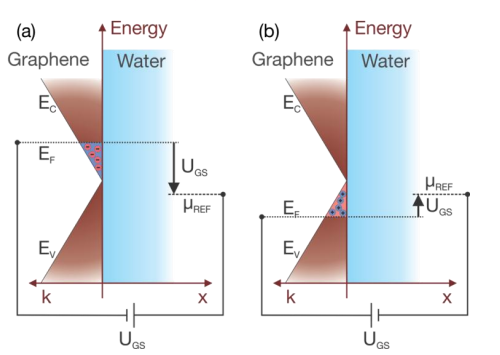
What’s needed, of course, is a flexible substrate that is also biocompatible with human tissue. Now Lucas Hess and pals at the Technische Universität München in Germany say they’ve found the ideal material–graphene. Today, they outline their plans for graphene-based neural prostheses and the experiments they’ve already done to test its biocompatibility.


Graphene is ideal because carbon “chicken wire” is only a single atom thick and therefore highly flexible. It is also held together by carbon bonds, which are among the most stable known to chemists. That means it should be relatively stable inside the human body.


Read more…

Braess' Paradox...


TECHNOLOGY REVIEW: One of the increasingly famous paradoxes in science is named after the German mathematician Dietrich Braess who noted that adding extra roads to a network can lead to greater congestion. Similarly, removing roads can improve travel times.


Traffic planners have recorded many examples of Braess’ paradox in cities such as Seoul, Stuttgart, New York and London. And in recent years, physicists have begun to study how it might be applied in other areas too, such as power transmission, sporting performance where the removal of one player can sometimes improve a team’s performance and materials science where the network of forces within a material can be modified in counterintuitive ways, to make it expand under compression, for example.


Today, Krzysztof Apt at the University of Amsterdam in The Netherlands and a couple of pals reveal an entirely new version of this paradox that occurs in social networks in which people choose products based on the decisions made by their friends. 


They show mathematically that adding extra products can reduce the outcome for everyone and that reducing product choice can lead to better outcomes for all. That’s a formal equivalent to Braess’ paradox for consumers.


1. Physics arXiv: Paradoxes in Social Networks With Multiple Products
2. Harvard: Virtual Cell Program

Read more…

Blerdology...


Who is Kat Calvin?

Kat Calvin is the founder of “Black Girls Hack,” the country’s first all-black female hack-a-thon. “Black Girls Hack” gives women of color across the US the opportunity to come together to create code that tackles specific digital challenges and problems. Numerous publications featured her for her dedication to educating young women in the tech field.

Calvin aims to empower young women who look like her and prepare them for a field where women of color are too scarce.


1. The Grio: Kat Calvin, Founder of Black Girls Hack
2. Welcome to Blerdology (Kat's web site)
Read more…

A Matter of Marketing...

I enjoyed the brief series Firefly as much as I've enjoyed over the years Star Trek: TOS, TNG, DS9, VOY, ENT (there, I think that's all the abbreviations).


Gina Torres (Zoe Warren-Washburne, coincidentally married to Lawrence Fishburne), Nichelle Nichols (Nyota Uhura, literally "freedom star"), LeVar Burton (Geordi La Forge), Michael Dorn (Worf); Avery Brooks (Benjamin Sisko), Felicia M. Bell (Jennifer Sisko), Brock Peters (Joseph Sisko), Cirroc Lofton (Jake Sisko) Tim Russ (Tuvok), Anthony Montgomery (Travis Mayweather, AKA "Boomer"): they are the offspring of Dr. King's encouragement to Ms. Nichols to not quit after the first season of TOS.


Yet, despite this, and the astronomical odds of going from amateur to professional athlete, we've apotheosized athletic accomplishment over academic accomplishment; physical prowess in subjective games with the one goal of winning for ONE team over physics and STEM, with very objective, obtainable and worthwhile goals for the individual, and our nation.


This was a link posted in an online forum I participate in on black science fiction:


It’s Black History Month and a great time for The Internets to remember that black people exist, and apparently, it sucks to be us. 


First I read a piece in xojane about the racism hurled toward black cosplayer Chaka Cumberbatch. Then Comic Alliance published a piece on the dearth of black writers in the comic book industry. I’m sure there will be more articles just like this in the next 22 days.


I’m a second generation Trek fan, a life long Star Wars fan and sporadic Marvel fangirl. I know the Fellowship of the Ring by heart. I self-identified as a geek long before I self-identified as a metalhead – but I honestly never really thought I was much of an anomaly until going to a mostly white college. You see, many of the kids I hung out with in my middle-class, black neighborhood in Chicago were (and are) geeks, obsessing over Star Wars lore, reading Spiderman and X-Men comics, trading Transformers, watching Aliens on HBO. 


There are tons of us: black, geek, proud – and generally invisible in portrayals of mainstream geek culture. And let’s face it, geek culture is mainstream.


Her article makes the astute observation in the following sad, simple formula:


"Geek" culture = white; "Urban" culture = black (in general).


"The Big Bang Theory" had Neil deGrasse Tyson in a brief cameo, but with the exception of an Indian scientist played by Kunal Nayyar (Dr. Rajesh Koothrappali) that fell in love with Siri, the cast is as diverse as "Cheers," "Friends" or "Seinfeld."


Advertising is simply information about a product or service - where/how to purchase it and what price; marketing is informing our minds how-to-think, or how we should think to drive the sales to said products and services.


Marketing has data that drives its decisions. Thus, an appearance by Dr. Tyson, as [his somewhat] ubiquitous presence has been in popularizing science to American culture is seen as a brief deviation from "the model." The model is the marketing plan that drives viewers to television stations and web sites, eventually to "point-and-click" = sales.


It is why things are so neatly packaged, socially "quantized" - and how we explicitly go along with it. An African American young woman that wants to write gaming code, a young man that wants to study science rather than hang out in the streets is labeled "white girl/boy" (I should know), and this sadly sometimes comes from their own immediate families. It is why Lil Wayne and Future can publish a controversial song about Emmett Till, further proving that for the untimely deaths of Tupac Shakur and Biggie Smalls, the current two modern day minstrels would be flipping burgers at McDonald's, or sharing a cell.


"Geek" culture = chemistry sets, Lego's, museum trips, science documentaries, Sylvan tutoring, scholarships, telescopes; leading to science or engineering positions, management, entrepreneurship, vice president, CEO, Nobel Laureate. These guys couldn't "make" the team, they now expense $200,000 box seats and/or OWN the team!


"Urban" culture = 5 Star basketball camps, football camps, hip hop/pop culture, memorizing rap, sagging (minstrel) britches, weed smoking, "thug life" glorification, leading to in the RAREST of cases, Russell Simmons or Jay-Z. The majority become the poor, or brick and mortar for the prison-industrial-complex.


"When you control a man's thinking you do not have to worry about his actions. You do not have to tell him not to stand here or go yonder. He will find his 'proper place' and will stay in it. You do not need to send him to the back door. He will go without being told. In fact, if there is no back door, he will cut one for his special benefit. His education makes it necessary." Carter G. Woodson, "The MIS-Education of the Negro"


It is simply, a matter of marketing...

Read more…

Mechanical QCs...


Ultra-fast computers of the future might consist of tiny pieces of superconducting material linked electrically to equally small mechanical resonators, the former providing the processing power and the latter the memory. That is the prospect raised by new work carried out by an international group of physicists, showing that quantum information can be passed between the two kinds of component in such a way that this delicate information might be protected from environmental interference.


Quantum computers exploit the counterintuitive idea that tiny objects can exist in more than one state at the same time. Rather than processing bits – which are either 0 or 1 – such devices instead manipulate qubits – which can be 0 and 1 simultaneously – potentially allowing vast numbers of operations to be carried out in parallel and rendering these devices far quicker than classical computers.


Physicists are working on a number of different kinds of quantum computer but all have their downsides. Some exploit the spin of individual particles, such as atoms, molecules or photons. The quantum states in these devices can be made quite robust against interference from outside – one of the biggest challenges in building a workable quantum computer – but they require bulky apparatus that is not well suited to building computers with large numbers of qubits. Suitable scaling up should not be a problem for solid-state designs, however, such as devices that exploit the quantum-mechanical properties of superconductors. But these devices are extremely susceptible to electromagnetic interference.


Physics World: Quantum computers turn mechanical

Read more…

George Edward Alcorn...


George Edward Alcorn, Jr. received a four-year academic scholarship to Occidental College, Los Angeles ,California where he graduated with a Bachelor of Science in Physics. He received his degree with honors while earning eight letters in basketball and football. George Alcorn earned a Master of Science in Nuclear Physics in 1963 from Howard University, after nine months of study. During the summers of 1962 and 1963 George Alcorn worked as a research engineer for the Space Division of North America Rockwell. He was involved with the computer analysis of launch trajectories and orbital mechanics for Rockwell missiles, including the Titan I and II, Saturn IV, and the Nova.


In 1967 George Alcorn earned a Ph.D. in Atomic and Molecular Physics from Howard University. Between 1965-67 Alcorn conducted research on negative ion formation under a NASA-sponsored grant. Dr. Alcorn holds eight patents in the United States and Europe on semiconductor technology. His area of research includes:

  • Adaptation of chemical ionization mass spectrometers for the detection of amino acids and development of other experimental methods for planetary life detection;

  • Classified research involved with missile reeentry and missile defense;

  • Design and building of space instrumentation, atmospheric contaminant sensors, magnetic mass spectrometers, mass analyzers;

  • Development of new concepts of magnet design and the invention of a new type of x-ray spectrometer.
Read more…

Vorbeck...

Rolls of printed graphene electronics are shown, including printed switches, printed sensors and printed resistors as seen before their incorporation into electronics devices.
Credit: Vorbeck Materials Corp

Nanotechnologies exist in the realm of billionths of a meter, with tolerances that push the limits of manufacturing--so it can be hard to imagine a factory that can turn out such products on a commercial scale.


And yet, the United States has created the right environment for nanomanufacturing to succeed here with its strong foundation in basic research and development, a skilled workforce and private and public investment support.


One nanotechnology--graphene--is relatively new to the nanomanufacturing sector, and NSF Small Business Innovation Research grantee Vorbeck Materials of Jessup, Md., is at the forefront of efforts to bring graphene technology to the marketplace.


According to researchers at Vorbeck, the company's Vor-ink™ graphene-based conductive ink for electronics was first introduced at the Printed Electronics Europe 2009 tradeshow and was directly marketed and sold to customers there--making it one of the first (if not the first) graphene products to go to market.


NSF: Graphene Technology Gaining a Foothold in the Marketplace
DOE: Vorbeck Materials Corporation

Read more…