Reginald L. Goodwin's Posts (3123)

Sort by

Dystopia...

Image Source: The Nation - This Is Your Brain on Climate Change


Topics: Climate Change, Existentialism, Global Warming, Greenhouse Gases


We are in an election cycle. A lot of memes have been generated, barring you support one "team" or the other. The chief concern when I was younger was "duck and cover" drills, as The Cold War and mass extinction wasn't a matter of ancient history: it was for me and my classmates our ever-present reality.

We still have those concerns as a country. We should vet our presidential candidates not just on what they can do for us locally, but what our example abroad - emulated for good or for ill - will mean to the human species.

I shuddered when I read The Nation's article: "This Is Your Brain on Climate Change" by Zoë Carpenter. If that was her intent, I think she accomplished it.

I didn't find any links to her reference to what the White House published this week, so I went searching:

FACT SHEET: What Climate Change Means for Your Health and Family was indeed published on Monday for immediate release. It is ironically my fifth year anniversary at my company, and the 48th year anniversary of Dr. Martin Luther King's assassination. Also on the Fact Sheet site - Climate and Health Assessment, from its first chapter:

Summary

Climate Change and Human Health

The influences of weather and climate on human health are significant and varied. Exposure to health hazards related to climate change affects different people and different communities to different degrees. While often assessed individually, exposure to multiple climate change threats can occur simultaneously, resulting in compounding or cascading health impacts (see Figure ES2).

With climate change, the frequency, severity, duration, and location of weather and climate phenomena—like rising temperatures, heavy rains and droughts, and some other kinds of severe weather—are changing. This means that areas already experiencing health-threatening weather and climate phenomena, such as severe heat or hurricanes, are likely to experience worsening impacts, such as higher temperatures and increased storm intensity, rainfall rates, and storm surge. It also means that some locations will experience new climate-related health threats. For example, areas previously unaffected by toxic algal blooms or waterborne diseases because of cooler water temperatures may face these hazards in the future as increasing water temperatures allow the organisms that cause these health risks to thrive. Even areas that currently experience these health threats may see a shift in the timing of the seasons that pose the greatest risk to human health.

Climate change can therefore affect human health in two main ways: first, by changing the severity or frequency of health problems that are already affected by climate or weather factors; and second, by creating unprecedented or unanticipated health problems or health threats in places where they have not previously occurred.

I experienced some of this personally and recently. This was without a doubt the sickest my wife and I have ever been. I've seen it affect coworkers and neighbors, spikes in temperature with chills and respiratory symptoms. All because of a change in temperature and our insistence on continuing fossil fuels to enrich a few that know no other way to make a living without collateral damage. The above photo is the imagined exaggeration of Earth as the Sahara Desert. When it gets that bad, there's nothing we can do, Paris or Kyoto. It's then over for us as a species...curtains...finis...kaput.

As I've said, we're in an election cycle and our instincts tend us towards tribalism, teaming, "us-versus-them"; cheers and trolling when our Avatars win or lose a primary or caucus; someone who we've falsely "friended," as if we'll be invited over to their homes for tea for an online $10 donation and a "promise."

In "Branches," I made my point quite clear: it's about the Supreme Court any candidate, then president will nominate and that it could affect us generations after her/his tenure. It's about the midterms that elects the legislatures that will forward your president's agenda, or in our most recent example, callously block it.

I am sick of the soundbites, the name-calling; one accusing another of lying (when that seems from the most observable evidence part of their training and job description); the well-rehearsed litany of talking points. It is well past time our candidates showed us their own science chops, and stop sending in their answers vetted by STEM Post Docs on staff. The willful ignorance encouraged by pseudoscience, pseudo-religion; science denial to ensure the reelection of a Congress we obviously DON'T like will not only weaken us as a republic, it may be our Chicxulub meteor as a species, and like the dinosaurs we still have no star ships to escape our own sizable hubris.

Lastly, to Mr. Nick Cannon and the rights your ancestors died for: your net worth has increased after your split with Maria Carey, far beyond mine in STEM as I'm not "Wilding Out" or hosting the revamped "Lifestyles of the Rich and Famous" (which includes you). You're not "too broke to vote," methinks you're just a narcissist that loves attention, and like Susan Sarandon - both of you at a net worth of $50 million - too rich to care who's president! The REST of us are voting, and demanding more from our representatives... as citizens of a republic; as humans while we still can. You nor "Louise" will be able to hide your wealth offshore on a crumbling, dysfunctional planet.

Octavia E. Butler:
Parable of the Sower
Parable of the Talents

Read more…

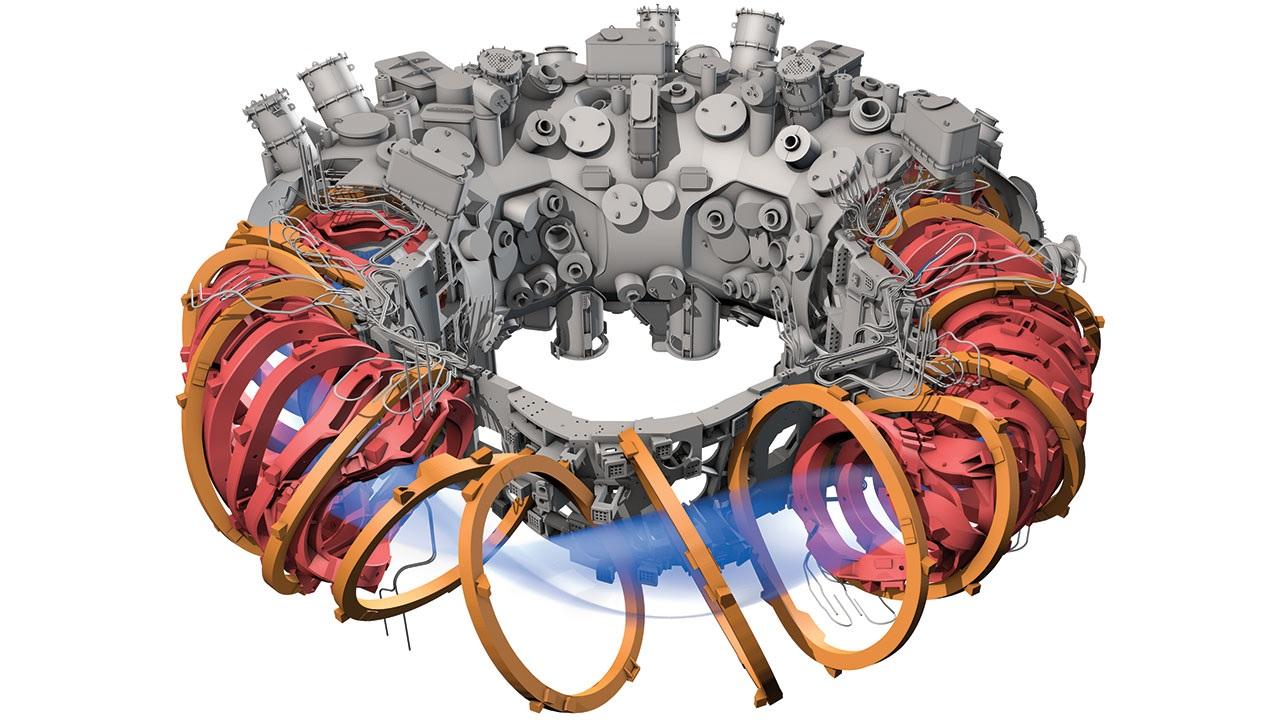
Wendelstein 7-X...

Image Source: Science Mag


Topics: Nuclear Fusion, Nuclear Physics, Nuclear Power


The sooner we get away from fossil fuels, the sooner we get away from energy needs demanding a toll on the globe in terms of wars for those resources, and climate impact that will eventually be paid by us all. No amount of money will ever be worth that.

“Only when the last tree has been cut down, the last fish been caught, and the last stream poisoned, will we realize we cannot eat money.”

Cree Indian Prophecy, GoodReads

Researchers from the Max Planck Institute for Plasma Physics (IPP) produced the first helium plasma in the Wendelstein 7-X stellarator last December. Since then, they have cleaned the plasma vessel with many more helium discharges. On 3 February they produced a hydrogen plasma in the world's biggest and most advanced stellarator-type nuclear fusion device for the first time. Thomas Klinger, Director at the IPP, talks about the special features of the Wendelstein 7-X stellarator and its structure, and the prospects for the construction of a fusion power plant.

Professor Klinger, will Federal Chancellor Angela Merkel launch the world's first fusion power plant on Wednesday?

No, the Wendelstein 7-X will not supply any energy yet. What we are aiming to demonstrate is that a stellarator is just as suitable a device for a power plant as a tokamak, and that it can bring its two advantages into play here: first, its plasma is fundamentally more stable and, second, it can operate in continuous mode without further intervention. In contrast, a tokamak requires pulsed operation, which is a considerable disadvantage for a power plant.

If the stellarator has such advantages to offer, why is the ITER, the world's biggest fusion device, being built as a tokamak?

A crash course in plasma physics is needed to understand this: for the plasma in a fusion device to reach the temperature of 100 million degrees Celsius required for nuclear fusion, it must make as little contact as possible with the walls of the plasma vessel. For this reason, its charged particles are captured in a ring-shaped magnetic field. And this magnetic field must be twisted into a spiral.

Phys.org: Plasma physicist discusses the Wendelstein 7-X stellarator, Peter Hergersberg

Read more…

Postage Stamp Gravimeter...

Image Source: Link Below


Topics: Electrical Engineering, Geophysics, Gravitational Waves, Gravity, MEMS


UK researchers have built a small device that measures tiny fluctuations in gravity, and could be used to monitor volcanoes or search for oil.

Such gravimeters already exist but compared to this postage stamp-sized gadget, they are bulky and pricey.

The new design is based on the little accelerometers found in smartphones.

To begin with, the team - from the University of Glasgow - tested it by measuring the Earth's tides over a period of several days.

Tidal forces, caused by the interacting pull of the Sun and Moon, not only drag the oceans up and down but slightly squash the Earth's diameter.

"It's not a very big squeeze, but it means that essentially Glasgow - or anywhere else on the Earth's crust - goes up and down by about 40cm over the course of 12-13 hours," said Richard Middlemiss, the PhD student who made the new instrument.

"That means that we get a change in gravitational acceleration - so that's what we've been able to measure."

Like most gravimeters, the heart of the new instrument is a weight hanging from a spring. Unlike all other gravimeters thus far, this one is a MEMS: a "microelectromechanical system".
 

The whole sensor is carved from a sheet of silicon 0.2mm thick; the "weight" is a small slab of that silicon and the "spring" consists of several thin shafts that hold it in place.

BBC Science and Environment: Small, cheap gravity gadget to peer underground
Jonathan Webb

Read more…

2116...


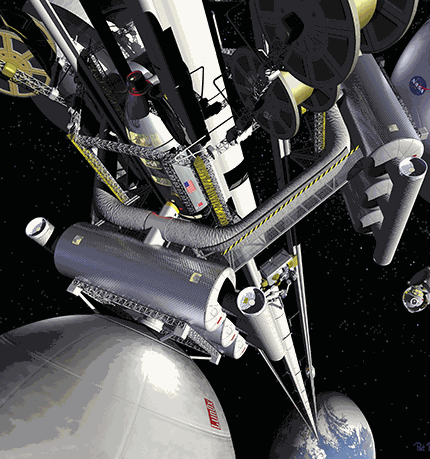
Figure 1. The space elevator, supported against gravity by centrifugal force, could forge a versatile link between the surface of Earth and the reaches of outer space. To realize the concept, we will need to manufacture new, strong materials, almost certainly designed with the help of computers. (Rendition by Pat Rawlings, courtesy of NASA.)

Citation: Phys. Today 69, 4, 32 (2016); http://dx.doi.org/10.1063/PT.3.3137

Topics: Futurism, Materials Science, Physics, Science Fiction, Space Exploration


Arthur C. Clarke proposed the concept in "The Fountains of Paradise" when I was a senior in high school. He also gave us the geosynchronous orbit, also known by the name: Clarke Orbit. I titled this one hundred years into the future following the premise of "Fountains," though we may master the technology sooner. Either would be fine with me: one I might just get to see. The other humanity might survive themselves, and colonize first Mars to engineer habitats in a clearly hostile environment; the Asteroid Belt for building materials; several choice moons for water beneath their icy crusts, eventually to the stars, the "stuff" we're all made of, compelled by its call to return.

“The nitrogen in our DNA, the calcium in our teeth, the iron in our blood, the carbon in our apple pies were made in the interiors of collapsing stars. We are made of starstuff.” Carl Sagan, Cosmos

The fundamental questions of the future will be profound, sophisticated, and difficult to answer. And the great projects of the future will be grand indeed.

What will the next 100 years in physics bring? I don’t know, of course, but it is a mind-expanding question to contemplate. The considered guesses recorded here naturally reflect my own interests, knowledge, limitations, and prejudices. And to keep this article within acceptable size, I’ve had to be crazily selective in choosing what to include. Its conjectures will have served their purpose if they provoke you to think about the question yourself, even if in the end you answer it quite differently (see the announcement on page 36).

To gain perspective, let us look back before looking ahead.

A century ago physics was in turmoil. Albert Einstein had only just published his revolutionary new theory of gravity. Ernest Rutherford’s recently discovered atomic nuclei, at the heart of matter, were mysterious, almost bizarre objects—terribly small, terribly dense, and subject to a bewildering variety of causeless transformations. Quantum theory, which featured Niels Bohr’s atomic model, was a tissue of guesswork. Superconductivity was an empirical fact, but a theoretical enigma. The nature of the chemical bond and the energy source of stars—supremely important aspects of the natural world—embarrassed contemporary physics.

Fifty years ago the picture had become quite different. General relativity was an established subject with a vast literature and a handful of experimental applications. Together with Edwin Hubble’s discovery of the expanding universe, it had opened new possibilities for scientific cosmology. The recently discovered microwave background radiation, together with a successful semiquantitative theory of cosmic nucleogenesis, pointed clearly to the Big Bang. Quantum mechanics was a mathematically precise, consistent, and wildly successful theory, though it seemed strange and troubling to many. It had become, as it remains, the language through which we speak with nature.

Physics Today: Physics in 100 years, Frank Wilczek

Read more…

Hacking Living Cells...

Coding for life
Zoonar GmbH/Alamy Stock


Topics: Biology, Bioengineering, Computer Science


I'm only going to comment with one Caveat Emptor: anything that can be hacked, can be weaponized with the right (i.e. "wrong") motivation and twisted imagination.

Tinkering with life just got easier. A tool that lets you design DNA circuits using a simple symbolic language makes programming living cells as straightforward as writing code for computers.

The tool uses an existing language called Verilog, which is used by chip designers to design electronic circuits. The idea is to make programming cells more like programming a computer. “We take the same approach as for designing an electronic chip,” says Chris Voigt of Massachusetts Institute of Technology. “Every step in the process is the same – it’s just that instead of mapping the circuit to silicon, it’s mapped to DNA.”

Synthetic biology aims to make it possible to treat cells as machines that can be engineered and programmed. By altering a microbe’s native DNA, it can be made to perform a specific task, such as producing a drug or changing colour to detect a virus in blood. Off-the-shelf genetic parts that can be swapped in and out make this easier, but it is still a painstaking process.

That’s where Verilog comes in. Verilog is a symbolic language that lets you specify the function of an electronic circuit in shorthand – without having to worry about the underlying hardware – and then convert it into a detailed design automatically. Voigt’s team realised they could do the same with DNA circuits.

Their system, called Cello, takes a Verilog design and converts it into a DNA wiring diagram. This is fed to a machine that generates a strand of DNA that encodes the specified function. The DNA can then be inserted into a microbe.


New Scientist: Bio coding language makes it easier to hack living cells, Andy Coghlan

Read more…

April 1st...

Image Source: Vanderbuilt School of Leadership Development


Topics: Commentary, Education, Physics, Research, Science, STEM


I touched down last Saturday, 2 April 2011 @ JFK at 2:40 PM EST. That was the easy part...

My turtle was shipped as Priority Parcel Post; my 92 lb lab as part of my luggage. I payed as much for the turtle as I did for my luggage: $200 each.


I had to first go get my luggage to the rental car place via the Air Train, then go get my turtle and lab: two neurotic pets that did not like the plane ride or the monorail at all...trust, me: the turtle (as turtles go) wasn't herself; the dog got car sick -- probably an extension of the plane trip -- on the way upstate.

Map Quest or Google Maps cannot tell me it's 1.5 - 2 hours from JFK...given traffic, juggling luggage, pets and my own naivete, I got where I was going by 10:15 PM.


Thank God for the GPS on my phone -- brought to us all courtesy of "The Photoelectric Effect" and a bit of quantum mechanics (of course, I had to say that...). #P4TC: New York...

* * * * *

My dog Raven passed away, but Speedy the turtle is going strong. She's managed to outlive every pet I've had since 1990.


This day five years ago was officially my last day as a high school physics and math teacher at Manor High School. Despite being a floater - no assigned classroom - I was allowed to tutor math and physics; teach martial arts one day after school and do performance poetry at school talent functions, many things that in five years I've found I really miss. I have found on reflection, all that free expression wasn't random chaos: it was me, the layers peeled of my own onion.

"This better NOT be an 'April Fool's joke, you bastard!" That was one of my students, a petite Hispanic young woman. Many students let me know I was the stability in their lives; for many the one person they could count on in their day.

"It wasn't," I said trying to choke back a lump. "Mr. Goodwin won't be here Monday."

When I called back on Monday, there seemed to be a lot of students in the office upset. I'd like to think other than my departure, I had a positive effect on them. They would be adults now, moving through life; loving, living and earning their way. I hope at least one of them found their way to a STEM field.

I've been in New York five years. I reentered an industry I'd departed August 26, 2003, a date I can't and won't forget.

I've seen changes in the industry, some by its own limitations; some by the limitations of intertwined economies that makes one think of butterflies.

I've seen changes in our climate, our country and our culture, as some petition our lesser angels to express themselves and the darkness within.

Through all of this, my students have become adults, millennials still but adults: fully functional and capable of expressing their desire as the governed by voting.

This world will be inherited by the meek, or the winds of Entropy.

Teaching is like saving one soul at a time. Despite number or technology's used or subject, it boils down to one-on-one. There is a rush when you can see the light go on in eyes that realize they've "got it." I revisited that briefly teaching at the Membership Training Academy for Kappa Alpha Psi. One of my fraternity brothers, a community college teacher complimented me. Another frat thought I had a PhD already.

Part of me is still that teacher, as my father and my grandfather before me.

I ponder the next five years. I have a graduate certificate in Microelectronics and Photonics. I am striving for more. I will let you know what shape that takes and soon.
Read more…

55 Cancri e...

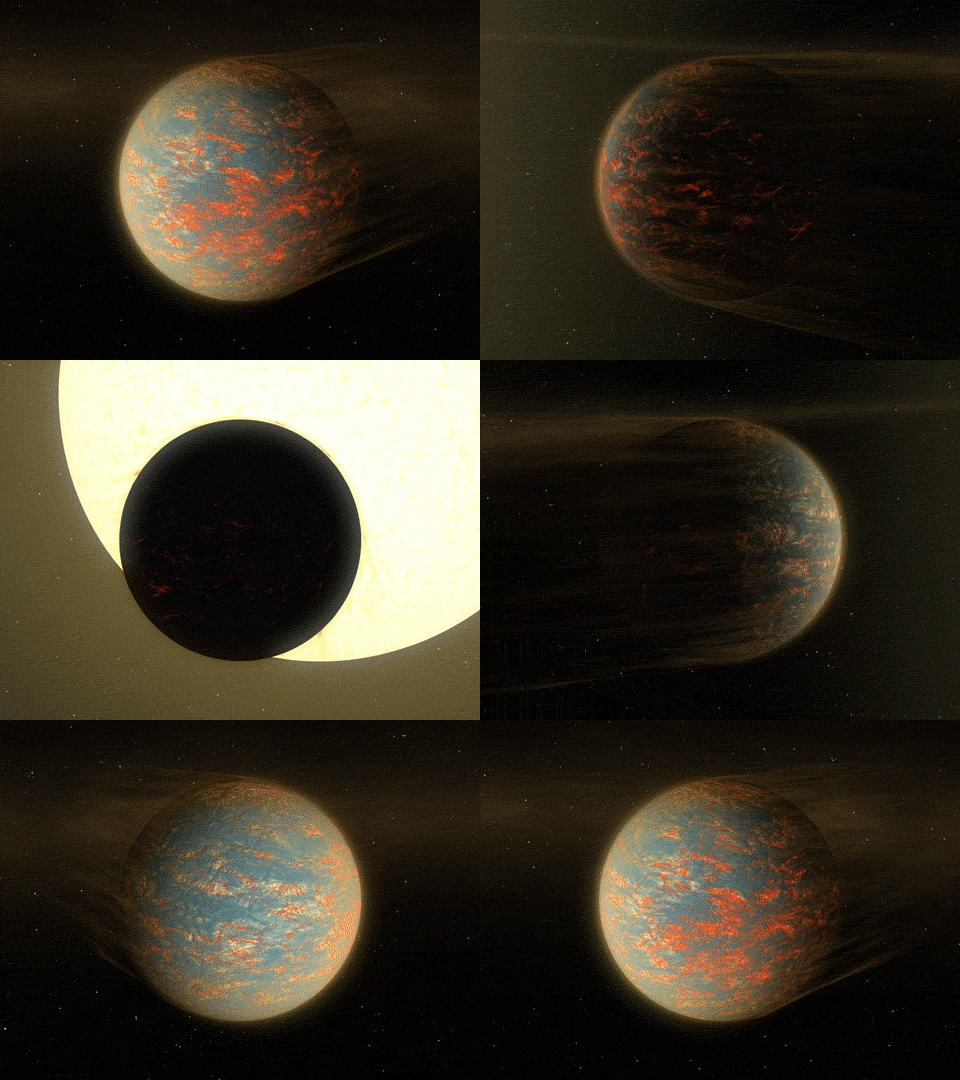
Animation Credit: NASA/JPL-Caltech


Topics: Astronomy, Astrophysics, Exoplanets, Planetary Science


Fascinating! However, it's not exactly a planet I'd want our descendants to travel to. I'd be more partial to the planets in the Goldilocks Zone of this particular solar system.

The first super-Earth planet to get its photo taken may be superweird and superhot, and perhaps have super-runny lava in spots on its surface, researchers said.

Astronomers investigated the alien planet 55 Cancri e, the innermost of five known planets orbiting the star 55 Cancri, located about 41 light-years from Earth. This exoplanet is a super-Earth, a rocky world nearly twice Earth's width and eight times its mass. It's the first super-Earth from which astronomers have detected light.

55 Cancri e circles its star about 25 times closer than Mercury does the sun. As a result, the planet whips fully around its star about every 18 hours, while Earth takes a year to complete an orbit.


Space.com: Weird, Oozing Super-Earth Planet Has Hot Nights, Even Hotter Days
Charles P. Choi

Read more…

Rabbit Ears...

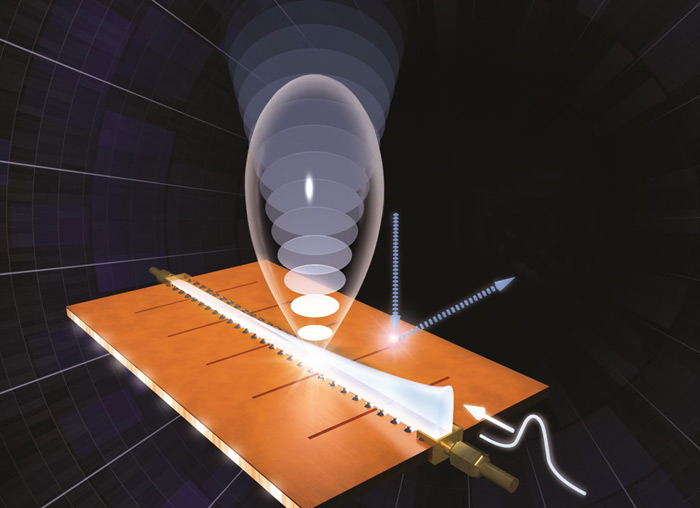
Schematic illustration of the new antenna in action. The lower-frequency modulation is illustrated as the gently varying level of white light along the antenna. The signal is illustrated as the much shorter pulse. (Courtesy: Andrea Alù)

Topics: Consumer Electronics, Electrical Engineering, Electromagnetism, Photovoltaics, Research

The last time I used the term, it was this post about television, posing in the right position with said rabbit ears for my parents; The Jetsons and flat screens. However, this is something old-to-new that never went away. Our WiFi, our remote controls to our televisions and in many cases, cars and key ignitions use this technology. Guglielmo Marconi was one of the giants that helped to spawn the modern age, others in their laboratories now the ages to come. Nanos Gigantium Humeris Incidentes...

A new simpler, cheaper and potentially more effective way to prevent radio antennas from picking up unwanted signals has been created by researchers in the US. With further development, the technique could also be used to help prevent thermophotovoltaic cells from re-emitting radiation they absorb – according to the team.

The laws of electromagnetism work exactly the same way if you run time in the opposite direction. One logical consequence of this is that an antenna designed to broadcast at a certain radio frequency will also be very good at absorbing radiation at that frequency. This is problematic for broadcast radio antennas, which will absorb radiation that has bounced back from surrounding objects – something that can have a negative impact on their operation. While there are ways of minimizing the effect of these echoes, they can be expensive and reduce the performance of the antenna.

Now, Andrea Alù and colleagues at the University of Texas at Austin have developed a new way of dealing with echoes. Their design is based on a traditional leaky-wave antenna, in which electromagnetic waves of certain frequencies couple to the space around the antenna and "leak out" as they travel along it. They added a series of variable capacitors called varactors to the antenna circuit. The capacitance of a varactor varies with the voltage applied to it, and this is used to adjust the operational frequency of the antenna. The researchers added a second, lower-frequency wave sent down the same antenna. This second wave does not couple to the space around the antenna and is therefore not radiated. However, the wave modulates the voltage on the varactors and therefore alters the operational frequency of the antenna while it is transmitting.


Physics World: New radio antenna avoids unwanted signals, Tim Wogan

Read more…

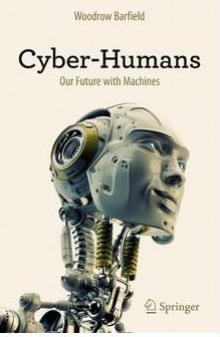
Cyber-Humans...

Image Source: See Link Below


Topics: Biology, Electrical Engineering, Internet of Things, Futurism, Robotics, Science Fiction


I consider this a dichotomy: equally exciting and terrifying. We are already becoming more "connected" through our mobile devices such that millennials have no memory of life before thousands of cable channels; million player online domains and ever-available search engines. It's up to philosophers and science fiction writers to ponder and model exactly "what are we becoming" and who (or what corporate entity) ultimately owns the enhanced, integrated biological-cybernetic intellectual property? Along with the aforementioned Internet of Things, a new dimension to hacking may be opening up. These issues, along with privacy matters and civil liberties concerns could make things dicey.

Dr Woodrow (Woody) Barfield has published over 350 articles and publications in the areas of computer science, engineering and law. He was head of the Sensory Engineering Laboratory as an Industrial and Systems Engineering Professor at the University of Washington, and he holds both JD and LLM degrees in intellectual property law and policy. His research revolves around the design and use of wearable computers and augmented reality systems.

Dr. Barfield latest book is Cyber-Humans: Our Future With Machines, published by Copernicus. I interviewed him via email on the topics of that his book addressed.

What time-line do you see cyborgs happening in the future? At what point will humans be more “cyber” than “human”?

There are several ways to think about the question. A few people have predicted that by the end of the century the majority (all?) of our biological parts could be artificial and perform better than the original. But actually, many of us are cyborgs now which I think raises many ethical, legal, and social issues. Generally, the definition of a cyborg is a person whose physiological and mental functioning is aided by or dependent upon a mechanical or electronic device. So if you have a heart pacer or cochlear implant, you are a cyborg. I would like to add to the above definition in the following way: given that prosthetics and other cyborg technologies are becoming part of the human body and can be modeled with control theory, I extend the definition of a cyborg to include the concept of: (1) closed-loop feedback, and (2) that the technology being integrated into the human body has computational ability.

Institute for Ethics & Emerging Technologies:
“Cyber-Humans: Our Future with Machines” – Interview with Prof. Woodrow Barfield
Hank Pellissier

Read more…

Clean Tech and Small Business...


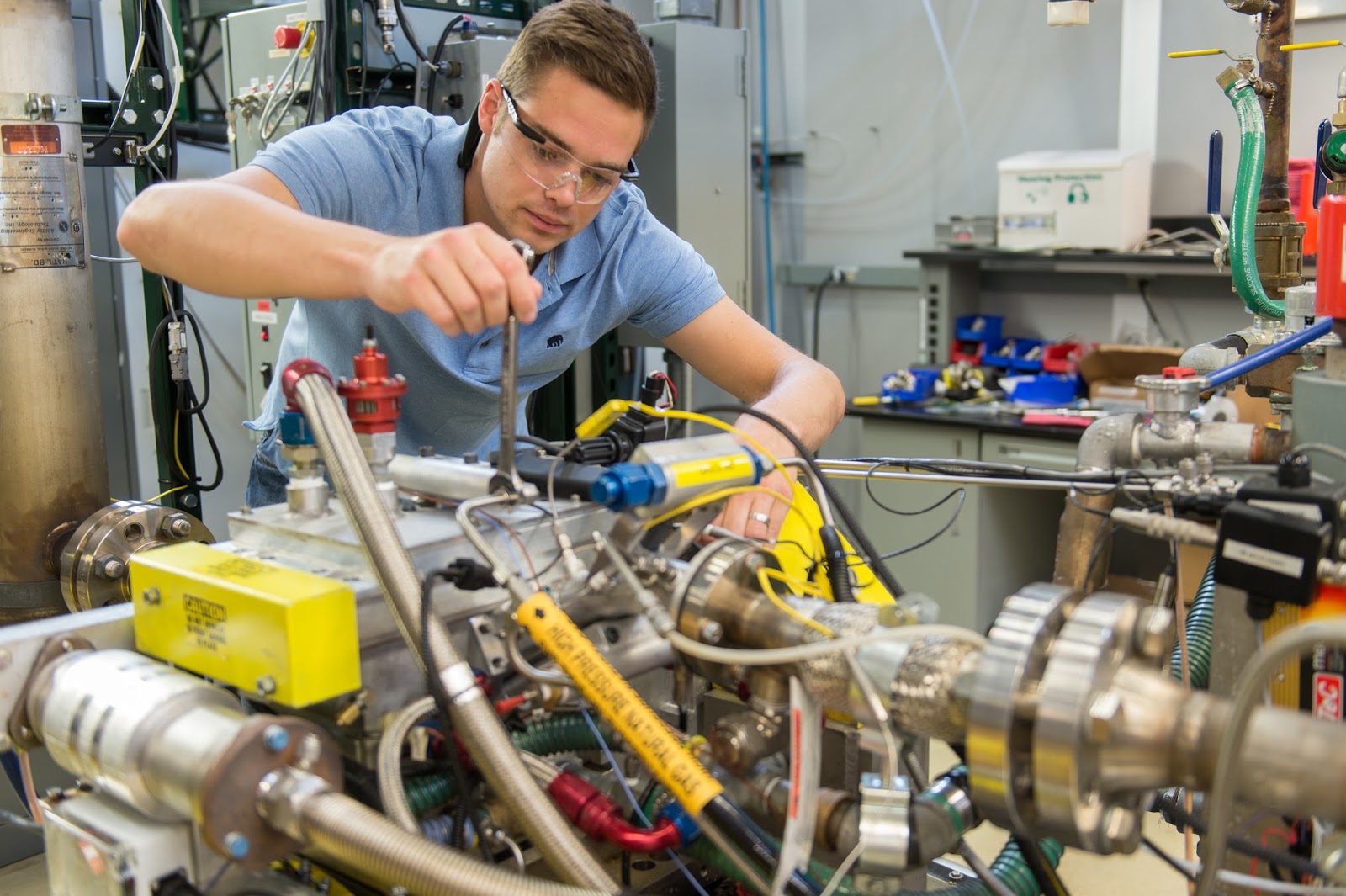
One of the small businesses with whom Argonne will collaborate is Transient Plasma Systems (TPS) of Torrance, Calif. TPS has developed a new type of ignition system that allows engines to run leaner or tolerate higher levels of recirculated exhaust gas, thereby increasing efficiency. Pictured is Argonne researcher Michael Pamminger working on a test engine that will be used as part of the TPS-Argonne collaboration.

Topics: Economy, Green Energy, Green Tech, Jobs, Mechanical Engineering, STEM


THIS is the type of innovation that could have global reach, yet keep jobs in the US as long as we're prepared to fill them. For our youth, it's a matter of the education infrastructure preparing them for jobs of the future; for slightly older workers, it could be a few semesters of retraining at a community college.

The U.S. Department of Energy's (DOE's) Argonne National Laboratory will be joining forces with three small businesses to advance innovative, clean transportation technologies as part of a larger program to help emerging firms access the resources of national laboratories.

DOE's Office of Energy Efficiency and Renewable Energy (EERE) issued 33 vouchers with a total value of $6.7 million in the first round of the Small Business Vouchers (SBV) Pilot, which matches small businesses with national laboratories to provide technical assistance to help bring next-generation clean energy technologies to market. Applications are currently being accepted for the second round, with a third round to follow.

The three companies selected by DOE to work with Argonne — Transient Plasma Systems (TPS), Connected Signals and Big Delta Systems (BDS) — each received vouchers to pursue vehicle-related research ranging from a new type of engine ignition system to new battery materials to innovative ways to empower motorists to drive more efficiently.

Argonne National Laboratory:
Three clean tech small businesses matched with Argonne in DOE program
Greg Cunningham

Read more…

Snapology...

Image Source: Harvard, John A. Paulson School of Engineering and Applied Science


Topics: 3D Objects, Architectural Engineering, Materials Science, Metamaterials


"A house that could fit in a backpack or a wall that could become a window with the flick of a switch" are just two fantastical objects that could be made from a new self-folding metamaterial – according to its inventors at Harvard University in the US. Inspired by origami, the material will pop up and fold down on command, and can change both its shape and stiffness. Other possible applications for the new material include retractable roofs and medical implants.

The metamaterial was developed by a team led by Katia Bertoldi, James Weaver and Chuck Hoberman. It was inspired by "snapology", which is a type of origami that uses modular units of folded paper to create larger objects. In the new approach, each unit cell is an extruded rhombus that has inflatable air pockets along three of its edges (see video). When an air pocket is pressurized, it causes an edge of the unit cell to try to fold flat. By pressurizing different combinations of pockets, the shape of the unit cell itself can be changed.

Physics World: Origami-inspired metamaterial changes shape and stiffness on command
Hamish Johnston

Read more…

Throttling Back Moore's Law...

Image Source: SemiWiki.com

Topics: Consumer Electronics, Electrical Engineering, Materials Science, Semiconductor Technology

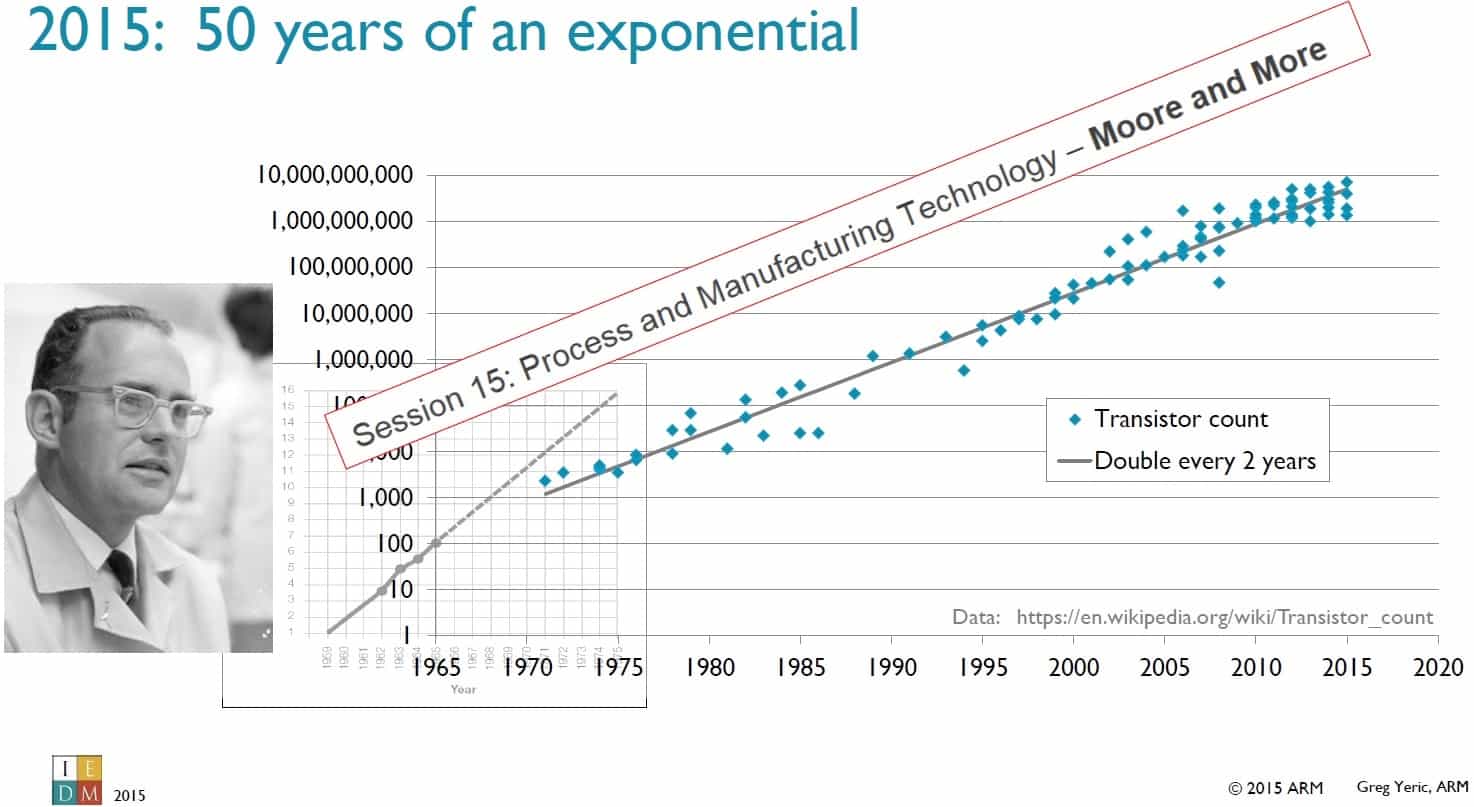
It was bound to happen. The smaller feature sizes gets, the more powerful that computer in your pocket you occasionally use to call someone and talk becomes, as you can pack literally more on the surface of Silicon substrates in billions of bits (so we can share cat videos, apparently). It also becomes increasingly difficult to manufacture such things, i.e. more expensive for the manufacturer in design, materials, processes and manpower. The old expression "somethings got to give" applies here. We're all hoping for something beyond Silicon, like carbon nanotubes.

Intel Puts the Brakes on Moore’s Law

Intel will slow the pace at which it rolls out new chip-making technology, and is still searching for a successor to silicon transistors.

Chip maker Intel has signaled a slowing of Moore’s Law, a technological phenomenon that has played a role in just about every major advance in engineering and technology for decades.

Since the 1970s, Intel has released chips that fit twice as many transistors into the same space roughly every two years, aiming to follow an exponential curve named after Gordon Moore, one of the company’s cofounders. That continual shrinking has helped make computers more powerful, compact, and energy-efficient. It has helped bring us smartphones, powerful Internet services, and breakthroughs in fields such as artificial intelligence and genetics. And Moore’s Law has become shorthand for the idea that anything involving computing gets more capable over time.

But Intel disclosed in a regulatory filing last month that it is slowing the pace with which it launches new chip-making technology. The gap between successive generations of chips with new, smaller transistors will widen. With the transistors in Intel’s latest chips already as small as 14 nanometers, it is becoming more difficult to shrink them further in a way that's cost-effective for production.

MIT Technology Review: Intel Puts The Brakes on Moore's Law, Tom Simonite

Read more…

Metamorphosis...

Image credit: rexboggs5 via flickr | http://bit.ly/1SECwxD
Rights information: http://bit.ly/1haBUhX


Topics: Engineering, Materials Science, Metamaterials, Research, Robotics


(Inside Science) -- By using fluids similar to Silly Putty that can behave as both liquids and solids, researchers say they have created fluid robots that might one day perform tasks that conventional machines cannot.

Conventional robots are made of rigid parts that are vulnerable to bumps, scrapes, twists and falls. In contrast, researchers worldwide are increasingly developing robots made from soft, elastic plastic and rubber that are inspired by worms, starfish and octopuses. These soft robots can resist many of the kinds of damage, and can squirm past many of the obstacles, that can impede hard robots.

However, even soft robots and the living organisms they are inspired by are limited by their solidity — for example, they remain vulnerable to cutting. Instead, researcher Ido Bachelet of Bar-Ilan University in Israel and his colleagues have now created what they call fluid robots that they say could operate better than solid robots in chaotic, hostile environments. They detailed their findings online Jan. 22 in the journal Artificial Life.

Inside Science: Researchers Are Developing Shape-Shifting Fluid Robots
Charles Q. Choi

Read more…

Thermometer...

A coal-fired power plant in Germany in 2014.


Topics: Climate Change, Global Warming, Greenhouse Gases


The correct term is Anthropgenic Climate Disruption, meaning that you don't experience what you're used to getting weather-wise.

Some practical symptoms I'm sure some of us are experiencing at this warmer-than-normal winter: I just finished a second round of antibiotics after a high temperature of 102.4, BP a very concerning 160/90; a third for my wife since her second antibiotic - Levaquin - she had an allergic reaction to, landing her in the emergency room at Vassar Hospital. I was suddenly on night shift again Friday morning...

Last winter was brutally cold, but that cold likely killed a lot of aerosols that normally wouldn't be in the atmosphere in New York. So, though minus 12 wasn't desirable, it was at least for the northeast, "normal."

Carbon is pouring into the atmosphere faster than at any time in the past 66 million years—since the dinosaurs went extinct—according to a new analysis of the geologic record. The study underscores just how profoundly humans are changing Earth’s history.

The carbon emissions rate is ten times greater today than during the prehistoric hot period that is the closest precedent for today's greenhouse warming.

That period, known as the Paleocene-Eocene Thermal Maximum (PETM), was marked by a massive release of the Earth's natural carbon stores into the atmosphere. (It’s not clear what caused the PETM, but volcanic eruptions and methane gas release are suspects.) The excess carbon triggered a 5°C (9°F) temperature increase, along with drought, floods, insect plagues, and extinctions. (Read more about this period of “Hothouse Earth.”)

National Geographic: Earth Hasn’t Heated Up This Fast Since the Dinosaurs’ End
Marianne Lavelle

Read more…

Chemical Gardens...


Figure 1. How a chemical garden grows. (a) A metal salt crystal at the bottom of a container with an appropriate alkaline solution begins to dissolve. (b) A thin membrane of metal hydroxide particles forms almost instantly, creating a small acidic compartment. (c) The membrane allows water molecules and hydroxide ions (OH−)(OH-) to flow inward through osmosis, which increases the interior pressure and (d) eventually ruptures the membrane. (e) As the buoyant metal–acid solution rises, the membrane immediately self-heals and a stem forms. The inset shows some details of the often fragile tube.


Citation: Phys. Today 69, 3, 44 (2016); http://dx.doi.org/10.1063/PT.3.3108

Topics: 3D Printing, Additive Manufacturing, Architectural Engineering, Chemistry


I could see a lot of correlation between what is now in vogue - 3D printing/additive manufacturing techniques and different ways we'll construct objects that say, carry medicinal treatments to targeted cancer cells.

I also thought about those crystal garden experiments I'd bug my parents to buy that they eventually acquiesced to doing...something I still appreciate as much as their presence I still miss.

“I shall never forget the sight. The vessel of crystallization was three-quarters full … and from the sandy bottom there strove upwards a grotesque little landscape of variously colored growths: a confused vegetation of blue, green, and brown shoots.”

That is how a character in German novelist and Nobel laureate Thomas Mann’s Doctor Faustus described the colorful mineral structures that he observed spontaneously growing from crystals placed into solution—an experiment that many readers may remember from their childhood chemistry kits or from classroom demonstrations. (See the cover of this issue.) But those experiments are not just toys: Many related systems are found in nature, technology, and the laboratory. First described in 1646 by Johann Glauber, “chemical gardens” are one of chemistry’s oldest fascinations, attracting even the curiosity of Isaac Newton. 1

Though not alive, chemical gardens do exhibit certain characteristics, including self-organization and the formation of membranes, reminiscent of biological systems. Indeed, in the 19th and early 20th centuries the self-assembling structures were thought to reveal insights into the mechanism of life emerging from an inorganic setting.

Today the chemical and molecular aspects of those systems are well understood, and the research focus has shifted to the physics of chemical gardens. The aim is to quantitatively explain basic features such as the growth speed and radius selection in the gardens. Bigger-picture questions are also being addressed that link chemical gardens to a larger class of self-organizing systems far from thermodynamic equilibrium. In that spirit, researchers are investigating macroscopic growth patterns and dynamical complexities such as relaxation oscillations in the system pressure that can lead to twitching and shape changes.


The physical approach reveals perplexing scaling laws and attracts researchers with backgrounds in nonlinear dynamics, pattern formation, self-assembly, and fluid dynamics. Materials scientists could learn potentially important lessons as chemical gardens create macroscopic complexity and hierarchical nano-to-macro architectures. There is even the possibility of making device-like tubes from molecular processes in a new field of study that has been termed chemobrionics. Finally, by studying chemical gardens that form in geological settings, researchers are again focusing on their role in the origins of life on Earth.

Physics Today: The fertile physics of chemical gardens
Oliver Steinbock, Julyan H. E. Cartwright and Laura M. Barge

1. L. M. Barge et al., Chem. Rev. 115, 8652 (2015). http://dx.doi.org/10.1021/acs.chemrev.5b00014

Read more…

Last Battlefield Reprise...

Spock's comment that "Change is the essential process of all existence" remains one of the most memorable lines of dialogue ever uttered on Star Trek. - See more at: Let That Be Your Last Battlefield


Topics: Diversity, Futurism, Martin Luther King, Politics, Star Trek


This was first posted in August of 2013, commemorating the 50th Anniversary of the March on Washington. I can hope Star Trek's return in 2017 to CBS has as much cultural impact as this episode did with me at its time and timing.

The vitriol and violence of the 2016 presidential campaign I've seen at political rallies; the racism, misogyny, tribalism and xenophobia purposely designed appealing to our lesser angels will not solve any problems, nor have any substantive policy proposals been forwarded by this particular camp. Sometimes art is a reflection of life. In this case, I sincerely hope life does not imitate art.

*     *     *     *     *

One of the most powerful Trek episodes for me as a youth was "Let That Be Your Last Battlefield." Recall, the 60's weren't just "make love, not war": there was a lot of both. Vietnam overseas, protests of the war and Civil Rights/Voting Rights marches at home. Suspicions that any deviance from the John Birch Society authoritarian "norm" was judged subversive; communist, therefore necessarily purged and crushed from existence. Judging from the date of airings, its first showing came nine months after the sad assassination of Dr. Martin Luther King.

It also aired during the climate of the Cold War, a period many seemingly LONG to get back to (that madness), where the nuclear "plan" was called MAD: mutually assured destruction. We still possess that insane power, essentially holding humanity hostage; guns to our own heads.

Gene Roddenberry put an interracial, international crew together: Nyota Uhura (literally: "Freedom Star" in Kiswahili); Hikaru Sulu (for the Sulu sea, meant to represent all of Asia, but of fictional Japanese origin); Pavel Andreievich Chekov (a RUSKIE for crying out loud!). You could say in this fictional treatment, Bele and Lokai "stood their ground" until the end. Roddenberry, as I've commented before developed his own eschatology, yet positive and relevant that we might just survive our own hubris, essentially stemming from old tribal conflicts and current contemporary displays of breathtaking stupidity and arrogance.


This episode was a stark warning; the inevitable consequences of NOT...

Source: Wikipedia

"Let That Be Your Last Battlefield" is the fifteenth episode of the third season of the original science fiction television show Star Trek. It was first broadcast on January 10, 1969, and repeated on August 12, 1969. It was written by Oliver Crawford, based on a story by Gene L. Coon (writing under his pen name "Lee Cronin") and directed by Jud Taylor. The script evolved from an outline by Barry Trivers for a possible first season episode called "A Portrait in Black and White". The script was accepted for the third season following budget cuts. The episode guest-stars Lou Antonio and Frank Gorshin, best known for his role as The Riddler in the Batman live-action television series. Contrary to popular rumor and articles, Gorshin was not Emmy nominated for this role.


In this episode, the Enterprise picks up two survivors of a war-torn planet, who are still committed to destroying each other aboard the ship.

Amazon link


Once the Ariannus mission is completed, Bele takes control of the Enterprise again, but this time he deactivates the auto-destruct in the process and sends the ship to Cheron. Once there, the two aliens find the planet's population completely wiped out by a global war fueled by insane racial hatred. Both Lokai and Bele stare silently at the destruction on the monitor and realize they are the only ones left of their race (or, as they see it, their "races").

Instead of calling a truce, the two beings begin to blame each other for the destruction of the planet and a brawl ensues. As the two aliens fight, their innate powers radiate, cloaking them with an energy aura that threatens to damage the ship. With no other choice, Kirk sadly allows the two aliens to chase each other down to their obliterated world to decide their own fates, consumed by their now self-perpetuating mutual hate. Forlorn, Lt. Uhura asks if their hate is all they ever had. Kirk ruefully says no...but it is all they have left.


*     *     *     *     *

"Our scientific power has outrun our spiritual power. We have guided missiles and misguided men."

"A nation that continues year after year to spend more money on military defense than on programs of social uplift is approaching spiritual doom."

"We must learn to live together as brothers or perish together as fools."

"The choice is not between violence and nonviolence but between nonviolence and nonexistence."

Dr. Martin Luther King Jr., BrainyQuote.com

Read more…

ERN...

Juan Gilbert, Chair of the Computer and Information Science and Engineering Department at the University of Florida speeks to attendees of the Emerging Researchers National (ERN) Conference in Science, Technology, Engineering and Mathematics. | MICHAEL COLELLA


Topics: Diversity, Diversity in Science, STEM, Women in Science


A lot of my off time I spend just being "seen," especially if I do a STEM fair. The usual questions are:

"Why did you major in physics?"

"Isn't it hard?"

"What other black people are physicists?"

I usually rattle off a few names from this list, then I point out when they learned how to walk, they had to learn balance in their inner ear so that when one foot falls (literally what you're doing) you don't collapse to the floor. "How many people can ride a bike?" Every hand goes up. Well, the same physics you used to learn how to walk is the same inner ear balance you used to stay upright on a bicycle. Or roller blade...or drive a car...or playing video games (who knew?).


Sometimes, just being seen is the only magic they'll ever need.

When computer science professor Juan Gilbert goes into an elementary-school classroom to talk about his work with students, most of them have never considered being a scientist before, and have never met one. But after one hour-long talk describing some of his work in human-centered computing, such as flying drones with brainwaves, their teachers report a turn-around in their perceptions, Gilbert said. “They say, ‘That’s cool,’ and are interested in doing science too.”

“I like to say, ‘If they see it, they can be it,’” Gilbert said. “You can’t underestimate the power of a role model.” Gilbert, who is the chair of the Computer and Information Science and Engineering Department at the University of Florida, shared this story on the final night of the sixth Emerging Researchers National (ERN) Conference in Science, Technology, Engineering and Mathematics (STEM) held 25-27 February in Washington, D.C.

The ERN conference is co-sponsored by AAAS and the National Science Foundation (NSF). It had more than 1,000 participants from 229 colleges and universities, 45 of which are Historically Black Colleges and Universities (HBCUs). About 70% of the participants are undergraduate and graduate student researchers who receive federal support for minorities, women, or students with disabilities. More than 600 gave oral or poster presentations at the conference.


AAAS:
Mentoring Key to Increasing Minority and Women’s Participation in STEM Education
Kathleen O'Neil

Read more…

Searching For Life...

Artist's impression of the Schiaparelli lander separating from the Trace Gas Orbiter as it approaches Mars. (Courtesy: ESA/ATG medialab) Alt: Artist's impression of the Schiaparelli lander separating from the Trace Gas Orbiter


Topics: Mars, NASA, Planetary Science, Space Exploration, Spaceflight


With Russia, the "20th times the charm" I suppose. We've had our failures as well. As you read though the text, you'll find that the chief element they're looking for is Methane, a source of biological (hoped) or geological activity. Too many puns have been made, so I'll leave any new ones to your imaginations.

A joint European and Russian probe to study the atmosphere and surface of Mars has successfully launched today from the Baikonur Cosmodrome in Kazakhstan. The Trace Gas Orbiter (TGO) – a collaboration between the European Space Agency (ESA) and the Russian space agency Roscosmos – also includes the entry, descent and landing demonstrator module (EDM) that will test landing techniques for a future Mars rover.

When the TGO arrives at Mars following a seven-month journey, it will initially stay in a highly elliptical orbit until January 2017. ESA scientists will then use "aerobraking" – taking advantage of the planet's atmosphere to slow the spacecraft down – to manoeuvre the TGO into a more circular orbit with an altitude of 400 km. "We do not know exactly how long aerobraking will take because this depends on how effectively we can use atmospheric drag," Jorge Vago, project scientist for the mission, told physicsworld.com.

Researchers expect TGO's scientific mission to begin in December 2017, when it will then operate for five years. Carrying four instruments including spectrometers, high-resolution cameras and a neutron detector, the TGO will map Mars for sources of methane, which could be evidence for possible biological or geological activity. The mission will also chart hydrogen below Mars's surface up to a depth of around 1 m. This could, for example, reveal deposits of water-ice below the surface that could help to provide landing locations for future missions. Vago told physicsworld.com that observations with the TGO will be 1000 times better than previous missions.

Physics World: Mission to Mars launches in search of signs of life, Michael Banks

Read more…

Honda Smart Home...

Image Source: Link Below

Topics: Civil Engineering, Computer Science, Green Tech, Electrical Engineering, Mechanical Engineering


Net Zero homes by NIST on the east coast; Honda Smart Homes in California. We have the capability of doing this; re-imagining our infrastructure and reducing significantly our carbon footprint, likely create a few jobs that can't be outsourced. The world will follow our example, as they are now. What it takes is the will to do it.

Honda Smart Home is packed to the brim with advanced sensors that track the flow of every electron and every ounce of water throughout the home’s systems – hundreds of channels of data. This information not only advances Honda’s research, but that of our technology, utility and university partners.

I know, based on firsthand experience, that reliable, high-resolution performance data for best practice sustainable construction is hard – if not impossible – to come by.

So, today, Honda is taking an additional step in our open source approach to this project by releasing more than 200 channels of data – down to a one minute resolution – to the public at large. This data covers April through September 2015.

If you’re a researcher, builder, energy analyst or green building expert, click Downloads -> Energy Data -> April to Sept ‘15 above to download a compressed file with all of the data. Make sure to check out the README file for a thorough explanation of how to use the Data Viewer and Channel Parser we’ve built.

And best of all, please send any questions or interesting findings to me at hondasmarthome AT hna.honda.com. I’ll try to address as many questions as I can, and post any interesting findings the community sources here on our blog.

Honda Smart Home: Water Conservation Better Than Expectations

Read more…

Next Einstein Forum...

The Next Einstein Forum is bringing together scientists working across the globe with those working in Africa. Each of these 15 young scientists was named a “gamechanger” at the conference. Could one of them be the next Einstein?
Photo: Courtesy of NEF


Topics: Diversity, Diversity in Science, Einstein, Women in Science


Meanwhile, in saner parts of the planet, Africa and other nations show far more interested in preparing for the challenges of the 21st and 22nd Century by encouraging innovation through STEM, or as Dean Kamen would say: "you get what you celebrate." Here (in the US at least) instead we're building up resentment of "the other," using bigotry, racism and misogyny to garner a following of howling idiots, Gil Scott Heron's lyrics to "B Movie" almost sounds prophetic:

What has happened is that in the last 20 years, America has changed from a producer to a consumer. And all consumers know that when the producer names the tune, the consumer has got to dance. That's the way it is. We used to be a producer - very inflexible at that, and now we are consumers and, finding it difficult to understand. Natural resources and minerals will change your world.

* * * * *

Why did Albert Einstein have such a unique scientific mind? Because he came from a disadvantaged background, says TED Prize winner Neil Turok.

“When new cultures enter science, especially disadvantaged cultures, transformation can happen,” he said today in his opening remarks at the Next Einstein Forum Global Gathering 2016. “I believe that the entrance of young Africans into science will transform science for the better.”

“Can you imagine a thinker who combines the brilliance of Einstein and the compassion of Mandela?”

The Next Einstein Forum is being held March 8-10, 2016, in Dakar, Senegal. It is the first global science forum taking place on African soil, and it’s bringing together 700 scientists, mathematicians and technologists from 80 countries — nearly half of them women and under the age of 42. The forum is the latest development toward Turok’s 2008 TED Prize wish: that we celebrate an African Einstein in our lifetimes.

Turok is the founder of the African Institute for Mathematical Sciences (AIMS), which offers a creative STEM education to African students and aims to improve the statistic that less that 1% of global research is done in Africa. AIMS has opened centers in Cameroon, Ghana, Senegal, South Africa and Tanzania — and in February 2016, Turok signed a partnership agreement with the government of Rwanda to open a sixth center there.

TED Blog: The Next Einstein Forum Begins

Read more…