Reginald L. Goodwin's Posts (3123)

Sort by

Mini Supernovae...


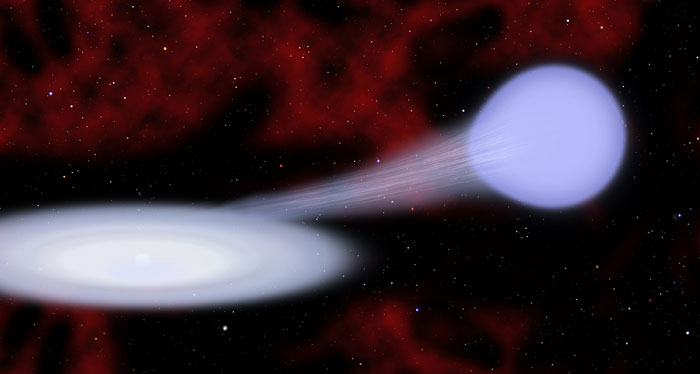
This artist's concept shows the suspected progenitor of a new kind of supernova called type Iax. Material from a hot, blue helium star on the right is funnelling toward a carbon/oxygen white-dwarf star on the left, which is embedded in an accretion disc. (Courtesy: Christine Pulliam, CfA)

A new type of supernova has been defined by researchers from the US. Designated type Iax, this new class is seen to be less energetic and fainter than previously defined and similar type Ia events – and may even leave behind part of its originating star.


Previously, only two classes of supernovae were recognized – core-collapse events, the explosion of stars 10–100 times as massive as our Sun, and type Ia supernovae, which involve the complete destruction of a white dwarf. Now, a team led by Ryan Foley at the Harvard-Smithsonian Center for Astrophysics has identified 25 members of the new type Iax class based on optical spectroscopic and photometric studies. Its work has shown these stars to be less energetic and with a lower absolute magnitude than would be expected with their type Ia cousin. The team believes that the supernovae of this new class originate from a binary star system comprised of a white dwarf that gathers helium from a companion star, which has lost its outer hydrogen.
Read more…

Campbell's Law...

Credit: Heart of the Matter Online

"Campbell's Law: The more any quantitative social indicator is used for social decision-making, the more subject it will be to corruption pressures and the more apt it will be to distort and corrupt the social processes it is intended to monitor."

Atlanta has been a slow-moving train wreck for a while. But it's not just Atlanta. It's the natural and national consequence of trying to run education like a business; the academic equivalent of "thieves [selling] in the temple."

New math

Not that I saw, or participated in a 'standardized testing scandal,' but I recall at my first campus a curve proposed that left me numb...seated at my desk; staring into space in my windowless room. My colleague walked into my room after school:

Him: "You know about the curve."

Me: "Curve? What curve?"

(Goes to my dry erase board): "Take the number of correct answers; divide by the total number of answers, take the square root and multiply by 100...that's the curve." He left.

I walked into the men's rest room. I stared at the toilet, contemplating the efficacy of shoving my finger down my throat. A student interrupted my dark meditations. I went home.

An actual example:


 13/20 x 100 = 81%


Hence, my nausea.

I heard young people exclaiming: "I'm a math beast," and I wanted to shout "no, you're NOT!" I was angry, and ashamed that I felt as though I was in some parallel universe where education didn't mean what it meant four years before my birth: it was literally a matter of national security.

The National Defense Education Act (NDEA), signed into law on September 2, 1958, provided funding to United States education institutions at all levels. It was one of a suite of science initiatives inaugurated by President Eisenhower in 1958, motivated to increase the technological sophistication and power of the US alongside, for instance DARPA and NASA. It followed a growing national sense that U.S. scientists were falling behind scientists in the Soviet Union, catalyzed, arguably, by early Soviet success in the Space Race, notably the launch of the first-ever satellite, Sputnik, the year before.

And, I felt myself - post end of the Cold War, duck-and-cover drills and Mutually Assured Destruction (MAD) - missing the "Ruskies"...
National Education Association
Read more…

Positive Possibilities...


The irony is this post appears on the traditional "April Fool's Day." This however, is not a joke.

The following is a quote I read in the book "Fool Me Twice: Fighting the Assault on Science in America," by Shawn Lawrence Otto. After reading the indictment of Galileo for "proposing the sun was the center of the world [and the earth was not]," this hit me like a thunderbolt:

"...Science is a reliable method for creating knowledge, and thus power...science constantly disrupts hierarchical power structures and vested interests in a long drive [my add: by science] to give knowledge, and thus power, to the individual, and that process is also political."

It would appear School House Rock was correct: knowledge is power. Currently in North Carolina, several university institutions are on the chopping block for possible closure, including my Alma mater, North Carolina A&T State University. I no longer believe in accidents of history.

Part of my admiration for Dr. King and everyone of my instructors at A&T that were a part of the movement in one way or another was they all seemed so smart, so well-informed, innately curious about the world around them, and active participants in it through scholarship and the citizenship act of voting for representative government.

These students are articulate, smart, and positive possibilities that you won't see on the "boob tube" flat screen. Forwarded 24/7 are the glorified images of rappers, athletes, entertainers, etc. that of course, doesn't threaten anyone in positions of power: just quaint little minstrel shows; death by a thousand warped cultural knives. I'd rather see more of this kind of "reality show" than the negativity we all seemed to be programmed to accept as our "normal." Of this long list of reality shows, "Myth Busters" is the only one I bothered to watch.

No mention of NSBE, SHPENSBP, NSHP, or what the acronyms mean (see the links). Urban youth in particular are conditioned almost from birth and circumstance to think math and science are "too hard," yet when I taught high school, I'd hear of, or see the same youth spend hours on a joystick mastering "the next level" on a video game. I witnessed the glorification of "flashing sets," "tagging graffiti" and sagging britches to parallel sagging grades: minstrelsy in the hallway. I recall, in all fairness, a staged walkout of Atkins High School because they wouldn't let us wear shorts - that wasn't important either.

We are all part of a "bewildered herd," prodded by the rod and staff of what our socially acceptable stalls are on the "Animal Farm." What we should be teaching is STEM can be as significant as a pillar of fire by night and smoke by day; it can split a sea of reeds and be the modern underground railroad to emancipation. Instead of mastering levels and cypher, we need to master Calculus and Physics!


It makes education...a revolutionary act.

School Page: Virginia State University

Read more…

Catharsis...


TECHNOLOGY REVIEW: The Doomsday Argument is the idea that we can estimate the total number of humans that will ever exist, given the number that have lived so far. This in turn tells us how likely it is that human civilisation will survive far into the future.

The numbers are not optimistic. Anthropologists think some 70 billion humans have so far lived on Earth. If we assume that we have no special status in human history, then simple probabilistic arguments suggest that there is a 95 per cent chance that we are among the last 95 per cent of humans that will ever be born. And this means there is a 95 per cent chance that the total number of humans that will ever exist will be less than 20 x 70 billion or 1.4 trillion.

These guys look at the scenario in which many civilisations have evolved throughout the universe, the so-called “universal doomsday” argument. “In that case, we should consider ourselves to be randomly chosen from all individuals in that universe or multiverse,” they say.

Now suppose that the world population stabilises at 10 billion and our life expectancy is 80 years, then the remaining humans will be born in the next 10,000 years. That’s not a long future for humanity. Today, Austin Gerig at the University of Oxford and a couple of pals put forward a new argument with a (slightly) happier ending.

These guys look at the scenario in which many civilisations have evolved throughout the universe, the so-called “universal doomsday” argument. “In that case, we should consider ourselves to be randomly chosen from all individuals in that universe or multiverse,” they say.

In the past, these universal arguments have been no more optimistic than the ordinary ones. They generally state that long-lived civilizations must be rare because if they were not, we would be living in one. What’s more, because long-lived civilizations are rare, the prospects for our civilisation ever becoming long-lived are poor.

This new approach approach allows Gerig and co to take a more fine-grained look at the odds that humanity will survive for much longer in future than it has existed in the past.

The results are complex but their main conclusion gives some reason for hope. “If [the number of existential threats] is not too large, the probability of long-term survival is about a few percent,” they say.


It's comforting to muse that we can actually know the future, and the likelihood of a predicted outcome. We guffaw when the weather anchor "gets it wrong," and somehow think that global warming means if the entire planet isn't becoming the Sahara Desert (and it snows somewhere), there's nothing to it. In the need for accuracy and truth, science revises itself through a rigorous process of peer review, and adherence to The Scientific Method. Modeling and probability always have a margin for error, so in reading the link, think of that.

One of the ways to "increase our odds" is addressing "existential threats" (meteors, nuclear war, pandemics, poverty), and becoming a space faring species. On "a few percent": Growing up under the "duck and cover" drills of the 60s during the Cold War (during which I never thought we had a snowball's chance), I'll TAKE that!

My Pascha post...

Physics arXiv: Universal Doomsday: Analyzing Our Prospects for Survival

Read more…

Diagnosing Fusion Plasma...

(Photo Credit: Graphic by Sam Lazerson)
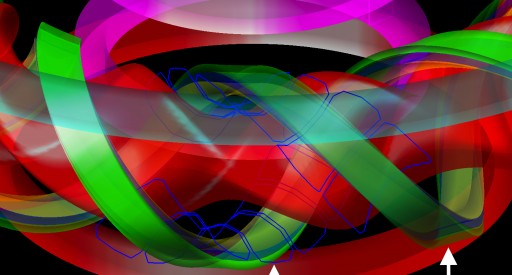
A simulated plasma in the Large Helical Device showing the thin blue saddle coils that researchers used to make diagnostic measurements with the new computer code

Scientists at the U.S. Department of Energy’s Princeton Plasma Physics Laboratory (PPPL) and the National Institute for Fusion Science (NIFS) in Japan have developed a rapid method for meeting a key challenge for fusion science. The challenge has been to simulate the diagnostic measurement of plasmas produced by twisting, or 3D, magnetic fields in fusion facilities. While such fields characterize facilities called stellarators, otherwise symmetric, or 2D, facilities such as tokamaks also can benefit from 3D fields.

Researchers led by PPPL physicist Sam Lazerson have now created a computer code that simulates the required diagnostics, and have validated the code on the Large Helical Device stellarator in Japan. Called “Diagno v2.0,” the new program utilizes information from previous codes that simulate 3D plasmas without the diagnostic measurements. The addition of this new capability could, with further refinement, enable physicists to predict the outcome of 3D plasma experiments with a high degree of accuracy.

The researchers employed a mathematical technique called “virtual casing” to develop the new code for 3D fusion plasmas that are in equilibrium. Such plasmas are held steady by the balance between the inward pressure of the magnetic fields that confine them and the outward pressure exerted by the plasma. Virtual casing enabled the researchers to efficiently calculate magnetic diagnostic signals given a simulated plasma. This was achieved by recognizing that the magnetic field at the edge of the simulated plasma was all that was necessary to calculate the magnetic diagnostic signals.

PPPL:
A fast new method for measuring hard-to-diagnose 3D plasmas in fusion facilities

Read more…

Swiss Army Metamaterial...

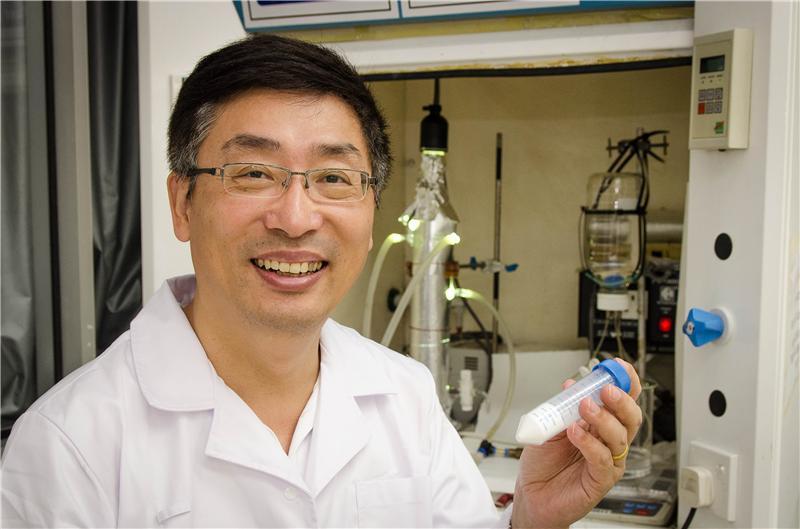
Assoc Prof Darren Sun holding the patented Titanium dioxide nanofibre in a test tube and the hydrogen reactor in the background. (Credit: Image courtesy of Nanyang Technological University)

Science fiction? Hardly, and there's more -- It can also desalinate water, be used as flexible water filtration membranes, help recover energy from desalination waste brine, be made into flexible solar cells and can also double the lifespan of lithium ion batteries. With its superior bacteria-killing capabilities, it can also be used to develop a new type of antibacterial bandage.


Scientists at Nanyang Technological University (NTU) in Singapore, led by Associate Professor Darren Sun have succeeded in developing a single, revolutionary nanomaterial that can do all the above and at very low cost compared to existing technology.


This breakthrough which has taken Prof Sun five years to develop is dubbed the Multi-use Titanium Dioxide (TiO2). It is formed by turning titanium dioxide crystals into patented nanofibres, which can then be easily fabricated into patented flexible filter membranes which include a combination of carbon, copper, zinc or tin, depending on the specific end product needed.


Science Daily:
Multi-Purpose Wonder Can Generate Hydrogen, Produce Clean Water and Even Provide Energy

Read more…

Yin and Yang...


Yin and yang are actually complementary, not opposing, forces, interacting to form a whole greater than either separate part; in effect, a dynamic system. Everything has both yin and yang aspects, (for instance shadow cannot exist without light). Either of the two major aspects may manifest more strongly in a particular object, depending on the criterion of the observation. The concept of yin and yang is often symbolized by various forms of the Taijitu symbol, for which it is probably best known in Western cultures. (Wikipedia)

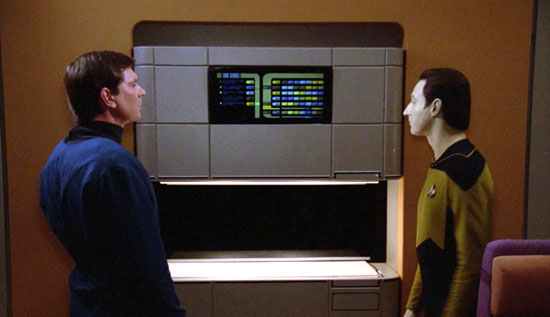
Star Trek Blog: Star Trek’s replicator is an amazing technology concept that has fascinated us for decades. Working at the molecular level to synthesize materials, the replicator is able to instantly produce nearly any object, food or medicine on demand. It is easy to imagine how the replicator would quickly change the world. Such a device could dramatically reduce or even eliminate the cost of most products. Hunger and poverty would be stamped out worldwide, and much of the time and energy spent working for a living could be used instead for pursuits of education, exploration and the advancement of society.

Star Trek envisions the future of humanity to be one of incredible achievements made possible by evolved philosophies as well as technologies. This hopeful view of tomorrow is perhaps the reason so many have dreamed of inventing real-life versions of Star Trek tech -- from the transporter to the tricorder -- and the replicator is one of the most coveted.

A process called “additive manufacturing,” or its more popular nickname, “3D Printing,” has captured the imagination of the tech industry. These machines work much like the two-dimensional printer you may have on your desk, but instead of printing a layer of ink, a 3D printer extrudes many layers of melted plastic to form a physical object. You can imagine this as similar to a hot glue gun, where the heated glue stick is carefully extruded from a nozzle. In the case of a 3D printer, that nozzle is controlled by software and digital design files that tells it how to form a shape.

The comparisons between 3D Printing and the Star Trek replicator don’t end with plastic. Other materials like wood, metal and even some foods are now being extruded in similar ways to make on-demand creations. This has led to excited speculation that soon we may see the beginnings of a new era of manufacturing in America and around the world, where small-scale production is possible at very low costs. We may even “print” biotechnologies and human organs one day.

Gene Roddenberry's underlying message of the future: eternal optimism. As much as I am a fan, I'm afraid I possess a healthy dose of skepticism. Even the Star Trek Memory Alpha Wiki mentions some rough roads prior to 1st Contact with Vulcan. I sincerely hope "life does [not] imitate art" in this case (the "rough road" part; 1st Contact would be OK).

The last five mass extinction events were completely involuntary; unassisted since we hadn't showed up just yet. I end below the embed with two quotes from Einstein:

“I don't know what weapons will be used in world war three, but in world war four people will use sticks and stones.”

"We cannot dispair of humanity, since we ourselves are human beings."

Read more…

Six-Legged Lizards...


Researchers can learn a lot from a lizard scampering across the hot desert sand or an insect crawling atop a pile of plant litter. Chen Li and colleagues from the Georgia Institute of Technology in Atlanta took cues from such creatures and designed a robot that uses six legs to traverse a bed of dry, loose grains.


The robotic design isn't as effective as a lizard's but it can move through sand at a reasonable pace without getting stuck, and it may help to boost the performance of roving and walking robots, such as the Mars rovers, the researchers said. They noted that previous studies of objects moving through air and water have led to improvements of industrial products such as aircraft wings and underwater robots.


"There's only going to be an increasing number of robots running around our planet and others," said Daniel Goldman, a co-author of the report that appears in the 22 March issue of Science. "We'd like to identify principles that allow devices to move effectively under diverse conditions."

Science: New, Off-Road Robot Inspired by Nature

Read more…

Cuprates...

Philip Phillips, a professor of physics and of chemistry at Illinois, and colleagues found that something other than electrons carries the current in copper-containing superconductors known as cuprates.

CHAMPAIGN, Ill. — To engineers, it’s a tale as old as time: Electrical current is carried through materials by flowing electrons. But physicists at the University of Illinois and the University of Pennsylvania found that for copper-containing superconductors, known as cuprates, electrons are not enough to carry the current.


“The story of electrical conduction in metals is told entirely in terms of electrons. The cuprates show that there is something completely new to be understood beyond what electrons are doing,” said Philip Phillips, a professor of physics and of chemistry at the U. of I.


In physics, Luttinger’s theorem states that the number of electrons in a material is the same as the number of electrons in all of its atoms added together. Electrons are the sub-atomic particles that carry the current in a conductive material. Much-studied conducting materials, such as metals and semiconductors, hold true to the theorem.


Phillips’ group works on the theory behind high-temperature superconductors. In superconductors, current flows freely without resistance. Cuprate superconductors have puzzled physicists with their superconducting ability since their discovery in 1987.


The researchers developed a model outlining the breakdown of Luttinger’s theorem that is applicable to cuprate superconductors, since the hypotheses that the theorem is built on are violated at certain energies in these materials. The group tested it and indeed found discrepancies between the measured charge and the number of mobile electrons in cuprate superconductors, defying Luttinger.

News Bureau, Illinois:
Electrons are not enough: Cuprate superconductors defy convention

Read more…

Planck's Four Surprises...


Lopsided universe: Planck’s new skymap shows that one half of the microwave background is brighter than the other, and the universe has a large cold spot. Credit: ESA and the Planck Collaboration

By now you've probably heard about the amazing new cosmic snapshot from the European Space Agency’s Planck spacecraft. It is one of those scientific achievements so mind-boggling that you have to spend a bit of time with it to truly appreciate what you are seeing. This is relic radiation from when the universe was 370,000 years old, still all aglow from the Big Bang. The radiation has been traveling 13.8 billion years since then, across ever-expanding stretches of space, before landing in Planck’s detectors. Then it took a tremendous feat of imagination and insight to translate that noisy signal into a comprehensible map of what the universe looked like in its infancy.


So let’s step back for a moment, look at how this image came to be, and consider some of the more surprising details hidden within it. [Headers lead into the topics]


The map started out as static.

Human brains cannot make sense of all the data from Planck.

The universe is darker, lighter, slower, and older than we thought.

The universe is lopsided.

Discovery: Four Surprises in Planck's New Map of the Cosmos

Read more…

Chicxulub Snowball...

...the prevailing theory:


Current theory:


The rocky object that wiped out the dinosaurs 65 million years ago may have been a comet, rather than an asteroid, scientists say.


The 112-mile (180 kilometers) Chicxulub crater in Mexico was made by the impact that caused the extinction of dinosaurs and about 70 percent of all species on Earth, many scientists believe. A new study suggests the crater was probably blasted out by a faster, smaller object than previously thought, according to research presented this week at the 44th Lunar and Planetary Science Conference in The Woodlands, Texas.


Evidence of the space rock's impact comes from a worldwide layer of sediments containing high levels of the element iridium, dubbed the Cretaceous-Paleogene (K-Pg) boundary, which could not have occurred on Earth naturally.


The new research suggests the often-cited iridium values are incorrect, however. The scientists compared these values with levels of osmium, another element delivered by the impact.


Their calculations suggested the space rock generated less debris than previously thought, implying the space rock was a smaller object. In order for the smaller rock to have created the giant Chicxulub crater, it had to have been going exceedingly fast, the researchers concluded.


Huffington Science: New Study Suggests Comet Instead Caused Extinction Event

Read more…

Einstein, Entropy and Information...


...as explained by one of the smartest physicists I know!

James Clerk Maxwell formulated the equations that describe electricity and magnetism. He was Einstein's hero! Both are the reason why we're in the age of laptops and I-phones.

Physics Colloquium, University of Texas Physics Department. Mark has a process that's a little more efficient than Steven Chu's (yes, THAT Steven Chu). It's worth your time to watch this presentation, and seek out colloquium wherever you are. Science is open and a social endeavor.

Something I used to enjoy in Texas, that I admittedly miss...
Read more…

Surely Not Joking...

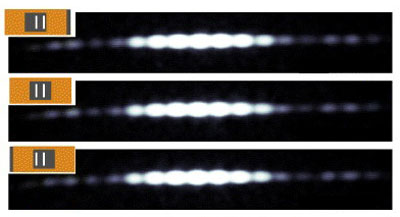
Electrons traveling through two slits and a single slit

Physicists in the US and Canada say that they have done the best job yet of realizing Richard Feynman's famous thought experiment about how single electrons pass through two slits. Although the researchers are not the first to recreate the experiment in the lab, they say that their incarnation best captures the essence of the original exercise.


Feynman originally outlined his thought experiment in volume three of his famous series The Feynman Lectures on Physics as a way of illustrating wave–particle duality in quantum mechanics. In the book, he invites the reader to imagine firing individual electrons through two slits and then marking the position where each electron strikes a screen behind the slits.


After many electrons have passed through the slits, the marks on the screen will comprise a diffraction pattern – illustrating the wave-like behaviour of each electron. But if one were to cover up one of the slits so that each electron could only pass through the other slit, the diffraction pattern would not appear – showing that each electron does indeed travel through both slits.


Physics World: Feynman's double-slit experiment gets a makeover
Feynman Physics Lectures: Site Link and You Tube Channel

Read more…

And Statistics...


"Figures often beguile me, particularly when I have the arranging of them myself; in which case the remark attributed to [19th-century British Prime Minister Benjamin] Disraeli would often apply with justice and force: 'There are three kinds of lies: lies, damned lies, and statistics.'"


Samuel Clemmons/Mark Twain, "Chapters from My Autobiography"

...Our analysis finds that the QGRE correlates with only one metric, the graduate GPA (but it is such a weak correlation the scientist in me rebels when fitting it to a line). That said, we find undergraduate GPA to be a better predictor of graduate GPA. We also find that undergraduate GPA is correlated with all three sections of the General GRE.


So why use the GRE at all? One certain answer: national rankings. Consider US News, whose rankings of graduate programs are widely influential among both prospective graduate students and administrators....


Justifying using the GRE becomes significantly more complicated, however, when the test results are dissected by race and gender. The figure plots QGRE scores by race/ethnicity and gender for US citizens whose intended graduate major was "physical sciences". The top and bottom of the lines are the 75th and 25th percentiles of the score distributions, respectively; the tick is the mean. This pattern is qualitatively unchanged when controlling for undergraduate GPA. Note the implications for diversity of using 700 as a minimum acceptable score: nearly three quarters of Hispanics would be rejected, and significantly more than this for American Indians, African Americans, and Puerto Ricans; similarly, women are filtered out at a higher rate than men. Mixing cut-off scores with these racial and gender disparities sets the foundation of a glass ceiling erected by the lopsided treatment of minorities and women before they even set foot in grad school.


The Asian > White > Hispanic > Black pattern permeates standardized testing: it is the same for the SAT, and is reflected in the recent race-based levels set by Florida and Virginia for grade schoolers' performance on state-wide standardized tests.


To be fair: there's more data and insight at the link below. The statistics (I feel), is a measure of where we've allowed ourselves as a society to get "comfortable." I have mused on this at length in the posts: "A Matter of Marketing" and "Dark Matters." Einstein is the source of the following quotes:


1. "It seems to be a universal fact that minorities--especially when the individuals composing them can be recognized by physical characteristics--are treated by the majorities among whom they live as an inferior order of beings. The tragedy of such a fate lies not merely in the unfair treatment to which these minorities are automatically subjected in social and economic matters, but also in the fact that under the suggestive influence of the majority most of the victims themselves succumb to the same prejudice and regard their kind as inferior beings. This second and greater part of the evil can be overcome by closer association and by the deliberate education of the minority, whose spiritual liberation can thus be accomplished.

"The resolute efforts of the American Negro in this direction deserve approval and assistance."

Mein Weltbild, Amsterdam: Querido Verilog, 1934, pp 117-118.


2. "Insanity: doing the same thing over and over again and expecting different results."


Bear with me...


APS Back Page: Admissions Criteria and Diversity in Graduate School, Casey W. Miller

Read more…

Phaser Effect...


The theoretical foundations for the laser were established in 1917, when Einstein formulated the quantum theory of radiation, describing the absorption, spontaneous emission, and stimulated emission of electromagnetic radiation. Its realization stayed hidden for decades, however, before it emerged in the form of masers and lasers, which emit microwave and visible radiation, respectively. The range of emitted frequencies was soon broadened to cover wavelengths from the infrared to the x-ray range, and lasing was extrapolated beyond the realm of optics. Free-electron lasers, in which the active medium is a relativistic electron beam, helped cover extreme wavelength ranges and are now the basis for a new generation of experimental facilities for x-ray experiments. Atom lasers—emitting matter waves instead of photons—have also been demonstrated. Recently, the laser idea was extended to sound waves, leading to the conceptualization of the acoustic analog of a laser, which emits phonons (lattice vibrations) instead of photons. Now, writing in Physical Review Letters, Imran Mahboob at the NTT Basic Research Laboratories, Japan, and colleagues report on the experimental demonstration of a purely mechanical counterpart of a three-level laser scheme [1]. The device, excited by acoustic vibrations, amplifies sound waves through stimulated emission of phonons and acts as a phonon laser: a spectrally pure source of phonons with a frequency of around 1.7 megahertz (MHz).


What is the appeal of phonon lasers? One potential advantage is that their emission has smaller wavelength than that of photon lasers at the same frequency because the sound speed is much smaller than the speed of light. This could help improve the resolution of tomographic, ultrasound, and other imaging techniques. In analogy with their optical cousins, phonon lasers might deliver directional and coherent acoustic beams, which could be coupled to nanoscale mechanical engines or used in communication networks based on acoustic waves. But as the history of optical lasers suggests, most applications of future phonon lasers may be completely unexpected.

The Trekkie in me notes: from the phonon pump, the upper-to-intermediate level transition is called "Phaser Emission." Wonder if there's a stun setting?

American Physical Society: Lasers of Pure Sound

Read more…

Kawazulite...

Kawazulite is a natural “topological insulator"

In a step toward understanding and exploiting an exotic form of matter that has been sparking excitement for potential applications in a new genre of supercomputers, scientists are reporting the first identification of a naturally occurring “topological insulator” (TI). Their report on discovery of the material, retrieved from an abandoned gold mine in the Czech Republic, appears in the ACS journal Nano Letters.


Pascal Gehring and colleagues point out that synthetic TIs, discovered only a decade ago, are regarded as a new horizon in materials science. Unlike conventional electrical insulators, which do not conduct electricity, TIs have the unique property of conducting electricity on their surface, while acting as an insulator inside. Although seemingly simple, this type of surface could allow manipulation of the spin of an electron, paving the way for development of a quantum computer. Such a computer would crunch data much faster than today’s best supercomputers.


American Chemical Society: First discovery of a natural topological insulator

Read more…

The Physics of Maple Syrup...

..."just when you thought it was safe to go into the IHOP"...Smiley

2D cross section through a fiber-vessel pair showing the water, ice and gas regions, the moving interfaces as well as the 1D region corresponding to simplified model geometry. Figure credit: Maurizio Ceseri and John Stockie

Philadelphia, PA—For many of us, maple syrup is an essential part of breakfast—a staple accompaniment to pancakes and waffles—but rarely do we think about the complicated and little-understood physiological aspects of syrup production. Each spring, maple growers in temperate regions around the world collect sap from sugar maple trees, which is one of the first steps in producing this delicious condiment.


However, the mechanisms behind sap exudation—processes that trigger pressure differences causing sap to flow— in maple trees are a topic of much debate. In a paper published today in the SIAM Journal on Applied Mathematics, authors Maurizio Ceseri and John Stockie shed light on this subject by proposing a mathematical model for the essential physiological processes that drive sap flow.


Sugars are produced in the leaves of the maple tree by photosynthesis with the help of absorbed water, carbon dioxide, and sunlight, and are consumed for current growth, or stored as starch. In the cold, dormant season, some of the starch enters the sap, where it remains mostly frozen until the spring. In the period between this dormant state and the active growing season (during cold nights with below-freezing temperatures followed by mild, warm days with above-freezing conditions), the stored starch is converted into sugar and the sap pressure grows, allowing it to exude naturally from the tap hole when tapped.

Society for Industrial and Applied Mathematics: Pancakes with a side of math

Read more…

Do Good...

John Green, meme from Facebook

Warnie C. Hay, D.D. was my pastor in Winston-Salem, NC.

He was  a huge mountain of a man. No matter how tall I got, he never seemed small (or short to me). I heard prior to his then current life, he'd been a truck driver and could "drink a fifth of liquor straight." [My father was the source of that quote.]

He, like a lot of leaders that actually shepherded their flocks, was keenly interested in my education, since as recently as the 60s, he and a lot of other pastors in the vein of Dr. King fought for our access to it, and our equal treatment regarding it.

"How are you doing in school, son?" We were all either "son" or "daughter" to him.

"Well...I'm studying evolution in biology with Mrs. Brake."

"OK, son. Do good!"

[...] That was it. I told him my grade on the exam later: B+. He smiled.


He was also pleased at my interest in amateur astronomy. He didn't lecture me when a mishap chemistry experiment resulted in a spectacular explosion in my room (don't worry: my parents did!). The only reservation he communicated was after the Challenger Disaster (I was in the Air Force, home on a visit): he preferred I not become an astronaut, though I never promised him I wouldn't.


I miss that simple encouragement, and the divorce from what is now political implications and spiritual litmus tests that have frozen critical thinking into ice age glaciers. There was no falsified "debate" on evolution vs. creationism; 6,000 years estimates from the Gregorian calendar vs. 14.6 billion years as estimated by measured light reaching us from the farthest stars. Science unimpeded by such machinations brings benefits to society like finding cures for diseases and advancing technologies that supply water, food, clean air, but I'd be the first to say an astronomer et al could not lead a "March on Washington." Different skill sets are required for such an endeavor.


Dr. Hay had contacts with congressional leaders. He could have gotten me an appointment at one of the service academies. I declined, and stated I wanted to go to college close to home. He respected my wishes, and I did that. He invited me to bring some of my classmates and discuss majoring in engineering and science at his "Super Saturday" career day, which he did every year...at church. Yet, I don't ever recall his ever needing to 'correct my thinking,' challenge what I'd learned...or that he seemed threatened at all by my interest in science as some seem to be today. Galileo and Copernicus would have appreciated him, and our youth less confused by this boondoggle.

Note this excerpt:


"Science has been responsible for roughly half of all US economic growth since World War II, and it lies at the core of most major unsolved policy challenges.


"In an age when most major public policy challenges revolve around science, less than 2 percent of congresspersons have professional backgrounds in it. The membership of the 112th Congress, which ran from January 2011 to January 2013, included one physicist, one chemist, six engineers, and one microbiologist.


"In contrast, how many representatives and senators do you suppose have law degrees - and whom many suspect avoided college science classes like the plague? Two hundred twenty-two. It's little wonder we have more rhetoric than fact in our national policy making..."


Shawn Lawrence Otto, Fool Me Twice: Fighting the Assault of Science in America, Rodale Books, October, 2011.

He passed two months before my own father in the same year, 1999. It was a pretty sad summer for me, to say the least. Neither man quite made it to the next century, born and expired in the 20th. They are buried, as now is my mother (2009), in Piedmont Memorial Gardens. These were people who worked hard, got passed over unfairly for promotions, experienced their own "sequester" in the form of where we all could live: care of Jim Crow. Knowledge was precious and appreciated, as my father used to say to me (numerous times): "once you get it in your head, no one can take that from you." My mother would tell me: "you can do anything you want to, once you put your mind to it, and trust God: you can do it!" I miss my cheering Valkyrie.

I miss this generation, and their encouragement to improve and advance, appreciative of the sacrifices of past giants, without guile, obfuscations, machinations or agenda, encouraged to simply:

"Do good."
Read more…

Higgs Confirmed!...


A newfound particle discovered at the world's largest atom smasher last year is, indeed, the Higgs boson, the particle thought to give other matter its mass, scientists reported today (March 14) at the annual Rencontres de Moriond conference in Italy.


Physicists announced on July 4, 2012, that, with more than 99 percent certainty, they had found a new elementary particle weighing about 126 times the mass of the proton that was likely the long-sought Higgs boson. The Higgs is sometimes referred to as the "God particle," to the chagrin of many scientists, who prefer its official name.


But the two experiments, CMS and ATLAS, hadn't collected enough data to say the particle was, for sure, the Higgs boson, the last undiscovered piece of the puzzle predicted by the Standard Model, the reigning theory of particle physics.


Now, after collecting two and a half times more data inside the Large Hadron Collider (LHC) — where protons zip at near light-speed around the 17-mile-long (27 kilometer) underground ring beneath Switzerland and France — physicists say the particle is the Higgs. [In Photos: Searching for the Higgs Boson]


"The preliminary results with the full 2012 data set are magnificent and to me it is clear that we are dealing with a Higgs boson though we still have a long way to go to know what kind of Higgs boson it is," said CMS spokesperson Joe Incandela in a statement.


Space.com: Confirmed! Newfound Particle Is the Higgs

Read more…

Fermi Bubbles, Dark Matter...


In 2011, an analysis of data from a NASA Fermi Gamma-Ray Space Telescope turned up massive, previously unseen galactic structures. A group of astrophysicists located two massive bubbles of plasma, now know as "Fermi Bubbles," each extending tens of thousands of light-years, emitting high-energy radiation above and below the plane of the galaxy. The structure spans more than half of the visible sky, from the constellation Virgo to the constellation Grus, and it may be millions of years old.


Now, more recently, in 2013, astrophysicists Dan Hooper of Fermi National Accelerator Laboratory and Tracy Slatyer at Princeton University, have published a study suggesting that a massive outflow of charged particles from Fermi bubbles, as they are known, outflows of charged particles (gamma rays) traveling at nearly a third the speed of light from the center of the Milky Way galaxy, may be partly due to collisions between dark matter particles that result in their annihilation, and the subsequent creation of the building blocks of visible matter—charged particles that appear as two lobes or "bubbles," above and below the center of the Milky Way Galaxy.


Another possibility includes a particle jet from the supermassive black hole at the galactic center.


Daily Galaxy: Colossal Bubbles at Milky Way's Plane --"May Be the Annihilation of Dark Matter"

Read more…