Consider Legos over the latest game system and/or game. Which will get your child into college with critical thinking skills?
Reginald L. Goodwin's Posts (3130)
Sort by
 |
| Themis Goddess of Justice - bronze sculpture, Goddess of Justice, Law and Equity - RoyalDecorations.fr |
Justice
That Justice is a blind goddess
Is a thing to which we black are wise:
Her bandage hides two festering sores
That once perhaps were eyes.
Langston Hughes
I was saddened that names I respect as credible authorities - Dr. Sanjay Gupta of CNN and PBS News Hour could so botch reporting on cancer cures and climate change. I recall seeing the "possible cure for cancer" on CNN, which put me in a rather melancholy mood: my father died of lung cancer in 1999; my mother had been a smoker and at one time and a breast cancer survivor. She passed in 2009.
There is a false balance, or as I refer to "blind balance" in the news we digest from so many different sources: television, talk radio, the Internet; You Tube. Anyone with a laptop can post a video questioning the history of the moon landing, and get a following whether they were physically on the planet to witness the event or not. Without judge, panel or jury, "everything on the Internet must be true" including cancer cures, climate change deniers, teaching the controversy on evolution and the earth only being around six millennia old. Meanwhile, back at the ranch of global competition, countries that score higher than us in STEM obviously don't consider such delusional machinations.
This is me typing: You can choose to believe it our not, as this particular post is only my humble opinion. However, when I see someones research I find interesting, I post excerpts of the article or abstract in italics differentiating the originator from my commentary (if any). I only post if I have the originator's permission, avoid it if some written instruction prohibits it. Usually at the end of the post, I provide a link to further review if the blog reader's interested. I give credit and links to photos and their origins.
"Fair and Balanced" is in the lexicon, yet we can blithely ignore statistics (or facts) we don't like; science that may put in question our worldviews creating our own realities in the process.
The Internet has made that consumption instantaneous, thus the Fourth Estate is reduced to tabloid journalism, embedded reporters and ratings wars. Facebook and Twitter feeds are scrolled during presented news; in many cases that is the news! The immediate gratification of seeing one's "handle" on the flat screen is probably a rush for some, however Letters to the Editor have to stay within a certain word count, have a subject, make your point to an editorial board. When the National Enquire can break John Edward's affair with Reille Hunter before any legitimate news outlet, we know we've gone past the Rubicon.
I hang my head sadly that the word "shoddy" should become associated with any media coverage on science.
Columbia Journalism Review: Shoddy TV science coverage
 |
| Credit: Physics World - Gold Nanoantennas |
Physicists in Germany have used evolutionary algorithms to help them pinpoint the best geometry for a nanoantenna. As well as zeroing in on the optimal design out of more than 10132alternatives, the technique has provided unexpected new insights into the complex optical properties of nanostructures.
Nanoantennas convert light to electrical power and vice-versa, and are essential in the design of tiny electro-optical devices. They have diverse potential applications in just about anything based on light–matter interaction, including optical sensing and signalling, microscopy, solar-power conversion and quantum cryptography.
Inspired by natural selection, evolutionary optimization algorithms work towards an ideal design rather than evaluating the performance of all possible designs. For the problem tackled by Feichtner's team, the latter would be impossible because more than 10132 antenna designs would need to be evaluated using a process that takes 20 minutes per structure. The team's goal was to find a geometry that would enhance the near-field intensity of an illuminating beam of light as much as possible, so they chose this as the "fitness parameter" that they would judge each design against. Just as in nature, the fittest patterns got the chance to pass on their characteristics to the next generation, while the weaker specimens were discarded. The highest-performing five from each batch were used to build a new generation of 20 structures via crossing techniques and mutations. The new structures were in turn pitted against one another, so the overall fitness of the designs improved generation by generation – over 100 generations – until the near-field intensity enhancement registered almost twice that of the reference antenna.
Physics World: Survival of the fittest nanoantenna
World Science Festival: Stories have existed in many forms—cave paintings, parables, poems, tall tales, myths—throughout history and across almost all human cultures. But is storytelling essential to survival? Join a spirited discussion seeking to explain the uniquely human gift of narrative—from how neurons alight when we hear a tale, to the role of storytelling in cognitive development, to the art of storytelling itself, which informs a greater understanding of who we are as a species.
 |
| Missouri S&T researchers' modeling of stacked nanoscale slot waveguides made of metamaterials shows an optical force 100 to 1,000 times greater than conventional slot waveguides made from silicon. |
In a study that could lead to advances in the emerging fields of optical computing and nanomaterials, researchers at Missouri University of Science and Technology report that a new class of nanoscale slot waveguides pack 100 to 1,000 times more transverse optical force than conventional silicon slot waveguides.
The findings could lead to advances in developing optical computers, sensors or lasers, say researchers Dr. Jie Gao and Dr. Xiaodong Yang, both assistant professors of mechanical engineering at Missouri S&T.
R & D: Researchers demonstrate "giant" forces in super-strong nanomaterials
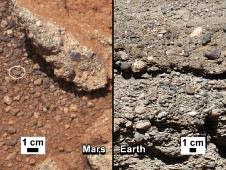 |
| This set of images compares the Link outcrop of rocks on Mars (left) with similar rocks seen on Earth (right). Image credit: NASA/JPL-Caltech/MSSS and PSI |
PASADENA, Calif. -- NASA's Curiosity rover mission has found evidence a stream once ran vigorously across the area on Mars where the rover is driving. There is earlier evidence for the presence of water on Mars, but this evidence -- images of rocks containing ancient streambed gravels -- is the first of its kind.
Scientists are studying the images of stones cemented into a layer of conglomerate rock. The sizes and shapes of stones offer clues to the speed and distance of a long-ago stream's flow.
"From the size of gravels it carried, we can interpret the water was moving about 3 feet per second, with a depth somewhere between ankle and hip deep," said Curiosity science co-investigator William Dietrich of the University of California, Berkeley. "Plenty of papers have been written about channels on Mars with many different hypotheses about the flows in them. This is the first time we're actually seeing water-transported gravel on Mars. This is a transition from speculation about the size of streambed material to direct observation of it."
* * * * *
“Nothing in the world is more flexible and yielding than water. Yet when it attacks the firm and the strong, none can withstand it, because they have no way to change it. So the flexible overcome the adamant, the yielding overcome the forceful. Everyone knows this, but no one can do it.”
Lao Tzu, Tao Te Ching
Mars Science Laboratory: NASA Rover Finds Old Streambed on Martian Surface
Related site: The Planetary Society
Star Trek TNG debuted on network television the week of 28 September 1987
Technology Review:As the Voyager 1 spacecraft was about to leave the Solar System in 1990, the American astronomer Carl Sagan asked that spacecraft's cameras be turned towards its home planet some 3 billion kilometres away.
The resulting photograph is called the Pale Blue Dot and shows Earth as a tiny bluish-white speck against the vast emptiness of space. Sagan later used this phrase for the title of a book about his vision of humanity's future in space.
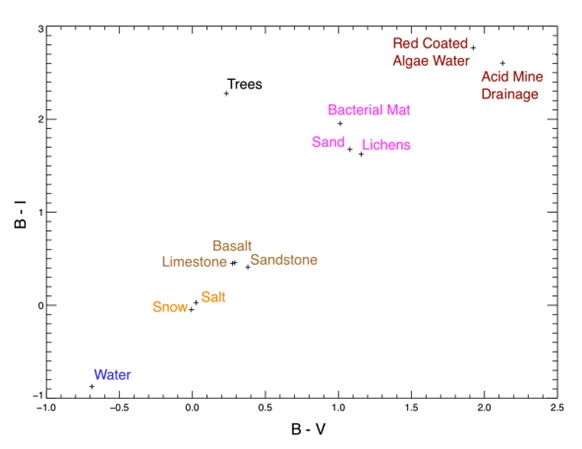
Given Earth's distinctive colour, an interesting question is what colour an alien Earth orbiting another star might be. Today, we get an answer of sorts from Siddharth Hegde at the Max Planck Institute for Astronomy in Germany and Lisa Kaltenegger at the Harvard-Smithsonian Center for Astrophysics in Cambridge, Massachusetts.
Physics arXiv: Colors of extreme exoEarth environments
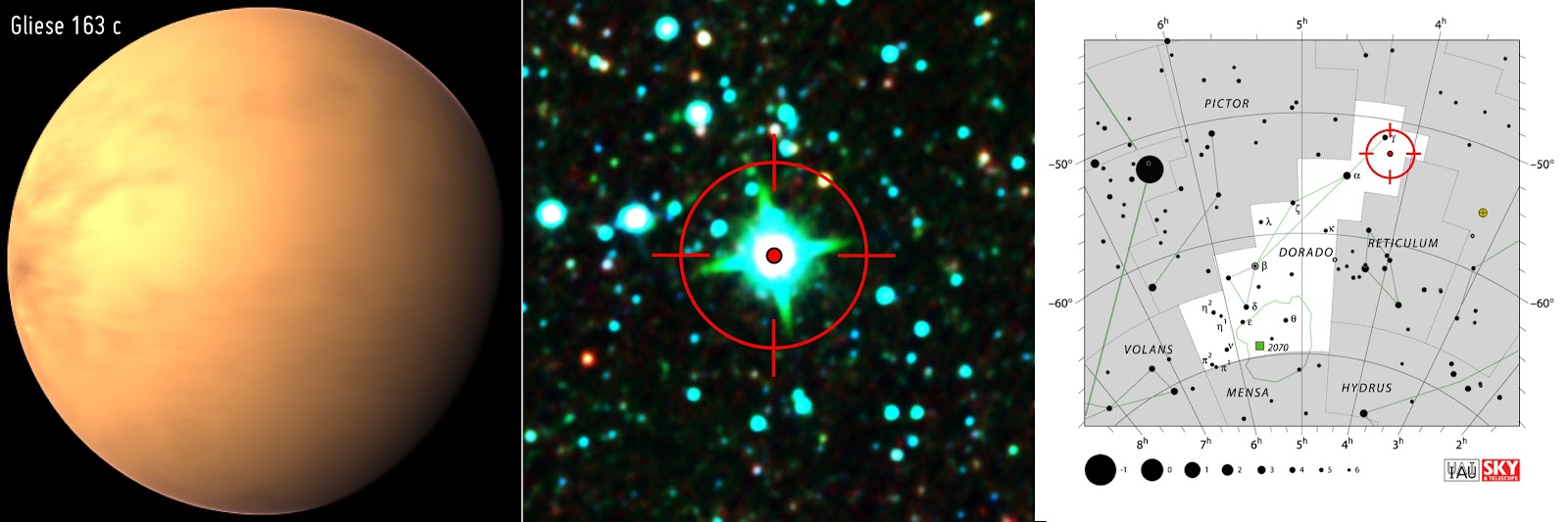 |
| Artistic representation of Gliese 163c as a rock-water world covered with a dense cloud layer (left). It looks reddish, instead of white, due to the reflected light from its red dwarf parent star. Actual false-color image of the Gliese 163 star taken by NASA's WISE Mission (center). Map with the location of Gliese 163 in the constellation Dorado (right). CREDIT: PHL @ UPR Arecibo, NASA/IPAC IRSA, IAU, Sky & Telescope. |
A new superterran exoplanet (aka Super-Earth) was found in the stellar habitable zone of the red dwarf star Gliese 163 by the European HARPS team. The planet, Gliese 163c, has a minimum mass of 6.9 Earth masses and takes nearly 26 days to orbit its star. Superterrans are those exoplanets between two and ten Earth masses, which are more likely composed of rock and water. Gliese 163 is a nearby red dwarf star 50 light years away in the Dorado constellation. Another larger planet, Gliese 163b, was also found to orbit the star much closer with a nine days period. An additional third, but unconfirmed planet, might be orbiting the star much farther away.

Some humble suggestions:
- Pay teachers a competitive entry wage like other professions: treat them as professionals.
- Set a national standard. In a global economy, it's not communist/evil/fascist/globalist/socialist: it's evidence of intelligence, otherwise, we expect our youth = future workers to start a sprint with leg irons tied to their ankles.
- Use standardized test scores (with a national target, not 50 yardsticks) to measure where students are, not a "Sword of Damocles" that makes them think only on passing exams and merely graduating, not understanding subject matter.
- Allow teachers to work internships at factories, businesses, laboratories over the summer. It will inform their instruction with "real-world" examples to draw from.
- Partner with local technology businesses, law firms, non-profits for mentors that will visit and co-teach periodically throughout the school year, once or twice a semester. Some sources: National Association of Black Accountants, National Association of Hispanic Journalist, National Society of Black Engineers, National Society of Black Physicists, National Society of Hispanic Physicists, Society of Hispanic and Professional Engineers, Society of Women Engineers et al. This is just a short list.
"The common good" simply means "the good of the community." It is the difference between E pluribus unum being a quaint Latin phrase, or United States... as oxymoron.
The alternate domination of one faction over another, sharpened by the spirit of revenge, natural to party dissension, which in different ages and countries has perpetrated the most horrid enormities, is itself a frightful despotism. But this leads at length to a more formal and permanent despotism. The disorders and miseries which result gradually incline the minds of men to seek security and repose in the absolute power of an individual; and sooner or later the chief of some prevailing faction, more able or more fortunate than his competitors, turns this disposition to the purposes of his own elevation, on the ruins of public liberty. George Washington, 1796 farewell address
Newsweek columnist Robert J. Samuelson recently wrote: "We face a choice between a society where people accept modest sacrifices for a common good or a more contentious society where groups selfishly protect their own benefits."
Ironically: This is post number 911.
MSNBC: Education Nation
A pleasant recollection birthed serindipitously from yesterday's posting: I visited the Basilica of Santa Croce in 2000, well before 9-11, a trip my wife won to Italy - Rome and Florence - for her sales at Dell.
I recall it was somber, silent except for the tourists - of which we were two - the snapping of photos and the films that invariably ended up on You Tube in one form or another.
Wikipedia: It is the burial place of some of the most illustrious Italians, such as Michelangelo, Galileo, Machiavelli, Foscolo, Gentile and Rossini,...
 |
| Florence, Italy |
It was humbling thinking I'd studied many of the concepts and theories of Marconi, Fermi; especially to stand before the tomb of Galileo, the father of modern scientific inquiry. The irony of the discovery that Copernican theory was more valid and contradicted (then) Aristotle and Church doctrine on geocentricity. He was labeled a heretic, sentenced to house arrest, had to "renounce" his theories, and died pretty much a pauper. Now the heretic is part of the Temple of the Italian Glories (Tempio dell'Itale Glorie). Vindicated by the passage of time and corroboration.
"Living well is the best revenge," George Herbert. Even in the face of ignorance...
Full 60-minute program: Each generation benefits from the insights and discoveries of those who came before. “If I have seen a little further it is by standing on the shoulders of Giants,” wrote Isaac Newton. In a new annual series, World Science Festival audiences are invited to stand on the shoulders of modern-day giants. For this year’s inaugural address, “The Future of Big Science,” Nobel laureate and physicist Steven Weinberg considers the future of fundamental physics, especially as funding for basic research is reduced. Weinberg will explore physics’ small origins, starting with the discovery of the atomic nucleus 100 years ago by a single scientist, and moving to the present-day, when collaborations involve hundreds of researchers and billions of dollars. What has motivated this growth spurt? What results has it yielded? And what would we stand to lose if Big Science were to suffer? Weinberg, one of the most revered voices in science, offers a distinguished vantage point for this crucial discussion.
Director, Theory Research Group and Jack S. Josey-Welch Foundation Chair in Science Regental Professor, University of Texas at Austin Nobel Laureate, Physics .
Steven Weinberg is a professor of physics and astronomy at the University of Texas at Austin. His honors include the Nobel Prize in Physics and National Medal of Science, election to numerous academies, and sixteen honorary doctoral degrees. In 2004 he received the Benjamin Franklin Medal of the American Philosophical Society, with a citation that said he is "considered by many to be the preeminent theoretical physicist alive in the world today."
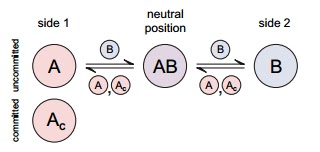
ABSTRACT: Some of the most pivotal moments in intellectual history occur when a new ideology sweeps through a society, supplanting an established system of beliefs in a rapid revolution of thought. Yet in many cases the new ideology is as extreme as the old. Why is it then that moderate positions so rarely prevail? Here, in the context of a simple model of opinion spreading, we test seven plausible strategies for deradicalizing a society and find that only one of them significantly expands the moderate subpopulation without risking its extinction in the process.
Physics arXiv: Encouraging moderation: Clues from a simple model of ideological conflict
Prospero:
Our revels now are ended. These our actors,
As I foretold you, were all spirits, and
Are melted into air, into thin air:
And like the baseless fabric of this vision,
The cloud-capp'd tow'rs, the gorgeous palaces,
The solemn temples, the great globe itself,
Yea, all which it inherit, shall dissolve,
And, like this insubstantial pageant faded,
Leave not a rack behind. We are such stuff
As dreams are made on; and our little life
Is rounded with a sleep.
William Shakespeare, The Tempest Act 4, scene 1, 148–158
 |
| HowStuffWorks - Warp Speed |
You can blame it on my reading material.
Though "real Sci-Fi fans" would differ with me, I had to take a "Star Trek" break from my usual (and quite depressing) dystopian literary diet and read two from Old School Trek: "The Eugenics Wars: The Rise and Fall of Khan Noonien Singh," part 1 and part 2 by Greg Cox. Khan as a four-year-old was written just as arrogantly as Ricardo Montaban portrayed him in the original series. If you're familiar with the "Space Seed" episode, it fleshes out a probable history of the genetically engineered race of supermen juxtaposed in real-world events of the 70s and 90s quite well.
Hence, the posts this week have been somewhat targeted.
So, I was probably primed to find these items:
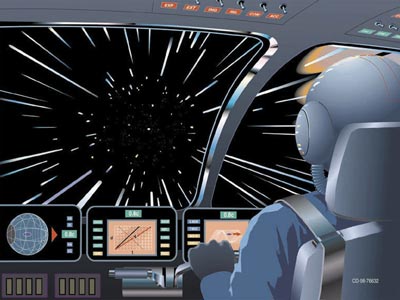
"Perhaps a Star Trek experience within our lifetime is not such a remote possibility." These are the words of Dr. Harold "Sonny" White, the Advanced Propulsion Theme Lead for the NASA Engineering Directorate. Dr. White and his colleagues don't just believe a real life warp drive is theoretically possible; they've already started the work to create one.
Yes. A real warp drive, Scotty.
Gizmodo: NASA Starts Work on Real Life Star Trek Warp Drive
Abstract Excerpt: NASA/JSC is implementing an advanced propulsion physics laboratory, informally known as "Eagleworks", to pursue propulsion technologies necessary to enable human exploration of the solar system over the next 50 years, and enabling interstellar spaceflight by the end of the century.
NASA Technical Reports Service:
Eagleworks Laboratories: Advanced Propulsion Physics Research (PDF embed)
 |
| The GRAIL mission so far has found little evidence for some hypothetical ancient impact basins. NASA/JPL-Caltech/MIT |
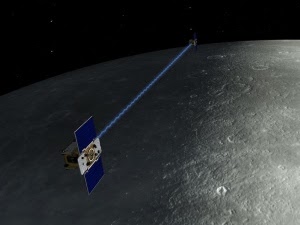
A sneak peek at the first results from a NASA mission to measure the Moon’s gravitational field hints at a lunar crust that is only half as thick as once thought.
There were a few gasps among scientists in the audience at a 13 September seminar at the Harvard-Smithsonian Center for Astrophysics in Cambridge, Massachusetts, as they took in the data revealed by Maria Zuber, principal investigator for NASA’s Gravity Recovery and Interior Laboratory (GRAIL) mission. Zuber, a planetary scientist at the Massachusetts Institute of Technology in Cambridge, showed a crisp, high-resolution gravitational map made with data collected by GRAIL’s twin spacecraft between March and June of this year.
NASA: Mars Science Laboratory Science Channel: Mars Landing 2012: The New Search for Life; i.am.mars
 |
| About.com - humor |


 |
| Space.com |
A spacecraft orbiting Mars has detected carbon dioxide snow falling on the Red Planet, making Mars the only body in the solar system known to host this weird weather phenomenon.
The snow on Mars fell from clouds around the planet's south pole during the Martian winter spanning 2006 and 2007, with scientists discovering it only after sifting through observations by NASA's Mars Reconnaissance Orbiter (MRO). The Martian south pole hosts a frozen carbon dioxide — or "dry ice" — cap year-round, and the new discovery may help explain how it formed and persists, researchers said.
Snow fall - at least on Earth - is not wierd at all. However, I'd caution against trying to make a snowball with dry ice. Remember those roses shattered in high school chemistry class? Yeah, it'd be kind of like that. 
Space.com: Snow on Mars: 'Dry Ice Snowflakes Discovered by NASA Probe
 |
This mosaic image shows spherules, or 'blueberries,' partly embedded and spread over the soil on Mars. (Image courtesy NASA/JPL/Cornell University.) |
...never count Rover out.
It’s unlikely anything lives on Mars today, but it may well have done so millions or billions of years past. And it may have left traces of its existence in the geology of the red planet.
One such tantalising hint was discovered by the NASA Opportunity Rover, which found small spherical hematite balls, dubbed ‘blueberries,’ in the Martian soil.
These were originally thought to have provided the first evidence of liquid water on Mars, but their existence may hold an even more profound implication.
Now researchers from the University of Western Australia and University of Nebraska have found that such iron-oxide spheroids, when they appear on Earth, are formed by microbes.
Jet Propulsion Lab: Mars Rover
Life Scientist: Iron 'blueberries' may be a sign of microbial life on Mars
Phsy.org: Mars 'blueberries' could be clues to presense of life
 |
| Credit: NASA |
PASADENA, Calif. -- NASA-funded astronomers have, for the first time, spotted planets orbiting sun-like stars in a crowded cluster of stars. The findings offer the best evidence yet that planets can sprout up in dense stellar environments. Although the newfound planets are not habitable, their skies would be starrier than what we see from Earth.
The starry-skied planets are two so-called hot Jupiters, which are massive, gaseous orbs that are boiling hot because they orbit tightly around their parent stars. Each hot Jupiter circles a different sun-like star in the Beehive Cluster, also called the Praesepe, a collection of roughly 1,000 stars that appear to be swarming around a common center.
NASA: First Planets Found Around Sun-Like Stars in a Cluster
This would have been my mother's 87th birthday. I am thinking of her, mindful of matters near and far, great and small.
The current conflagration in the Near East at the US Embassies in Egypt and Libya that have spread to even more countries, my curiousity led me to this entry on PBS.org:
Muslims believe that God had previously revealed Himself to the earlier prophets of the Jews and Christians, such as Abraham, Moses, and Jesus. Muslims therefore accept the teachings of both the Jewish Torah and the Christian Gospels. They believe that Islam is the perfection of the religion revealed first to Abraham (who is considered the first Muslim) and later to other prophets. Muslims believe that Jews and Christians have strayed from God's true faith but hold them in higher esteem than pagans and unbelievers. They call Jews and Christians the "People of the Book" and allow them to practice their own religions. Muslims believe that Muhammad is the "seal of the prophecy," by which they mean that he is the last in the series of prophets God sent to mankind.
Poughkeepsie Journal: “Any way you dissect it, from a moral or religious standpoint, those protesters broke our commandments,” said Umar Ahmad, a longtime member of the Mid-Hudson Islamic Association located in the Town of Wappinger. “What happened in Libya is unforgivable.”
I am not a Muslim. I do have Muslim members of my family, as well as agnostic, Jehovah's Witness, nondenominational, etc. We respect one another. Proselytizing one another has never occurred in any conversations I've had with them. What counts most is the relationship; the familial bond.
Tomorrow, and tomorrow and tomorrow...one of the most famous soliloquies written by Shakespeare, spoken from the mouth of Macbeth, a fictional ruler grieving the loss of his wife, musing aloud the futility's of life, the emphasis on unimportant things with respect to the brevity of existence.
We have selective amnesia regarding John Donne's admonition and cautionary warning.
We are all involved in mankindby virtue of being a part of it. The oceans no longer separate us; our worldviews aren't dictated by our limited experiences where we immediately are.
I reject the notion any culture's sacred text - Buddhist, Christian, Hebrew, Hindu, Mormon, Muslim et al - is somehow in some bigoted comparison, worthy of desecration. I reject the notion of demonizing Agnostics or Atheists. I reject - as does the US Constitution - the idea of religious tests as a qualifier for elected office (though news pundits seem to count how many times the president uses the word "God" - and he does quite often - as if this is relevant). I reject the notion that an amateurish video of moribund, racist stereotypes falls under "free speech" and "our American values," unless those values now typify the classroom bully; the boot of empire stamped on the neck of the world. Freedom of speech does not give one the right to yell firein a building not ablaze!
I am as diminished by the loss of diplomats abroad as I am military service members deployed, as I am the senseless loss of life in inner cities across the United States.
I quote President Reagan, post the failed rescue attempt 1979 in Iran, Desert 1:
"This is the time for us as a nation and a people to stand united and to pray."
Simple, elegant, sober, reflective and quite presidential.
It is in times of triumph and tragedy our leaders are called upon to quell our fears; raise our hopes. Personal vendettas and assaults are the mark of petty minds, I am particularly diminished by candidates that would take death so lightly as to score political points.
Isaiah 11:6 ends: ...and a little child shall lead them.I end with this photo from Facebook, the future meek that will "inherit the earth." I wish mom could see it. I think it would make her smile, and speaks more volumes than the cleverest self-serving sound bite:
 |
Happy birthday, mom.
 |
| Scratch.MIT.edu |
The usually quiet world of mathematics is abuzz with a claim that one of the most important problems in number theory has been solved.
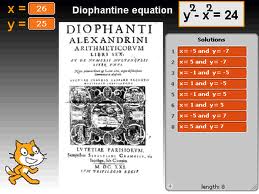
Mathematician Shinichi Mochizuki of Kyoto University in Japan has released a 500-page proof of the abc conjecture, which proposes a relationship between whole numbers — a 'Diophantine' problem.
The abc conjecture, proposed independently by David Masser and Joseph Oesterle in 1985, might not be as familiar to the wider world as Fermat’s Last Theorem, but in some ways it is more significant. “The abc conjecture, if proved true, at one stroke solves many famous Diophantine problems, including Fermat's Last Theorem,” says Dorian Goldfeld, a mathematician at Columbia University in New York. “If Mochizuki’s proof is correct, it will be one of the most astounding achievements of mathematics of the twenty-first century.”
Like Fermat’s theorem, the abc conjecture refers to equations of the form a+b=c. It involves the concept of a square-free number: one that cannot be divided by the square of any number. Fifteen and 17 are square free-numbers, but 16 and 18 — being divisible by 42 and 32, respectively — are not.
Scientific American: Proof Claimed for Deep Connection between Prime Numbers
