Reginald L. Goodwin's Posts (3128)

Sort by

Firmly Aboard the Pequod...


The most prescient portrait of the American character and our ultimate fate as a species is found in Herman Melville’s “Moby Dick.” Melville makes our murderous obsessions, our hubris, violent impulses, moral weakness and inevitable self-destruction visible in his chronicle of a whaling voyage. He is our foremost oracle. He is to us what William Shakespeare was to Elizabethan England or Fyodor Dostoyevsky to czarist Russia.

Our country is given shape in the form of the ship, the Pequod, named after the Indian tribe exterminated in 1638 by the Puritans and their Native American allies. The ship’s 30-man crew—there were 30 states in the Union when Melville wrote the novel—is a mixture of races and creeds. The object of the hunt is a massive white whale, Moby Dick, which, in a previous encounter, maimed the ship’s captain, Ahab, by biting off one of his legs. The self-destructive fury of the quest, much like that of the one we are on, assures the Pequod’s destruction. And those on the ship, on some level, know they are doomed—just as many of us know that a consumer culture based on corporate profit, limitless exploitation and the continued extraction of fossil fuels is doomed.

Chris Hedges, "We Are All Aboard the Pequod"

Houston Chronicle: Texas lawmakers on Tuesday began weighing changes to the state’s high school graduation requirements to give students more flexibility in which courses they must take.

A closely watched bill by Sen. Dan Patrick, R-Houston, would change the default graduation plan so students would not necessarily have to take four years of English, math, science and social studies. Instead, they could specialize in areas such as arts and humanities or science, technology, engineering and math.

“My focus is to help stem the dropout rate,” Patrick said during a meeting Tuesday, explaining that students would be able to take more courses that interest them.

Lake Houston Observer: Assessments in Algebra II, geometry, English III, chemistry, physics, world geography, and world history have been eliminated from the testing requirements. As a result, the July 2013 STAAR administration will not include assessments for these courses. End-of-course assessments will continue to be offered in Algebra I, English I, English II, biology, and U.S. history.

Texas is a large market due to its sheer size. Thus, a lot of other states emulate them; based their textbook purchase decisions on what they deem are deliberative, informed educational moves.

This was alerted to me by a friend on Facebook. My description/reaction is as follows:

"So, biology only is going to help us design an I-phone? Ye gods, we are destroyed by ideology, lunacy and idiocy! The only "logic" I can see in this: physics and chemistry would destroy their creationist/intelligent design garbage narrative I've read they're trying to get in textbooks K-12. Texas influences a lot of education markets nationally that assume it following a rational course, which this is NOT."

We seem all firmly aboard the Pequod, 'tossed to and fro by every wind of doctrine' (Ephesians 4:14); the ship of fools captained by a 1% Ahab fighting against the forces of nature and common sense. Anything that should be eliminated is the testing-industrial-complex, not science in an ever-increasing; ever-complicated world. We need more scientists, mathematicians, engineers and technologists with an appreciation for written discourse, geography and history; more importantly: a citizenry that appreciates these subjects and informed enough to demand such from its leaders and hold them accountable. A canyon gap between 1 and 99% will soon be an untraversable chasm. I do not see a stable society emerging from this Phoenix's ashes.

Controversies are manufactured to keep us divided: "Smokey James: ['Blue Collar' voice over echoing earlier line] They pit the lifers against the new boy and the young against the old. The black against the white. Everything they do is to keep us in our place." A fill-in-the-blank modern extrapolation is pretty simple.

Chris Hedges opined on climate change, which takes an appreciation of science. The conclusions of science have long been opposed since Galileo as it destroys the narrative of authoritarians in sheep and shepherds' clothing (Canis Lupus would be too obvious), more driven by their warped sense of order and power than any concern...as sociopaths lack empathy nor real concern for the well-being of their fellow humankind, spiritual and scientific efficacy in this country.

Shoulders thrown into the effort of rowing; brine spraying our collective faces, we steady our feet above deck as someone shouts:

"There she blows!--there she blows! A hump like a snow-hill! It is Moby Dick!"

"Hereby perhaps Stubb indirectly hinted, that though man loved his fellow, yet man is a money-making animal, which propensity too often interferes with his benevolence."

"From hell's heart I stab at thee; for hate's sake I spit my last breath at thee."

"Ignorance is the parent of fear."

There she blows, a great force of nature and alas, we cannot all be Ishmael...

Read more…

Luis Federico Leloir...


The Nobel Prize in Chemistry 1970
Luis Leloir

Luis F. Leloir

Born: 6 September 1906, Paris, France

Died: 2 December 1987, Buenos Aires, Argentina

Affiliation at the time of the award: Institute for Biochemical Research, Buenos Aires, Argentina

Prize motivation: "for his discovery of sugar nucleotides and their role in the biosynthesis of carbohydrates"

Field: Biochemistry

Luis F. Leloir was born in Paris of Argentine parents on September 6, 1906 and has lived in Buenos Aires since he was two years old. He graduated as a Medical Doctor in the University of Buenos Aires in 1932 and started his scientific career at the Institute of Physiology working with Professor Bernardo A. Houssay on the role of the adrenalin carbohydrate metabolism. In 1936 he worked at the Biochemical Laboratory of Cambridge, England, which was directed by Sir Frederick Gowland Hopkins. There he collaborated with Malcom Dixon, N.L. Edson and D.E. Green. On returning to Buenos Aires he worked with J.M. Muñoz on the oxidation of fatty acids in liver, and also together with E. Braun Menéndez, J.C. Fasciolo and A.C. Taquini on the formation of angiotensin. In 1944 he was Research Assistant in Dr. Carl F. Cori's laboratory in St. Louis, United States and thereafter worked with D.E. Green in the College of Physicians and Surgeons, Columbia University, New York. Since then he has been Director of the Instituto de Investigaciones Bioquímicas, Fundación Campomar. With his early collaborators, Ranwel Caputto, Carlos E. Cardini, Raúl Trucco and Alejandro C. Paladini work was started on the metabolism of galactose which led to the isolation of glucose 1,6-diphosphate and uridine diphosphate glucose. The latter substance was then found to act as glucose donor in the synthesis of trehalose (with Enrico Cabib, 1953 ) and sucrose (with Carlos E. Cardini and J.Chiriboga, 1955). Other sugar nucleotides such as uridine diphosphate acetylglucosamine and guanosine diphosphate mannose were also isolated. Further work showed that uridine diphosphate glucose is involved in glycogen synthesis and adenosine diphosphate glucose in that of starch.

Nobel Prize:

Biographical, Nobel Lecture, Banquet Speech

Read more…

Photonic Bernoulli Forces...


ABSTRACT:
By Bernoulli's law, an increase in the relative speed of a fluid around a body is accompanies by a decrease in the pressure. Therefore, a rotating body in a fluid stream experiences a force perpendicular to the motion of the fluid because of the unequal relative speed of the fluid across its surface. It is well known that light has a constant speed irrespective of the relative motion. Does a rotating body immersed in a stream of photons experience a Bernoulli-like force? We show that, indeed, a rotating dielectric cylinder experiences such a lateral force from an electromagnetic wave. In fact, the sign of the lateral force is the same as that of the fluid-mechanical analogue as long as the electric susceptibility is positive (ε>ε0), but for negative-susceptibility materials (e.g. metals) we show that the lateral force is in the opposite direction. Because these results are derived from a classical electromagnetic scattering problem, Mie-resonance enhancements that occur in other scattering phenomena also enhance the lateral force.

Physics arXiv: Optical "Bernoulli" Forces

Read more…

Bernardo Alberto Houssay...


The Nobel Prize in Physiology or Medicine 1947
Carl Cori, Gerty Cori, Bernardo Houssay

Bernardo Alberto Houssay

Born: 10 April 1887, Buenos Aires, Argentina

Died: 21 September 1971, Buenos Aires, Argentina

Affiliation at the time of the award: Instituto de Biologia y Medicina Experimental (Institute for Biology and Experimental Medicine), Buenos Aires, Argentina

Prize motivation: "for his discovery of the part played by the hormone of the anterior pituitary lobe in the metabolism of sugar"

Bernardo Alberto Houssay was born in Buenos Aires, Argentina, on April 10, 1887, one of the eight children of Dr. Albert and Clara (née Laffont) Houssay, who had come to Argentina from France. His father was a barrister. His early education was at a private school, the Colegio Británico. He then entered the School of Pharmacy of the University of Buenos Aires at the exceptionally early age of 14, graduating in 1904. He had already begun studying medicine and, in 1907, before completing his studies, he took up a post in the Department of Physiology. He began here his research on the hypophysis which resulted in his M.D.-thesis (1911), a thesis which earned him a University prize.

In 1910 he was appointed Professor of Physiology in the University's School of Veterinary Medicine. During this time he had been doing hospital practice and, in 1913, became Chief Physician at the Alvear Hospital. In addition to this he was also in charge of the Laboratory of Experimental Physiology and Pathology in the National Department of Hygiene from 1915 to 1919. In 1919 he became Professor of Physiology in the Medical School at Buenos Aires University. He also organized the Institute of Physiology at the Medical School, making it a centre with an international reputation. He remained Professor and Director of the Institute until 1943. In this year the Government then in power deprived him of his post, as a result of his voicing his opinion that there should be effective democracy in the country. Although receiving many invitations from abroad, he continued his work in an institute which he organized with the support of funds contributed by the Sauberan Foundation and other bodies. This was the Instituto de Biología y Medicina Experimental, where he still remains as Director. In 1955 a new Government reinstated him in the University.

Nobel Prize:

Biographical, Nobel Lecture, Banquet Speech

Read more…

On The Brane...


This challenges a holy grail of physics, and relates to The Standard Model; how we describe the four forces of nature and how they interact, even the Higgs Boson.

I almost hesitate to post it because many who do not "believe in the Big Bang Theory" will shout: aha! I say: ah, science - self-examining, exploring; learning more tomorrow than we thought we knew yesterday. Quantum mechanics had its trials and tribulations: Weins Law, Rayleigh-Jeans Law and the "ultraviolet catastrophe" eventually getting to Max Planck (of Planck's constant) and light seen as quanta. This eventually led to Einstein and the photoelectric effect in his Annus mirabilis papers generated in a lowly patent office in Munich. Thus we have the Internet, I-phones, flat screens, etc.

This description matches some of the wording I've seen over the years of the "universe as hologram" and admittedly either didn't understand or regarded as new age mystic pop culture. This challenge will have to be peer-reviewed and experiments performed to verify. Stay tuned...

However, Pluto is still not a planet.

A few nine-year-olds will send me hate mail now...Smiley

It could be time to bid the Big Bang bye-bye. Cosmologists have speculated that the Universe formed from the debris ejected when a four-dimensional star collapsed into a black hole — a scenario that would help to explain why the cosmos seems to be so uniform in all directions.

The standard Big Bang model tells us that the Universe exploded out of an infinitely dense point, or singularity. But nobody knows what would have triggered this outburst: the known laws of physics cannot tell us what happened at that moment.

“For all physicists know, dragons could have come flying out of the singularity,” says Niayesh Afshordi, an astrophysicist at the Perimeter Institute for Theoretical Physics in Waterloo, Canada.

It is also difficult to explain how a violent Big Bang would have left behind a Universe that has an almost completely uniform temperature, because there does not seem to have been enough time since the birth of the cosmos for it to have reached temperature equilibrium.

In our Universe, a black hole is bounded by a spherical surface called an event horizon. Whereas in ordinary three-dimensional space it takes a two-dimensional object (a surface) to create a boundary inside a black hole, in the bulk universe the event horizon of a 4D black hole would be a 3D object — a shape called a hypersphere. When Afshordi’s team modelled the death of a 4D star, they found that the ejected material would form a 3D brane surrounding that 3D event horizon, and slowly expand.

The authors postulate that the 3D Universe we live in might be just such a brane — and that we detect the brane’s growth as cosmic expansion. “Astronomers measured that expansion and extrapolated back that the Universe must have begun with a Big Bang — but that is just a mirage,” says Afshordi.

Nature: Did a hyper-black hole spawn the Universe?
Physics arXiv: Out of the White Hole: A Holographic Origin for the Big Bang

Read more…

Baruj Benacerraf...


The Nobel Prize in Physiology or Medicine 1980
Baruj Benacerraf, Jean Dausset, George D. Snell

Baruj Benacerraf

Born: 29 October 1920, Caracas, Venezuela

Died: 2 August 2011, Boston, MA, USA

Affiliation at the time of the award: Harvard Medical School, Boston, MA, USA

Prize motivation: "for their discoveries concerning genetically determined structures on the cell surface that regulate immunological reactions"

I was born in Caracas, Venezuela, on October 29, 1920 of Spanish-Jewish ancestry. My father, a self-made business man, was a textile merchant and importer. He was born in Spanish Morocco, whereas my mother was born and raised in French Algeria and brought up in the French culture. When I was five years old, my family moved to Paris where we resided until 1939. My primary and secondary education was in French which had a lasting influence on my life. The second World War caused our return to Venezuela, where my father continued to have a thriving business. It was decided that I should pursue my education in the United States, and we moved to New York in 1940. I registered at Columbia University in the School of General Studies, and graduated with a Bachelor of Science Degree in 1942, having also completed the pre-medical requisites for admission to Medical School. By that time, I had elected to study biology and medicine, instead of going into the family business, as my father would have wanted. I did not realize, however, that admission to Medical School was a formidable undertaking for someone with my ethnic and foreign background in the United States of 1942. In spite of an excellent academic record at Columbia, I was refused admission by the numerous medical schools I applied to and would have found it impossible to study medicine except for the kindness and support of George W. Bakeman, father of a close friend, who was then Assistant to the President of the Medical College of Virginia in Richmond. Learning of my difficulties, Mr. Bakeman arranged for me to be interviewed and considered for one of the two remaining places in the Freshman class. I was accepted and began my medical studies in July 1942. While in medical school, I was drafted into the U.S. Army with the other medical students, as part of the wartime training program, and naturalized American citizen in 1943 I greatly enjoyed my medical studies, which at the Medical College of Virginia were very clinically oriented. I received what I considered to be an excellent medical education in the relatively short time of three war years.

Nobel Prize:

Biography, Lecture

Read more…

Multiple Personality Material...


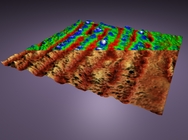
Photo: In order to understand how complex materials merge at the boundary, scientists look at cross-sections of an oxide superlattices. In this picture, peaks correspond to layers of cuprate superconductor and valleys to metallic manganites (bottom region). The power of scanning tunneling microscopy allows researchers to gain insight into both the material's topography as well as its electronic properties.

ARGONNE, Ill. – Just like people, materials can sometimes exhibit “multiple personalities.” This kind of unusual behavior in a certain class of materials has compelled researchers at the U.S. Department of Energy’s Argonne National Laboratory to take a closer look at the precise mechanisms that govern the relationships between superconductivity and magnetism.

Previous measurements of magnetic and electronic properties in these superconducting oxide materials relied on aggregate or “bulk” measurements of a large area. By using advanced scanning tunneling microscopy at the laboratory’s Center for Nanoscale Materials, Argonne physicist John Freeland and materials scientist Nathan Guisinger were able to develop a clearer picture of the physical and chemical behavior of boundary regions within the material.

According to Guisinger, the most important regions of study in oxide superconductors are the boundaries or interfaces.

“You can think of the sample as kind of like lasagna,” Guisinger said. “There are layers within it that have different properties, and we want to see if the ‘cheese’ in one section mixes with the ‘sauce’ in another.”

Argonne National Laboratory: A Material's Multiple Personalities

Read more…

Luis Alvarez...


The Nobel Prize in Physics 1968
Luis Alvarez

Born: 13 June 1911, San Francisco, CA, USA

Died: 1 September 1988, Berkeley, CA, USA

Affiliation at the time of the award: University of California, Berkeley, CA, USA

Prize motivation: "for his decisive contributions to elementary particle physics, in particular the discovery of a large number of resonance states, made possible through his development of the technique of using hydrogen bubble chamber and data analysis"

Field: Particle physics

Luis W. Alvarez was born in San Francisco, Calif., on June 13, 1911. He received his B.Sc. from the University of Chicago in 1932, a M.Sc. in 1934, and his Ph.D. in 1936. Dr. Alvarez joined the Radiation Laboratory of the University of California, where he is now a professor, as a research fellow in 1936. He was on leave at the Radiation Laboratory of the Massachusetts Institute of Technology from 1940 to 1943, at the Metallurgical Laboratory of the University of Chicago in 1943-1944, and at the Los Alamos Laboratory of the Manhattan District from 1944 to 1945.

Early in his scientific career, Dr. Alvarez worked concurrently in the fields of optics and cosmic rays. He is co-discoverer of the "East-West effect" in cosmic rays. For several years he concentrated his work in the field of nuclear physics. In 1937 he gave the first experimental demonstration of the existence of the phenomenon of K-electron capture by nuclei. Another early development was a method for producing beams of very slow neutrons. This method subsequently led to a fundamental investigation of neutron scattering in ortho- and para-hydrogen, with Pitzer, and to the first measurement, with Bloch, of the magnetic moment of the neutron. With Wiens, he was responsible for the production of the first 198Hg lamp; this device was developed by the Bureau of Standards into its present form as the universal standard of length. Just before the war, Alvarez and Cornog discovered the radioactivity of 3H (tritium) and showed that 3He was a stable constituent of ordinary helium. (Tritium is best known as a source of thermonuclear energy, and 3He has become of importance in low temperature research.)

Nobel Prize: Biographical, Nobel Lecture, Banquet Speech

Read more…

Quantum Algae...

Image of the diffraction grating made by the researcher

The exoskeleton of a tiny organism has been used as a diffraction grating by researchers in Vienna, who have carried out a molecular interferometry experiment using it. The team showed that a coherent molecular beam could be diffracted from the silicon-based cell walls of a marine alga. Algae are cheap and easily available, so replacing costly nanodevices with them in interferometry experiments would be beneficial, according to the researchers.

Contrary to classical mechanics, quantum physics states that a particle can act like a wave and vice versa – an idea that was first proposed by Nobel-prize-winning physicist Louis de Broglie back in 1923. While the idea that tiny particles such as electrons could behave like a wave came as a shock, scientists now know that even objects a million times more massive than electrons, such as complex molecules, also show quantum interference. Massive molecules have very small wavelengths and therefore a grating with extremely thin and closely spaced slits is needed to observe their diffraction. Currently, such sophisticated devices are specially fabricated using nanotechnology techniques.

Physics World: Diatoms bring the quantum effects to life

Read more…

Sufficiently Advanced Technology...

"Any sufficiently advanced technology is indistinguishable from magic."
Arthur C. Clarke

I sadly see an arms race brewing:

TECHNOLOGY REVIEW: Today, Lu Lan at Zhejiang University in China and a few pals have actually created the first invisibility cloak designed using topology optimization. They carved it out of Teflon and it took them all of 15 minutes using a computer-controlled engraving machine. “The fabrication process of a sample is substantially simplified,” they say.

The resulting “Teflon eyelid” invisibility cloak hides a cylindrical disc of metal the size of poker chip from microwaves. But crucially, its performance closely matches the prediction of the computer simulation.

Physics arXiv:
Experimentally demonstrated an unidirectional electromagnetic cloak designed by topology optimization

Also:

Pro and Con, i.e. before I get too excited, I'd like to hedge my bets!

Read more…

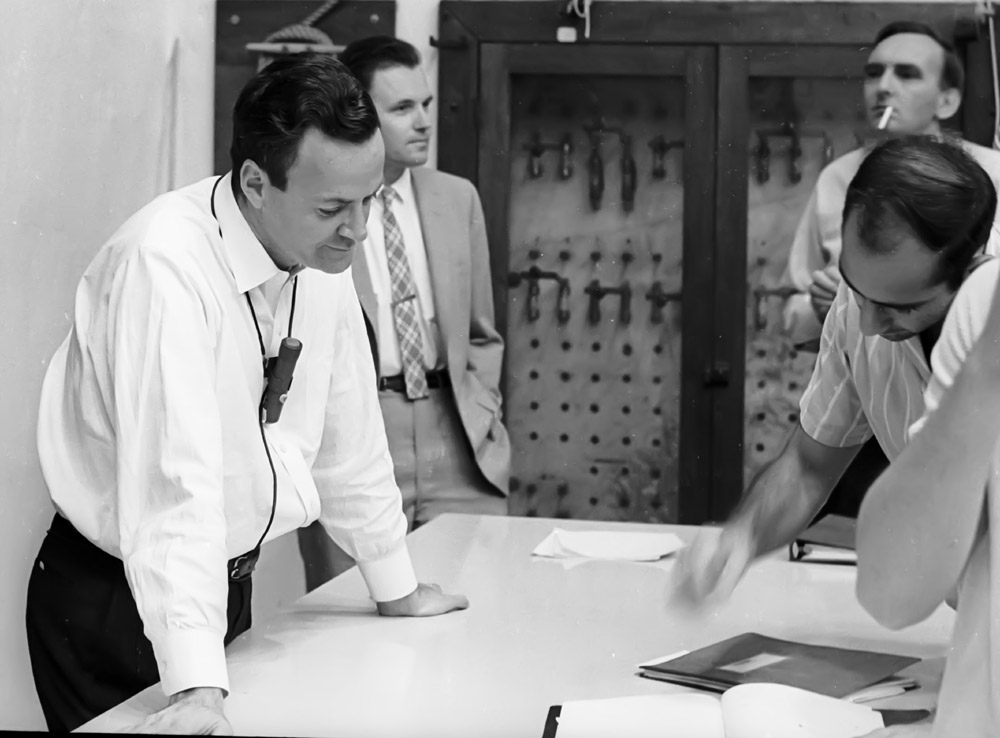
The Feynman Lectures on Physics...

Volume I now available!


CalTech: Feynman Lectures on Physics, Feynman, Leighton, Sands
Nobel Prize: Richard P. Feynman


Announcements of the 2013 Nobel Prizes
PHYSIOLOGY OR MEDICINE - Monday 7 October, 11:30 a.m. at the earliest
PHYSICS - Tuesday 8 October, 11:45 a.m. at the earliest
CHEMISTRY - Wednesday 9 October, 11:45 a.m. at the earliest
PEACE - Friday 11 October, 11:00 a.m.
ECONOMIC SCIENCES - Monday 14 October, 1:00 p.m. at the earliest
LITERATURE - The date will be set later

Read more…

Cursing The Darkness...


"I have a foreboding of an America in my children's or grandchildren's time -- when the United States is a service and information economy; when nearly all the manufacturing industries have slipped away to other countries; when awesome technological powers are in the hands of a very few, and no one representing the public interest can even grasp the issues; when the people have lost the ability to set their own agendas or knowledgeably question those in authority; when, clutching our crystals and nervously consulting our horoscopes, our critical faculties in decline, unable to distinguish between what feels good and what's true, we slide, almost without noticing, back into superstition and darkness...

"The dumbing down of Americans is most evident in the slow decay of substantive content in the enormously influential media, the 30 second sound bites (now down to 10 seconds or less), lowest common denominator programming, credulous presentations on pseudoscience and superstition, but especially a kind of celebration of ignorance."

Carl Sagan, "The Demon-Haunted World: Science as a Candle in the Dark."

This is a significant date: first of all, it's Hispanic Heritage Month; 5 years ago along with the global financial meltdown, my mother celebrated what would be her last birthday this side of the grave. She lasted until the Thursday before Mother's Day in 2009. She would have been 88 today.

This is one of my favorite quotes by Carl. A shame "The Sagan Effect" is part of the lexicon. We could use some more popularizing of science (kudos to Science Channel), our consumption of which is only as end-users of high tech devices. Neil deGrasse Tyson's revival of "Cosmos" can't come soon enough.

It is quite evident by the turn of recent events, candidates for and in office; ridiculous public statements, inane sound bites parroted; conspiracy theories ad nauseum - cabals, crystals, dogs and cats living together (Ghostbusters - couldn't resist), Bermuda Triangle, Bigfoot, faking six moon landings (and one near-fatal attempt), pyramids by aliens, poltergeists, UFOs and our propensity to concern ourselves with the goings on of "reality shows" - this quote is more haunting than his contribution to modeling and warning the aftermath of thermonuclear war: a nuclear winter. The real cabal conspiracy is NOT wanting to teach critical thinking skills (they now "admit" a wording gaffe/faux pas); "teaching the controversy"; of the dumbing down of Americans in prime time.

A technocracy is so far only hypothetical and the basis of the fictional Superman's alien society (and, it apparently didn't work out well for them). I don't expect an overnight appreciation for science from any of our leaders, but such would help in the long run. It would help Congress's approval rating if they could regulate Wall Street instead the Citizen's United vice-versa. At least have a discussion about how technology is rapidly diminishing the need for certain career fields that can only exacerbate the income gap. Instead, for 126 days of "labor," we get meaningless votes on the taxpayer's time and dollar as we sleepwalk the "American Dream."

We slouch nonchalantly towards dystopia - somewhere between Margaret Atwood's The Handmaid's Tale and Octavia Butler's Parable series. We ignore evidence we think inconvenient to our beliefs; create controversies in science classes that do not exist to satisfy a constituency that thinks dinosaur bones were placed in digs by beelzebub The crazy thing is people run on this claptrap...and get elected. Then, they wish to be president and have the nuclear codes to Armageddon. The bellicose bravado expressed by certain pundits on the Syrian conflict is prime example of rushing in where angels fear to tread. With noted exception of the Iran-Contra affair star shredder and smuggler, no pundit has any military experience. There are implications for the region and the globe beyond chemical weapons. Biological life is not like "The SIMS": there is no reset button.

What is frightening is that this dumbing down process may actually be a prelude to global conflagration: idiocy before oblivion. I don't begrudge anyone's beliefs and don't impose mine, but the "New Heaven and a New Earth" hopefully has a solution to a warming climate, and post nukes - mechanism to dissipate radiative half-life followed by surviving environmental chill, or full life, liberty and the pursuit of happiness on this pale blue dot...will not be possible.

Scientific American: More Cuts Loom for US Science

Read more…

Self-Assembling Quantum Devices...


TECHNOLOGY REVIEW: One of the great goals of applied physics is to make quantum information processing a robust and common technique. To achieve this, physicists will need a simple way of storing and manipulating quantum information, preferably at room temperature.

There is no shortage of possible quantum storage devices but one sits head and shoulders above most others: a nitrogen atom that has replaced a carbon atom in a diamond lattice, an arrangement known as a nitrogen-vacancy centre.

Today, an international team of physicists say they’ve used biological self-assembly techniques to make diamond-based prototypes of the quantum information storage devices of this type. That’s a development that has the potential to profoundly influence the future of computing.

The key to all this is nitrogen-vacancy centres in diamond which behave like single atoms. They can store photons, emit them again and interact with other nitrogen-vacancy centres nearby. In fact, their photon storage ability is legendary, holding them, and the information the carry, for periods stretching to milliseconds. At room temperature.

Physics arXiv: Self-assembling hybrid diamond-biological quantum devices

Read more…

V'Ger...

Artist conception, Image credit: NASA/JPL-Caltech

Not exactly "warp factor one," but its a start...Smiley


PASADENA, Calif -- NASA's Voyager 1 spacecraft officially is the first human-made object to venture into interstellar space. The 36-year-old probe is about 12 billion miles (19 billion kilometers) from our sun.

New and unexpected data indicate Voyager 1 has been traveling for about one year through plasma, or ionized gas, present in the space between stars. Voyager is in a transitional region immediately outside the solar bubble, where some effects from our sun are still evident. A report on the analysis of this new data, an effort led by Don Gurnett and the plasma wave science team at the University of Iowa, Iowa City, is published in Thursday's edition of the journal Science.

"Now that we have new, key data, we believe this is mankind's historic leap into interstellar space," said Ed Stone, Voyager project scientist based at the California Institute of Technology, Pasadena. "The Voyager team needed time to analyze those observations and make sense of them. But we can now answer the question we've all been asking -- 'Are we there yet?' Yes, we are."

NASA: NASA Spacecraft Embarks on Historic Journey Into Interstellar Space
Star Trek Memory Alpha Wiki: V'Ger

Read more…

Eye See You...

Kenneth Chau is excited about the newly published research that explains how he and his colleagues developed a negative-index material that can be sprayed onto surfaces and act as a lens.

A team of researchers, including a University of British Columbia engineer have made a breakthrough utilizing spray-on technology that could revolutionize the way optical lenses are made and used.


Kenneth Chau, an assistant professor in the School of Engineering at UBC’s Okanagan campus,worked with principal investigator Henri Lezec and colleagues Ting Xu, Amit Agrawal, and Maxim Abashin at the National Institute of Standards and Technology in Maryland on the development of a flat lens. Their work is published in the May 23 issue of the journal Nature.


Nearly all lenses – whether in an eye, a camera, or a microscope – are presently curved, which limits the aperture, or amount of light that enters.


“The idea of a flat lens goes way back to the 1960s when a Russian physicist came up with the theory,” Chau says. “The challenge is that there are no naturally occurring materials to make that type of flat lens. Through trial and error, and years of research, we have come up with a fairly simple recipe for a spray-on material that can act as that flat lens.” (1)
A NIST team has created an ultraviolet (UV) metamaterial formed of alternating nanolayers of silver (green) and titanium dioxide (blue). Credit: Lezec/NIST

For the first time, scientists working at the National Institute of Standards and Technology (NIST) have demonstrated a new type of lens that bends and focuses ultraviolet (UV) light in such an unusual way that it can create ghostly, 3D images of objects that float in free space. The easy-to-build lens could lead to improved photolithography, nanoscale manipulation and manufacturing, and even high-resolution three-dimensional imaging, as well as a number of as-yet-unimagined applications in a diverse range of fields.


"Conventional lenses only capture two dimensions of a three-dimensional object," says one of the paper's co-authors, NIST's Ting Xu. "Our flat lens is able to project three-dimensional images of three-dimensional objects that correspond one-to-one with the imaged object."


An article published in the journal Nature* explains that the new lens is formed from a flat slab of metamaterial with special characteristics that cause light to flow backward—a counterintuitive situation in which waves and energy travel in opposite directions, creating a negative refractive index. (2)

1. UBC engineer helps pioneer flat spray-on optical lens
2. The Better to See You With: Scientists Build Record-Setting Metamaterial Flat Lens

Read more…

The Most Astonishing Fact...

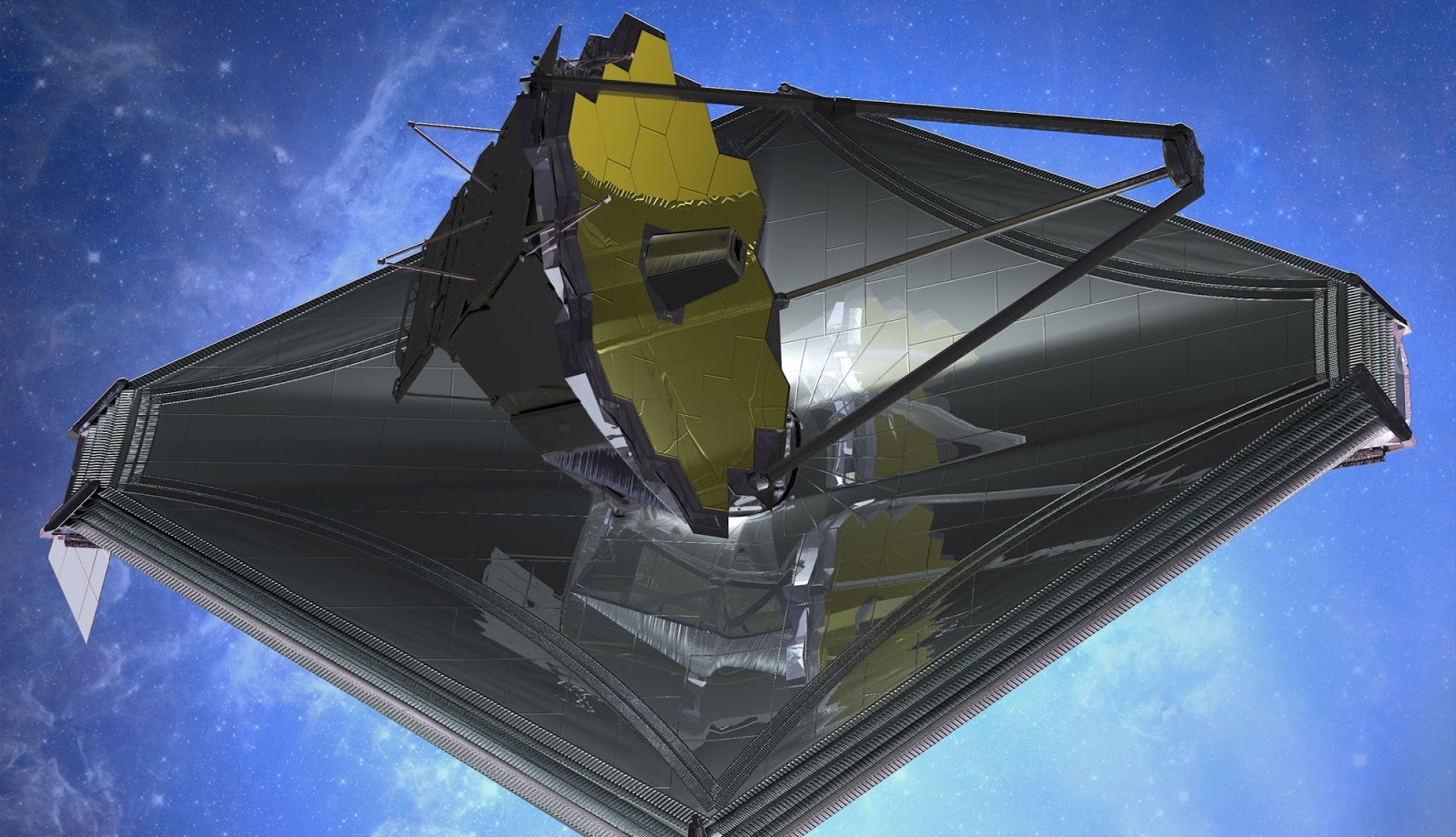
An artist's impression of the James Webb Space Telescope observing the Universe. Credit: Northrop Grumman

The first video embed has the voice of Neil deGrasse Tyson (title credit); the second Nobel laureate John Mather.

The most astonishing fact is not just as Carl Sagan quipped we are made of "star stuff": is that we have within humanity persons threatened by that knowledge; re-fighting the war between the church and Galileo (which, by the way has yet to pardon him...just saying).

The most astonishing fact is we're more comfortable with telling our children of controversies that don't exists; information that could start careers in STEM fields; threatened by critical thinking skills while the rest of the world passes the US by.

NIRSpec (Near-Infrared Spectrograph) will be sensitive enough to pick out the light from the earliest stars and galaxies to form in the Universe, only about 400 million years after the Big Bang happened 13.8 billion years ago.

It will split infrared light from these objects into a spectrum, helping astronomers to find out their chemical make-up, physical properties, age and distance. NIRSpec will be able to carry out its observations on up to 100 such objects at a time.


Demonstrating its versatility, NIRSpec will also study the early stages of starbirth across our own Milky Way galaxy, and analyse the atmospheric properties of exoplanets orbiting other stars, checking the potential for life to exist there.

The most astonishing fact is that mere excerpt above to the link below (I found out Saturday to some)...is controversy.

SEN: Europe completes second instrument for James Webb Space Telescope

Read more…

Confronting Willful Ignorance...

Image source

I'm a live-and-let-live kind of person. I accept others may or may not agree with how I look at life. My viewpoints are shaped by my experiences, observable and measurable experimental evidence and logic.

However, two instances of confrontation occurred Saturday, one in real space and the other on Facebook.

Real space: walking my Labrador retriever. Picking up after her is like shoveling the droppings of a horse! I passed a young couple who in my vision allowed their beagle to plop down excrement and walked past me smiling...

I picked it up and deposited it in the dog waste bins provided by our complex. I saw them on our 2nd lap ("our": got to count Raven!).

Me: Do you live here?

Them: No, we're here visiting my parents (him).

Me: I picked up your dog's droppings. Just to make you aware, that is a policy of the apartment complex.

Them: Oh! We didn't know.

Me: OK. Thanks. [Continued walk...]

Facebook: I rebroadcast a humorous meme with two well-known politicians. One believed the earth was 9,000 years old and that humans and dinosaurs existed together; the other believed the earth 10,000 years old and that God destroyed the dinosaurs for humans. My only comment at the time was an emoticon: (((o_0))).

Someone felt the need to reply: "I believe God created the heavens and the earth and rested on the 7th day."

Me: That's fine, [name omitted]. However, I don't believe the authors of the bible had the information from astronomy, carbon dating nor the scientific method. If so, the bible would need a forklift as the CRC Handbook of Chemistry and Physics in its 94th edition is 2,668 pages: CRC Handbook of Chemistry and Physics.

Him: Good point I still believe the Bible story though the Earth is to (meant: "too" - grammar) complex to come from a big bang theory. The Bible is really not clear as to how old the earth is. So some things we have to take by faith even science does not hold all the answers the more you learn the more you realize how much you don't know.

Me: That is science. Your statement however, was not.

I left the link I embed below. He did not reply. Guess whatever button I pushed he was done.

Live-and-let-live: a position I feel (or, at least I hope) lacks arrogance. The couple that didn't think they would be asked about their responsibility seemed slightly appalled at my stating the facility policy; my theological debate was started by someone whom I wasn't addressing directly, has no knowledge of my life experiences nor asked about what my views in his area of concern were: this person just assumed me hostile.


Live-and-let-live: that means I don't care what you believe or how you choose to live (unless it included ignored dog droppings). The choices - and they are choices - you make in your life are based on your life experiences, which I have no inkling of, nor the conclusions you've made from those experiences and how you interact with the wider world based on them. You and I have a right to them without attack, criticism or judgement as long as we follow stated rules and regulations; standards of civility, courtesy and common decency.

Science is an iterative process of investigation: it often holds strong convictions until evidence clues otherwise, e.g. the  luminiferous aether was once thought to explain the propagation of light - experiment and the miracle year of Einstein - provided correction. It is by no means a perfect process - the scientist and engineers are only human, subject to human frailties, foibles and flaws in their thinking. Thus, a relentless adherence to the Scientific Method is the central arbiter of what is and is not acceptable science, removing one's persuasion from consideration. Science often doesn't know; therefore explores the unknown.

Related link: How Science Really Works

Read more…

Appeal From Entropy...

Image source

It is unusual I admit, to appeal from a physics law or personify it as if it could speak.

1st Law of Thermodynamics: Conservation of Energy

2nd Law of Thermodynamics: Entropy, which concerns heat transfer, but more specifically our concept of "time's arrow" and the order of systems.

Over time, things tend to go from order to disorder/chaos. It is entropy whereby we have the concept of time, and like an arrow is unidirectional. An arrow does not leap out of a target into its bow; bullets do not burrow out of targets and reenter their firearms; water does not flow upstream; suns, plants, animals and eventually the universe dies; champagne glasses do not reassemble from the floor to its previous waiter's tray.

Thermodynamics is a study of energy; energy systems and its transformations. It is primacy in how we will manage the increasing demands for power to our cities, economies, schools, public and private facilities. What is true for us, arrows, bullets, water, suns, the universe and champagne glasses should also apply to countries as a "system."

There is a prevailing myth of the "surgical strike." Atmospheric diffraction prevents the usage of laser or particle beam weapons in theater (there have been limited tests), the only surgical instrument that could be called that if it existed in large distribution to units in the field. Missiles deliver payloads; payloads explode; blast waves expand at sonic speeds; shrapnel disperses to unfortunate bodies called "collateral damage." The scatter of a beam weapon from a reflective surface to unprotected eyes or body could be just as lethal as shrapnel.

In an explosion, an internal impulse acts in order to propel the parts of a system (often a single object) into a variety of directions. After the explosion, the individual parts of the system (that is often a collection of fragments from the original object) have momentum. If the vector sum of all individual parts of the system could be added together to determine the total momentum after the explosion, then it should be the same as the total momentum before the explosion. Just like in collisions, total system momentum is conserved. Physics Classroom

It is the above description why in a forensics investigation - say, the Boston Marathon bombing - greater than 90% of the bomb fragments can be recovered on investigation of the blast area.

However, lives and failed states are not as easy to assemble. And like any system that tends to go from order to chaos: the introduction of mayhem doesn't increase stability nor transform it to a better system.

"Our scientific power has outrun our spiritual power. We have guided missiles and misguided men."


Dr. Martin Luther King, Jr.

"You break it, you own it." Retired General Colin Powell

Read more…

What Indeed...


I have a multiple choice question for you.


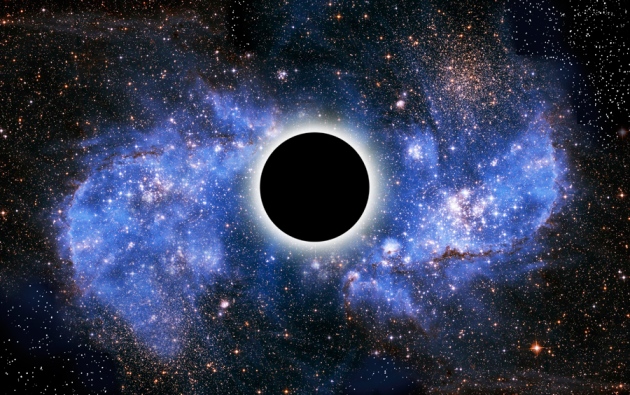
What’s inside a black hole?


(A) An unlimited amount of stuff.

(B) Nothing at all.

(C) A huge but finite amount of stuff, which is also outside the black hole.

(D) None of the above.


The first three answers all seem absurd, boosting the credibility of (D). Yet … at the “Rapid Response Workshop” on black holes I attended last week at the KITP in Santa Barbara (and which continues this week), most participants were advocating some version of (A), (B), or (C), with varying degrees of conviction.


When physicists get together to talk about black holes, someone is bound to draw a cartoon like this one:


But for nearly 40 years now, we have known that black holes can shed their mass by emitting radiation, and presumably this process continues until the black hole disappears completely. If we choose to, we can maintain the black hole for as long as we please by feeding it new stuff at the same rate that radiation carries energy away. What I mean by option (A) is that the radiation is completely featureless, carrying no information about what kind of stuff fell in. That means we can hide as much information as we please inside a black hole of a given mass.


On the other hand, the beautiful theory of black hole thermodynamics indicates that the entropy of a black hole is determined by its mass. For all other systems we know of besides black holes, the entropy of the system quantifies how much information we can hide in the system. If (A) is the right answer, then black holes would be fundamentally different in this respect, able to hide an unlimited amount of information even though their entropy is finite. Maybe that’s possible, but it would be rather disgusting, a reason to dislike answer (A).


There is another way to argue that (A) is not the right answer, based on what we call AdS/CFT duality. AdS just describes a consistent way to put a black hole in a “bottle,” so we can regard the black hole together with the radiation outside it as a closed system. Now, in gravitation it is crucial to focus on properties of spacetime that do not depend on the observer’s viewpoint; otherwise we can easily get very confused. The best way to be sure we have a solid way of describing things is to pay attention to what happens at the boundary of the spacetime, the walls of the bottle — that’s what CFT refers to. AdS/CFT provides us with tools for describing what happens when a black hole forms and evaporates, phrased entirely in terms of what happens on the walls of the bottle. If we can describe the physics perfectly by sticking to the walls of the bottle, always staying far away from the black hole, there doesn’t seem to be anyplace to hide an unlimited amount of stuff.

Quantum Frontiers: What's inside a black hole?

Read more…