The Hubble telescope launched in 1990. Credit: NASA
Topics: Astronomy, Astrophysics, NASA, Politics, Research
Yet another casualty: science. The NSF, NOAA and other related sites are either down, or limited. Research is slow to crippled. The FDA is discontinuing food inspections. Any delay in industry was almost a death sentence in semiconductors, as your competitors took advantage of your tardiness to market, and sped past you. This is Economics 101 one would THINK a "businessman" would understand, but tariffs seem a mystery to him. A months long, or year-long shutdown as threatened by this hostage situation, will cause our economy and along with it the world's to falter. I can't imagine China or Russia standing still while our orange child throws a tantrum for his wailing/whining wall pablum. "Winning"... #MCGA, #MRGA
Aging telescope’s wide-field camera fails while key NASA staff are on involuntary, indefinite leave due to political impasse.
One of the Hubble Space Telescope’s main instruments stopped working on 8 January because of an unspecified hardware problem, NASA says. Engineers are unlikely to be able to fix the aging telescope until the ongoing US government shutdown ends — whenever that might be.
Hubble’s mission operations are based at NASA’s Goddard Space Flight Center in Greenbelt, Maryland, where most employees are on involuntary leave during the shutdown. A few people who operate spacecraft that are actively flying, including Hubble, have been allowed to keep working.
But fixing the problem with Hubble, which is almost 30 years old, will almost certainly involve additional government employees who are forbidden to work during the shutdown. NASA has formed an investigative team, composed primarily of contractors and experts from its industry partners, to examine the technical troubles.
Federal law allows agencies to keep some personnel working during a shutdown if they are deemed necessary to protect life and property. It is not clear whether NASA might request an emergency exception to allow repairs to Hubble before the shutdown — now in its 19th day — ends.
Topics: Green Energy, Green Tech, Mechanical Engineering, Robotics, Star Wars
Ironically, I drive a Hyundai Santa Fe (2013). But I'm satisfied with its performance, so I don't think I'll be "trading up" to this one. Plus, it's designed primarily for first responders.
You have to admit: it resembles Imperial Walkers or AT-AT's (all-terrain, armored tanks), from a movie franchise "long, long ago; in a galaxy far, far away." Heck, they even say it in the article.
Hyundai started 2019 off right by teasing a concept vehicle that could allegedly walk and climb. Now, Hyundai has brought this concept to CES 2019, and it's every bit as wild as we hoped.
Hyundai used CES 2019 as the backdrop to debut its Elevate walking car concept. While it's primarily designed to give first responders an additional edge in rescuing people, it can also be used to enhance mobility options for all sorts of citizens.
According to Hyundai, the Elevate is capable of driving at highway speeds, but it can also allegedly climb a 5-foot wall, step over a 5-foot gap and have a track width up to 15 feet. So, it's basically an AT-AT from Star Wars that has, as Hyundai puts it, "both mammalian and reptilian walking gaits."
Topics: Biology, Cancer, Electromagnetic Radiation, Green Energy, Nanotechnology, Research
One potentially valuable way to attack cancer cells is to zap them with low-intensity alternating current. This interferes with the flow of calcium and potassium ions in and out of the cells, a process so important that disrupting it ultimately kills them.
But there is a problem with this approach: healthy cells are just as susceptible to ion channel disruption as cancer cells, so the treatment kills healthy and cancerous cells alike. What’s needed is a way to focus the treatment on cancer cells while leaving the healthy ones untouched.
Enter Attilio Marino at the Istituto Italiano di Tecnologia, Enrico Almici at the Polytechnic University of Turin, and colleagues in Italy. These guys use piezoelectric nanoparticles that generate current inside the body when repeatedly compressed with ultrasound. And they have gathered the first evidence that this could be turned into an effective treatment for cancer.
The technique is straightforward in theory. Piezoelectric materials generate a charge when squeezed (and similarly change shape when zapped with a voltage). They are widely used in everything from microphones to motors.
Marino and co’s idea is to inject biocompatible nanoparticles into the body and then bombard them with ultrasound. The high and low pressures associated with the ultrasound should cause the nanoparticles to generate a charge that interferes with ion channels and kills the cells. The team choose barium titanate nanoparticles, which are considered biocompatible since they contain no lead.
Figure 1: On 17 August 2017 LIGO detected gravitational waves from a neutron-star collision. Within 12 hours observatories had identified the source of the event GW170817 within the galaxy NGC 4993 – shown in this Hubble Space Telescope image – and located the associated radioactive emissions, or “kilonova”. Hubble observed that flare of light fade over the course of six days, as shown in these observations taken on 22, 26 and 28 August (insets). (Courtesy: NASA, ESA; A Levan (University of Warwick), N Tanvir (University of Leicester), A Fruchter and O Fox (STScI))
Topics: Astronomy, Astrophysics, General Relativity, Gravitational Waves, LIGO, Neutron Stars
04 Jan 2018
Congratulations to Imre Bartos, whose article "A new cosmic messenger" has been picked as one of Physics World's five favourite features of 2018. Taken from the January 2018 issue of Physics World. Members of the Institute of Physics can enjoy the full issue via the Physics World app.
The first observation of gravitational waves from two merging neutron stars that was recently made by the LIGO and Virgo detectors has – along with data from telescopes across the globe and in space – kicked off a new era in multimessenger astronomy. Imre Bartos describes this watershed moment, which crowned decades of research and will shape the future of observational astronomy.
It was almost over. There was only one week to go before the Advanced LIGO and Virgo detectors would complete their observational run, and be shutdown for a year. Indeed, many of my colleagues from the LIGO–Virgo team were already on vacation, while I was awaiting relatives who were visiting. Then my phone buzzed. An automated text message, which read “ALERT FROM GWHEN | New event: G298048 | Check your email!” prompted me to rush to my computer, to look at the signal in a LIGO database. When a flurry of agitated phone calls from collaborators followed, it became clear that a historic moment was unfolding. We observational astronomers needed to act quickly, and as our findings were still a secret, I couldn’t even tell my relatives, who had arrived in the middle of the excitement, why I would need to work.
On 17 August 2017 the LIGO detectors in Louisiana and Washington detected gravitational waves from the collision of two neutron stars – ultracompact dead stars that weigh as much as our Sun, but are barely 20 km in diameter, roughly the size of Manhattan. Such an event had been anticipated for decades, but had never been observed until now. Within two seconds of the arrival of gravitational waves at LIGO, NASA’s Fermi Gamma-ray Space Telescope detected a short gamma-ray burst. This made it even clearer: the gravitational-wave detection – dubbed GW170817 – was not a false alarm, and observatories across the globe quickly needed to turn towards the direction of the collision, or the data would be lost forever. More than 70 telescopes and observatories around the globe and in space were rapidly notified, and were able to execute a co-ordinated survey of the merger and its aftermath, across the full electromagnetic spectrum – gamma-rays, X-rays, light, radio waves – and neutrinos. A new era in multimessenger astronomy had begun (figure 1).
What did we learn?
Neutron-star mergers may be the main source of heavy elements in the universe.
The expansion of the universe can be measured by neutron-star mergers,
We have a new upper limit on the mass of neutron stars.
The neutron stars in GW170817 orbited each other for billions of years before colliding.
The colliding neutron stars created a gamma-ray burst.
There’s something strange about the energetic jet.
Imre Bartos is an assistant professor at the University of Florida in the US, where he studies extreme cosmic explosions related to the formation and evolution of black holes. He is a member of the LIGO Scientific Collaboration and an associate member of the IceCube Collaboration
Topics: Civics, Civil Rights, Diversity, Human Rights, Humor
Note: Enjoy the holidays. I'll be on break until 7 January 2019.
"He's a 'Chaos Candidate' and He’d Be a 'Chaos President,'" former Florida Governor John Edward ("JEB") Bush in an alarmingly accurate moment of prescience.
Maxwell Smart, a.k.a. Agent 86, works for CONTROL, a Washington, D.C.-based counterintelligence agency. Totally inept as a secret agent, Smart can barely use the gadgetry the agency provides him (including a phone embedded in his shoe). Nevertheless, he and his fellow agents always seem to thwart the operations of KAOS, an organized crime outfit dedicated to evil. Agent 99 is Smart's smarter partner, a resourceful agent who eventually marries her bumbling cohort. Smart and Agent 99's boss is a man known only as The Chief. Source: Google users search
His "charity" has met the fate of his "university": eventual oblivion. The market has erased all its gains in 2018 in November, and it doesn't show any signs of slowing down. We are at this posting, hours from a reality TV inspired government shutdown that the current occupant of the Executive Mansion proudly owned to the surprised delight of "Nan-Chuck-Ku," who needed no mental Jujitsu to outwit a nitwit. Michael Cohen is "rat" and Michael Flynn a "saint," at the moment - the jury's still out on Roger Stone. With his 3-month delayed Mulligan sentence to think about Flynn and his lawyer's cute "perjury trap" stunt and Judge Sullivan's disgust, he'll likely be Mus musculus by poetically, the Ides of March and a morning bowel movement/Twitter rant. Wired published a complete guide to 17 investigations related to him. So...much..."winning."
"Who's going to pay for the wall? MEXICO!"
This was the refrain at rallies before and after the election. It was shtick; an applause line that appealed to his audience's racism and xenophobia. He embarrassed himself literally begging the previous Mexican president, Enrique Peña Nieto to fund it, who patently refused. Now he's demanding 5 billion dollars - an arbitrary number I'm certain - or, the equivalent of a screaming match from a toddler ensues. A toddler that until January has control of the Executive Branch, Supreme Court, the Senate and the House he lost in the midterms. Mattis is out; and the stock market is in free fall. So a shutdown is the chaos that goes down well, in the spirit of the season with sugar, coal and golf at Mar-a-Lago. The secret service will by duty protect him, albeit unpaid.
New Knowledge published a White Paper "The Tactics and Troupes of the Internet Research Agency." You should read it. We all should read it. At 101 pages, it's shorter than a novel. At 10 pages a day, you could have it finished in over a week. The social media companies have always made money on the aggregation of information our behaviors log on their platforms. They then sell that typically to companies. It's why your "like" of something on social media turns up on Amazon or other websites as an associated product to sell you. It's not too far a reach to speculate they'd sell it to governmental agencies, or extra-governmental agencies (i.e. "spies"), some interested in exploiting the fissures in our society. If the most famous democratic republic in history falls, it's dominoes across the planet. We are literally, the linchpin to chaos.
I participated in the Facebook boycott, adding Twitter and Google since those are the main platforms I use. Before we wait on the slow grind of government to finally regulate social media companies, we should regulate our own behaviors. They gather that aggregate data by the sheer number of times we engage their platforms, typically now through social media apps on our mobile phones. Rather than a single day's abstinence, why not delete the apps from our phones? That is what I did. I imagine it would cut engagement times from a surprising number of hours to minutes. I think you'll find yourselves less distracted, and like I said, it's an easy, voluntary implementation. The companies will regulate themselves to survive and get some of your business back.
My theory of the case is simple: he never meant to win, and Putin never envisioned him winning. His biggest fear isn't pee tapes, but that Putin knows his actual net worth (which we'd know if he released his taxes). He wanted to hamper his opponent - who he really hated - from implementing her agenda. It's why he has that Cheshire cat smirk every time he and Orange Doofus are in the same room: he despises him, thinks he's an idiot and the pee tapes are probably on permanent loop at the Kremlin with Vodka and laughter. And like a cat, Cheshire or otherwise, he's playing with his prey before he's done with it. Any collusion by his Keystone Cop campaign was clumsy and stupid. It's why the tower in Russia was still on the table. His payoffs of an adult film star and a Playboy centerfold was pure ego. The affairs happened years before: If he was going to lose, he WASN'T going to lose for that! Though, he would rather have lost, and just not admitted to losing. Then he could scream from the bleachers "the system is rigged," get another Apprentice gig and his own Faux News 2.0 station with his buddies Sean Hannity and Bill O'Reilly.
To see what happens inside a pile of sand or another volume of granular material, researchers rely either on deformation observations at the surface, which don’t always reflect any internal flows, or on simulations. Several existing techniques can image interior flows, but they each have one or more disadvantages, such as limited spatial and temporal resolutions, high costs, and invasiveness. A new technique, developed by James Baker, Itai Einav, and their colleagues at the University of Sydney, overcame those hurdles by using sets of two-dimensional x-ray radiographs to uncover the three-dimensional velocity field inside a volume of opaque grains.
X rays were fired from three orthogonal locations through a container of opaque grains that were being sheared from below by a conveyor belt, as shown in the diagram above. By spatially correlating successive radiographs, the researchers extracted the probability density functions (PDFs) of the two displacement components orthogonal to the x-ray direction for each grid cell. Each PDF was then sampled evenly to generate an unsorted array of the different displacements through the beam direction.
By combining the PDF results orthogonal to each other and solving a Sudoku-style puzzle, the researchers were able to reconstruct the 3D velocity field shown from 2D projections. As in Sudoku, the displacement values that should be placed in each row and column are known from the two sets of PDFs, but how to arrange those displacements in space defines the puzzle. Unlike in Sudoku, though, there is no unique solution.
Topics: Climate Change, Existentialism, Global Warming, Politics
Note: I participated in the Facebook boycott yesterday, and included Twitter and Google. I'll speak to that on my last post for the year Friday.
"Then I saw 'a new heaven and a new earth,' for the first heaven and the first earth had passed away, and there was no longer any sea." Revelation 21:1
The Arctic is continuing to warm twice as fast as the rest of the planet; air temperatures every year from 2014 to today have been warmer than all previous records since 1900.
The reasons for this trend include less snow and ice to reflect sunlight, warmer oceans releasing heat into the atmosphere later into the fall, and increasing winter cloudiness, according to the US National Oceanic and Atmospheric Administration (NOAA).
NOAA released its 13th annual Arctic Report Card, synthesizing the peer-reviewed work of 81 scientists from 12 countries, on 11 December 2018 at the American Geophysical Union (AGU) Fall Meeting in Washington, DC. The report sounded warnings about the current effects of Arctic warming in such diverse fields as caribou populations and poisoning of shellfish.
Emily Osborne, who heads NOAA’s Arctic research programme, told reporters at AGU that the higher air and water temperatures are pushing the Arctic into uncharted territory. The average temperature this past year was 1.7 °C above the long-term average, she said, and an unusually sluggish and wavy high-altitude jet stream coincided with a heat wave at the North Pole and a swarm of severe winter storms in the eastern US.
Animals famous for walking up walls can also use a combination of techniques to race across water.
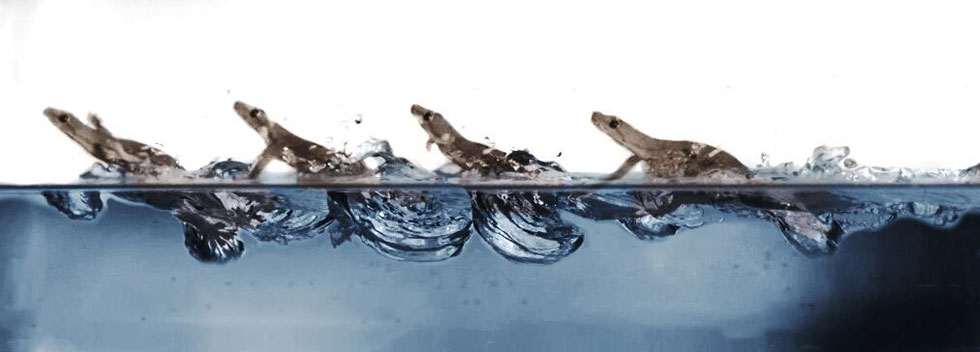
The flat-tailed house gecko can not only stick to walls and glide through the air, but also run on water, a new study finds. This discovery of the combination of techniques the reptile uses to race across water could one day lead to robots capable of the same feats, researchers said.
The flat-tailed house gecko (Hemidactylus platyurus) is a common pet reptile native to southern and Southeast Asia. Not only can bristles on its toes help it climb walls and hang from ceilings, but it can glide with the aid of its webbed feet and skin flaps. "They're kind of like superheroes -- every time you look at them, they can do more things," said study senior author Robert Full, an integrative biologist at the University of California, Berkeley.
The newfound talent of this species was discovered by study co-author Ardian Jusufi, a biophysicist now at the Max Planck Institute for Intelligent Systems in Stuttgart, Germany, when he was in a rain forest in Singapore and saw the geckos skidding across puddles to escape predators. Lab experiments with these reptiles found they could run up to nearly a meter per second over 8 centimeters of water, faster than the swimming speeds of many aquatic creatures, including ducks, muskrats, juvenile alligators and marine iguanas. They could also easily switch to dashing across solid ground or scampering up a wall.
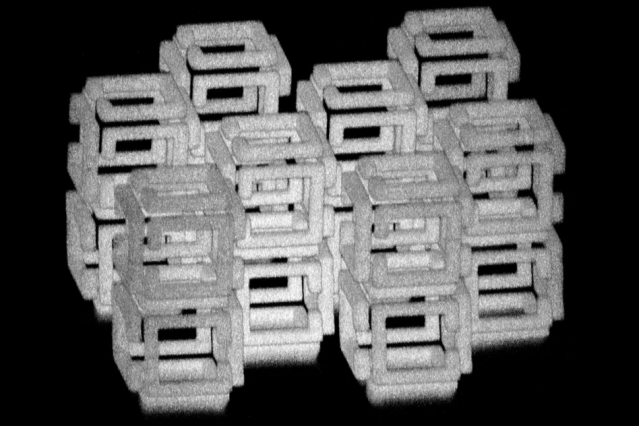
MIT engineers have devised a way to create 3D nanoscale objects by patterning a larger structure with a laser and then shrinking it. This image shows a complex structure prior to shrinking. Courtesy: Daniel Oran
Topics: 3D Printing, Materials Science, Metamaterials, Nanotechnology, Science Fiction
A new 3D nanofabrication technique called Implosion Fabrication could be used to create a wide variety of nano- and microstructures not previously possible. The technique, which can print 3D objects of nearly any shape by patterning a polymer scaffold with a laser and then shrinking the structure to a thousandth of its original volume, might be used to make novel optical metamaterials and electronics devices.
Shrinking hydrogel scaffold
Most existing nanofabrication techniques are limited in what they can produce. Direct laser writing methods, for example, can produce 2D patterns but not 3D ones, which need to be built up a layer at a time – a process that is difficult and slow. Lithography, one of the oldest nanofabrication techniques, can again only print 2D layers on patterned surfaces.
The apropos cultural reference that absolutely dates me!
Image Source: Wikipedia link below
Raymond "Ray" Palmer, is a physicist and professor at Ivy University in the fictional city of Ivy Town, somewhere in New England, specializing in matter compression as a means to fight overpopulation, famine and other world problems. Using a mass of white dwarf star matter he finds after it lands on Earth, Palmer fashions a lens that enables him to shrink any object to any degree he wishes. Compression destabilizes an object's molecular structure, however, causing it to explode. Source: Wikipedia
It's also the epitome of escapist fiction, since a white dwarf in real life is kind of dense.
Damnatio memoriae is a modern Latin phrase meaning "condemnation of memory", i.e., that a person is to be excluded from official accounts. There are and have been many routes to damnatio, including the destruction of depictions, the removal of names from inscriptions and documents, and even large-scale rewritings of history.
In Latin, the term damnatio memoriae was not used by the ancient Romans. The first appearance of the phrase is in a dissertation written in Germany in 1689. The term is used in modern scholarship to cover a wide array of official and unofficial sanctions whereby the physical remnants of a deceased individual were destroyed to differing degrees.
Damnatio memoriae, or oblivion, as a punishment was originally created by the peoples of Ephesus after Herostratus set fire to the Temple of Artemis, one of the Seven Wonders of antiquity.[citation needed] The Romans, who viewed it as a punishment worse than death, adopted this practice.[citation needed] Felons would literally be erased from history for the crimes they had committed.[citation needed] Wikipedia
Apparently I have a few fans on the site Black In America dot com, a forum started by Soledad O’Brien when she was an anchor at CNN:
Another idiot is Mr. Reginald Goodwin! He’s always criticizing Pres. Trump, but I logically know this!
I am positive that Mr. Goodwin voted for Hillary Clinton and this is my argument.
If Mr. Goodwin was as smart as he think he is he would have reasoned like I did that Mr. Trump would be White America’s 45th president. Instead, the idiot Mr. Goodwin comes on Black in America and trash Pres. Trump for winning proving that Mr. Goodwin isn't smart at all since he voted for the wrong candidate, Ms. Hillary Clinton!
The policies that Mr. Trump campaigned on I reasoned Mr. Trump would win and that did happen, Mr. Trump won!
Mr. Goodwin is an idiot and I can say he is because I've proven he is since he voted for the wrong person and is now trashing the candidate that won, that is not intelligence!
Despite calling me out with an insult, I'm judiciously protecting this person's privacy. I'm obviously being facetious about his fandom. From his own words, we know who he's a fan of.
65,853,625 voted for the sane (though, maybe not desired) candidate.
62,985,105 voted for the orange fascist tweeting on the loo and defecating from his pie hole in a breathtaking achievement of daily, all-time Olympic-level lying.
Note: I was Who's Who For Colleges and Universities in my undergraduate days; International “Who’s Who” of Professionals 1998, volume 3 - page 2-47. I've never aspired however, to be on Director Robert Mueller's "Who's Who."
In response, I'm positive I voted for Secretary Clinton too. I'm pretty certain I did (my candidate is saner, and makes complete sentences on and off Twitter). I also don't think she's so much of a narcissist to call for a civil war if removed from office. He's Vladimir Putin's orange wet dream.
My retort (curt and to-the-point):
Who the hell are you, and why should I care? Take your meds and go back to bed, idiot. A prophet you're not, and a profit you've yet to net from your asinine comments. Enjoy oblivion as you will now be blocked and your insane commentary you can keep to yourself. Monday, December 10th 2018 at 1:52 PM
My troll posits himself a "prophet," a title I suspect he's assigned himself and is probably as accurate as Ms. Cleo, may she rest in peace, not speaking ill of the dead.
So, my response was to use the site's tools to block him. Because I've blocked him, he can only fume, post, spit at me from cyberspace and I won't respond or care. I do sincerely hope he takes his meds.
Lastly, I think damnatio memoriae is apropos once we are all post this era of Tweets, insults, incitements, indictments, arrests and Russian collusion. Oblivion should be his purgatory and zero access to the Internet. Like the Witch in the "Wizard of Oz" and my disturbed troll that is his fan: Entropy will allow him to shrivel and die alone and ignored, a Twitter account archived; no presidential library commissioned, bald; bereft of ferret toupees and tanning beds in something beyond hell and pee-pee tapes he would loathe above all else - obscurity.
Topics: Astrophysics, Black Holes, Cosmology, Gravitational Waves, LIGO
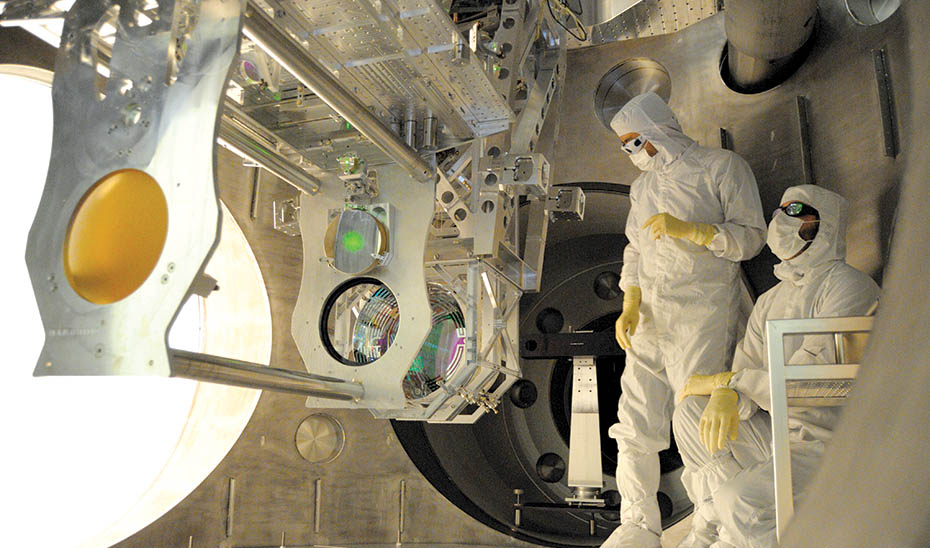
Decades of experimental effort paid off spectacularly on 14 September 2015, when the two detectors of the Laser Interferometer Gravitational-Wave Observatory (LIGO) spotted the gravitational waves generated by a pair of coalescing black holes.1 To get a sense of the effort leading to that breakthrough, consider that the gravitational waves caused the mirrors at the ends of each interferometer’s 4 km arms to oscillate with an amplitude of about 10−18 m, roughly a factor of a thousand smaller than the classical proton radius. The detection was also a triumph for theory. The frequency and amplitude evolution of the measured waves precisely matched general relativity’s predictions for the signal produced by a binary black hole merger, even though the system’s gravity was orders of magnitude stronger than that of any system that had been precisely probed before that detection.
Labeled GW150914, that first reported event was soon joined by other detections of binary black hole mergers. Each of those events appeared to be totally dark to traditional astronomical instruments—the matter and electromagnetic fields near the merging black holes were not sufficient to generate any signal other than gravitational. As had long been promised, gravitational waves have opened a window onto an otherwise invisible sector of the universe.
In a discovery that could pave the way for new materials and applications, materials scientists at Rensselaer Polytechnic Institute have found that oscillating loads at certain frequencies can lead to several-fold increases in the strength of composites with an interface that is modified by a molecular layer of "nanoglue."
A newly published article in Nature Communications reports the unexpected discovery of the effects of loading frequency on the fracture energy of a multilayer composite involving a "nanoglue," the use of which was also pioneered at Rensselaer.
"Unearthing, understanding, and manipulating nanoscale phenomena at interfaces during dynamic stimuli is a key to designing new materials with novel responses for applications," said Ganpati Ramanath, the John Tod Horton Professor of Materials Science and Engineering at Rensselaer and the lead author on the study. "Our work demonstrates that introducing a nanoglue layer at an interface of a layered composite can lead to large mechanical toughening at certain loading frequencies."
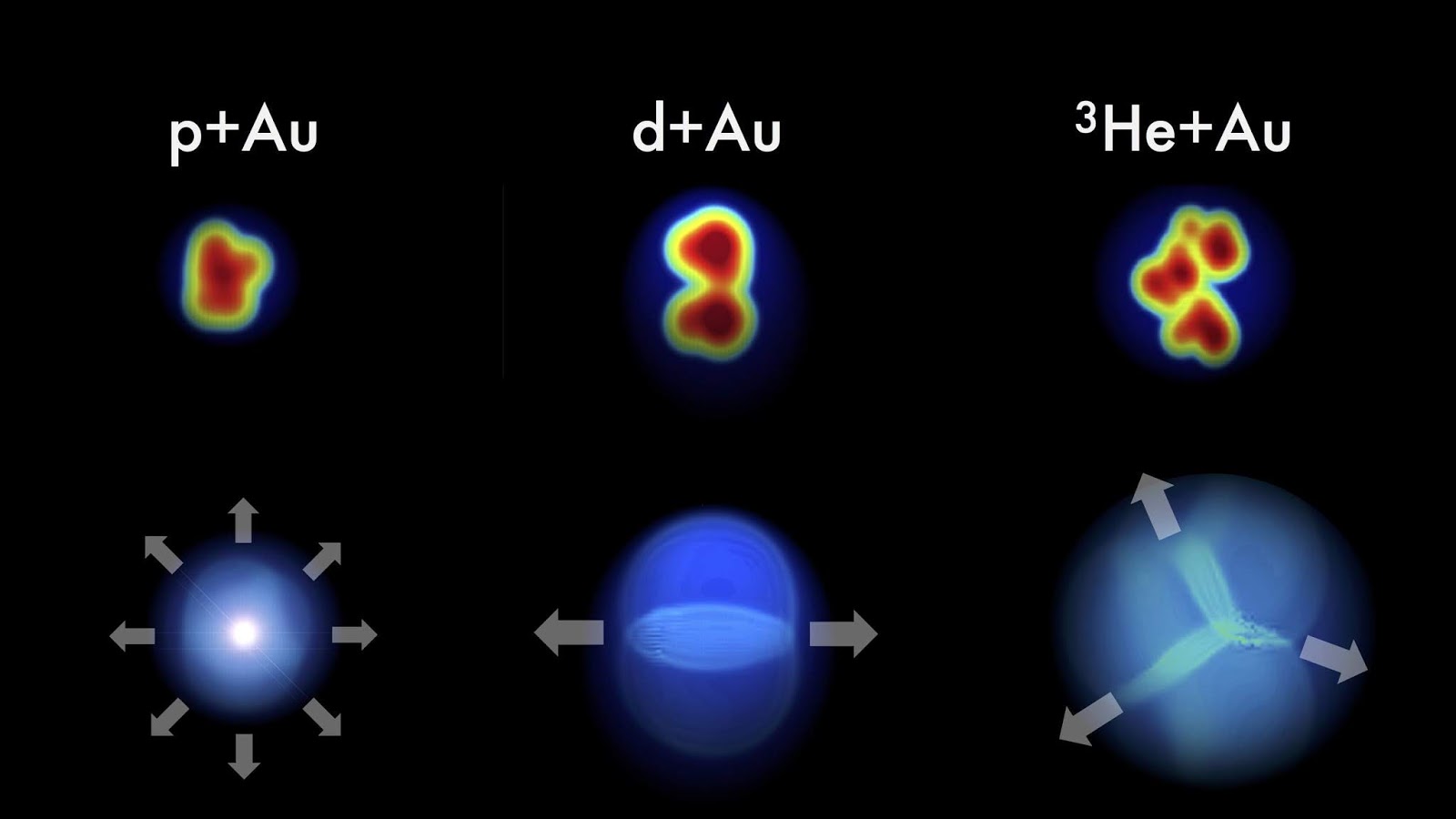
If collisions between small projectiles -- protons (p), deuterons (d), and helium-3 nuclei (3He) -- and gold nuclei (Au) create tiny hot spots of quark-gluon plasma, the pattern of particles picked up by the detector should retain some 'memory' of each projectile's initial shape. Measurements from the PHENIX experiment match these predictions with very strong correlations between the initial geometry and the final flow patterns. Credit: Javier Orjuela Koop, University of Colorado, Boulder
Nuclear physicists analyzing data from the PHENIX detector at the Relativistic Heavy Ion Collider (RHIC)—a U.S. Department of Energy (DOE) Office of Science user facility for nuclear physics research at Brookhaven National Laboratory—have published in the journal Nature Physics additional evidence that collisions of miniscule projectiles with gold nuclei create tiny specks of the perfect fluid that filled the early universe.
Scientists are studying this hot soup made up of quarks and gluons—the building blocks of protons and neutrons—to learn about the fundamental force that holds these particles together in the visible matter that makes up our world today. The ability to create such tiny specks of the primordial soup (known as quark-gluon plasma) was initially unexpected and could offer insight into the essential properties of this remarkable form of matter.
"This work is the culmination of a series of experiments designed to engineer the shape of the quark-gluon plasma droplets," said PHENIX collaborator Jamie Nagle of the University of Colorado, Boulder, who helped devise the experimental plan as well as the theoretical simulations the team would use to test their results.
Citizen scientists have outperformed physicists in creating Bose–Einstein condensates (BECs) of ultracold atoms. That is the finding of an international team of scientists and social scientists, which ran the first-ever optimization challenge in which the public was able to create a BEC remotely by manipulating laser beams and magnetic fields. Optimization experts using state-of-the-art algorithms took a similar challenge and both groups created BECs containing more atoms than the physicists who had built the experiment – even though the physicists had months to perfect their techniques.
By studying the behavior of the 600 citizen scientists who participated, the team has uncovered insights into what makes human problem solving unique. As well as providing hints for creating advanced algorithms based on human intuition, the study suggests how to exploit the best of human and artificial intelligence in the future.
The research was done by Jacob Sherson and colleagues at Aarhus University in Denmark, Ulm University in Germany and the University of Sussex in the UK. Sherson and some of his colleagues have been involved in the ScienceAtHome project, which develops games that use the brainpower of the general public to solve quantum science challenges. In 2016, they described how more than 10,000 players of one of these games – Quantum Moves –had efficiently optimized operations that could run a hypothetical quantum computer. “[With Quantum Moves], we documented that humans can contribute to solving complex challenges,” says Sherson. “With our current work we now take on the challenge of starting to answer how they contribute.”
Reuters (via HuffPost): A Honduran toddler in diapers who came to the border on the migrant caravan sobs after she and her mother fled tear gas fired by American officers at the Mexican border Sunday.
Topics: Biology, Ethics, Existentialism, Politics
Note: Studying for and taking finals next week. Will be on hiatus until 10 December.
I've decided not only will there not be a "presidential pivot," but that there is no "low." When we think he's reached it, he'll just tunnel further to the center of Hades. Apparently, deviant meditations can be generated with the combination of an aggressive laxative encouraging septuagenarian elimination and early morning tweeting, a perversion of the old maxim "walking and chewing gum." The presence of his spot-on clone of Joseph Goebbels (himself a descendant of Holocaust survivors), only eggs on the most depraved behavior from our government and mimicked by a cult following of nihilists. It emboldens fascists globally: domestic terrorists here in the US, and authoritarians worldwide. What's happening at the border can't be done alone: there had to be a group of fellow citizens working in government for YEARS waiting for this moment and its orange, tweeting avatar. We have gone in two years from the world's best example (and that is arguable on many levels, I admit), to its decidedly worst.
*****
Tear "gas" consists of either aerosolized solid compounds or evaporated liquid compounds (bromoacetone or xylyl bromide), not gas. Tear gas works by irritating mucous membranes in the eyes, nose, mouth and lungs, and causes crying, sneezing, coughing, difficulty breathing, pain in the eyes, and temporary blindness. With CS gas, symptoms of irritation typically appear after 20–60 seconds of exposure and commonly resolve within 30 minutes of leaving (or being removed from) the area. With pepper spray (also called "oleoresin capsicum", capsaicinoid or OC gas), the onset of symptoms, including loss of motor control, is almost immediate. There can be considerable variation in tolerance and response, according to the National Research Council (US) Committee on Toxicology.
Use of tear gas in warfare (as with all other chemical weapons,) is prohibited by various international treaties that most states have signed. Police and private self-defense use is not banned in the same manner. Armed forces can legally use tear gas for drills (practicing with gas masks) and for riot control. First used in 1914, xylyl bromide was a popular tearing agent since it was easily prepared. Source: Wikipedia
*****
"The use of tear gas on children -- including infants and toddlers in diapers -- goes against evidence-based recommendations, and threatens their short and long-term health," the statement, written by AAP (American Academy of Pediatrics) President Colleen A. Kraft, reads.
"Children are uniquely vulnerable to physiological effects of chemical agents. A child's smaller size, more frequent number of breaths per minute and limited cardiovascular stress response compared to adults magnifies the harm of agents such as tear gas."
The AAP also alludes to possible psychological trauma, since children who have arrived at the border "have taken harrowing journeys."
"We must make every effort not to retraumatize them," Kraft writes. [1]
*****
Washington (CNN) President Donald Trump on Monday denied that federal agents along the US-Mexico border used tear gas on child migrants, but photos and videos show women and children migrants were among those caught up in an incident between border agents and a migrant group that rushed a border crossing Sunday.
At the White House, Trump said that border agents involved in the incident "had to use (force) because they were being rushed by some very tough people and they used tear gas."
"Here's the bottom line, nobody's coming into our country unless they're coming legally," he added. Trump also said the Mexican government "wants to see if they can straighten it out." [2]
The Trump family infrequently attended Marble Collegiate Church, on Fifth Avenue in New York City. It was chaired famously by Reverend Norman Vincent Peale, author of the "Power of Positive Thinking" and other books published along the lines of the "new thought" philosophy that would become famous in motivational books, speaking circles as well as prosperity gospel ministries, and the new age movement. Dr. Peale performed his first wedding to Ivana; his successor would perform his second to Marla Maples in the same facility. Peale would famously be derided by the psychological community as a fraud. Maybe evidenced by his choices of consigliere that was an appealing trait.
One major criticism of The Power of Positive Thinking is that the book is full of anecdotes that are hard to substantiate. Almost all of the experts and many of the testimonials that Peale quotes as supporting his philosophy are unnamed, unknown and unsourced. Examples include a "famous psychologist", a two-page letter from a "practicing physician", another "famous psychologist", a "prominent citizen of New York City", and dozens, if not hundreds, more unverifiable quotations. Similar scientific studies of questionable validity are also cited. As psychiatrist R. C. Murphy exclaimed, "All this advertising is vindicated as it were, by a strict cleaving to the side of part truth," and referred to the work and the quoted material as "implausible and woodenly pious".
A second major accusation of Peale is that he attempted to conceal that his techniques for giving the reader absolute self-confidence and deliverance from suffering are a well known form of hypnosis, and that he attempts to persuade his readers to follow his beliefs through a combination of false evidence and self-hypnosis (autosuggestion), disguised by the use of terms which may sound more benign from the reader's point of view ("techniques", "formulas", "methods", "prayers", and "prescriptions"). One author called Peale's book "The Bible of American autohypnotism". Source: Wikipedia
This is why my theory is, I don't think he "thinks" he's lying: he's - in the parlance of "faith confessions" - speaking the outcome he wants to see, a warped understanding, or an intellectual laziness not to even BOTHER to understand.
Because he said President Obama was born in Kenya, he HAD to be born in Kenya. Because he "says" the Mueller probe is a witch hunt, it HAS to be a witch hunt (that has bagged a substantial amount of Warlocks). Because he "says" there was "no collusion," their CAN'T have been any collusion. Because he "says" the children aren't harmed, they can't be harmed by teargas. Because he "says" global warming is a hoax by the Chinese, it HAS to be a hoax by the Chinese. Because he SAID their were "fine people on both sides" in Charlottesville, they have to have BEEN fine people on both sides in Charlottesville, Virginia (to remind: one side - antifascists; the other side - Nazis).
I could go on for 6,420 false claims in 649 days (9.89/day). Every prevarication uttered like a steady flow of diarrhea from an erupting sewer are all individual, cherished "golden nuggets" of truth for us mere mortals that don't understand his vibe...
The Eugenics Wars (or the Great Wars) were a series of conflicts fought on Earth between 1992 and 1996. The result of a scientific attempt to improve the Human race through selective breeding and genetic engineering, the wars devastated parts of Earth, by some estimates officially causing some thirty million deaths, and nearly plunging the planet into a new Dark Age. (TOS: "Space Seed"; ENT: "Borderland")
*****
When a researcher in China startled the world earlier this week with the revelation that he had created the first gene-edited babies, only one prominent scientist quickly spoke out in his defense: geneticist George Church, whose Harvard University lab played a pioneering role in developing CRISPR, the genome editor used to engineer embryonic cells in the hugely controversial experiment. Church has reservations about the actions of He Jiankui, the scientist in Shenzhen, China, who led the work.
The fiercely debated experiment, described by He at a meeting in Hong Kong, China, today, used CRISPR to try to make the babies resistant to HIV by crippling a receptor, CCR5, that the virus uses to infect white blood cells. But Church also thinks there’s a frenzy of criticism surrounding He that exaggerates the severity of what one critic gingerly called his “missteps” but another called “monstrous.” [1]
*****
HONG KONG, CHINA--An international conference on human gene editing dominated by news of the birth of the world's first genetically engineered babies today concluded with a statement from the organizers that harshly condemned the controversial study. But it did not call for a global moratorium on similar studies, as some scientists had hoped; instead it called for a "translational pathway" that might eventually bring the ethically fraught technology to patients in a responsible way.
The hotly debated study, which apparently resulted in twin baby girls whose genomes were altered in a way that could affect their offspring, came to light on the eve of the Second International Summit on Human Genome Editing here. The first summit, held in Washington, D.C. in December 2015, concluded with a statement that specifically said that unless and until safety, efficacy, and ethical and regulatory issues are resolved, "it would be irresponsible to proceed with any clinical use of germline editing," a reference to genetic modifications that can be passed on to the next generation.
But that is exactly what Chinese researcher He Jiankui did, crippling a gene known as CCR5 in hopes of making the babies as well as their offspring resistant to HIV infection. After the news appeared in the media, He appeared at a special session at the summit yesterday to defend his work and answer questions from the stunned audience. (He, an associate professor at Southern University of Science and Technology in nearby Shenzhen, withdrew from a second session on embryo editing on Thursday afternoon.) [2]
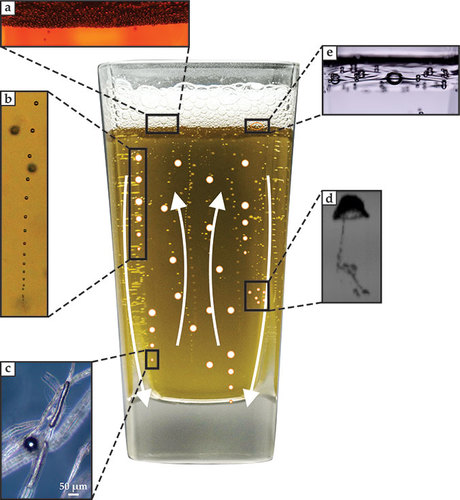
A glass of beer, deconstructed. (a) At the beer’s surface sits a head of foam. (b) A trail of bubbles rises from a nucleation site along the glass wall. The rising of bubbles from different nucleation sites induces a global circulation (sketched here with white arrows). (c) Cellulose fibers serve as nucleation sites; gas cavities inside the fiber are clearly visible. (d) A 3-mm-wide mushroom-shaped bubble plume arises from the implosion of a millimeter-sized bubble when a beer bottle is gently tapped. (e) Surface bubbles seen from below are nearly on edge. (Panels a and b courtesy of Rodrigo Viñas, TresArt Collective.)
Topics: Chemistry, Fluid Mechanics, Physics Humor
Carbonation can also occur by fermentation. When yeast eats simple sugars, it primarily excretes ethanol and CO2. If the process occurs in a closed container, the pressure rises as the amount of CO2 increases. In turn, as the pressure rises, the gas dissolves. Although beer making dates back thousands of years,3it is unclear how bubbly beer could have been originally—old ceramic containers were most likely unsealed. Sparkling wine was discovered later—in the 17th century—and its carbonation comes from a secondary fermentation inside the bottle.
The presence of alcohol and other molecules during fermentation, such as proteins and enzymes, makes the physical description even more interesting. They affect the liquid’s surface tension, viscosity, density, and other properties, which in turn affect the formation, motion, and surface stability, or lifetime, of the bubbles. No less important is the bubbles’ ability to accelerate the absorption of alcohol in the body and thus the rapidity of intoxication.4
Alcoholic or not, bubbly drinks are full of physics. Figure 1 illustrates the processes that occur when a carbonated drink is poured into a tall glass. If the liquid is poured shortly after the bottle is opened, the birth of bubbles is visible inside the liquid and on the surface of the glass. Streams of bubbles continuously form and induce convection that affects their production rate and motion. As they grow, the bubbles rise and eventually reach the surface. Once there, depending on the properties of the liquid, the bubbles either burst or float.
A ubiquitous quantum phenomenon has been detected in a large class of superconducting materials, fueling a growing belief among physicists that an unknown organizing principle governs the collective behavior of particles and determines how they spread energy and information. Understanding this organizing principle could be a key into “quantum strangeness at its deepest level,” said Subir Sachdev, a theorist at Harvard University who was not involved with the new experiments.
The findings, reported today in Nature Physics by a team working at the University of Sherbrooke in Canada and the National Laboratory for Intense Magnetic Fields (LNCMI) in France, indicate that electrons inside a variety of ceramic crystals called “cuprates” seem to dissipate energy as quickly as possible, apparently bumping up against a fundamental quantum speed limit. And past studies, especially a 2013 paper in Science, found that other exotic superconducting compounds — strontium ruthenates, pnictides, tetramethyltetrathiafulvalenes and more — also burn energy at what appears to be a maximum allowed rate.
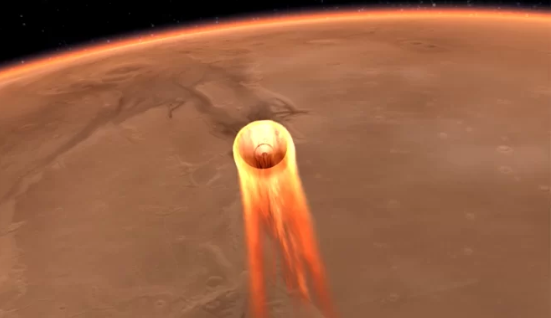
As InSight enters Mars's atmosphere, it will be traveling at around 12,300 mph, generating a tremendous amount of heat. Credit: NASA/JPL-Caltech
Topics: Mars, NASA, Planetary Science, Space Exploration, Spaceflight
When NASA's InSight mission arrives at Mars on Monday (Nov. 26), the probe faces a formidable challenge — perhaps the most harrowing so far of its seven-month journey — touching down on the planet's surface.
Any given moment of the process of launching a spacecraft and propelling it toward a distant target in our solar system carries risks. But InSight's descent will be an especially nerve-wracking nail-biter for NASA: Mission control won't have any idea what's happening to the spacecraft in real time, due to the minutes-long delay in the craft's transmission signal.
During the critical minutes after InSight breaches Mars' atmosphere, when the probe is hurtling toward the planet's surface, news of the lander's progress won't yet have reached Earth. For 6 long minutes, NASA engineers will tensely wait for InSight's status reports to catch up, leaving the team unable to confirm if InSight landed safely or if something unexpected went horribly wrong. The latter could leave the lander "dead" on the Martian surface.
There are three stages that InSight (short for Interior Exploration Using Seismic Investigations, Geodesy and Heat Transport) will undergo as it zooms toward the landing site: a rocket-powered trip through Mars' upper atmosphere; a parachute descent after ejecting the lander's protective heat shield; and a powered descent to the ground, slowed by 12 firing engines, according to NASA. First, the "cruise stage" will separate and the capsule will reposition itself so its heat shield faces the atmosphere, where the shield will heat up to more than 1,800 degrees Fahrenheit (1,000 degrees Celsius), Rob Manning, a systems engineer at NASA Jet Propulsion Laboratory (JPL), said in a video.
'Cry God for Harry, England, and Saint George!' speech of Shakespeare's Henry V, Act III, 1598.
Because apathy gives power to a demagogue. As he is wounded, and apparently moping, he will try something, ANYTHING to constantly change the subject during a creeping authoritarianism; (as Bill Maher said) a slow-moving coup.
Late night comedians are making great hay of this moment. It allows us to diffuse our angst in humor. Charlie Chaplin did so in 1940 with his self-produced speaking film, "The Great Dictator," Adolf Hitler personified in his cinematic character (and, Chaplin's obvious opinion of him) Adenoid Hynkel. That levity did not stop the coming atrocities, or the war.
Coup D'état (n) : a sudden decisive exercise of force in politics
especially : the violent overthrow or alteration of an existing government by a small group Merriam-Webster
*****
The Trump administration is breaking with 75 years of precedent by attempting to interfere in how science is practiced by the U.S. government, according to three experts who issued a dire warning to their profession in the journal Science on Thursday. The administration is empowering political staff to meddle with the scientific process by pushing through reforms disguised to look as though they boost transparency and integrity, the experts say.
“It is tempting to conclude that recent proposals for reforming regulatory science are similar to what has occurred in the past,” they write. “They are not.”
“People who are not scientists are telling us how scientific synthesis and analysis should be done,” says Wendy Wagner, a professor of law at the University of Texas at Austin and one of the authors of the paper. “We’re not even getting scientists’ best work. We’re tying scientists’ hands behind their back and not even giving them a shot.”
“It’s a very dangerous place for science and public policy,” she told me. “Politics has gone to a place that should be off limits, and no one is noticing and calling them on that fact.”
Why are all these reforms so unprecedented? According to the authors, each of them places some stage of the scientific process under political direction. For decades, they write, the EPA and other federal agencies have followed a “two-step process” when consulting science: First, scientific staff have reviewed existing research and summarized and synthesized it for political staff. Then that political staff “can accept, ignore, rerun some of the analysis, or reinterpret the results.”
This process essentially erects an apolitical wall between the agency’s scientific staff and its policy makers, and it has been endorsed by the U.S. National Academy of Science, the authors say. But every single one of the proposed EPA reforms breaches that wall, allowing political staff to dictate the terms of scientific analysis and synthesis to scientists.
In his piece on Psychology Today, Eric R. Maisel, Ph.D. lists "What You Can Expect From an Authoritarian." The list is terrifying, but number 7: "Truth Held As Enemy - Authoritarians have little regard for the truth. If your agenda is to punish others because you are filled with hatred and anger, the truth of any particular matter is a mere inconvenience." This sums up the assault on legitimate news media and science. There is method to this madness.
*****
1. Systematic efforts to intimidate the media.
2. Building an official pro-Trump media network.
3. Politicizing the civil service, military, National Guard, or the domestic security agencies.
4. Using government surveillance against domestic political opponents.
5. Using state power to reward corporate backers and punish opponents.