Genesis Science Fiction Magazine Is Back By Popular Demand!
Get the E-Magazine Issue #11 Now!
https://fliphtml5.com/purchase/pbqer/bvks/index.html
#blackscifi #blackcomics #afrofuturism #blackwriters #genscifi #blackgirlmagic #GenesisSciFiMag
Genesis Science Fiction Magazine Is Back By Popular Demand!
Get the E-Magazine Issue #11 Now!
https://fliphtml5.com/purchase/pbqer/bvks/index.html
#blackscifi #blackcomics #afrofuturism #blackwriters #genscifi #blackgirlmagic #GenesisSciFiMag

Topics: History, Politics, Research, STEM
A crowd began to form at the train station in Pocatello, Idaho, around 5:15 am on Wednesday, 10 May 1950. Some 700 bleary-eyed townspeople had come to see the president and neither the day’s cold weather nor the hour would deter them. When the train chugged into town, President Harry Truman was standing on the rear platform, ready to greet the crowd. The trip to Pocatello was part of a whistle-stop tour of the northern US that took the president to numerous small towns dotting the railway.
Although Truman spent most of his time in Idaho addressing local agricultural and economic issues, in Pocatello, he talked to the crowd about science. Earlier that morning, as his train sped along the tracks, Truman had signed the National Science Foundation Act of 1950. It created the first federal agency devoted to supporting fundamental research and education across all scientific disciplines. Standing before a group of chilly Idahoans, Truman made a case for the importance of large-scale federal support for scientific research.
The story of NSF’s creation and early years of operation serves as an important window into the growth of postwar federal science policy. Science’s role in World War II had convinced many in the government that public support was needed for scientific research. Once open, NSF became an important site where debates over science policy, federal support for civilian research facilities, and federal support for education in STEM (science, technology, engineering, and mathematics) played out in postwar America.
NSF and postwar US Science, Emily Gibson, Physics Today
I haven't done one of these in a long time and I was thinking about some of the products I read or watched a while ago. I wonder what our creative members are up to these days?
About darn time!
 Vote Here
A Lovecraftian JRPG where you have to consume monsters to survive
Our game Celestial Tear: Lost World is a semi-finalist in the Ultimate Game Idea contest and we are in need of as many VOTES as we can get. This cross-genre space adventure takes action turn based combat and mixes survival mechanics into a fun and sometimes terrifying adventure as consuming grotesque creatures and taking on their abilities is the only way to protect your sanity from the ever haunting Void.
 The Haunting Void
Each of the three playable characters can all consume monsters by eating or salvaging their organs or body parts into weapons or gear. Uzu, the fighter, can fashion enough monster parts to create permanent weapon upgrades while Jake, the gunner, can use them to make ammo and other expendable resources. Trask, however, can eat the monsters, absorbing their physical traits and some abilities until she completely metabolizes the energy.
 Crafting
This will be a fun, engaging game where battles become varied and exciting as players can choose and execute these unique traits and abilities that the characters naturally possess in conjunction with the varied and weird monsters they consume. They will travel across this weird and almost organic-like planet where caverns seem more like the bowels of a rotting monster than the stony walls of an eroding cavern.
 Action Turn-Based Battles
Blending elements of sandbox, survival, and horror with classic, active turn-based, Japanese role-playing style battles, Celestial Tear: Lost World presents a new cross-genre experience unlike anything seen before. With retro pixel-art graphics and a lush, dynamic 16-bit soundtrack, the world of Celestial Tear: Lost World provides an immersive Lovecraftian experience as players travel across this gritty, dark anti-universe. Fans of Final Fantasy, Silent Hill, and even the classic Eternal Darkness will all find something to relish in this cosmic, terrifying adventure.
Click here Vote for Celestial Tear: LOST WORLD for the Ultimat Game Idea
Topics: Civics, Civil Rights, COVID-19, Existentialism, Fascism, Human Rights
On April 12, 1633, chief inquisitor Father Vincenzo Maculani da Firenzuola, appointed by Pope Urban VIII, begins the inquisition of physicist and astronomer Galileo Galilei. Galileo was ordered to turn himself in to the Holy Office to begin trial for holding the belief that the Earth revolves around the Sun, which was deemed heretical by the Catholic Church. Standard practice demanded that the accused be imprisoned and secluded during the trial.
This was the second time that Galileo was in the hot seat for refusing to accept Church orthodoxy that the Earth was the immovable center of the universe: In 1616, he had been forbidden from holding or defending his beliefs. In the 1633 interrogation, Galileo denied that he “held” belief in the Copernican view but continued to write about the issue and evidence as a means of “discussion” rather than belief. The Church had decided the idea that the Sun moved around the Earth was an absolute fact of scripture that could not be disputed, despite the fact that scientists had known for centuries that the Earth was not the center of the universe.
Galileo is convicted of heresy, History.com
Authoritarians have a long history of defying science and reality. No one questions now that the Earth isn't the center of the solar system and our understanding of the universe has expanded since Galileo confirmed Copernican Heliocentric Theory. Modern authoritarians resort to pathological lying.
I've discussed Biff's proclivities here and here before. The video above is homage to him without invoking his hideous visage.
You look scared, Donald.
You should be.
A pandemic is problematic for you.
You can’t gaslight a pandemic.
You can’t bully it into compliance.
You can’t lie to it and hope it won’t run a fact check.
You can’t pay for its silence or promise immunity.
You can’t threaten its reelection bid if it breaks ranks.
You can’t fire it when it dissents from your ramblings.
You can’t impugn its character with baseless attacks.
You can’t fool it with talk about God.
You can’t bury it with FoxNews fluff pieces.
You can’t drown it in nationalism.
You can’t dismiss it with cries of fake news.
You can’t pardon it after it completes its assaults.
You can’t give it a demeaning nickname and hope to deflate it.
You can’t rage-Tweet it into exhaustion.
You Can’t Gaslight a Pandemic, Donald, John Pavlovitz, Stuff That Needs To Be Said
By golly, Biff damned sure is trying!
I wrote this on Facebook, May 8th:
He’s wrecked the economy like 1 of his casinos.
He sucks as a moral leader, or comforter-in-chief.
Expect Biff to go full Brown People-Chinese-Mexican-Muslim racist, because, why not?
May 8th was Friday. He managed to fulfill my predictions by Monday.
Like all authoritarians, fascists, Nazis and racists: facts don't matter. What matters is emotion, what a certain thing makes "the base" feel. Most of them, like Biff feel threatened by changing demographics. Fascists take advantage of disasters and chaos, as rampant confusion consolidates their power, and a pandemic is made-to-order. For his bewildered, gun-toting herd, it's like the last gasp of Archie Bunker. They're worried about 2042. I'm worried about Dr. Bright's ominous prediction of this being our "darkest winter." I'm worried about the Forbes article four years ago that capitalism MUST change, or humanity will starve itself to death eight years later in 2050. The so-called white majority becoming numerical minorities will be short-lived, and moot:
Corporate capitalism is committed to the relentless pursuit of growth, even if it ravages the planet and threatens human health.
We need to build a new system: one that will balance economic growth with sustainability and human flourishing.
Unless It Changes, Capitalism Will Starve Humanity By 2050, Drew Hansen, Forbes, 2016
In one of a number of revolts against colonial rule, in a corner of what is now Tanzania, the Maji Maji Rebellion sought to drive out German colonialists. The rebels were partly incited by a spirit medium who claimed to be possessed by a snake spirit and to have a “war medicine” that would turn German bullets into water. In one of the saddest and most surreal episodes in anti-colonial history, thousands of Africans who put their faith in this magic perished before German machine guns.
It has been axiomatic in anthropology since Bronislaw Malinowski’s seminal work in the early 20th century that people turn to magic when they feel powerless. Soldiers, for example, may repeatedly practice mastery of their weapons, but they know there is still a strong element of chance in whether they live or die in combat, and so they also pray, wear talismans, and develop superstitions about weapons, clothes, or routines that bring luck. In this spirit, the Maji Maji rebels—outgunned but unwilling to tolerate German occupation—put their faith in magic water, as well as their own martial skills, as they rose up.
COVID-19 and the Turn to Magical Thinking, Hugh Gusterson, Sapiens.org
I don't think it will matter what hue of human is in the numerical majority. This pandemic screams at us that capitalism as we practice it is out of balance with the globe we live on. This pandemic roars at us that all the magical-thinking-whistling-past-the-graveyard in the world won't will it away, nor will opening up too soon and assume callously only "brown people" will die. As much as I love Star Trek as nerd mythology, I'm not expecting a leap in physics, discovering warp drive, and leaving the planet for exciting Alpha Centauri tours. In 2050, I pretty much expect to be either 88, or ashes. I just didn't expect the rest of the world to be ashed with me.
It is, in a dark sense, a brute force way to end inequality, forever.
"Blessed are the meek, for they shall inherit the earth," Matthew 5:5.
I guess that doesn't necessarily have to mean Homo Sapiens.
Topics: Biology, COVID-19, Statistics
Unless there is widespread testing for COVID-19, experts warn, cases will surge as governments reopen more businesses and public spaces. But there is still a woeful shortage of diagnostic tests for coronavirus infections, because of unprecedented demand for chemicals and supplies. The U.S., for instance, does hundreds of thousands of tests a day, but that number is still far short of the millions of daily assays recommended for a safe return to normal.
Now dozens of researchers in the U.S., Israel and Germany are pursuing a strategy to dramatically increase diagnostic capacity: group tests. By pooling samples from many people into a few groups and evaluating pools rather than individuals, the scientists think they can use fewer tests on more people. This approach could lead to the faster detection of individuals who are unwitting carriers of the disease and an ability to quickly clear others who have not been infected. The strategy has been used in the past to successfully detect cases of HIV, chlamydia, malaria and influenza, and was originally conceived during World War II to test thousands of military personnel for syphilis.
“As long as we have no vaccine, we can only stop the transmission of the virus by testing and isolation of people who are infected,” says Sandra Ciesek, director of the Geothe University Frankfurt’s Institute of Medical Virology in Germany. In mid-February, she was among the first to report that people with no symptoms could spread the virus. Since then, Ciesek has been working on a pooled testing technique to identify asymptomatic carriers. The approach “is trying to do more with the same number of tests,” says Tomer Hertz, a computational immunologist at Ben-Gurion University of the Negev in Israel, who is also developing a batch-testing strategy. There is a caveat, though: as the prevalence of the infection in a community goes up, the ability to save resources through group testing goes down.
Coronavirus Test Shortages Trigger a New Strategy: Group Screening, Marla Broadfoot, Scientific American
Topics: Astrophysics, Atomic Physics, Cosmology, Philosophy
We are more alike than different. The atoms in our bodies are the same forged in distant stars; Carl Sagan said we are "made of star stuff."
Then: we evolve under ultraviolet light at degree inclinations on the globe, thereby changing the prominence of Melanin in our epidurals. Due to war and conquests, we craft a narrative of what is godly, who is "divine" and who is deviant. Good and evil has a hue or light and darkness. And thus, we craft the seeds of our own self-destruction from ignorance, hubris, racism, snobbery and xenophobia.
Star stuff should be better behaved.
 |
| Next big thing: Haifei Zhan and colleagues reckon that carbon nanothreads have a future in energy storage. (Courtesy: Queensland University of Technology) |
Topics: Applied Physics, Battery, Materials Science, NanotechnologyComputational and theoretical studies of diamond-like carbon nanothreads suggest that they could provide an alternative to batteries by storing energy in a strained mechanical system. The team behind the research says that nanothread devices could power electronics and help with the shift towards renewable sources of energy.
The traditional go-to device for energy storage is the electrochemical battery, which predates even the widespread use of electricity. Despite centuries of technological progress and near ubiquitous use, batteries remain prone to the same inefficiencies and hazards as any device based on chemical reactions – sluggish reactions in the cold, the danger of explosion in the heat and the risk of toxic chemical leakages.
Another way of storing energy is to strain a material that then releases energy as it returns to its unstrained state. The strain could be linear like stretching and then launching a rubber band from your finger; or twisted, like a wind-up clock or toy. Over a decade ago, theoretical work done by researchers at the Massachusetts Institute of Technology suggested that strained chords made from carbon nanotubes could achieve impressive energy-storage densities, on account of the material’s unique mechanical properties.
Odes to the Multiverse is a collection of short works consisting of vignettes, meant to be digested in small doses, accompanied by several longer short stories for more leisurely enjoyment.
This book features punk scifi, space opera, horror & urban fantasy vignettes and short stories featuring cosmic tales of distant worlds and strange futures where earthbound horrors unfold. This omnibus invites you to marvel at the macabre and maleficent; and embrace the weird and wonderful.
Odes to the Multiverse is available for Kindle and in Print from Amazon, as well as a number of other retailers.
See full list of retailers here: https://tonyarmoore.com/books-by-tonya-r-moore/odes-to-the-multiverse/
 |
| At the former IBM research facility, Fishkill, NY |
Topics: Civics, Civil Rights, COVID-19, Existentialism, Human Rights, Politics, Women's Rights
*****

The following comics are adult in nature. Featuring superheroes and sex, the main character Dark Spider traverses, the law, identities and universes to stop threats from this world and beyond.
Dark Spider's first appearance: Lawful Evil # 1
Dark Spider's Rise to power: Lawful Evil: A Night Out.
Dark Spider's possible future: The Menagerie: Entangled.
 |
| Image Source: Pinterest |
Topics: Civics, Civil Rights, COVID-19, Existentialism, Fascism, Human Rights, Politics, Women's Rights
Ref: Leadership of Ghouls...October 26, 2018
Can make a Heav'n of Hell, a Hell of Heav'n.
What matter where, if I be still the same,
And what I should be, all but less then he
Whom Thunder hath made greater? Here at least
We shall be free; th' Almighty hath not built
Here for his envy, will not drive us hence:
Here we may reign secure, and in my choyce
To reign is worth ambition though in Hell:
Better to reign in Hell, then serve in Heav'n.
But wherefore let we then our faithful friends,
Th' associates and copartners of our loss
Lye thus astonisht on th' oblivious Pool,
And call them not to share with us their part
In this unhappy Mansion, or once more
With rallied Arms to try what may be yet
Regaind in Heav'n, or what more lost in Hell?
Did Colonists Give Infected Blankets to Native Americans as Biological Warfare?
History.com
Strictly speaking, one-eyed ghouls always have to cannibalize since they are forced to eat human or ghoul meat. In their case, however, only eating ghoul meat is typically treated as cannibalism.
 |
| Burbidge, pictured with her husband and research partner, Geoffrey, was appointed to numerous leadership positions previously held only by men. | W.W. Girdner/Caltech Archives |
Topics: Astronomy, Astrophysics, Diversity, Diversity in Science, Women in Science
In Memoriam:
Margaret Burbidge, Pioneering Astronomer and Advocate for Women in Science
Adam D. Cohen, American Association for the Advancement of Science
 |
| Figure 1: Planar transistors vs finFETs vs nanosheet FET. Source: Samsung |
Topics: Applied Physics, Electrical Engineering, Moore's Law, Nanotechnology, Semiconductor Technology
Making Chips At 3nm And Beyond
Mark Lapedus and Ed Sperling, Semiconductor Engineering
 |
| Will Smith as U.S. Army virologist Lt. Col. Robert Neville in the movie, "I Am Legend." |
Topics: Civics, Civil Rights, COVID-19, Elections, Existentialism, Fascism, Human Rights
 |
| Silicon sees the light: Elham Fadaly (left) and Alain Dijkstra in their Eindhoven lab. (Courtesy: Sicco van Grieken/SURF) |
Topics: Optics, Electrical Engineering, Nanotechnology, Research, Solar Power, Spectroscopy
Silicon-based light emitter is ‘Holy Grail’ of microelectronics, say researchers
Hamish Johnston, Physics World
 |
| Wiki Chip: 14 nm lithography process |
Topics: Electrical Engineering, Moore's Law, Nanotechnology, Semiconductor Technology
A Reckoning for Moore’s Law
Why upgrading your computer every two years no longer makes sense.
Ian Fisk, Simon's Foundation
 |
| Credit: Getty Images |
Topics: African Americans, Civil Rights, COVID-19, Human Rights, Medical Science
What the COVID-19 Pandemic Means for Black Americans
Uché Blackstock, Scientific American
To fling my arms wide
In some place of the sun,
To whirl and to dance
Till the white day is done.
Then rest at cool evening
Beneath a tall tree
While night comes on gently,
Dark like me-
That is my dream!
To fling my arms wide
In the face of the sun,
Dance! Whirl! Whirl!
Till the quick day is done.
Rest at pale evening...
A tall, slim tree...
Night coming tenderly
Black like me.
Dream Variations, Langston Hughes, Poet.org and enotes analysis
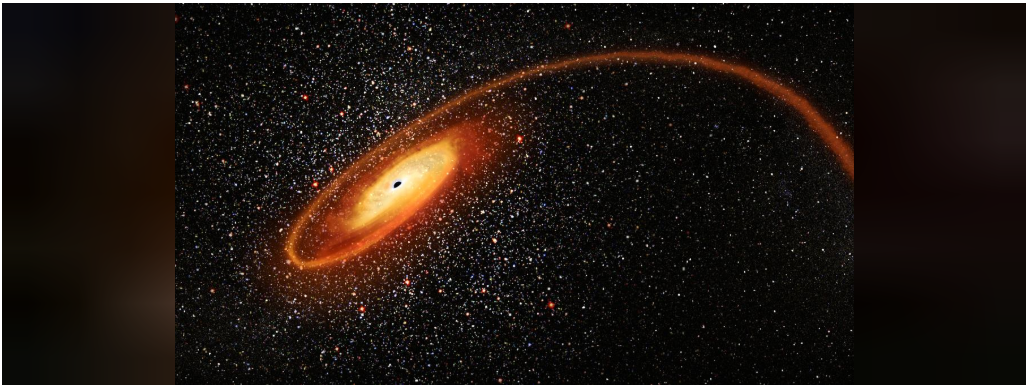 |
| A cosmic homicide in action, with a wayward star being shredded by the intense gravitational pull of a black hole that contains tens of thousands of solar masses in an artist's impression obtained by Reuters April 2, 2020. NASA-ESA/D. Player/Handout via REUTERS. |
Topics: Astrophysics, Black Holes, Cosmology, General Relativity, Hubble
Astronomers spot 'missing link' black hole - not too big and not too small
Will Dunham, Reuters Science
