Reginald L. Goodwin's Posts (3123)

Sort by

DIY...

Source: Technology Review

If you find yourself with an old 30 meter satellite communication antenna, what should you do with it? One option is to convert it into a radio telescope, which is exactly what astronomers at the Auckland University of Technology in New Zealand have done with an old dish lying around in the northernmost reaches of the country.

So what exactly do you have to do to convert a communications antenna into a radio telescope? Today, Lewis Woodburn at the Auckland University of Technology and a few pals, answer this question by detailing the process they have gone through to make the conversion.

The old satellite communications dish in question was built in 1984 for the New Zealand Post Office and transferred to Telecom New Zealand in 1987. By 2010, the dish had become obsolete and the company stopped maintenance with the intention of demolishing it. That’s when the Auckland University of Technology stepped in.

Abstract:

We describe our approach to the conversion of a former 100-foot (30-m) telecommunication antenna in New Zealand into a radio telescope. We provide the specifications of the Earth Station and identify the priorities for the conversion. We describe implementation of this plan with regards to mechanical and electrical components, as well as design of the telescope control system, telescope networking for VLBI, and telescope maintenance. Plans for RF, front-end and back-end developments based on radio astronomical priorities are outlined.


Physics arXiv:
Conversion of New Zealand's 30m Telecommunication Antenna into a Radio Telescope
Lewis Woodburn, Tim Natusch, Stuart Weston, Peter Thomasson, Mark Godwin, Sergei Gulyaev

Read more…

Nihilistic Narcissists...


"One of the penalties for refusing to participate in politics is that you end up being governed by your inferiors." Plato

Political science is the study of governments, public policies and political processes, systems, and political behavior. Political science subfields include political theory, political philosophy, political ideology, political economy, policy studies and analysis, comparative politics, international relations, and a host of related fields. (For a good cross section of the areas of study, see the list of APSA Organized Sections.) Political scientists use both humanistic and scientific perspectives and tools and a variety of methodological approaches to examine the process, systems, and political dynamics of all countries and regions of the world. American Political Science Association, What is Political Science?


Nihilism (n):

1 a : a viewpoint that traditional values and beliefs are unfounded and that existence is senseless and useless; b : a doctrine that denies any objective ground of truth and especially of moral truths

2 a : a doctrine or belief that conditions in the social organization are so bad as to make destruction desirable for its own sake independent of any constructive program or possibility; b capitalized : the program of a 19th century Russian party advocating revolutionary reform and using terrorism and assassination Webster


Narcissism (n):

1 : egoism, egocentrism

2 : love of or sexual desire for one's own body

— nar·cis·sist noun or adjective

— nar·cis·sis·tic adjective

Examples of NARCISSISM

Origin of NARCISSISM


German Narzissismus, from Narziss Narcissus, from Latin Narcissus

First Known Use: 1822, also Webster and Narcissistic Personality Disorder

Lastly, Egoism

1 a : a doctrine that individual self-interest is the actual motive of all conscious action, b : a doctrine that individual self-interest is the valid end of all actions; 2 : excessive concern for oneself with or without exaggerated feelings of self-importance — compare egotism 2 Ibid


C-Span feeds it; 24-hour news cycles and "gothca" soundbite politics cultivates it; well-heeled dark money encourages it. The "science" has been removed from the definition and "cult" would be more appropriate.


We should not be surprised one iota that a cult sect that says they're for "limited government" would wish it diminished: "small enough to drown it in the bathtub" to paraphrase Grover Norquist. The apotheosis of "The Gipper" has resulted in a "Facebook for patriots." Despite his deification, The Gipper didn't attend church on a regular basis. Despite his tax-cutting legend, he wasn't above negotiations that meant raising taxes. Even David Stockman - no pinko commie - has pretty much disavowed "trickle-down economics." Today, there is a love of the products of science by the cult and a disdain for its report on Climate Change. Corporate news that has the legal right to lie to the electorate; still lying to itself after its "predictions of the Romney landslide" fell to dried fecal dust. Facts are the bereft antithesis to dogma when your sect disdains the "reality-based community."


550,000 children were sacrificed on Moloch altars; "crematoriums of care" (or, don't care). Their dreams have become nightmares as this political stunt is similar to lemmings in suicide vests for any leverage in the nation's changing demographics. A paired-down "bill" that demands deportation back to the humanitarian crisis meat grinder some of these recent kids escaped; a result of our trade polices, a moribund, oxymoron "war on drugs" and an appetite for the same sorcery. There is 1 death every 74 minutes in Honduras. So much for the "war." Suing the president for using executive powers expanded under his predecessor; then demanding he use the same to "solve the crisis at the border." It would be an SNL skit or an "Onion" faux story, but it sadly, is a part of our congress that is clearly psychotic.


I don't use the word "cult" lightly. Mike Lofgren - previous life as a GOP operative - takes his former party to task in his op-ed: "Goodbye to All That: Reflections of a GOP Operative Who Left the Cult."


Two poignant excerpts:

"It should have been evident to clear-eyed observers that the Republican Party is becoming less and less like a traditional political party in a representative democracy and becoming more like an apocalyptic cult, or one of the intensely ideological authoritarian parties of 20th century Europe. This trend has several implications, none of them pleasant.

"Far from being a rarity, virtually every bill, every nominee for Senate confirmation and every routine procedural motion is now subject to a Republican filibuster. Under the circumstances, it is no wonder that Washington is gridlocked: legislating has now become war minus the shooting, something one could have observed 80 years ago in the Reichstag of the Weimar Republic. As Hannah Arendt observed, a disciplined minority of totalitarians can use the instruments of democratic government to undermine democracy itself."

We are being held hostage by nihilistic narcissists/domestic terrorists: more intent on wrecking "collectivism"-cum-Koch rebuke, deliberately sabotaging the very idea of democratic republics, holding off scrutiny from  many well-meaning peoples with a few biblical verses and babble on the "sanctity of the unborn." We can't solve the crisis at the border; the crisis in the Near East; Ebola virus containment; Climate Change; education reform minus standardized testing idiocy; global competitiveness in science and technology; jobs; keeping the government open: we can't pass laws in a governing body where part of it doesn't believe in government. When the Earth and entire universe is only 6,000 years old and "the end is nigh," there is no reason - as it, and logic have left the House of Representatives - and there is no possibility of solving complex problems. That is a ship of state teetering the narrow edge of self-extinction. It is arrogant to think the global powers would not change the world currency of commerce from the Dollar to the Yuan or Euro overnight.


Meanwhile, the now-born on the border fleeing violence are destined to be stillborn on their fleeing feet; as an esteemed member of congress and Civil Rights icon John Lewis has stated, "history will judge us harshly." More also for not demanding the one litmus test prior to running for public office that should matter for our leaders: a psychological evaluation on the fitness to serve.

Read more…

Moxie and Mars 2020...


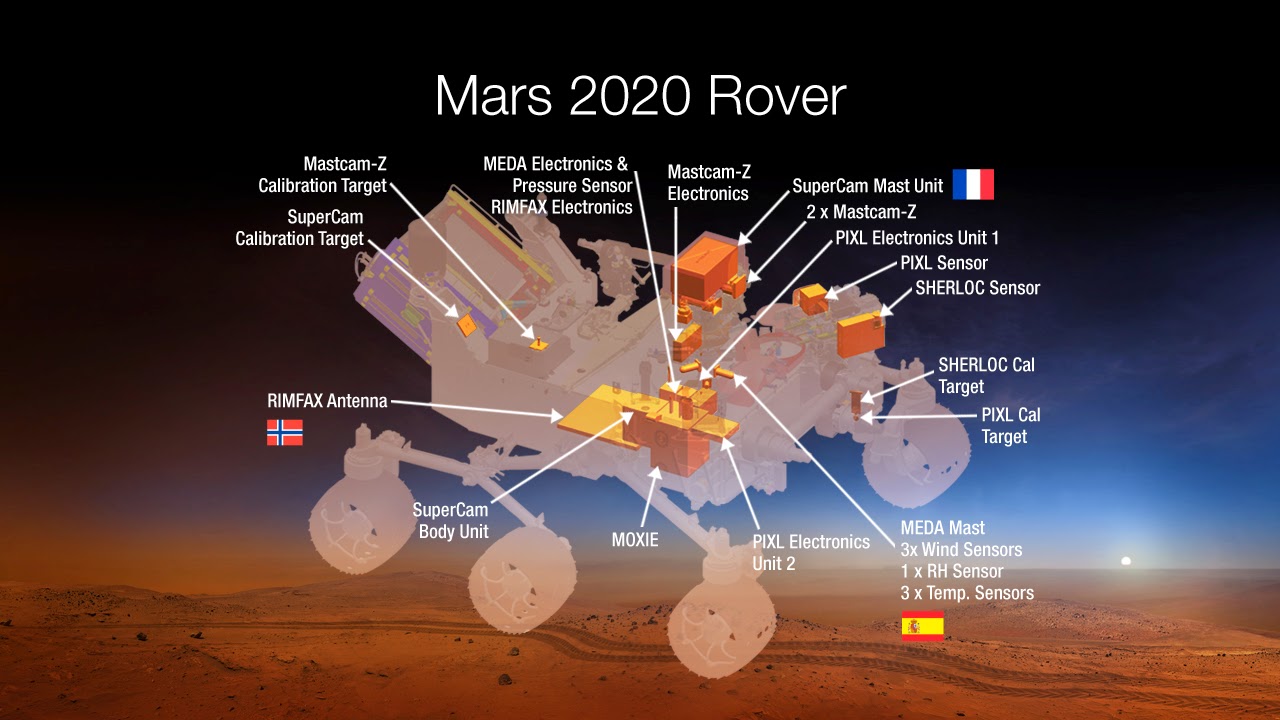
NASA's next Mars rover will feature lasers, ground-penetrating radar and other high-tech science gear designed to help it snag samples of the most interesting Martian rocks for eventual return to Earth.


The U.S. space agency announced today (July 31) that the new car-size rover will carry seven instruments when it launches toward the Red Planet in 2020. The different parts of the science payload are designed to work together to identify rocks that have the best chance of preserving evidence of past life on Mars, if it ever existed, officials said. 1


 2

Space.com:
1. NASA's Next Mars Rover to Collect Martian Samples, Carry Lasers
2. How NASA's Mars 2020 Rover Will Work (Infographic)

Tomorrow: Nihilistic Narcissists

Read more…

The First Second...


At first, I was just going to post without comment, but given the environment and the excitement "theory" elicits from a few of us with either limited understanding and/or only the social metaphor appreciation:

The United States National Academy of Sciences defines scientific theories as follows: The formal scientific definition of theory is quite different from the everyday meaning of the word. It refers to a comprehensive explanation of some aspect of nature that is supported by a vast body of evidence. See also: Wikipedia and  Live Science.

Now - I saw this on The Science Channel Thursday morning:
Read more…

Light Speed and Neutrinos...

Composite image of the remnant of SN1987A. Can James Franson's theory explain why the supernova appears to have emitted two bursts of neutrinos? (Courtesy: ALMA (ESO/NAOJ/NRAO)/A Angelich)

The effect of gravity on virtual electron–positron pairs as they propagate through space could lead to a violation of Einstein's equivalence principle, according to calculations by James Franson at the University of Maryland, Baltimore County. While the effect would be too tiny to be measured directly using current experimental techniques, it could explain a puzzling anomaly observed during the famous SN1987 supernova of 1987.


In modern theoretical physics, three of the four fundamental forces – electromagnetism, the weak nuclear force and the strong nuclear force – are described by quantum mechanics. The fourth force, gravity, does not currently have a quantum formulation and is best described by Einstein's general theory of relativity. Reconciling relativity with quantum mechanics is therefore an important and active area of physics.


An open question for theoretical physicists is how gravity acts on a quantum object such as a photon. Astronomical observations have shown repeatedly that light is attracted by a gravitational field. Traditionally, this is described using general relativity: the gravitational field bends space–time, and the light is slowed down (and slightly deflected) as it passes through the curved region. In quantum electrodynamics, a photon propagating through space can occasionally annihilate with itself, creating a virtual electron–positron pair. Soon after, the electron and positron recombine to recreate the photon. If they are in a gravitational potential then, for the short time they exist as massive particles, they feel the effect of gravity. When they recombine, they will create a photon with an energy that is shifted slightly and that travels slightly slower than if there was no gravitational potential.


Physics World:
New correction to speed of light could explain SN1987 neutrino burst

Read more…

Quantum Pigeons...

Quantum pigeons do not roost in pairs. (Courtesy: iStock/slobo)

Because a Cheshire-like cat just wasn't clarifying/confusing enough...Smiley

First there was Schrödinger's cat, now an international team of physicists has come up with a new animal-related paradox involving "quantum pigeons".

For nearly a century students have struggled to understand the many counter-intuitive implications of quantum physics. Perhaps the most famous paradox is Schrödinger's cat, whereby a cat being both dead and alive at the same time illustrates the fact that a particle can exist simultaneously in two quantum states.

Now, Jeff Tollaksen of Chapman University in California and colleagues in Israel, Italy and the UK have proposed an equally bizarre scenario dubbed the "quantum-pigeonhole effect". The paradox begins with the observation that when you put three pigeons in two pigeonholes, there will always be at least two pigeons in the same hole. But according to the team's quantum analysis, it is possible for none of the pigeons to share a hole.

"It's one of those things that seem to be impossible," says Tollaksen. But it is a direct consequence of quantum mechanics and, he adds, "It really has immense implications."

Classical physics is deterministic. This means that measuring the initial state of a system will, in principle, tell you everything you need to determine the final state. But in 1964 Yakir Aharonov of Chapman University and Tel Aviv University helped discover that in quantum mechanics, you can choose initial and final states that are entirely independent, Tollaksen says.

Now Aharonov has teamed up with Tollaksen and colleagues to use this and other concepts of quantum mechanics to postulate the quantum-pigeonhole effect. They reckon that the effect will arise when an observer makes a sequence of measurements while trying to fit three particles in two boxes.


Physics World: Paradoxical pigeons are the latest quantum conundrum

Read more…

URMs...

Source: Link below

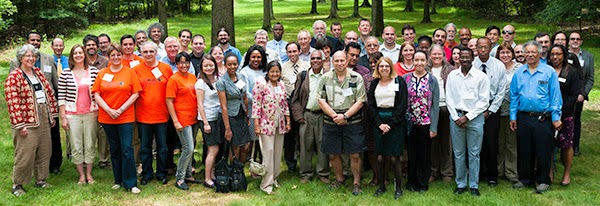
This year's APS Bridge Program meeting (June 25 – 27, 2014) focused on the role of the Master's degree in advancing underrepresented minority students toward PhDs in physics.


This is a very short article, but specifically one of the last paragraphs caught my attention:


This year's meeting focused on the role of the Master's degree in advancing URMs in physics. In her plenary talk, Sheila Lange, University of Washington, discussed results from an analysis of the Survey of Earned Doctorates that indicates URM students take very different pathways to doctoral degrees compared to White and Asian American students.


In my previous post "And Statistics," also discussed this subject in an admitted inequality (and I mean both mathematically and politically). Quoting from the link:


"The Asian > White > Hispanic > Black pattern permeates standardized testing: it is the same for the SAT, and is reflected in the recent race-based levels set by Florida and Virginia for grade schoolers' performance on state-wide standardized tests."


It is refreshing that academia is noting they tend to produce the "usual suspects." As a society, we have to promote STEM as an emancipator; as a "Path to Freedom" (Carl Sagan, and title of post) and a means to put a dent in the rising inequality that is pervasive in our country and American culture - easily seen systemic and designed in a primitive, backwards; archaic era. Faux controversies in accepted scientific discoveries only take us to such a state, and thus exacerbates an unsustainable status quo in the long run.


I got a note from our human resources to update my internal profile (modeled on LinkedIn.com, and largely pulled data from it). One of the questions other than "resume" and "experience" (apparently different), was the tab "languages," of which I indicated "French - beginner." I did take two years of French in high school and college respectively. Until I get a chance to freshen my gray matter with Rosetta Stone, I felt it the most honest assessment of my previous abilities to speak and write a romantic language.


We have to advocate and encourage diversity in a country based on "E pluribus unum" (out of many, one in Latin). We do not in a global economy have the luxury of a nearly homogeneous citizenry, nor do I believe such a populace in any country will be possible as humans constantly move about; find themselves employed in other nations not their own; fulfill the demands of their employers by being "flexible." To keep from being irrelevant on the world stage (and rather quickly), we will all need to be.


APS: APS Bridge Program Annual Meeting

Read more…

Room at the Bottom for 25 Years...

Life Quote Tumblr page: Richard Feynman

We entered the nanoscale world officially 25 years ago. The distinction is primarily gate feature size: we were in the microelectronics era due to printing gate features 10-6 meters; "nano" is 10-9 meters as far as electronics goes. There are two distinct branches now: "nanoscience," which I'm not as familiar with, but tends to involve medicine and biology, specifically focused delivery systems for medicinal treatments, and "nanoengineering" where I now find my career has evolved. What we now take for granted: flat screens TVs and pads; cell phones with photographic and video capability we take and upload to social media that have now become a part of how we gather news and hold authority accountable. A few things to highlight how far we've come:


Nanotechnology: Highlights From 25 Years (PDF).


One of the most cited and downloaded papers in Nanotechnology is 'Comparison of calibration methods for atomic-force microscopy cantilevers'. Published in 2003, it presented a detailed comparison of the calibration methods of several atomic-force microscopy cantilevers.


Nancy A Burnham, from Worcester Polytechnic Institute, talks about some aspects of the paper, highlighting some of the contributions that have now, 10 years later, become commonplace among AFM manufacturers.


Dr. Burnham below:


We can never forget the character who who contributed greatly to the idea it all (some would say he started it with this lecture). Initially given in 1959, he repeated it in 1984. What he referred to then as "tiny machines," we now call MEMS - microelectromechanical systems, 1st coined by DARPA in 1986. As we get perilously (in a good way) towards the Moore's Law limit, there is indeed "plenty of room at the bottom" (Richard Feynman):


Original Lecture Transcript: Plenty of Room at the Bottom (1959)

Read more…

Fromm and Roddenberry...

Source

Seeing patterns in my previous posts Trek Musings and Resources and Refugees (and possibly some others), I was led to reexamine the works of Eric Fromm, a sociologist best known for his seminal work after WWII on the Nazi party: "Escape From Freedom," also known as originally "Fear of Freedom" outside of North America.


If you read through the Dystopian "1984," Fromm gives an Afterword, found here in whole at this PDF.


I quote the beginning of the fourth paragraph:


One of the most important ones is a new form of writing which developed since the Renaissance, the first expression of which was Thomas More's Utopia (literally: "Nowhere"), a name which was then generically applied to all other similar works. Thomas More's Utopia combined a most penetrating criticism of his own society, its irrationality and its injustice, with the picture of a society which, though perhaps not perfect, had solved most of the human problems which sounded insoluble to his own contemporaries. He also sites "Italian friar Campanella's 'City of the Sun', and the German humanist Andreae's 'Christianopolis'" as three seminal works in the emergent genre.


Sounds vaguely familiar...almost "Trekkie," which I'm sure it's part of the many sources where Gene got the idea.


Fromm goes on to relate this longing for perfection in the great philosophers of the Enlightenment. Its modern epitome - I submit - was Star Trek.


Dr. Fromm also lists the Trifecta of "negative-Utopian" i.e. Dystopian novels: "We" by the Russian Yevgeny Zamyatin; "Brave New World" by Aldous Huxley and "1984" by Eric Blair (George Orwell was a pen name). It is from these three, all modern science fiction descends.


Going back to Roddenberry, the societal "hiccup" was as I've mentioned a neo-fascist "Optimum Movement" that was the catalyst for Trek's version of WWIII, which I'm happy to say we have not fought (and don't want to).


The current resistance to change, the mantra cry: "I want my country back," or at one of the border national embarrassments (if the meme is genuine), a woman yelling at fleeing refugee children stands beneath a sign she held up stating: "Make English America's Offical Language" (I think the holder meant "official"). The sad part is whoever authored it, double-underlined the misspelling. That's not what our Constitution says, and it would help if someone invested in a good civics class and a spell checker.


From the Amazon Kindle book description for "Escape From Freedom":

The pursuit of freedom has indelibly marked Western culture since Renaissance humanism and Protestantism began the fight for individualism and self-determination. This freedom, however, can make people feel unmoored, and is often accompanied by feelings of isolation, fear, and the loss of self, all leading to a desire for authoritarianism, conformity, or destructiveness.

It is not only the question of freedom that makes Fromm’s debut book a timeless classic. In this examination of the roots of Nazism and fascism in Europe, Fromm also explains how economic and social constraints can also lead to authoritarianism.

Fromm's definitions:

Authoritarianism: Fromm characterizes the authoritarian personality as containing a sadist element and a masochist element. The authoritarian wishes to gain control over other people in a bid to impose some kind of order on the world, they also wish to submit to the control of some superior force which may come in the guise of a person or an abstract idea.


Destructiveness: Although this bears a similarity to sadism, Fromm argues that the sadist wishes to gain control over something. A destructive personality wishes to destroy something it cannot bring under its control.


Conformity: This process is seen when people unconsciously incorporate the normative beliefs and thought processes of their society and experience them as their own. This allows them to avoid genuine free thinking, which is likely to provoke anxiety. Wikipedia


These all sound frightening and familiar in the modern context. The John Birch Society and inspired modern clones never went away. Like a bad rash or foot fungi, the slightest moisture and warmth rebirths them in familiar, parroted talking-points. It's like watching a slow-motion psychological operation designed by a commercial version of the Creel Commission, made to look like "grass roots" when it's actually financed AstroTurfing.

It was Roddenberry's "hope" during the turbulence of the 1960's with its Vietnam conflict; struggle for Civil Rights that branched into Women's Rights, Human Rights and modernly LGBT rights that we all "learned to get along," and not quite blow the planet to smithereens! This of course, hinged on matter replicators and the willful, "magical thinking" dismantling of a scarcity economy and pre-Trek fictional social order.


Since this scarcity has made a very small part of humanity - 1% to 0.001% - wildly rich beyond Solomon's dreams, I think that dismantlement, if ever, will be resisted - as is any change beyond the current status quo is being resisted, quite vigorously - until it hurts them (and ultimately, us).
Read more…

Terabytes and Smartphones...

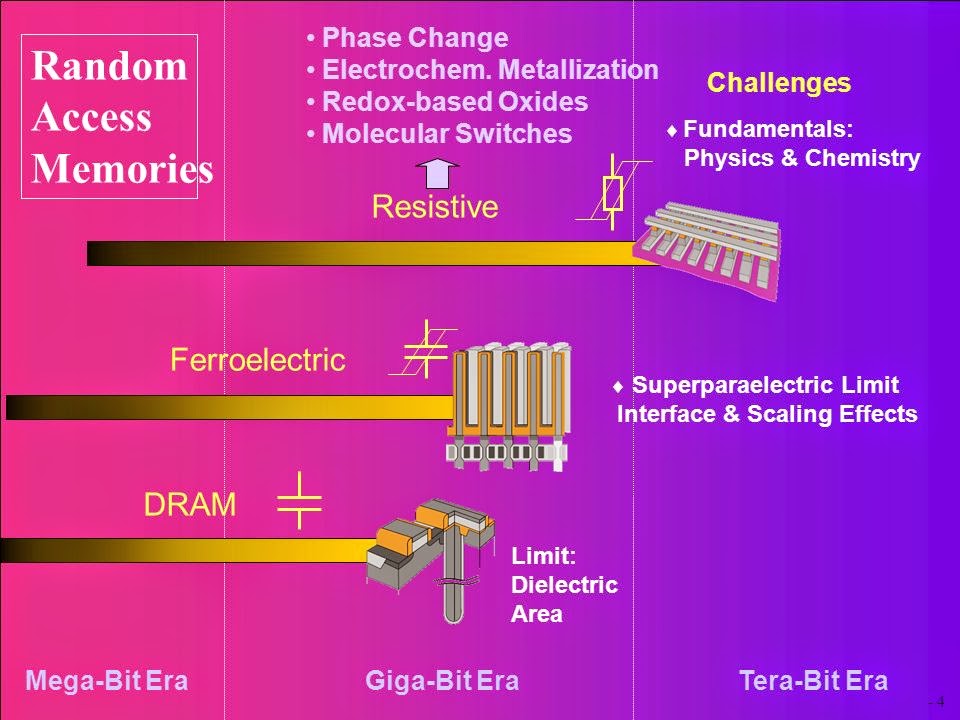
Slide 4 of 50 on Slide Player, Rainer Waser*

A novel type of computer memory could, in theory, let you to store tens or even hundreds of times as much data on your smartphone. Researchers at Rice University have demonstrated a more practical way to manufacture it.


The type of memory in question, resistive random access memory (RRAM), is being developed by several companies, but fabrication usually requires high-temperatures or voltages, making production difficult and expensive. The Rice researchers have shown a way to make RRAM at room temperature and with far lower voltages.


Like flash memory, RRAM can store data without a constant supply of power. Whereas flash memory stores bits of information in the form of charge in transistors, RRAM stores bits using resistance. Each bit requires less space, increasing the amount of information that can be stored in a given area.


MIT Technology Review: Super-Dense Computer Memory, Kevin Bullis

* Rainer Waser JARA-FIT @ FZJ Forschungszentrum Jülich & RWTH Aachen University Outline Forschungszentrum Jülich Center of Nanoelectronic Systems for Information Technology Scaling Projections for Resistive Switching Memories


Tomorrow: Fromm and Roddenberry

Read more…

Particle Physics 101...

Source: Fermilab link below

The first step: accelerators


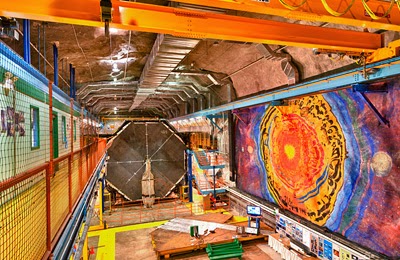
The collision of particles at high energy, either with other particles or with a stationary target, allows physicists not only to look at what's inside these particles, but also to use the energy of their collisions to create different, more massive and more exotic particles of matter. To create such high-energy collisions, scientists must use very powerful particle accelerators.


The second step: detectors


Unveiling the tiniest constituents of matter with accelerators is only half the battle. Physicists also need extraordinary particle detectors to observe what happens in high-energy collisions.


Detectors are instruments that count particles, visualize tracks, measure particle energies, record time of flight and identify different particles. Detectors can be as tiny as computer chips or as big as apartment houses, containing thousands of tons of steel and other material.


The third step: data analysis


Detectors are the product of international collaborations of physicists, all contributing their own expertise and the support of their home institutions. In return, each physicist receives access to the data recorded. To simplify the networking and data exchange within these worldwide collaborations, scientists at the European research laboratory CERN invented the World Wide Web. High-energy physics laboratories such as DESY, SLAC and Fermilab were among the first to offer Web pages in their home countries.


To analyze the enormous amount of data, particle physicists have always relied on some of the most powerful computers in the world, quickly adopting new computing technologies. The analysis of particle physics data takes place on powerful and cost-effective PC farms. Comparing simulated collision events with experimental results, sophisticated computer programs can identify the processes that took place in each collision, whether it takes place when two beams collide or at a fixed target. Physicists use the results to test theoretical predictions, improving our knowledge of crucial parameters, contradicting theoretical expectations and discovering new phenomena.


Physics4Kids.com: Modern Physics Introduction
Read more…

Higgs Consolation...

Ping! In this event, two W bosons collide and then decay into particles called muons (red) while the quarks that emitted the W’s produce sprays of other particles (yellow).

Ever wonder what particle physicists would have done had the Higgs boson not existed? Even before they fired up the atom smasher that 2 years ago blasted out the Higgs—the $5.5 billion Large Hadron Collider (LHC) at the European particle physics lab, CERN, near Geneva, Switzerland—researchers said that if they didn't find that coveted quarry, it wouldn't be a total disaster. If there were no Higgs, they said, then a particular ordinary particle interaction should instead go haywire and hint at whatever nature was doing to get by without the Higgs. Now, physicists at the LHC have spotted the rare interaction in that "no-lose" theorem, which is known as WW scattering.


"I am thrilled," says Barbara Jäger, a theorist at the University of Tübingen in Germany who was not involved in the work. Of course, now that physicists know the Higgs exists, they don't expect WW scattering to go bonkers. But it could still play an important role in the hunt for new physics, as scientists look for deviations from the predictions of the field’s prevailing standard model. That approach would complement studies of the Higgs itself, Jäger says.


The Higgs boson is key to physicists' explanation of how all elementary particles—such as electrons and the quarks that make up protons and neutrons—get their masses. Theorists assume that otherwise massless particles interact with a quantum field a bit like an electric field that consists of Higgs bosons lurking "virtually" in the vacuum. Those interactions give each type of particle a certain amount of energy and, thanks to Einstein's famous equation E = mc2, mass.


Science Mag:
Had there been no Higgs boson, this observation would have been the bomb, Adrian Cho

Read more…

Proton Spin Mystery...

Credit: Brookhaven National Laboratory

Protons have a constant spin that is an intrinsic particle property like mass or charge. Yet where this spin comes from is such a mystery it’s dubbed the “proton spin crisis.” Initially physicists thought a proton’s spin was the sum of the spins of its three constituent quarks. But a 1987 experiment showed that quarks can account for only a small portion of a proton’s spin, raising the question of where the rest arises. The quarks inside a proton are held together by gluons, so scientists suggested perhaps they contribute spin. That idea now has support from a pair of studies analyzing the results of proton collisions inside the Relativistic Heavy-Ion Collider (RHIC) at Brookhaven National Laboratory in Upton, N.Y.


Physicists often explain spin as a particle’s rotation, but that description is more metaphorical than literal. In fact, spin is a quantum quantity that cannot be described in classical terms. Just as a proton is not really a tiny marble but rather a jumble of phantom particles appearing and disappearing continuously, its spin is a complex probabilistic property. Yet it is always equal to one half.


Scientific American: Proton Spin Mystery Gains a New Clue, Clara Moskowitz

Read more…

Printed, Flexible, Organic...

Source: Solid State Electronics link below

In wearable gadgets, flexible electronics may have met its dream application. And that’s no stretch of the imagination.


For example: The 711th Human Performance Wing of the U.S. Air Force is looking at sweat sensors that could be embedded in a printed electronic plaster and attached to the arms of pilots to monitor whether they need to drink more fluids or if taking amphetamines would be advised to maintain optimal alertness in flight.


IDTechEx has forecast that the worldwide market for flexible, printed, and organic electronics will increase from $16.04 billion last year to $76.79 billion in 2023. The overall market will continue to be dominated organic light-emitting diode displays this year and in 2015, the market research firm predicts. Conductive ink and photovoltaics represent large segments of the total market. “On the other hand, stretchable electronics, logic and memory, thin-film sensors are much smaller segments but with huge growth potential as they emerge from R&D,” IDTechEx states.


Solid State Electronics:
Printed, flexible, and organic electronics: A growing opportunity, Jeff Dorsch

Read more…

M.A.D...

Image Source: KQED.org

Today is the 45th anniversary of the Apollo 11 moon landing. Despite what the naysayers and conspiracy theorists insist on with You Tube embed videos ad nauseum, I counter that with the memory of initially disappointed 6-year-old eyes as my Saturday cartoons had been preempted. Those eyes - mine - were soon delighted, sitting on my father's lap filled with wonder and hope. Post Dr. King's assassination, our continued involvement in the Vietnam conflict (of which I had several older friends fighting) and the turbulence of the 1960's, nationally we all needed a lift of our collective spirits.

2014: We appear to be losing it - spirit, mind, wonder...hope.


Ground forces advance in Gaza...The Malaysian airlines downed in the Ukraine...Fires raging in Washington State and drought in California...The border crisis of Central American refugees fleeing the drug wars and violence we helped foster...


Mutually Assured Destruction (M.A.D.): born when the former Soviet Union achieved parity with the US in nuclear weapons. The research of the weapons of our extinction was birthed during the Second World War, and the fear Nazi scientists would beat the Americans to the atomic bomb punch. Destructiveness became measured in "Hiroshima's": ~ 100,000 souls perished in a flash of nightmare, an instant of atomizing. We comforted, compensated and deluded ourselves with moribund, useless drills of "duck and cover." The follow-on "improvement" - thermonuclear bombs - generated the following gradients:
  • 1 November 1952 ("Mike" - US): 800 Hiroshima's.
  • 12 August 1953 ("Joe-4" - USSR): 30 Hiroshima's.
  • 1 March 1954 ("Bravo" - US): 1,300 Hiroshima's.
  • 23 November 1955 (No code name - USSR): 300 Hiroshima's.
  • No date given ("Behemoth" - USSR): 5,000 Hiroshima's.

Most US and Russian yields are around 30 Hiroshima's currently. (Source: "Black Holes and Time Warps-Einstein's Outrageous Legacy," Kip Thorne, pages 231-232, paperback).


Science and power

Unfortunately, it would be naive to say science has been strictly harnessed for the benefit of mankind. Part of the reason you have 3% of climate scientists "doubt" the conclusions of 97% of their colleagues on climate change is science costs money. Money comes from benefactors who typically have agendas; those being obviously amassing more power and wealth to themselves. A large part of the tools developed to analyse the density, mass and electric charge of black holes were developed during the Manhattan Project; many things we take for granted were developed initially for the Apollo program. This is called "spin-off": a peaceful commercial application to an otherwise warfare-born idea. The Internet is another example.

We are at a tinderbox moment of history. Our publicly elected political leaders parrot apocalyptic worldviews from the once extreme, now mainstreamed portions of society. Our motivations as a species must change if we are to solve difficult problems and survive our own hubris. Our current understanding of five previous mass extinction events makes our balance in the Drake Equation not look so favorably for us. The world will keep spinning, and it's instructive to note dinosaurs are "technically" still around us (counter to creationists' envision): as fossil fuels, lower reptiles and consumed chickens. J. Robert Oppenheimer - America's Prometheus - is an example of what happens when genius is employed in the service of sociopaths.

M.A.D. is the acronym of the unthinkable; the "doomsday scenario," the outcome succinctly summed in the 80's classic "War Games" and that life sadly, doesn't always conclude in the neatly-packaged Hollywood ending:
Read more…

A Little Bit of Bedlam...

Image: Neil Armstrong and Arthur Clarke met for the first time during a NASA conference held on Wallops Island, VA in June 1970, having shared the bus that took them out to Wallops from NASA headquarters.

From Centauri Dreams by Paul Gilster


As we approach the 45th anniversary of the first landing on the Moon, journalist and author Neil McAleer has been looking back at an interview he conducted with Neil Armstrong on March 16, 1989. The author of Visionary: The Odyssey of Sir Arthur C. Clarke (Clarke Project, 2012), McAleer has lived among and written about the space community for many years. We learn little about Clarke from this interview, but Armstrong’s character comes through — he’s terse, focused, always impatient to get back to work. I suspect Centauri Dreams regular Al Jackson, who worked with Armstrong and Buzz Aldrin in his role as astronaut trainer on the Lunar Module Simulator (see The Magicians of Confidence), will recognize Armstrong’s mode here immediately. His self-imposed distance could never conceal the cool competence he displayed on the most breathtaking descent in history.


An interview conducted by Neil McAleer


I requested this interview with Neil Armstrong 25 years ago, when I was writing and researching the first edition of my Arthur C. Clarke biography. That work was the reason. I wanted to know how they met and what kind of relationship they had during the early years of the Space Age.


The interview’s first question, not on tape, asked Mr. Armstrong if he knew how Arthur C. Clarke’s substantial Epilogue (“Beyond Apollo”) for the book First on the Moon came about.


[Armstrong] “I just don’t have that kind of information.”


This book—subtitled, “A Voyage with Neil Armstrong, Michael Collins, Edwin E. Aldrin, Jr.”–is considered the official eyewitness account of Apollo 11’s journey to the moon’s surface and return to Earth. It was published in 1970, the year after their historic mission.


[McAleer] “Did you ever actually meet Clarke, by the way?”


[Armstrong] “Yes. We attended a NASA meeting for a couple of days, and I can’t remember where it was. It seems to me it was somewhere in Virginia. [Wallops Island I found out later]. It must have been around 1970.”


Tomorrow: M.A.D.
Read more…

Energy of Things...

Source: Polywell Nuclear Fusion

"Thermodynamics is a branch of physics which deals with the energy and work of a system. It was born in the 19th century as scientists were first discovering how to build and operate steam engines. Thermodynamics deals only with the large scale response of a system which we can observe and measure in experiments. Small scale gas interactions are described by the kinetic theory of gases. The methods complement each other; some principles are more easily understood in terms of thermodynamics and some principles are more easily explained by kinetic theory." Source: NASA


Essentially, that is what these two articles allude to: the system is not a single engine per se, but now all our interconnected devices (our coming like a freight train Internet of Things) that by themselves are probably benign. Collectively however, they're putting a load on our power grids like no engine before it. Note Susanne Jacobs in Technology Review:

Between computers, smartphones, tablets, wearables, and the Internet of things, the number of networked devices around the world is growing rapidly, and all those devices need energy, even if they’re not doing anything. That could be a problem.

A new report from the International Energy Agency, an intergovernmental organization dedicated to ensuring reliable and clean energy, says that the electricity demand of networked devices around the world in 2008—420 terawatt-hours—was equal to that of France; in 2013 the demand surpassed that of Canada, reaching 616 terawatt-hours. By 2025, the report projects, networked devices will account for 6 percent of global electricity demand at 1,140 terawatt-hours. As much as 80 percent of that demand will be used just to maintain a network connection, keeping devices ready and waiting.

Let's put this in perspectives:

Your average home or apartment consumed 90 million BTUs (British Thermal Units) in 2009, according to the Residential Energy Consumption Survey (RECS) report. Roughly, that's 10273.972602739726027397260273973 BTU/hr ~ 10,274, or 3011.0121732 Watts. For a year, that comes to 26,376,466.637232 Watts/Year. Divide that into 15 terrawatts and it yields 568688.8 "years" of energy consumption. Mind you, that's just for "ONE" house only on Earth. Apparently, 1.6 billion human souls live in the 21st century without electricity.


A terrawatt = 1012 Watts = 1,000,000,000,000 or a trillion watts. Your average home is quickly becoming minuscule in comparison to the demands of the tech we all crave. Without embracing this need posed by the technology and more efficient, cleaner means to produce and deliver energy to its end-users, I can only envision rolling blackouts for our lack of vision and avarice. I say that for as energy delivery becomes cleaner, cheaper and more efficient, structures used to making their wealth on scarcity will inevitably try to block it out of self-preservation, resulting in the quickest way to devalue the world economy in human history; making their wealth meaningless in the long run.

"If everyone is moving forward together, then success takes care of itself." Henry Ford

"We must learn to live together as brothers, or perish together as fools." Martin Luther King

Read more…

Quantum Criticality...

Figure 1: (a) An example of the classical phase transition in a ferromagnet. See more at APS link below.

Theoretically predicted quantum critical behavior in a model magnetic material has been experimentally confirmed at a quantitative level.


Every physicist knows how a ferromagnet like iron behaves as the temperature is increased [Fig. 1(a)]. At low temperatures, the constituent spins are spontaneously aligned as a result of the local magnetic fields from neighboring spins. Thermal fluctuations act against such local fields, inducing random reorientation of the spins. As the temperature increases, thermal fluctuations grow and the net magnetization in the ordered state continuously decreases. The magnetization drops to zero at a critical temperature Tc (1043 kelvin in the case of iron). In a narrow temperature range around Tc, thermal fluctuations of the spins extend over all length scales of the material—scale invariance is a key feature of critical points. This is an example of a continuous classical phase transition driven by thermal fluctuations.


Fluctuations driving quantum phase transitions are of a different nature, however. For example, a continuous quantum phase transition [1, 2, 3] is driven by quantum fluctuations resulting from Heisenberg’s uncertainty principle. The transition takes place when the material is at zero temperature but as a function of a nonthermal control parameter, such as applied pressure, an external magnetic field, or the density of electrons manipulated by the chemical composition. Theory has predicted that, surprisingly, an additional presence of thermal fluctuations at finite temperatures does not eliminate the critical fluctuations present around the quantum critical point [4]. Instead, the region of quantum criticality becomes progressively broader with increasing temperature and extends to temperatures significantly above zero [Fig. 1(b)]. This has now been experimentally demonstrated by Alison Kinross and her colleagues at McMaster University, Canada, in cooperation with theorist Subir Sachdev from Harvard University. In a paper in Physical Review X [5], they report the phase diagram of CoNb2O6, a model magnetic material for quantum criticality [6]. Their results correspond perfectly to the general phase diagram outlined in Fig. 1(b). Furthermore, they provide the first quantitative confirmation of any theory—although there are not many—aiming to predict the temperature evolution of the quantum critical behavior. Although the work by Kinross et al. is concerned with a particular compound, the results are important in a broader sense. Namely, the quantum critical behavior observed in such diverse systems as metals, magnets, superconductors, gases of cold atoms, and black holes, shares many fundamental characteristics—universality is another key feature of critical points.

Quantum criticality is related to high temperature superconductors, which would make our power-consuming lives a lot easier (and in a geopolitical sense, maybe more peaceful). "Wars and rumors of wars" are essentially serial struggles for scarce resources, usually pilfered by the country with the biggest weapons from those with little or none.

Related links follow:


American Physical Society: Viewpoint: A Critical Test of Quantum Criticality
Martin Klanjšek, Jožef Stefan Institute, Jamova cesta 39, 1000 Ljubljana, Slovenia
Physics arXiv: Quantum Criticality
Subir Sachdev, Department of Physics, Harvard University, Cambridge MA 02138
Bernhard Keimer, Max-Planck Institute for Solid State Research, Stuttgart, Germany
Rutgers: Quantum Criticality
Science Daily: Quantum criticality observed in a new class of materials, Rice University

Read more…

Within the Event Horizon...

At the center of spiral galaxy M81 is a supermassive black hole about 70 million times more massive than our sun.
Image credit: NASA/CXC/Wisconsin/D.Pooley & CfA/A.Zezas;NASA/ESA/CfA/A.Zezas; NASA/JPL-Caltech/CfA/J.Huchra et al.; NASA/JPL-Caltech/CfA
Rights information: http://1.usa.gov/Kwf96l

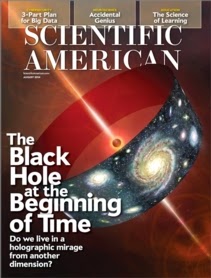
(ISM) -- Our universe may exist inside a black hole. This may sound strange, but it could actually be the best explanation of how the universe began, and what we observe today. It's a theory that has been explored over the past few decades by a small group of physicists including myself.


Successful as it is, there are notable unsolved questions with the standard big bang theory, which suggests that the universe began as a seemingly impossible "singularity," an infinitely small point containing an infinitely high concentration of matter, expanding in size to what we observe today. The theory of inflation, a super-fast expansion of space proposed in recent decades, fills in many important details, such as why slight lumps in the concentration of matter in the early universe coalesced into large celestial bodies such as galaxies and clusters of galaxies.


But these theories leave major questions unresolved. For example: What started the big bang? What caused inflation to end? What is the source of the mysterious dark energy that is apparently causing the universe to speed up its expansion?


The idea that our universe is entirely contained within a black hole provides answers to these problems and many more. It eliminates the notion of physically impossible singularities in our universe. And it draws upon two central theories in physics: General Relativity and Quantum Mechanics (my adds, more at the link).


Inside Science:
A physicist presents a solution to present-day cosmic mysteries.
Nikodem Poplawski, PhD, Indiana University

Read more…