Reginald L. Goodwin's Posts (3130)
Sort by
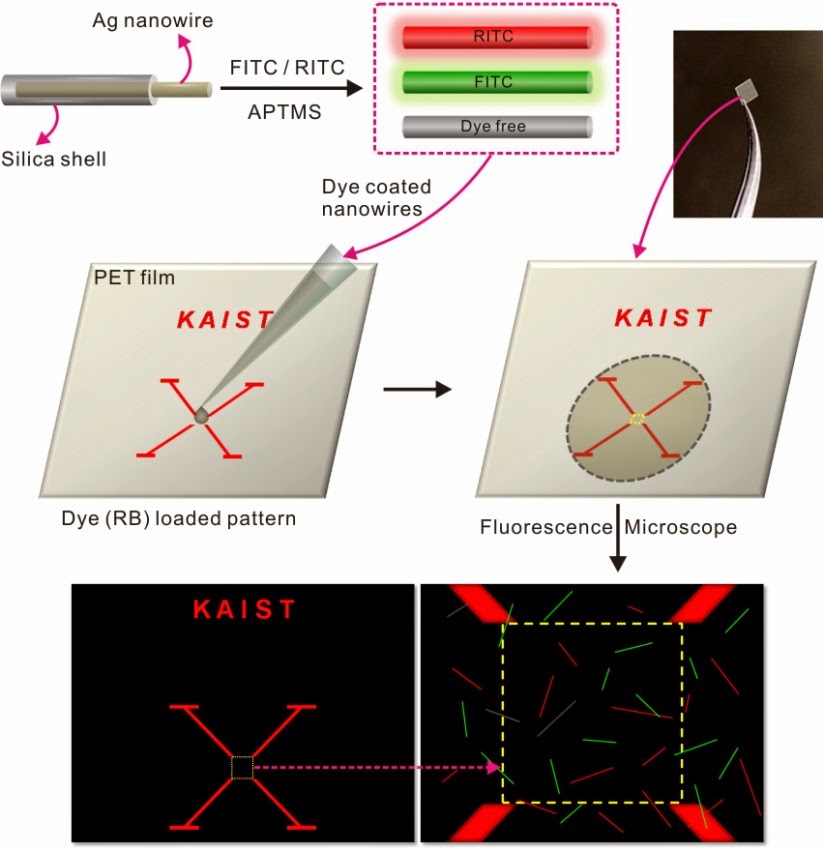 |
| The process of producing anti-counterfeit nano-fingerprints based on randomly distributed silver nanowires. [1] Silver nanowires (AgNWs) are prepared by the self-seeding method and an amorphous silica shell is coated on the surface using tetraethyl orthosilicate (TEOS). [2] Fluorescein isothiocyanate (FITC) and rhodamine B-isothiocyanate (RITC) are attached covalently to the surface of the pre-formed silica shell by allowing the formation of covalent bonds between the silica surface and 3-aminopropyltrimethoxysilane (APTMS). [3] A photolithographic process is used to inscribe the direction and target markers on the surface of the PET film. The orientation marker (“KAIST”) can be used to determine the correct direction of the PET film. The target marker (“X”) has an empty space in its central region where AgNWs are loaded to generate fingerprints. |
Counterfeiting is a steady and increasingly important problem that occurs in nearly every trade and industry. Recognizing the difficulty in distinguishing counterfeit goods from genuine products, new nanoscale technologies are being developed to prevent and identify this illegal practice. Using dye-coated one-dimensional (1D) nanowires, researchers at the Korea Advanced Institute of Science and Technology (KAIST) in South Korea have demonstrated that randomly distributed nanowires can generate unique and simple barcode patterns readily applicable by many to anti-counterfeiting.
Reporting in Nanotechnology, nanoscale fingerprint patterns are generated by simply casting fluorescent dye-coated silver nanowires onto a transferrable flexible polyethylene terephthalate (PET) film. The direction and target markers ("KAIST" and "X") are patterned by a photolithographic technique to provide positional information for identification and the nanowires are cast onto it. Then, using an optical microscope, the resulting unique fingerprint patterns can be visually authenticated in a simple and straightforward manner, as shown fully in the figure above.
Nano Tech Web: Combatting counterfeit goods with nanoscale fingerprints
 |
| Photon-shaping technique could lead to "nuclear" quantum computers. (Courtesy: iStockphoto/polygraphus) |
A way of modulating the waveforms of individual, coherent high-energy photons at room temperature has been demonstrated by researchers in the US and Russia. The advance opens the way for new quantum-optics technologies capable of extremely high-precision measurements, as well as the possibility of <>quantum-information systems based on nuclear processes. The new approach could also be useful for those doing fundamental research in a variety of areas, ranging from the role of quantum phenomena in biological processes to fundamental questions in quantum optics itself.
The technique was developed by Olga Kocharovskaya, Farit Vagizov and colleagues at Texas A&M University and the Kazan Federal University. Their set-up bears some similarity to a Mössbauer spectroscopy experiment. A sample of radioactive cobalt-57 decays to an excited state of iron-57, which then decays by emitting a 14.4 keV "soft" gamma-ray photon. This photon can then be absorbed and re-emitted by a nearby stainless-steel foil containing iron-57. Because of the Mössbauer effect, no energy is lost in the recoil of the stainless-steel lattice and the photon is emitted at 14.4 keV with very little spectral blurring.
As the foil absorbs and re-emits the photons, it is vibrated at megahertz frequencies. By making clever use of the Doppler effect, the team is able to shape a single photon into a double pulse and even a train of ultrashort pulses. This makes it possible to use the gamma-ray photons to encode quantum information in a "time-bin qubit" – quantum bits in which information is encoded in terms of the relative arrival time of pulses.
Physics World:
Gamma-ray shaping could lead to 'nuclear' quantum computers
A little something to do while vegging on the couch (nothing on the "boob tube" except COSMOS, really).
Controlling a lab from home
The Remote Control Glow Discharge (RGDX) is a plasma that you can control from the comfort of your browser. YOU have control of the entire experiment including the gas pressure inside the tube, the voltage produced by the power supply that makes the plasma, and the strength of an electromagnet surrounding the plasma. You can perform experiments from any computer anywhere in the world!
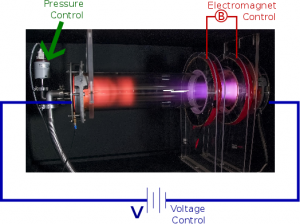
In 2002, we began developing plasma sources for educational purposes and one of our devices won 2nd place in the National Apparatus Competition sponsored by the American Association of Physics Teachers. In 2003, we began controlling our plasma sources by computer for a plasma exhibit in a science museum. The progression of this has led to remote control of a plasma from any location by anyone with an internet connection. This type of control could serve as an experimental component of an online physics class or for a school that typically does not have plasma physics equipment.
As with all other Science Education Department labs, the RGDX has been developed in large part by high school and undergraduate interns.
The Remote Glow Discharge Experiment was officially released to the public on 3/12/2014. The story can be found here.

Established in 1847, the Children's Home provides a range of services and programs giving hope and healing to abused and neglected children in the Hudson River Region. The Children's Home served 397 children and their family members last year. The Home provides a full range of residential services including campus-based care, community-based group homes and boarding homes, and independent living apartments. It also provides regular foster care and intensive therapeutic foster homes.
Throughout our 167 year history, the underlying mission of the Children’s Home of Poughkeepsie has remained the same: The Home is dedicated to providing a safe and nurturing environment that improves lives and empowers at-risk children and families in the Hudson Valley and surrounding communities.
I did this presentation on Saturday, 22 March at the behest of the local Alpha Kappa Alpha alumni chapter. I have done such presentations before. I was more than happy to do it.
It was a focused audience of five young men and three young women. They participated well, and at least a few of them said they were going to purchase electronics snap kits from "The Shack." I came away encouraged and inspired by the curiosity of these young people in spite of their challenging circumstances. Especially in an era of error and pseudoscience propagated as alternate "truth" more outreach like this is needed: these are the "meek who will inherit the earth" and will need the tools to manage it.
Physics teachers: all the links in the embed are active, including those in the pictures of slides 8 and 12. If you want the Power Point version with all the "bells and whistles" of this embed, email: physics4thecool@gmail.com. Please attribute the source. My reference to Korea on slide 4 was a quote from "The Smartest Kids in the World and How They Got That Way," by Amanda Ripley and not meant to be derisive: the Korean children spend 16 hours a day in school M-F and 8 hours on Saturday. They are brilliant via focus and immersion.
I used parts from Electronics 101 and Electronics 303 kits purchased from Radio Shack. Apparently, Radio Shack only carries the Electronics 101 snap kit. I'd try their service number for the more advanced Electronics 303. However, Amazon carries comparable manipulatives: SC-100, SC-300 and SC-750. Good luck.
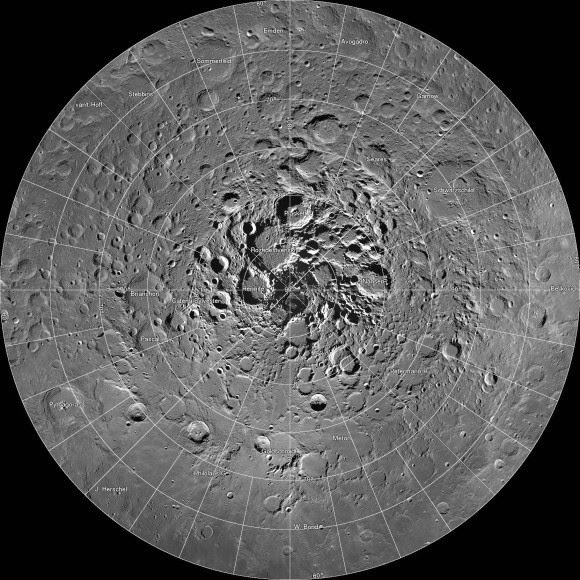
On 18 June 2009, NASA launched the Lunar Reconnaissance Orbiter (LRO) to map the surface of the Moon and collect measurements of potential future landing sites as well as key science targets. After two and a half years in a near-circular polar orbit, LRO entered an elliptical polar orbit on 11 December 2011 with a periapsis (point where the LRO is closest to the surface) near the south pole, and the apoapsis (point where LRO is furthest from the surface) near the north pole. The increased altitude over the northern hemisphere enables the two Narrow Angle Cameras (NACs) and Wide Angle Camera (WAC) to capture more terrain in each image acquired in the northern hemisphere. As a result, the Lunar Reconnaissance Orbiter Camera (LROC) archive now contains complete coverage from 60°N to the north pole (except of course for areas of permanent shadow) with a pixel scale of 2 meters.
The LROC team assembled 10,581 NAC images, collected over 4 years, into a spectacular northern polar mosaic. The LROC Northern Polar Mosaic (LNPM) is likely one of the world’s largest image mosaics in existence, or at least publicly available on the web, with over 680 gigapixels of valid image data covering a region of the Moon (2.54 million km², 0.98 million miles²) slightly larger than the combined area of Alaska (1.72 million km²) and Texas (0.70 million km²) -- at a resolution of 2 meters per pixel! To create the mosaic, each LROC NAC image was map projected on a 30 m/pixel Lunar Orbiter Laser Altimeter (LOLA) derived Digital Terrain Model (DTM) using a software package called Integrated Software for Imagers and Spectrometers (ISIS). A polar stereographic projection was used in order to limit mapping distortions when creating the 2-D map. In addition, the LROC team used improved ephemeris provide by the LOLA and GRAIL teams and an improved camera pointing model to enable accurate projection of each image in the mosaic to within 20 meters.
1. Mind House (Barcelona, Spain)
.jpg) |
| credit: Angelo Amboldi |
2. The Crooked House (Sopot, Poland)
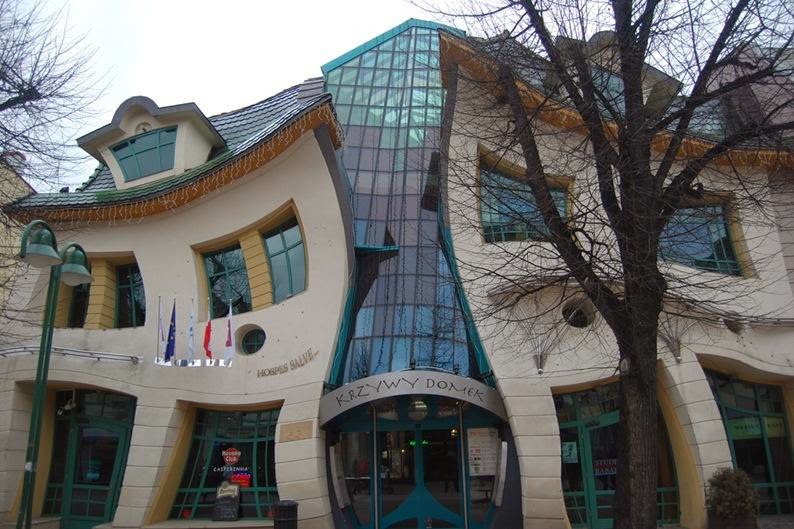.jpg) |
| credit: tomek.pl via strangebuildings.com |
3. Stone House (Guimarães, Portugal)
.jpg) |
| credit: Feliciano Guimarães via strangebuildings.com |
My Science Academy: Top 17 World's Strangest Buildings
 |
| Timberwood Park, San Antonio, TX: Caveat emptor |
Yesterday (17 March), researchers from the Background Imaging of Cosmic Extragalactic Polarization (BICEP2) telescope at the South Pole revealed that they have detected the first evidence for the primordial B-mode polarization of the cosmic microwave background (CMB). The astronomers claimed that the primordial B-mode polarization signal – which is related to primordial gravitational waves that flowed through the early universe – is the first direct evidence for cosmic inflation and has been measured to a statistical certainty of 3σ. Now, cosmologist and Perimeter Institute director Neil Turok, who worked on an inflationary model of his own with Stephen Hawking in the 1990s, urges caution and says that extensive experimental confirmation is necessary before BICEP2's results can be considered as evidence for inflation.
"If...and it's a big if...this is true, it would be spectacular evidence for what happened at the Big Bang," Turok told physicsworld.com. While he agreed that at first glance, the BICEP2 observations are in keeping with inflation "as suggested over 30 years ago, wherein space–time would resonate with the aftershocks of inflation and would ring like a bell", a closer look at the discrepancy between the new results and previous data from the Planck and WMAP telescopes is what worries Turok. Indeed, the tensor-to-scalar ratio of 0.20 that BICEP2 measured is considered to be significantly larger than that expected from previous analyses of data. But the BICEP2 researchers said in their press conference yesterday that they believe certain tweaks could be made to an extension of the ΛCDM cosmological model that could make the two results agree.
"But these tweaks would be tremendously ugly....and in fact, I believe that if both Planck and the new results agree, then together they would give substantial evidence against inflation!" exclaims Turok, further explaining that "[we] must be careful before we treat them as true".
"Extraordinary claims requires extraordinary evidence." Carl Sagan.
Even though Tuesday's announcement was exciting news, and I really want it to be true, it might not be. After the Scientific Method, this is the rigor of peer review and the necessity of it. Without it, we march down the primrose path of pseudoscience and created entities like the Discovery Institute ("intelligent design") and World Science Database (which purports that the Special and General Theory of Relativity have been "disproved" despite yesterday, I was discussing superconducting quantum interference devices - SQUID's). Both organizations are of "sounding brass and tinkling cymbal" to quote Corinthians. The Science Channel - when it's not suggesting UFO close encounters - promotes the tagline "question everything." We really should.
Physics World: Neil Turok urges caution on BICEP2 results
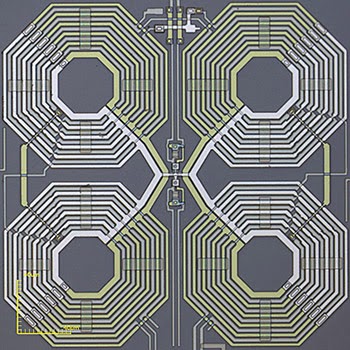 |
| Micrograph of a SQUID amplifier, made at NIST in 2012, that is part of a circuit used to read signals from arrays of superconducting sensors. Small currents generated by the sensors are carried and amplified in the coils, which create magnetic fields detected by the SQUID (two small squares in the center of the image). Credit: NIST |
From humble beginnings in a series of accidental discoveries, SQUIDs have invaded and enhanced many areas of science and medicine, thanks, in part, to the National Institute of Standards and Technology (NIST).
SQUIDs—short for superconducting quantum interference devices—are the world's most sensitive magnetometers and powerful signal amplifiers, with broad applications ranging from medicine and mining to cosmology and materials analysis.
Physicists from around the world celebrated last week* to mark the 50th anniversary of the first journal paper introducing the SQUID, published in February 1964.
Celebrants heard about the use of SQUIDS to measure brain activity in Finland, discover mineral deposits leading to a large silver mine in Australia, and detect faint light from the early moments of the universe from telescopes all over the world.
SQUIDs measure magnetic fields based on quantum properties created when a superconducting circuit loop, in which electricity flows without resistance, is interrupted with one or two short sections of resistive material. The current across the resistive section varies predictably, based on the strength of the external magnetic field, making the device an exquisitely sensitive detector of magnetic fields. Typically, SQUIDs need to be cooled to cryogenic temperatures below 4 kelvins (-269 degrees Celsius) with liquid helium.
The SQUID was invented at Ford Scientific Laboratories in the 1960s but was further developed at NIST (then called the National Bureau of Standards). James Zimmerman co-invented one type of SQUID (the RF-SQUID) and coined the term while at Ford, before joining NIST where he worked in the 1970s and 1980s.
NIST: Magnetic Attraction: Physicists Pay Homage to the SQUID at 50
 |
| The 10-meter South Pole Telescope and the BICEP (Background Imaging of Cosmic Extragalactic Polarization) Telescope against the Milky Way. BICEP2 recently detected gravitational waves in the cosmic microwave background, a discovery that supports the cosmic inflation theory of how the universe began. (Photo: Keith Vanderlinde, National Science Foundation) |
The detection of gravitational waves by the BICEP2 experiment at the South Pole supports the cosmic inflation theory of how the universe came to be. The discovery, made in part by Assistant Professor Chao-Lin Kuo, supports the theoretical work of Stanford's Andrei Linde.
Almost 14 billion years ago, the universe we inhabit burst into existence in an extraordinary event that initiated the Big Bang. In the first fleeting fraction of a second, the universe expanded exponentially, stretching far beyond the view of today's best telescopes. All this, of course, has just been theory.
Researchers from the BICEP2 collaboration today announced the first direct evidence supporting this theory, known as "cosmic inflation." Their data also represent the first images of gravitational waves, or ripples in space-time. These waves have been described as the "first tremors of the Big Bang." Finally, the data confirm a deep connection between quantum mechanics and general relativity.
Stanford News:
New evidence from space supports Stanford physicist's theory of how universe began
Harvard Center for Astrophysics: First Direct Evidence of Cosmic Inflation
 |
| Artist's impression of a comet striking the Earth. (Courtesy: iStock/PaulPaladin) |
Two theoretical physicists in the US have made a surprising connection between dinosaur extinction and dark matter. Lisa Randall and Matthew Reece of Harvard University believe that some of this mysterious invisible matter – which makes up 85% of all matter in the universe – could exist in a special form that affects the rate at which comets strike our planet. A comet crashing into Earth about 66 million years ago is one possible reason why these giant creatures died off.
Comets have smashed into Earth throughout its history, creating huge craters and possibly causing mass extinctions, such as that which befell the dinosaurs. Many of these comets come from the Oort cloud, which is a huge halo of small icy objects that surrounds the Sun, out to a distance of about one light year. But rather than being entirely random, there is some evidence that the frequency of comet impacts oscillates on a timescale of about 35 million years.
Although this oscillation is not certain, if it is true, there could be something on that timescale that affects the rate at which comets from the Oort cloud are sent towards Earth. Two possible explanations have been proposed so far. One – dubbed the "nemesis hypothesis" – involves the gravitational pull of an as-yet-undiscovered distant companion star to the Sun. The other involves the oscillating pull of the dense galactic disc as the solar system crosses and re-crosses the plane of the Milky Way.
Physics World: Did dark matter help kill off the dinosaurs?
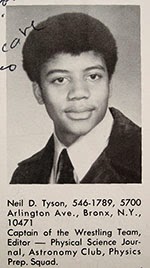
When I was in elementary school in the public schools of New York City, I distinctly remember that it was important for me to be athletic — in particular, to be able to run fast. I was encouraged by all around me. My reward was the respect and admiration of classmates and especially my streetmates.
In junior high school it was important for me, now that I was certified the “fastest on the block,” to slam-dunk a basketball. To do this you have to jump high and palm the basketball. On April 17, 1973, I was the first in my grade to slam-dunk a basketball. I then asked myself, “Is this all there is to it?” The answer is basically yes, yet one can imagine creative variations such as a 360-degree pirouette in midair preceding the dunk, but you still score only two points.
About the same time, I learned that light, traveling at 186,282 miles per second, moves too slowly to escape from the event horizon of a black hole. This was more astonishing to me than a 360-degree slam-dunk. I soon became scientifically curious and read everything I could find about the universe. I began to see myself as a future scientist — in particular, an astrophysicist. It became a deeply seated dream.
I shortly came to the shattering awareness that few parts of society were prepared to accept my dreams. I wanted to do with my life what people of my skin color were not supposed to do. As an athlete, I did not violate society’s expectations since there was adequate precedent for dark-skinned competitors in the Olympics and in professional sports. To be an astrophysicist, however, became a “path of most resistance.” I began to wonder whether I originally wanted to be an athlete more from society’s interest rather than my own. My brother, Stephen, today a professional artist, could run faster and jump higher than I could. He, too, felt these forces of society.
In high school, nobody probed further about how I became captain of the wrestling team. But when I became editor-in-chief of my school’s annual Physical Science Journal, my qualifications were constantly queried. And when I was accepted to the college of my choice, I was continually asked for my SAT scores and grade point average. Indeed, one fellow student, who worked in the office of the guidance counselor, threatened to find the file in the school records to read my scores himself, if I didn’t tell.
When I first entered graduate school, before transferring to Columbia, I was eager to pursue my dreams of research astrophysics. But the first comment directed to me in the first minute of the first day, by a faculty member whom I had just met was, “You must join our department basketball team.” As the months and years passed, faculty and fellow students, thinking that they were doing me a favor, would suggest alternative careers for me.
“Why don’t you become a computer salesman?”
“Why don’t you teach at a community college?”
“Why don’t you leave astrophysics and academia? You can make much money in industry.”
At no time was I perceived as a future colleague, although this privilege was enjoyed by others in graduate school.
When combined with the dozens of times I have been stopped and questioned by the police for going to and from my office after hours, and the hundreds of times I am followed by security guards in department stores, and the countless times people cross the street upon seeing me approach them on the sidewalk, I can summarize my life’s path by noting the following: in the perception of society, my athletic talents are genetic; I am a likely mugger-rapist; my academic failures are expected; and my academic successes are attributed to others.
Book Excerpt: The Sky is Not the Limit, by Neil deGrasse Tyson on BillMoyers.com
Site: COSMOS: A SpaceTime Odyssey
Mother Jones: Neil deGrasse Tyson on "Cosmos" (source of podcast below)
 |
| Source: http://wizewomon.blogspot.com/2011/12/hypatia-womon-of-note.html |
This is Women's History Month. As a blog that promotes diversity in the sciences, I'm well aware of it. However, I received my midterm exam from Stevens University on the 28th of February. Solid State Electronics II is no less the challenge than Part I was admittedly. I had two weeks to solve, thus my time was fairly focused. I turned in my test at the deadline. I can for a moment breath on this Ides of March.
Hypatia (pronounced "hi-pay-see-a"): I read her name in the book Cosmos that I downloaded to my Kindle. I looked at the "old school" Cosmos show where Carl Sagan mentions her (starts at 3:25), and her sad fate. She's described as mathematician, astronomer, physicist, philosopher, quite lovely apparently and driver of her own chariot! She was a beloved teacher and by social practice a celibate, no doubt frustrating potential suitors of her day.
Interestingly as I predicted to some casually offline, Cosmos: A SpaceTime Odyssey has already had its detractors of the "young Earth"/humans with dinosaurs/faux debate between Evolution and so-called Intelligent Design variety. The odd and breathtaking display of hypocrisy in most of the trolls taking to the Internet - notably in 140 misspelled characters or less - created by the very science and modern physics they rail against; supporting pseudoscience in their destructive wake.
A certain part of the reptilian portion of our minds attacks instinctively that which we think challenges our belief systems - and thus us. Time and again, we've seen the razing of cities, the flaying of martyrs, the murder of not only the person, but new ideas that would take the species forward. This of course, all for adherence to a dogma. Supposedly through evangelism, it is meant as a "sell," and thus adherence is voluntary - zealotry and fanaticism turns it involuntary; totalitarian. Authoritarianism becomes our governance and its dogmatic ruling class the thought police. Sadly, I can't help but think if part of the mob that set upon Hypatia and ended her life so tragically were peopled by members of her own gender, suffering from what would in the 20th century gain the name "Stockholm Syndrome."
I often fear intolerance will rear its ugly head again and plunge us all over the abyss with it, as it did Alexandria, Egypt. They executed Hypatia...for the "crime" of thinking critically and independently of the lordship of patriarchal society. The saying goes "teach a woman and you teach a generation." The library, like Hypatia, soon expired after her forced passing.
For these and other reasons, I will support Dr. Tyson and the relaunch of Cosmos. As Dr. Sagan states above, we "must not let it happen again."
"Those who do not learn from history are doomed to repeat it."
Jorge Agustín Nicolás Ruiz de Santayana y Borrás, known as George Santayana
Related Links:

Link: LiveFromSpace.com
Source: Quantum Made Simple
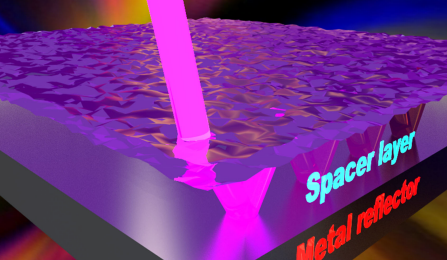 |
| A rendering shows a beam of light interacting with an optical nanocavity. The nanocavity boosts light absorption in ultrathin semiconductors. Credit: Advanced Materials |
By Cory Nealon
Release Date: March 5, 2014
BUFFALO, N.Y. – Associated with unhappy visits to the dentist, “cavity” means something else in the branch of physics known as optics.
Put simply, an optical cavity is an arrangement of mirrors that allows beams of light to circulate in closed paths. These cavities help us build things like lasers and optical fibers used for communications.
Now, an international research team pushed the concept further by developing an optical “nanocavity” that boosts the amount of light that ultrathin semiconductors absorb. The advancement could lead to, among other things, more powerful photovoltaic cells and faster video cameras; it also could be useful for splitting water using energy from light, which could aid in the development of hydrogen fuel.
The team, comprised of faculty and students from the University at Buffalo and two Chinese universities, presented its findings Feb. 24 in the journal Advanced Materials. The paper, called “Nanocavity enhancement for ultra-thin film optical absorber,” is available here: http://bit.ly/1bGGIbO.
University of Buffalo: An (optical) cavity that you want
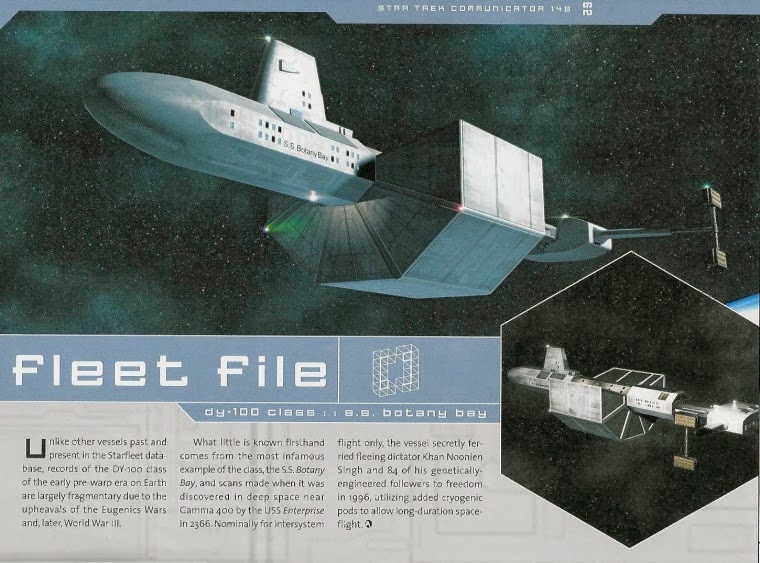 |
| A faux historical account of Earth "pre-warp" |
Warp drive, as enthusiastically a Trekkie I am, was a plot device created by Gene Roddenberry to get his astronauts from "here-to-there" in a reasonable amount of time to tell a story in an hour or less. NASA on the other hand, needs something other than chemical rockets that once the fuels expended to get the rocket into orbit - Newton's Laws dominate. Which is why currently a manned trip to Mars would take ~ 7 months to 300 days, and have astronauts with muscles of mush and bone mass of jello. VASIMR may get us there one day, thanks to the diligent research of people like Franklin Ramón Chang Díaz, PhD.
Abstract
The Alcubierre warp drive allows a spaceship to travel at an arbitrarily large global velocity by deforming the spacetime in a bubble around the spaceship. Little is known about the interactions between massive particles and the Alcubierre warp drive, or the effects of an accelerating or decelerating warp bubble. We examine geodesics representative of the paths of null and massive particles with a range of initial velocities from -c to c interacting with an Alcubierre warp bubble travelling at a range of globally subluminal and superluminal velocities on both constant and variable velocity paths. The key results for null particles match what would be expected of massive test particles as they approach +/- c. The increase in energy for massive and null particles is calculated in terms of v_s, the global ship velocity, and v_p, the initial velocity of the particle with respect to the rest frame of the origin/destination of the ship. Particles with positive v_p obtain extremely high energy and velocity and become "time locked" for the duration of their time in the bubble, experiencing very little proper time between entering and eventually leaving the bubble. When interacting with an accelerating bubble, any particles within the bubble at the time receive a velocity boost that increases or decreases the magnitude of their velocity if the particle is moving towards the front or rear of the bubble respectively. If the bubble is decelerating, the opposite effect is observed. Thus Eulerian matter is unaffected by bubble accelerations/decelerations. The magnitude of the velocity boosts scales with the magnitude of the bubble acceleration/deceleration.
As you read through the paper, please note the possibility of incinerating the star system/planet/people we'd be trying to hurry up and visit ("we come in peace" \\//_?).
I think - as even Star Trek alludes to - our first interstellar space faring will likely be at sub light speed in sleeper ships. Better to crawl first before running: 1/3 c to begin.
Someone will just have to invent inertial dampers since the Higgs Boson has been discovered so we don't kill ourselves or anyone else out there (another convenient plot device to avoid describing space faring humans as "street pizza" due to rapid acceleration).
In light of crawling, colonizing the moon, mining the asteroid belt and establishing a permanent base on Mars would be a good 1st start. Sagan mentioned terraforming the Red Planet or Venus in his book "The Cosmic Connection," which would be a practical solution on a global economy based on consumption. On the Kardashev scale, we are primitive.
Eventually, our toy/sandbox will be empty on the sandlot we're accustomed to playing in. Staying earthbound as a species will soon be the equivalent of not accepting potty training at the age and maturity one ought to be. Kind of gross, too.
Physics arXiv: The Alcubierre Warp Drive: On the Matter of Matter
Brendan McMonigal,∗ Geraint F. Lewis,† and Philip O’Byrne‡
Sydney Institute for Astronomy, School of Physics
A28, The University of Sydney, NSW 2006, Australia
Related:
Amazon: The Physics of Star Trek, Beyond Star Trek; Lawrence Krauss
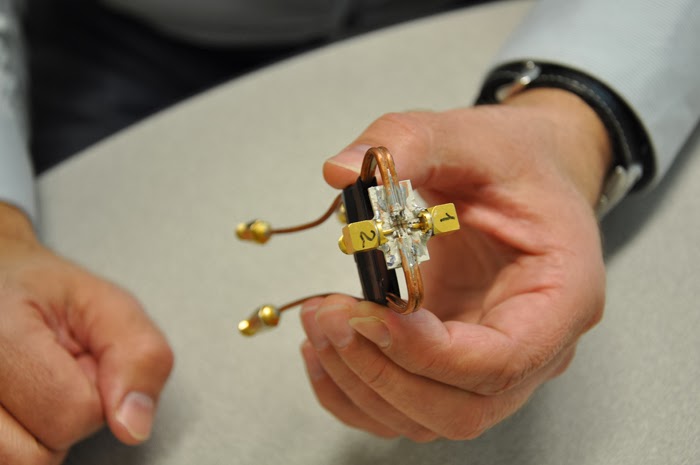 |
| Prototype holographic memory that uses spin waves. (Courtesy: UC Riverside) |
A new type of memory device based on the interference of spin waves has been unveiled by scientists in the US and Russia. Data are stored in the form of magnetic bits and read out simultaneously as holographic images. Because the wavelengths of the spin waves are much shorter than those of light, the storage density of the memory has the potential to be much greater than systems based on optical holograms, and could someday be used to store very large amounts of information.
Conventional holography involves splitting a beam of laser light into an illumination beam and a reference beam. The illumination beam is fired at the object of interest and the deflected light is sent to a detector (or photographic film), where it is reunited with the reference beam. The detector records the interference between the two beams and this information is then used to create a 3D image of the object. As well as being used as a security feature on credit cards and banknotes, holograms also have the potential to store and retrieve large amounts of information in a very efficient way.
However, the storage densities that can be achieved using optical holograms are limited by the relatively long wavelengths of visible light – about 500 nm. Now, Alexander Khitun and colleagues at the University of California, Riverside and the Kotel'nikov Institute of Radioengineering and Electronics in Saratov, Russia, have created a holographic memory that uses spin waves, which have much shorter wavelengths.
Physics World: Data stored in magnetic holograms
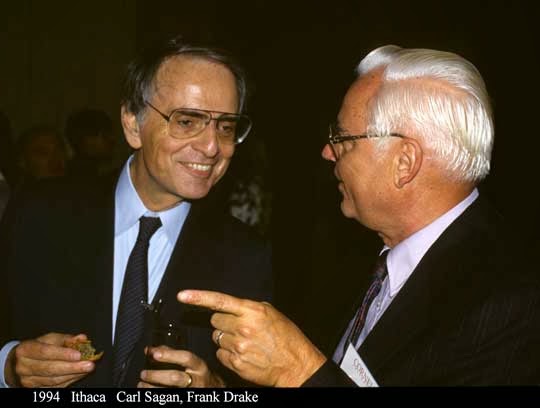 |
| Carl Sagan (left) and Frank Drake (right), one of the founders of the SETI Institute and former director of the Carl Sagan Center. Photo by David Morrison. |
David Morrison, director of the Carl Sagan Center of the SETI Institute, has written a biographical memoir of Carl Sagan (1934-1996), founder of the modern disciplines of planetary science and exobiology.
Morrison’s piece has been published in Biographical Memoirs, an online collection of the National Academy of Sciences that includes more than 1,500 biographies of deceased academy members.
Carl Sagan, you of course know.
Frank Drake: astrophysicist; author of the "Drake Equation" used to estimate the likelihood of extraterrestrial life.
We start the adventure again tonight...COSMOS premieres!
"The cosmos is all that is or ever was or ever will be."
The U.S. Library of Congress has recently designated Cosmos one of the eighty-eight books "that shaped America." It's a roster that includes such earth-shaking works as Thomas Paine's Common Sense, Herman Melville's Moby Dick, Harriet Beecher Stowe's Uncle Tom's Cabin, and Jack Kerouac's On the Road. They're listed in chronological order and the very first one, published in 1751 (decades before the concept of a constitutional government by, for and of the people, crystallized), is also a science book...The list begins with Benjamin Franklin's Experiments and Observations on Electricity. That book and this one are passionate acts of citizenship by two scientists who wanted science to belong to all of us.
Ann Druyan, creative director of NASA's Voyager Interstellar Message, co-writer of Cosmos, co-creator of the motion picture Contact; executive producer and writer of Cosmos: A SpaceTime Odyssey, 2014 (Fox and National Geographic). She was married to Dr. Sagan until his death. The asteroids named after them are in perpetual wedding-ring orbit around the Sun. (From the Foreword)
SETI Institute:
The SETI Institute's David Morrison Publishes Carl Sagan Memoir
National Academy of Sciences Online: Carl Sagan Memoir
* Dedicated to Wilbur and Sandra Banks (both deceased). Wilbur was my cousin by blood; Sandra by marriage. Like Richard and Mildred Loving, a union between the so-called "races" was provocative in 60's North Carolina during the height of the Civil Rights struggle. They made their loving home in Brooklyn, New York in an environment a bit more enlightened than Winston-Salem at the time. I recall noticing as a small child when they visited the south, it was mostly - surreptitiously - under cover of night.
* * *
“One thing I have learned in a long life: that all our science, measured against reality, is primitive and childlike - and yet it is the most precious thing we have.” Albert Einstein (source of the title to Chapter 2 of Sagan's referenced book below)
We are all - every single human that has ever walked the face of the Earth - from what is now known as the African continent, the soil for the root of humanity's Baobab tree starting 6 or 7 million years ago, thankfully well past the Cretaceous Period. About 200,000 years ago, the wanderlust inherit in us all led us to explore and leave Eden. The angle of incidence for ultraviolet radiation, environment adaption and physical separation for millennium did the rest. We are likely as a space faring species to encounter this Punnett Square diversity on distant worlds - if we survive long enough to reach them, and should not [then, or now] find it at all remarkable.
We as a species have unfortunately exacerbated this separation with faux social constructs, magical thinking - conferring/denying powers to melanin or lack thereof; draconian drug polices, gated neighborhoods, consolidated power, for-profit prisons, "old-boy" hierarchies (dubiously based on debunked Social Darwinism [1]) and income inequality enabled by laws once penned by feudal lords, now de facto pseudoscience reinforced by de jure lobbyists. An appreciation for real scientific knowledge could change that, and set us forward out of the darkness of ignorance on a path towards true freedom.
I have endeavored to celebrate science and African American culture and its impact on astronautics, astrophysics, electronics; gas masks and stop lights, part of the set of myriad cultures of humanity in the 21st century. We should all embrace one anothers diversity when the time and situation warrants and when that embrace and acknowledgement neither disrespects or debases. We are globally all "the melting pot"; we are E Pluribus Unum; we are all cousins*.
In doing so, we might have had just one less 9-11 in the US or 7-7 in the UK (zero for both would have been good); one less mass shooting: mall, school, army/naval base, Sikh temple or otherwise; one less Hadiya Pendleton; one less Amadou Diallo; one less Sean Bell; one less Jordan Davis; one less Oscar Grant; one less Jonathan Ferrell; one less police Officer Willie Wilkins; one less police Sgt. Cornel Young Jr.; one less Trayvon Martin...as a result of our scientific enlightenment. One can only hope...
If it seems strange that I end this month with Carl Sagan - here's the tie-in:
COSMOS begins next month (Sunday, March 9th on Fox; March 10th National Geographic), hosted by Neil deGrasse Tyson, PhD and Director of the Hayden Planetarium here in New York. At 17, he received a note from Dr. Sagan which went something like this (my Tyson paraphrase): "I hear you're interested in the universe. So am I." Sagan invited a young Mr. Tyson up to Cornell for a tour, which in many ways shows Sagan as someone that allowed science - not the norm or prejudices in his environment and times - to shape him. Scientists at one time were just as guilty of prejudice as society (a small number sadly still are), but Carl only saw a then young Neil and his desire to explore the stars; another human soul interested in science and thrilled with its wonder. As a fellow human, he was more than happy to encourage this desire, as we still should with each other. Science literacy is our "most precious thing," and paramount to effective governance as a democratic republic in a society and a world only increasing in complexity.
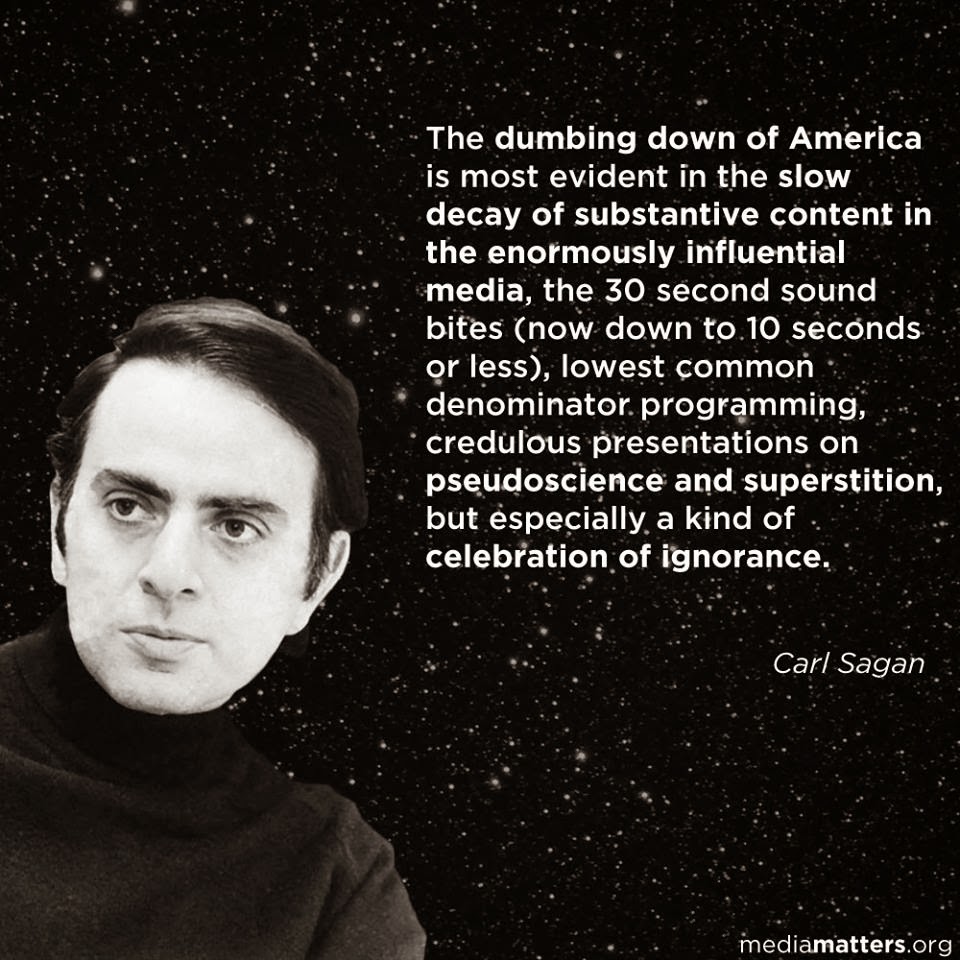
"The Path to Freedom" is the title of the 21st chapter to Dr. Sagan's "The Demon-Haunted World: Science as a Candle in the Dark" (ironically coinciding with this century). The entire book is a course in critical thinking; a discourse in logic and reasoning. This particular chapter was so profound, so significant I transcribed an excerpt and embed it below (a link on some platforms), giving its proper credit to Sagan and his lucid thoughts as he'd penned them. I encourage you to buy a copy of the book, available in paperback and e-book format. A quote from the excerpt: "In evaluating these facts, we must be careful not to improperly deduce causation from correlation" should hopefully encourage you to go deeper in the text and perchance download the book at the link provided. As storyteller and science advocate, especially in our current struggles with myriad pseudoscience, he is sorely missed.
Science as a human enterprise has had its foibles and failings (the atomic bomb; the pseudoscience of eugenics) but the Scientific Method makes it remarkably, and thankfully self-correcting.
Science is our candle in the dark; our Nyota Uhura ("freedom star") that lights our way true north on a path to freedom out of willful ignorance into a shared future and a hope...if we would only allow it.
But I have understanding as well as you;
I am not inferior to you.
Indeed, who does not know such things as these? Job 12:3
Related links:
Seth McFarland's 'Cosmos' gets its closeup
8 of the Most Fascinating Items From Carl Sagan's Personal Archives
(a letter to a young Mr. Neil deGrasse Tyson in 1975 being one of them)
I'll let "Frederick Bailey" explain the rest, and challenge us all to strive towards science literacy (my apologies for the 'good' Captain Auld's language).
1. "Social Darwinism," Microsoft® Encarta® Online Encyclopedia 2000
