Carl: you are missed.
Site: Carl Sagan Day
Amazon: Pale Blue Dot: A Vision of the Human Future in Space
Zen Pencils: Pale Blue Dot
Reginald L. Goodwin's Posts (3130)
Sort by
Lecture by Leo Susskind...
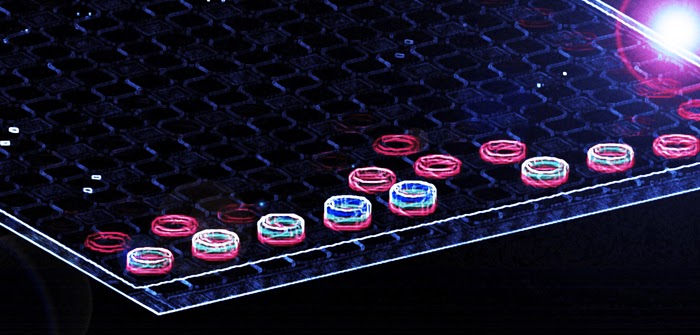 |
| False-colour scanning-electron-microscope image of the edge of the JQI optical lattice showing the ring-shaped waveguides. A waveguide at the centre of the image is missing and the light is seen detouring around it. (Courtesy: Emily Edwards/JQI) |
A version of the quantum Hall effect (QHE) involving light rather than electrons has been created by physicists in the US. The team believes the demonstration could boost understanding of the QHE and perhaps lead to the development of better photonic circuits that use light to process information.
The QHE is a well-known phenomenon that occurs when a voltage is applied along a thin conducting sheet and a magnetic field is applied perpendicular to the sheet's surface. Throughout most of the sheet, the magnetic field makes conduction electrons travel in circular orbits that are quantized. At the edge of the sheet, however, the electrons cannot travel in circles because they would have to leave the sheet and re-enter it. Instead, these electrons hop along the edge in repeated semicircles. Crucially, they will travel along the edge regardless of its shape, following any dents or bulges.
These "topologically protected" paths and other aspects of the QHE have proven to be a rich seam of physics research that has led to two Nobel prizes. However, certain key predictions of QHE theory, such as the presence of bound electron states called anyons, remain unproven. This is because QHE experiments require pure samples, cryogenic temperatures and an ultra-high magnetic field – making measurements difficult to do.
Physics World: Quantum Hall effect created using light
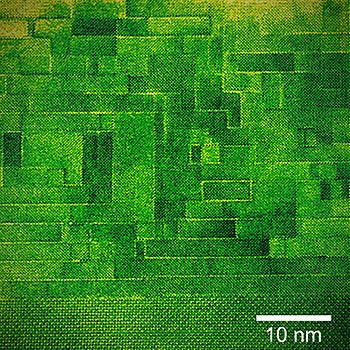 |
| Not a brick wall. Electron microscope image of a cross section of the newly characterized tunable microwave dielectric clearly shows the thick layers of strontium titanate "bricks" separated by thin "mortar lines" of strontium oxide that help promote the largely defect-free growth of the bricks. Credit: TEM image courtesy David Mueller. Color added for clarity by Nathan Orloff. |
Researchers from the National Institute of Standards and Technology (NIST) have joined with an international team to engineer and measure a potentially important new class of nanostructured materials for microwave and advanced communication devices. Based on NIST's measurements, the new materials—a family of multilayered crystalline sandwiches—might enable a whole new class of compact, high-performance, high-efficiency components for devices such as cellular phones.*
"These materials are an excellent example of what the Materials Genome Initiative refers to as 'materials-by-design'," says NIST physicist James Booth, one of the lead researchers. "Materials science is getting better and better at engineering complex structures at an atomic scale to create materials with previously unheard-of properties."
The new multilayer crystals are so-called "tunable dielectrics," the heart of electronic devices that, for example, enable cell phones to tune to a precise frequency, picking a unique signal out of the welter of possible ones.
Tunable dielectrics that work well in the microwave range and beyond—modern communications applications typically use frequencies around a few gigahertz—have been hard to make, according to NIST materials scientist Nathan Orloff. "People have created tunable microwave dielectrics for decades, but they've always used up way too much power." These new materials work well up to 100 GHz, opening the door for the next generation of devices for advanced communications.
What this means to you: as you'll read in the article, it could mean an end to dropped cell phone calls (or, at least minimizing it significantly)...

*C-H Lee, N.D. Orloff, T. Birol, Y. Zhu, V. Goian, E. Rocas, R. Haislmaier, E. Vlahos, J.A. Mundy, L.F. Kourkoutis, Y. Nie, M.D. Biegalski, J. Zhang, M. Bernhagen, N.A. Benedek, Y. Kim, J.D. Brock, R.Uecker, X.X. Xi, V. Gopalan, D. Nuzhnyy, S. Kamba, D.A. Muller, I. Takeuchi, J.C. Booth, C.J. Fennie and D.G. Schlom. Exploiting dimensionality and defect mitigation to create tunable microwave dielectrics. Nature, 502, 532–536, Oct. 24, 2013. doi:10.1038/nature12582.
National Institute of Standards and Technology:
Perfect Faults: A Self-Correcting Crystal May Unleash the Next Generation of Advanced Communications
 |
| Source: Science in Seconds |
"God must be an Aggie," my classmate said as the weather was beautiful: average temperature felt about 70 degrees Fahrenheit...in November. We won in a 59-12 blowout. I left after the halftime show: 31-6 then.
So, out of curiosity, I went to the archives of the National Oceanic and Atmospheric Association Weather Forecast Service for Raleigh/Durham. I'd last attended #GHOE in 1999 right after my father's passing; the archives only went to 2000 (all admitted "eyeball" approximations of November average temperatures). I recall it being cold enough for a coat and ski cap in that November:
2000: 50 degrees
2001: 52 degrees
2002: 50 degrees
2003: 58 degrees
2004: 70 degrees
2005: 50 degrees
2006: 52 degrees
2007: 50 degrees
2008: 50 degrees
2009: 60 degrees
2010: 52 degrees
2011: ~50 degrees or less
2012: 50 degrees
2013: ~68 degrees
Greensboro and Durham, NC are both 36 and 40 degrees respectively for the moment. Climate change is murky because people either want a clear demonstration that it IS happening - Louisiana may be gone in 10 years. Once we've reached that stage, only star ships or biblical rapture could save the human species.
Ironically, the NOAA posts a disclaimer: "Climate data on this page is PRELIMINARY (unofficial). CERTIFIED (official) climate data is available from the National Climate Data Center (NDCC)."
Except, when you click on the link you get this message:
404 Not Found
The requested URL /rah/cliplot/www.ncdc.noaa.gov was not found on this server.
The actual URL I did find, and it has some useful information, but sadly seems as well-designed as the health care exchange site. I'm not saying the information is NOT there: it's just going to take some patience on your and my part since neither of us are environmental engineers.
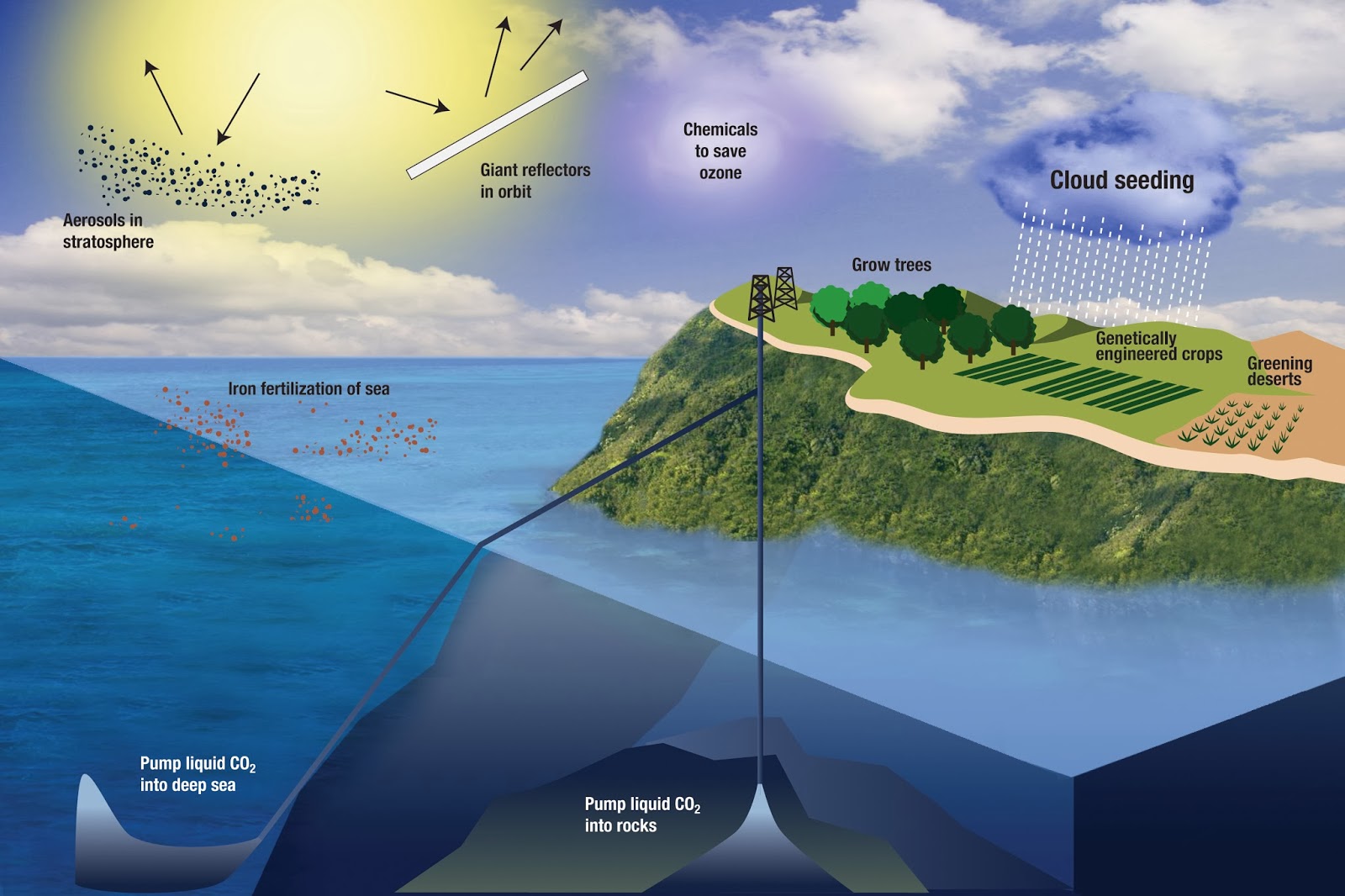
I'm posting not just due to a week from Hurricane Sandy's anniversary: the "quick fix" solution promoted (and I've reported on this blog) has been geoengineering, i.e. seeding the clouds with sulfate aerosols deliberately to cool the temperature of the planet. I had a strong reaction to this: One of my process engineering projects had been eliminating chlorofluorocarbons from [then] our Polysilicon Etch processes. The problem with the whole aerosol spray thing is there could possibly be less rain, and since the planet and our bodies are made of ~70% melted comet snow balls, that presents problems only Bedouins so far have successfully adapted to. Of course, the Bedouins kind of "know" where the water is for their survival. Quick fixes seem to be the norm in the post-Google world of downloading information versus studying to master it; we've lost an appreciation for the process of discovery and problem solving: both take time, and soon that luxury will not be afforded us.
In Caveat Emptor, I pointed out a large percentage of the elements/rare earths for so-called green technology are found in the country of our banker, China.
We appear to be painting ourselves into a very narrowing corner, our options are few and sadly due to the elevation of the politics of deliberate science ignorance at the highest level: self-constricting...
PSA: It's election day, and every one counts. Go out and vote for the representatives that can answer these questions: ScienceDebate.org. Money becomes free speech only when free people stay home.
Technology Review: One Potential Problem With Geoengineering: Less Rain
Originally, this appeared one year ago as "This Is What It Looks Like." Europe just got a taste of it recently. Sandy occurred one year ago today.
Sadly, our political leaders figuratively whistle in the dark; play mythological fiddles while Rome burns (Nero never did it). Congressman Joe Barton believes "wind is a finite resource," and harnessing it would RESULT in global warming. Hill Heat reports Congressman Kevin Cramer believes "global warming is fraudulent science to promote wind farms." It would be laughable if only these men didn't have the levers of government behind their lack of training in STEM fields. The fact Cramer's name correlates well with the "Seinfeld shutdown" is pure irony. Life and physics are not a "multiple choice exams": you can't make it up as you go for very long. Laws of nature have abrupt ways of asserting themselves, and it doesn't grade on a curve.
What is not fraudulent: I opted not to go to my college homecoming last year due to Hurricane Sandy careening towards the eastern seaboard last year. What was not fraudulent is how many people went "Lord of the Flies" over gasoline: driving up from NYC and New Jersey; police called to break up fights at gas stations. What was sadly not fraudulent is these and other elected officials not voting for emergency relief since it didn't affect their constituents.
I am going to #GHOE this year, and taking a week off from posting. I am grateful for the training my university gave me in laws of physics, chemistry, Calculus, engineering, to make a real difference in the world. It all started with a chemistry set; it lifted a child from a sometimes violent existence to something wondrous. It is this wonder I'll pay homage to in Greensboro, NC. See you in a week...
In Austin, Texas I witnessed the caravans from Hurricanes Katrina and Rita: Interstates 10 and 45 packed headed towards Austin and Dallas respectively.
Houston received the first wave of fleeing masses of humanity from Louisiana. Churches and shelters in the three cities put up cots and sleeping bags as fast as they could; clothing and canned foods were donated; homes opened. We were brothers, sisters, cousins, friends: suddenly any differences were rendered utterly meaningless: "Vanity of vanities" said Solomon. I became used to life in "tornado alley," and the Texas colloquial phrase of "hunkering down," but nothing like shelves emptied at the grocery stores; sudden influxes of students from 9th Ward NOLA.
Moving from Texas to New York last year, my wife and I experienced Hurricane Irene, which was described at the time a once-in-a-lifetime event as far as its power (hurricanes and tropical storms have affected NY before). Sandy has now proven that comforting logic wrong, coupling winds, flooding, rain, and possibly tornadoes and snowstorms. Last year, the one and only snowstorm happened on Halloween, downing power lines made heavy by wet snow caught on autumn leaves and tree branches that snapped under the great unexpected weight, leaving families without lights; heat. We took in friends that lived in Hyde Park due to that: their children had an increased commute to school when it started again. In Irene's aftermath: Insect populations flourished that in times past should have passed on in seasonal death. Our power blinked in and out before it settled then, but I'm not so sure we'll be as lucky. I hope we are.
WE WILL HAVE TO DEAL WITH THIS: soberly using critical thinking skills, (which, as a nation we show ourselves remarkably bereft), not sound bites and slogans. We have lawyers as administrators of the republic: lawyers argue. Eight of the top nine government posts in China are held by engineers and scientists according to Forbes. Accordingly, they will move to economic prominence, no dominance in 2016, or at least by the 2020s. Narry a tax exempt creation museum on the Sino land mass.
Perhaps it's too late to solve it, and the carbon producers can revel in their profits merrily, having obfuscated truth and fact in our elected officials on science committees; literally running out the clock until...we are here.
And, great wealth only matters: when you have a functional planet to spend it on.
Site: Climate Change Refugees
You Tube: Real Time With Bill Maher
Do the Math: 350.org
Your memories will truly outlive you by eons...
TECHNOLOGY REVIEW: Back in 1956, IBM introduced the world’s first commercial computer capable of storing data on a magnetic disk drive. The IBM 305 RAMAC used fifty 24-inch discs to store up to 5 MB, an impressive feat in those days. Today, however, it’s not difficult to find hard drives that can store 1 TB of data on a single 3.5-inch disk.
But despite this huge increase in storage density and a similarly impressive improvement in power efficiency, one thing hasn’t changed. The lifetime over which data can be stored on magnetic discs is still about a decade.
That raises an interesting problem. How are we to preserve information about our civilisation on a timescale that outlasts it? In other words, what technology can reliably store information for 1 million years or more?
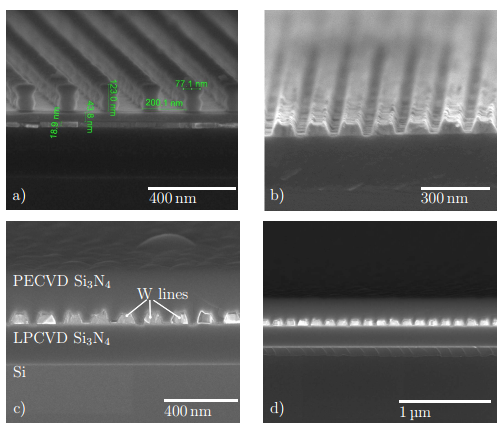
Today, we get an answer thanks to the work of Jeroen de Vries at the University of Twente in the Netherlands and a few pals. These guys have designed and built a disk capable of storing data over this timescale. And they’ve performed accelerated ageing tests which show it should be able to store data for 1 million years and possibly longer.
These guys start with some theory about ageing. Clearly, it’s impractical to conduct an ageing experiment in real time, particularly when the periods involved are measured in millions of years. But there is a way to accelerate the process of ageing.
This is based on the idea that data must be stored in an energy minimum that is separated from other minima by an energy barrier. So to corrupt data by converting a 0 to a 1, for example, requires enough energy to overcome this barrier.
The probability that the system will jump in this way is governed by an idea known as Arrhenius law. This relates the probability of jumping the barrier to factors such as its temperature, the Boltzmann constant and how often a jump can be attempted, which is related to the level of atomic vibrations.
Some straightforward calculations reveal that to last a million years, the required energy barrier is 63 KBT or 70 KBT to last a billion years. “These values are well within the range of today’s technology,” say de Vries and co.
Physics arXiv:
Towards Gigayear Storage Using a Silicon-Nitride/Tungsten Based Medium
 |
| Source |
expert
1. somebody skilled or knowledgeable: somebody with a great deal of knowledge about, or skill, training, or experience in, a particular field or activity
2. highest rank of marksmanship: in shooting, the highest grade of marksmanship
3. highest-ranked shooter: in shooting, somebody who has achieved the grade of expert
Synonyms: skilled, skillful, practiced, proficient, professional, knowledgeable, adept
It started right before the dawn of the 21st Century, the hand-wringing with regards to the "information superhighway" and access to it by minorities, or the fear of lack of access to what was then essentially emerging as a global database. Knowledge is power, advantage; hope.
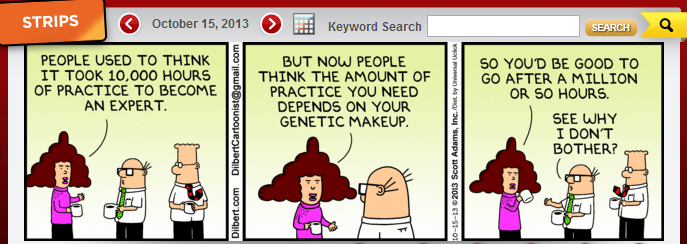
Expertise, as the definition above suggests, can be acquired from skilled practice; repetition its mother; skill its patriarch. What is now understood as muscle memory, ancients mystified as "no mind." Expertise suggests a teacher-disciple relationship, tutelage and qualification from some combination of observation and tasks performed. It used to be an earned credential that qualified for a specific line of work endeavor.
C Everett Koop, MD was US Surgeon General under the Reagan Administration - known for infuriating gay and conservative activists alike - targeting the former for AIDS, and advising sex education as early as the 3rd grade with instruction on the proper use of condoms to prevent disease - lent his name to a business and a web site: DrKoop.com. It's headquarters I passed often in Austin, Texas on the MOPAC expressway, also known as Loop 1; also derided as "segment 1," since a true loop around the city has been thus far impossible to achieve. It was not a successful venture according to the Texas Tribune (June 2000): In mid-March the financial newsweekly Barrons gave the company just three months to live based on its rapidly dwindling supply of cash, and a report by drkoop.com’s auditors to the Securities and Exchange Commission similarly called its long-term survival into question, noting that it had “sustained losses and negative cash flows from operation since its inception.” Twice before, the auditors had warned about the company’s financial health, but investors paid no attention. This time, however, they did: The dire news slashed the price of drkoop.com’s already depressed shares another 43 percent to $3.56 on March 31. On April 29 the stock was trading at $2.75.
The site now reflects to Health Central, may Dr. Koop rest in peace. Hopefully, their financial situation is not as dire as reported in 2000. However, one of the causes of the dot com bubble bursting was the notion of assumed expertise and viability because of the existence of a web site. Venture capitalists threw money at start ups with abandon and aplomb, knowing how to make money in the old world; arrogantly not perceiving or researching the viability of their gambits in the cyberspace of the then emerging new one. They fed and inflated the bubble.
I say assumed because pre-Google, one had to study for and pass a test administered by most librarians on the Dewey Decimal System. Knowledge was and is precious, as well as the development of basic research and critical thinking skills. With the diminishing importance of Dewey Decimal and the perceived public lack of Boolean logic in search engine queries, we have collectively lost our curiosity; our ability to separate the biblical "wheat from chaff"; to discern facts from loudly declared opinions. We are thus participant in inflating a bubble of dangerous ignorance.
The democratization of information has meant we have access to a global database: true. Teenagers as a demographic however, tend to use it to keep up with one another, bored with any other application; knowledgeable with regards to the opinions of other peers versus laws of nature, mathematics or critical thinking. Pundits have become entertainers, the lines blurred utterly between Comedy Central and so-called Cable News. Networks have sued for the right at the very least, to not run a story unfavorable to a major sponsor; many hired to disseminate information or disinformation in prime time are not educated nor trained in journalism, nor increasingly do actual journalists feel it is their duty to hold power accountable in a democratic republic.
Conspiracy theories used to be passed around on pamphlets by fringe groups whose meeting places you had to seek out and find on your own. Now: you may join a chat room, and become angry about anything fed you via cookies after a few search engine queries. The fringe are not only mainstream; they are AstroTurf movement, wielding power in principalities and higher offices of gerrymandered localities; temporarily shutting down democratic republics.
It is a power reinforced by uniform resource locator, the digital equivalent of preaching to a choir of the already convinced; similar to teens online - tweeting during the State of the Union; playing poker during senate hearings on Syria - our political leaders seem only interested in the echos within their own bubble chambers, reinforcing unyielding opinions. And like some pundits and most developing teenagers, they do not have to be skilled in governance to win higher office. Thomas Gray said "ignorance is bliss"; George Orwell "ignorance is strength." And when this bubble pops, there will be massive casualties.
Related links:
Successful Workplace: Is social BPM the end of focused expertise?
The Atlantic: The End Of Expertise?
Forbes:
The End of the Expert: Why No One in Marketing Knows What They're Doing
 |
| Source: link below |
Mesoporous silica (mSiO2) can be used to carry anti-cancer drugs to tumour sites in mice. So say researchers at the University of Wisconsin−Madison in the US who have succeeded in making TRC105-conjugated mSiO2 labelled with radioactive copper for the first time. TRC105 is a chimeric monoclonal antibody that binds to both human and mouse endoglin, or CD105 (a type I membrane glycoprotein found on endothelial cell surfaces).
mSiO2 nanoparticles are a promising new category of drug delivery vehicle because they are biocompatible and non-toxic. Their surfaces can also be easily modified and their mesopores (which are around 2–3 nm across) can hold a significant amount of therapeutic molecules.
Successful anti-cancer drug delivery
In vivo tumour targeting experiments by Cai and colleagues clearly show that the 64Cu-NOTA-mSiO2-PEG-TRC105 accumulates at mouse breast tumour sites (known as "4T1") thanks to TRC105-mediated binding to CD105 in tumour blood vessels. As a proof of concept, they also demonstrated that they could successfully deliver the anti-cancer drug doxorubicin (DOX) in mice with 4T1 tumours by injecting DOX-loaded 64Cu-NOTA-mSiO2-PEG-TRC105 into the animals.
Nanotech Web: Silica nanoparticles deliver anti-cancer drugs
ABOUT THE COURSE
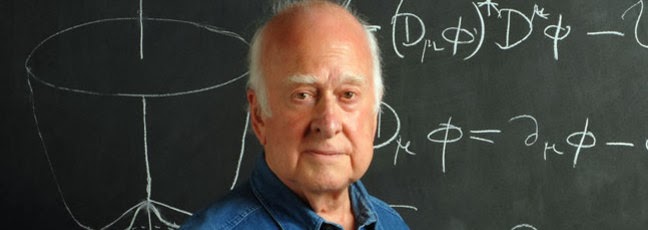
The discovery of a new fundamental particle at the Large Hadron Collider (LHC), CERN is the latest step in a long quest seeking to answer one of physics’ most enduring questions: why do particles have mass? The experiments’ much anticipated success confirms predictions made decades earlier by Peter Higgs and others, and offers a glimpse into a universe of physics beyond the Standard Model.
As Professor Peter Higgs continues his inspiring role at Edinburgh University’s School of Physics & Astronomy, the experiments at the LHC continue.
This MOOC introduces the theoretic tools needed to appreciate the discovery, and presents the elementary particles at the tiniest scales ever explored. Beginning with basic concepts in classical mechanics, the story unfolds through relativity and quantum mechanics, describing forces, matter and the unification of theories with an understanding driven by the tools of mathematics.
Narrating the journey through experimental results which led to the discovery in 2012, the course invites you to learn from a team of world-class physicists at Edinburgh University. Learners participate in discussion of the consequences of the Higgs boson, to physics and cosmology, and towards a stronger understanding and new description of the universe.
REQUIREMENTS
The course requires a basic level of mathematical skills, at the level of a final-year school pupil. A basic knowledge of physics is helpful, but not required.
University of Edinburgh: The Discovery of the Higgs Boson (click "Join this course")
 |
| Credit: Physics arXiv Blog; paper link below |
Physics arXiv Blog: When the new ideas of quantum mechanics spread through science like wildfire in the first half of the 20th century, one of the first things physicists did was to apply them to gravity and general relativity. The result were not pretty.
It immediately became clear that these two foundations of modern physics were entirely incompatible. When physicists attempted to meld the approaches, the resulting equations were bedeviled with infinities making it impossible to make sense of the results.
Then in the mid-1960s, there was a breakthrough. The physicists John Wheeler and Bryce DeWitt successfully combined the previously incompatible ideas in a key result that has since become known as the Wheeler-DeWitt equation. This is important because it avoids the troublesome infinites—a huge advance.
But it didn't take physicists long to realise that while the Wheeler-DeWitt equation solved one significant problem, it introduced another. The new problem was that time played no role in this equation. In effect, it says that nothing ever happens in the universe, a prediction that is clearly at odds with the observational evidence.
This conundrum, which physicists call ‘the problem of time’, has proved to be thorn in flesh of modern physicists, who have tried to ignore it but with little success.
Then in 1983, the theorists Don Page and William Wooters came up with a novel solution based on the quantum phenomenon of entanglement. This is the exotic property in which two quantum particles share the same existence, even though they are physically separated.
Entanglement is a deep and powerful link and Page and Wooters showed how it can be used to measure time. Their idea was that the way a pair of entangled particles evolve is a kind of clock that can be used to measure change.
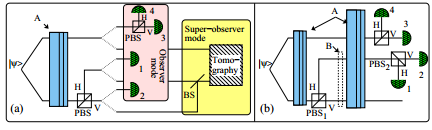
But the results depend on how the observation is made. One way to do this is to compare the change in the entangled particles with an external clock that is entirely independent of the universe. This is equivalent to god-like observer outside the universe measuring the evolution of the particles using an external clock.
In this case, Page and Wooters showed that the particles would appear entirely unchanging—that time would not exist in this scenario.
But there is another way to do it that gives a different result. This is for an observer inside the universe to compare the evolution of the particles with the rest of the universe. In this case, the internal observer would see a change and this difference in the evolution of entangled particles compared with everything else is an important a measure of time.
This is an elegant and powerful idea. It suggests that time is an emergent phenomenon that comes about because of the nature of entanglement. And it exists only for observers inside the universe. Any god-like observer outside sees a static, unchanging universe, just as the Wheeler-DeWitt equations predict.
 |
| Scientific American, see [2] below |
Stereotype threat refers to being at risk of confirming, as self-characteristic, a negative stereotype about one's group (Steele & Aronson, 1995). This term was first used by Steele and Aronson (1995) who showed in several experiments that Black college freshmen and sophomores performed more poorly on standardized tests than White students when their race was emphasized. When race was not emphasized, however, Black students performed better and equivalently with White students. The results showed that performance in academic contexts can be harmed by the awareness that one's behavior might be viewed through the lens of racial stereotypes. [1]
Scott Barry Kaufman seems to refer to this in his Scientific American article "The Need for Belonging in Math and Science" [2]:
From her earliest memories, Catherine Good was good at math. By second grade she was performing at the fourth grade level, sometimes even helping the teacher grade other students’ work. She was praised constantly for her “gift”, often overhearing her mother tell anyone who would listen that she was a “sponge” for anything mathematical.
As time went on:
Achieve she did. Good did so well as an undergraduate, that she decided to pursue a Ph.D. in mathematics. Again, she wasn't driven by the sheer joy, but by other forces:
“My counter-stereotypical achievement, coupled with my belief that those successes were rooted in an innate gift, not only fueled my academic pursuits, but also formed the basis for my academic identity.”
For awhile, Good performed as usual in her graduate program. But then something happened that would change the course of her career: her identity became threatened. As Good puts it, “the identity as a mathematician that I thought was so well-entrenched and established came crashing down, leaving me in a professional crisis.”
Despite her good grades, a flood of self-doubt crept in. She suddenly wondered: Was I simply no longer inspired by the level of rigor and originality necessary for graduate level mathematics? Was it the fact that for the first time in my academic life, I had to work, really work, at my studies?
And, finally...
Whatever the cause(s), one thing was certain: she no longer felt a sense of belonging in mathematics. As a result, she left mathematics.
I have had to come to grips with this in myself, having tried masters programs in physics at Texas State and Astrophysics at UT: certain things stick out to you.
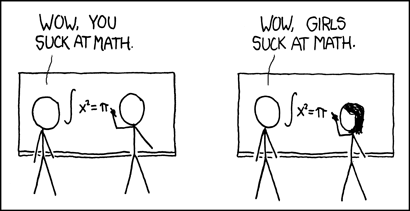
1. You're the only "one." The cartoon above pertaining to the difference for women in STEM could also be of the one African American, Hispanic/Latino/Native American; the Asian that HAS to be good at math as a matter of genetics, so any questions for clarification and understanding means you're a defect somehow.
2. Some indication of that in my offspring. He's performing quite well in Civil Engineering, yet he often feels like "the one." I'm sure if he asked around campus, he'd find it not so unique.
Ironically, the strength of my taking a masters online is I am "one" of many "ones" online. We don't see each other; we only interact/question via email. I send homework in PDF. If I experience some form of stereotype threat, it is in my own self-doubt, which are many: am I too old to do this; will I be the only "one" in the room? There is a freedom and a loneliness in online anonymity, the only brief camaraderie I experienced when I inquired last year how they weathered Hurricane Sandy: Stevens University is in Hoboken, NJ.
I recall once that observation being made by someone I worked with at Motorola: "we're the 'only black engineers' in the room," my fellow alumni said. "And, we're the best damn engineers IN the room" I shot back. Despite that bravado, I wish I had Dr. JC Holbrook's paper on survival strategies [3] in many instances I felt the pressure of stereotype threat. Religion and spirituality - as she mentions - are forms of mental survival strategies (go see 12 Years a Slave) and cultural expression that if not abused by charlatans, pundits, lying politicians and political machinations spewing manipulative talking points, propels individuals and groups forward despite near insurmountable obstacles. Think of the Civil Rights movement. Unless society were to make a massive, herculean change towards eliminating inequality, this will remain necessary.
To go further beyond a masters, I'll have to emerge from online anonymity, even with my company behind me (as they enthusiastically are), I'll have to use survival strategies and fight within myself this "stereotype threat" that morphs into self-fulfilling prophecy for many of us. One is a promise I made to my parents. My journey in science started with a chemistry set and my first almost fatal experiment. Instead of discouraging me, they just barred me from repeating THAT particular one. As science lifts countries out of poverty, it has lifted me twice: once post the US Air Force; second eight years after a lay off from that same company where we were the "best damn engineers in the room." And I have obligated myself to finish what they planted in me and seed it forward to their grandchildren, and any other youth I can influence.
It is an important, internal and external struggle we ultimately must win. This country is bereft of a prosperous future without our triumph and our inputs.
1. Reducing Stereotype Threat: What is 'Stereotype Threat'?
2. SciAm Beautiful Minds: The Need for Belonging in Math and Science
3. P4TC: Survival Strategies
 |
| BBC Universe: Quantum Mechanics |
Steve Spicklemire | More videos
 |
| Seebeck Effect - see arXiv (1) below |
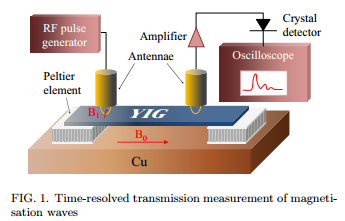
EPFL scientists have provided the first evidence ever that it is possible to generate a magnetic field by using heat instead of electricity. The phenomenon is referred to as the Magnetic Seebeck effect or ‘thermomagnetism’.
A temperature difference across an electric conductor can generate an electric field. This phenomenon, called the Seebeck effect, lies at the root of thermoelectricity (heat turned into electricity), and is used to drive space probes and power thermoelectric generators, and could be implemented for heat-harvesting in power plants, wrist-watches and microelectronics. In theory, it is also possible to generate a magnetic field by using a temperature difference across an electrical insulator (‘thermomagnetism’). This has been referred to as the Magnetic Seebeck effect, and has enormous applications for future electronics such as solid-state devices and magnetic-tunnel transistors. In a breakthrough Physical Review Letters publication that has been promoted to “Editors’ Suggestion”, EPFL scientists have for the first time predicted and experimentally verified the existence of the Magnetic Seebeck effect.
Thermoelectricity and ‘thermomagnetism’
The Seebeck effect (thermoelectricity) — named after Thomas Johann Seebeck who first observed it in 1821 — is generated when electrons in an electric conductor move as a response to a temperature gradient. On average, the electrons on the hot side of the conductor have more kinetic energy and subsequently move at higher speeds than the electrons on the cold side. This causes them to diffuse from the hot to the cold side, generating an electric field that is directly proportional to the temperature gradient along the conductor.
Using an electrical insulator rather than a conductor, researchers led by Jean-Philippe Ansermet at EPFL have shown that a Magnetic Seebeck effect also exists. Because an insulator does not allow electrons to flow, a temperature gradient does not cause electrons to diffuse. Instead, it affects another property of electrons that forms the basis of magnetism and is referred to as ‘spin.’
In an insulator, a temperature gradient alters the orientation of electrons’ spin. Under certain conditions, this generates a magnetic field that is perpendicular to the direction of the temperature gradient. Similar to thermoelectricity described above, the intensity of the thermomagnetic field is directly proportional to the temperature gradient along the insulator. 2
1. Physics arXiv: Evidence for a Magnetic Seebeck Effect
2. Thermomagnetism: Using Heat to Make Magnets, Nik Papageorgiou, EPFL, Scientific Computing
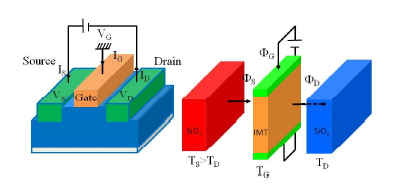
TECHNOLOGY REVIEW: In recent years, engineers have begun to design and test thermal transistors with some success. Their goal is to exercise the same control over heat that they already have over electric current–the ability to switch it on and off, to modulate it and even to amplify it.
That would be hugely useful for managing heat dissipation but also for creating thermal logic gates that can process information in the form of heat.
The thermal transistors built so far all work by modulating the flow of phonons, or thermal vibrations, from one material to another. For this to work, materials must be in physical contact with one another.
But there is another way for heat to flow–by radiative transfer. In this case, heat flows with the passage of thermal photons from one material to another. In this case, the materials do not need to be in physical contact.
Today, Philippe Ben-Abdallah at the Université Paris-Sud in France and Svend-Age Biehs at Carl von Ossietzky Universität in Germany, unveil the first thermal transistor to operate on thermal photons. The big advantage of this device is that it works at much higher speed than phonon transistors, potentially at light speed.
The design is simple. The transistor consists of three parts, which Ben-Abdallah and Biehs call the source, drain and gate, in analogy to a conventional transistor. The source and drain are made of silica and held at different temperatures to create a temperature gradient.
The source, which is hotter than the drain, emits thermal photons which transfer heat to the drain.
Physics arXiv: Near-field thermal transistor
 |
| StopBullying.gov |
Sadly, it's happened again. And each time it happens, I am diminished in the spirit of John Donne's Meditation 17; we are diminished as a nation because brilliance that shouldn't die so young, a candle that should illuminate the darkness...is extinguished.
It's not the first time I've discussed bullying. Scientists get bullied too, many are the survivors of some pretty awful bullying for just being curious; just being different than the "cool, accepted norms." Now, the bullies are young earth advocates, climate change deniers, museums that have Fred and Barney; dragons and zip lines (see Sunday's rant). Lately, the bullies staged a "Seinfeld shutdown" and come out of it in the spirit of Macbeth: "like sound and fury, signifying nothing!"
The dark side of technology is it empowers narcissistic psychopaths. Those are the only words that come to mind when disengagement, transfer to another school only intensifies pursuit for the perverse pleasure of causing harm to a fellow human being. Then when the unthinkable happens and that person takes their own life, the Facebook post is "IDGAF" with 30 likes? Of course now, the account was hacked. That remains to be proven. I sincerely hope if true, they do. It does not absolve them from the physical abuse Rebecca Ann Sedwick received from them offline; I can only imagine the hateful name-calling; the social ostracizing. If they were truly innocent, when she left their school, they should have left her alone.
The narcissists are not all young, as former NY congressman Anthony Weiner lived long enough to see himself become a byword. Internet addiction disorder seems to suggest stereotypical nerds, but I think it is the act of esteeming something that amounts to ones and zeros; mean girls and idols; more important than yourself feeds into a pathology that previously might have in other times made someone a successful "Type A."
I personally witnessed a brouhaha almost ignite in a 4th period physics class...over Facebook...on what one of the young ladies said about themselves to others. This is a generation that compared to previous ones - coming through segregation, poll taxes, Jim Crow and Civil Rights; The Vietnam War; the draft; the Cuban Missile Crisis; The Korean War; The Cold War; WWII and "meatless Tuesdays" have more privilege and less sacrifice than previous ones; their only crisis growing up in the shadows of 9-11, Afghanistan and Iraq...and bullies.
I've recently experienced similar treatment from a religious zealot. A year older than I from the same high school, I don't have much of a recollection of him. I've blocked him, and liberally block anyone else that I think not worth my time. Life is too precious and short. As a survivor of old-school, offline bullying, I relate too well, too personally with each of these stories.
Our minds were made for reason and real problems, reading literature, campfires and conversations. I will finish this post, as I do others in about 20 Terran minutes. I'll then go read an assignment and do problems in solid state electronics. I'll look at my Kindle and laugh. I'll talk to people and treat them with respect.
This is an essay I wrote regarding a young lady that took her life in NY earlier this year.
This, along with gun violence, is becoming a dark national addiction for which we need a Betty Ford intervention.
 |
| T Shirt Guru |
This is a repost with a bit of editing I think you'll find useful.
I've long championed what I like to term "conversational physics concepts," as well as diversity on this blog, particularly gender ascendancy in science, technology, engineering and math. Thus, my concentration this month wasn't all physics (though, I'm admittedly partial). For the nation to advance in the future, we need every one of us.
Hispanic Americans have contributed to our country in measurable ways in science, technology, engineering and mathematics. Knowledge is power: a cliche to be sure, but a commanding statement. Its corollary leads to poverty and personal powerlessness. Carl Sagan said: Science confers power on anyone who takes the trouble to learn it (although too many have been systematically prevented from doing so). Resist that systematic effort when you detect it with all your might. Get help and study; form groups; connect to local chapters of NSHP and SHPE; invite speakers. Too many ethnic minorities drop out of STEM because it is difficult. Anything worth mastering is. Think of the other things in your life that were hard, and you didn't give up. That is the determination I'd like you to bring to this fight. It's more than just a career in science: it is literally learning how to think, and you can apply that in any area of your lives. For a democracy to function, we need an electorate with critical thinking skills. The cost you pay in this challenge I offer to you will be evident and measurable; the cost of the loss of your genius to this country is frightening and incalculable.
It is my hope one or several posts during the month informed, entertained and inspired. I started these posts with something that struck me as wrong: that due to someone's name and attending a historically black college and university as an undergrad, they would most likely not get a grant from the National Institute of Health. It affected me because I know and have taught one such young man that in his future, this impediment will affect him: he currently attends Howard University in Biology Pre Med, and plans to research in Ear, Nose and Throat ailments. Something that because of my own struggles with Sinusitis, I sincerely HOPE he's successful in getting research dollars!
I post this as a father, with two young men with dreams, hopes and futures in Education and Civil Engineering. I have watched over Robert and Mildred Goodwin's grandsons. As they did for me, I hope and work for a future that they can contribute to positively.
Shout out to the students and teachers at Manor High School 
For students, your futures lie not just in sports or rap music; a future in science, technology, engineering and math is not only possible: it is "what you can do for your country" (John F. Kennedy)...and for yourselves.
El reto: ¿Qué vas a celebrar? Adios...
...or at least found on the former planets around them.
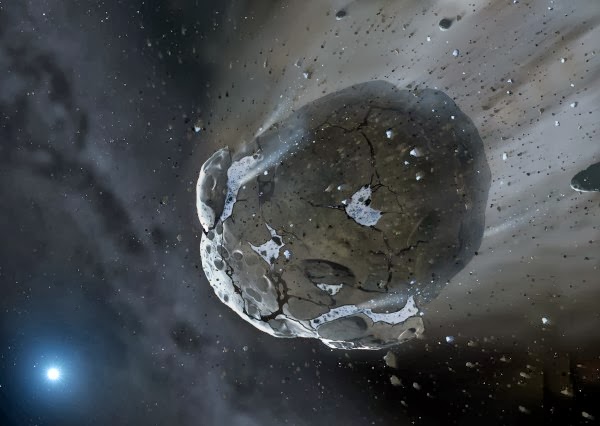
Most stars (including, in about 4 billion years, our sun) end their lives as white dwarfs, after they have burned all their nuclear fuel. These super dense stellar embers exert such strong gravity that any element heavier than helium will immediately sink to the dwarf’s core. So imagine astronomers’ surprise when they discovered that some white dwarfs are cloaked in layers of “pollution” made up of silicon, oxygen, and other elements much higher up on the periodic table.
This pollution is made up of “pieces of planetary systems that are falling into their central stars,” explains Jay Farihi, an astronomer at the University of Cambridge in the United Kingdom. By measuring the pollution’s constituent elements, scientists can peer back in time and discover what the original solar system’s asteroids, comets, and planets were made of. “It’s a wonderful technique for doing planetary forensics,” says Michael Jura, a white dwarf expert at the University of California, Los Angeles, who wasn’t involved in the current research.
In GD 61’s pollution, Farihi and his colleagues noticed a curious abundance of oxygen. Their first thought was that the original asteroid must have been encrusted with carbon dioxide in the form of dry ice. Trouble is, there was no carbon anywhere to be found around GD 61. So in order to account for the extra oxygen, “the only chemically viable substance left is water,” Farihi says.
Science Mag: Stellar Graveyard Shows Signs of Possible (Past) Life
Warwick:
Water discovered in remnants of extrasolar rocky world orbiting white dwarf
If humanity does it, it will not be the fictional Dr. Zephram Cochrane of Star Trek folklore...
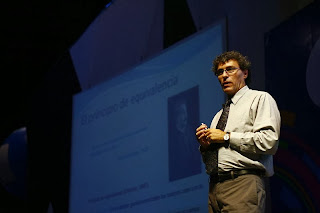
Miguel Alcubierre Moya (born 1964, Mexico City) is a Mexican theoretical physicist.[1] He obtained a degree in physics, and a Master of Science in theoretical physics at the School of Science of Universidad Nacional Autónoma de México (UNAM).

Miguel Alcubierre Moya (born 1964, Mexico City) is a Mexican theoretical physicist.[1] He obtained a degree in physics, and a Master of Science in theoretical physics at the School of Science of Universidad Nacional Autónoma de México (UNAM).
At the end of 1990, Alcubierre moved to Wales to attend graduate school at the University of Wales, Cardiff, receiving his doctorate through study of numerical general relativity.[1][2][3] After 1996 he worked at the Max Planck Institute for Gravitational Physics in Potsdam, Germany, developing new numerical techniques used in the description of black holes. Since 2002, he has worked at the Nuclear Sciences Institute of the National Autonomous University of Mexico (UNAM), where he conducts research in numerical relativity, employing computers to formulate and solve the physical equations first proposed by Albert Einstein.[4] The solitary wave solutions proposed by Alcubierre for the Einsteinian field equations may possibly prove general relativity consistent with the experimentally verified non-locality of quantum mechanics. This work militates against the idea that quantum non-locality would ultimately require abandoning the mathematical structure of general relativity.
On 11 June 2012, Miguel Alcubierre was appointed Director of the Nuclear Sciences Institute at the National Autonomous University of Mexico (UNAM).
Alcubierre is best known for the proposal of "The Warp Drive: Hyper-fast travel within general relativity" which appeared in the science journal Classical and Quantum Gravity.[5] In this, he describes the Alcubierre drive, a theoretical means of traveling faster than light that does not violate the physical principle that nothing can locally travel faster than light. In this paper, he constructed a model that might transport a volume of flat space inside a "bubble" of curved space. This bubble, named as Hyper-relativistic local-dynamic space, is driven forward by a local expansion of space-time behind it, and an opposite contraction in front of it, so that theoretically a spaceship would be placed in motion by forces generated in the change made by space-time.
WikipediaAbstract
It is shown how, within the framework of general relativity and without the introduction of wormholes, it is possible to modify a spacetime in a way that allows a spaceship to travel with an arbitrarily large speed. By a purely local expansion of spacetime behind the spaceship and an opposite contraction in front of it, motion faster than the speed of light as seen by observers outside the disturbed region is possible. The resulting distortion is reminiscent of the "warp drive" of science fiction. However, just as it happens with wormholes, exotic matter will be needed in order to generate a distortion of spacetime like the one discussed here.
Physics arXiv: The warp drive: hyper-fast travel within general relativity
Miguel Alcubierre, Department of Physics and Astronomy
University of Wales, College of Cardiff, UK
Amazing Mexicans: Miguel Alcubierre Moya, PhD
#P4TC links:
Alcubierre Drive
As Dreams Are Made Of
Warp Fields and Research Efficacy
I'm Given Her All She's Got, Captain
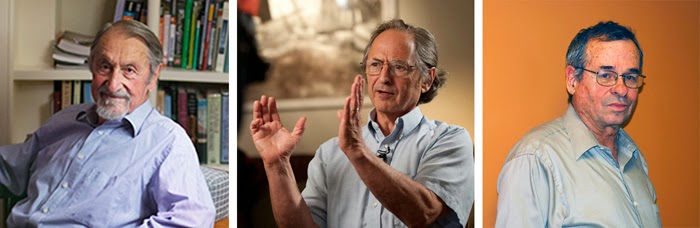
The 2013 Nobel Prize for Chemistry has been awarded to Martin Karplus, Michael Levitt and Arieh Warshel for their development of computer models of complex chemical systems. All three researchers have close links to physics. Karplus, who is a US and Austrian citizen, originally studied physics and chemistry at Harvard University and is now based there and at the University of Strasbourg. Levitt, who has a physics degree from King's College London, is a US and UK citizen working at Stanford University, while Warshel is a US and Israeli citizen based at the University of Southern California. The trio will share the SEK 8m (£775,000) and will receive their medals at a ceremony in Stockholm on 10 December.
Karplus, Levitt and Warshel won the prize for developing computational techniques that use both classical and quantum physics to describe complex chemical processes. Chemical models based on classical physics are relatively easy to compute and can therefore be used to simulate some aspects of the behaviour of large molecules such as proteins. The problem, however, is that these classical models cannot describe crucial aspects of chemistry such as how reactions proceed. To do so requires models based on quantum mechanics, which in turn need huge amounts of computing power. Quantum simulations can therefore only be applied to relatively small molecules.
Physics World: Chemistry Nobel honors trio who combined classical and quantum physics
