Reginald L. Goodwin's Posts (3123)

Sort by

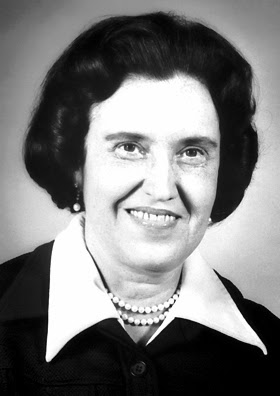
Dr. Barbara McClintock...

Image Source: NobelPrize.org


Topics: Biology, Genetics, Diversity, Diversity in Science, Nobel Prize, STEM, Women in Science

The Nobel Prize in Physiology or Medicine 1983

Born: 16 June 1902, Hartford, CT, USA

Died: 2 September 1992, Huntington, NY, USA

Affiliation at the time of the award: Cold Spring Harbor Laboratory, Cold Spring Harbor, NY, USA

Prize motivation: "for her discovery of mobile genetic elements"

Field: genetics


Relatively few students took this course and most of them were interested in pursuing agriculture as a profession. Only twenty-one years had passed since the rediscovery of Mendel's principles of heredity. ... The results of these studies provided a solid conceptual framework into which subsequent results could be fitted. Nevertheless, there was a reluctance on the part of some professional biologists to accept the revolutionary concepts that were surfacing. This reluctance was soon dispelled as the logic underlying genetic investigations became increasingly evident.

When the undergraduate genetics course was completed in January, a telephone call came from Dr. Hutchinson. He must have sensed my intense interest in the content of his course because the purpose of his call was to invite me to participate in the other genetics course given at Cornell. It was scheduled for graduate students. His invitation was accepted with great pleasure and great anticipations. Obviously, this telephone call cast the die for my future. I remained with genetics thereafter. [1]

*****


To paraphrase George Orwell, every person is unique, but some are more unique than others. There has never been anyone like Barbara McClintock in this world, nor ever will be. She was not simply a representative of a type. Some have considered her as an eccentric, others as a heroine of Science, and still others as a model to be imitated. I would like to tell you how I think of her.

Barbara McClintock was a woman who rejected a woman's life for herself. She began to do it as a small child and never deviated. Her childhood was not a happy one, and perhaps this provided the force, the moral tension that was so strong in her and so necessary for the life she lived. And we must not forget that at the foundation of every creative life there lies a sense of personal inadequacy that energizes the struggle. This sense was strong in Barbara.

Barbara deliberately chose a solitary life without encumbrances, but she did not reject womanhood. In a feminine way, she once said to me "I cannot fight for myself, but I can fight for others." In a time of confusion about such matters, it is important to note that Barbara did not fight against herself by choosing a path that was inconsistent with her nature or her capacity. This is why she could, at the end, say "I have lived a wonderful life and I have no regrets about it." This does not mean that Barbara's life of isolation protected her from inner storms and passions. On the contrary, she was familiar with periods of depression, sense of futility and, yes, tears of frustration and rage. Yet her final judgment on her life was strongly affirmative. [2]

1. "Barbara McClintock - Facts". Nobelprize.org. Nobel Media AB 2014. Web. 23 Mar 2015. http://www.nobelprize.org/nobel_prizes/medicine/laureates/1983/mcclintock-facts.html
2. In Memoriam - Barbara McClintock

Read more…

Yotta-eV and ET...

Artist's impression of a black hole. Could an advanced alien civilization create a cosmic collider using such an object? (Courtesy: NASA/JPL-Caltech)


Topics: Black Holes, Neutrinos, Particle Physics, Space, SETI


Has an advanced alien civilization built a black-hole-powered particle accelerator to study physics at "Planck-scale" energies? And if such a cosmic collider is lurking in a corner of the universe, could we detect it here on Earth?

Brian Lacki of the Institute for Advanced Studies in Princeton, New Jersey, has done calculations that suggest that if such an accelerator exists, it would produce yotta electron-volt (YeV or 1024 eV) neutrinos that could be detected here on Earth. As a result, Lacki is calling on astronomers involved in the search for extraterrestrial intelligence (SETI) to look for these ultra-high-energy particles. This is supported by SETI expert Paul Davies of Arizona State University, who believes that the search should be expanded beyond the traditional telescope searches.

Like humanity, it seems reasonable to assume that an advanced alien civilization would have a keen interest in physics, and would build particle accelerators that reach increasingly higher energies. This energy escalation could be the result of the "nightmare scenario" of particle physics in which there is no new physics at energies between the TeV energies of the Standard Model and the 1028 eV Planck energy (10 XeV) – where the quantum effects of gravity become strong. "The nightmare of particle physics is the dream of astronomers searching for extraterrestrials," says Lacki.

An important problem facing alien physicists would be that the density of electromagnetic energy needed to reach the Planck scale is so great that the device would be in danger of collapsing into a black hole of its own making. However, Lacki points out that a clever designer could, in principle, get round this problem and "reaching [the] Planck energy is technically allowed, if extremely difficult".

Physics World: Have alien civilizations built cosmic accelerators from black holes?
Hamish Johnston is editor of physicsworld.com

Read more…

Cyber-Bullying...

ERA: History


Topics: Bullying, Diversity in Science, Equal Rights, Internet, Trolls, Women in Science


Section 1. Equality of rights under the law shall not be denied or abridged by the United States or by any state on account of sex.

Section 2. The Congress shall have the power to enforce, by appropriate legislation, the provisions of this article.

Section 3. This amendment shall take effect two years after the date of ratification.

A moment to discuss this related topic: Yesterday, the Equal Rights Amendment was passed by congress in 1972 (a rare time congress actually worked in our behalf). It would ultimately be defeated from becoming law by Phyllis Schlafly, using fear tactics and some homophobia.

Even the actress Ashley Judd is not immune to cyber-bullying, subjected to the vilest and violent responses to a somewhat off-color remark at a sporting event, that most are thinking anyway as their team is losing, but didn't openly share on social media as we do now (as it didn't exist before). The double-standard is quite apparent as no male sharing such disappointment is assaulted in such a manner.  What used to be done in-person by the muscular bully on the playground is done by the cowardly troll on the Internet, usually before there moms call them down for dinner.

As a survivor of trolls: you have the ability to respond in protecting yourselves from bullying, cyber or otherwise. Most social media has a method of blocking them from commenting on your stream. The FBI has a podcast on cyber-bullying as well as an official PSA. My bullying usually has been the response to something said innocuously in a science post that offended a particular troll's view of the universe. After a spirited back-and-forth that eventually went nowhere, I either used the aforementioned blocking settings, or in one severe case, I went here where I found this:

The IC3 (Internet Criminal Complaint Center) was established as a partnership between the Federal Bureau of Investigation (FBI) and the National White Collar Crime Center (NW3C) to receive Internet related criminal complaints and to further research, develop, and refer the criminal complaints to federal, state, local, or international law enforcement and/or regulatory agencies for any investigation they deem to be appropriate. The IC3 was intended, and continues to emphasize, serving the broader law enforcement community to include federal, as well as state, local, and international agencies, which are combating Internet crime and, in many cases, participating in Cyber Crime Task Forces. You can file a complaint here.

Like Ms. Judd, it stops when you stand up and say "no more!" Social media has done wonderful things, but has revealed homophobes, misogynists, racists, sectarians and sociopaths. NONE of you with the ambition, drive and intelligence can be good scientists or engineers if you don't feel safe, on or offline. Sadly, by accident or incident, these Neanderthals will one day be someone's father, dealing with the seeds they have sown to the wind they will inherit. Let their mothers deal with them now when the authorities come to their doors. They deserve neither your power, your protection nor your respect.
Read more…

Dawn...

Image Source: Link below


Topics: Ceres, Ion Propulsion, NASA, Space Exploration


The NASA spacecraft Dawn has spent more than seven years traveling across the solar system to intercept the asteroid Vesta and the dwarf planet Ceres. Now in orbit around Ceres, the probe has returned the first images and data from these distant objects.

But inside Dawn itself is another first – the spacecraft is the first exploratory space mission to use an electrically-powered ion engine rather than conventional rockets.

Such ion engines will propel the next generation of spacecraft.

Ion engines use electric power to create charged particles of the fuel, usually the gas xenon, and accelerate them to extremely high velocities. The exhaust velocity of conventional rockets is limited by the chemical energy stored in the fuel’s molecular bonds, which limits the thrust to about 5km/s. Ion engines are in principle limited only by the electrical power available on the spacecraft, but typically the exhaust speed of the charged particles range from 15km/s to 35km/s.

What this means in practice is that electrically powered thrusters are much more fuel efficient than chemical ones, so an enormous amount of mass can be saved through the need for less fuel on board. With the cost to launch a single kilogram of mass into Earth orbit of around $20,000, fuel savings can make spacecraft significantly cheaper.

This can be of great benefit to commercial manufacturers of geostationary satellites, where electric propulsion can allow them to maneuver adding new capabilities to the satellite during its mission. And for scientific missions such as interplanetary travel to the outer regions of the solar system, electric propulsion is the only means to carry useful scientific payload quickly across the enormous distances involved.

Discovery: Step Aside, Rockets – Ion Engines Are the Future of Space Travel
By Steve Gabriel, University of Southampton
#P4TC: NEXT...

Read more…

Dr. Rita Levi-Montalcini...

Image Source: NobelPrize.org


Topics: Biochemistry, Cell Physiology, Diversity, Diversity in Science, Medicine, Nobel Prize, Women in Science

The Nobel Prize in Physiology or Medicine 1986

Rita Levi-Montalcini

Born: 22 April 1909, Turin, Italy

Died: 30 December 2012, Rome, Italy

Affiliation at the time of the award: Institute of Cell Biology of the C.N.R., Rome, Italy

Prize motivation: "for their discoveries of growth factors"

Field: biochemistry, cell physiology

Prize share: Stanley Cohen and Rita Levi-Montalcini "for their discoveries of growth factors"


My twin sister Paola and I were born in Turin on April 22, 1909, the youngest of four children. Our parents were Adamo Levi, an electrical engineer and gifted mathematician, and Adele Montalcini, a talented painter and an exquisite human being. Our older brother Gino, who died twelve years ago of a heart attack, was one of the most well known Italian architects and a professor at the University of Turin. Our sister Anna, five years older than Paola and myself, lives in Turin with her children and grandchildren. Ever since adolescence, she has been an enthusiastic admirer of the great Swedish writer, the Nobel Laureate Selma Lagerlöf, and she infected me so much with her enthusiasm that I decided to become a writer and describe Italian saga "à la Lagerlöf". But things were to take a different turn.

Ever since childhood, Paola had shown an extraordinary artistic talent and father's decision did not prevent her full-time dedication to painting. She became one of the most outstanding women painters in Italy and is at present still in full activity. I had a more difficult time. At twenty, I realized that I could not possibly adjust to a feminine role as conceived by my father, and asked him permission to engage in a professional career. In eight months I filled my gaps in Latin, Greek and mathematics, graduated from high school, and entered medical school in Turin. Two of my university colleagues and close friends, Salvador Luria and Renato Dulbecco, were to receive the Nobel Prize in Physiology or Medicine, respectively, seventeen and eleven years before I would receive the same most prestigious award. All three of us were students of the famous Italian histologist, Giuseppe Levi. We are indebted to him for a superb training in biological science, and for having learned to approach scientific problems in a most rigorous way at a time when such an approach was still unusual.

In 1936 I graduated from medical school with a summa cum laude degree in Medicine and Surgery, and enrolled in the three year specialization in neurology and psychiatry, still uncertain whether I should devote myself fully to the medical profession or pursue at the same time basic research in neurology. My perplexity was not to last too long.

"Rita Levi-Montalcini - Facts". Nobelprize.org. Nobel Media AB 2014. Web. 21 Mar 2015. http://www.nobelprize.org/nobel_prizes/medicine/laureates/1986/levi-montalcini-facts.html

Read more…

First Contact...

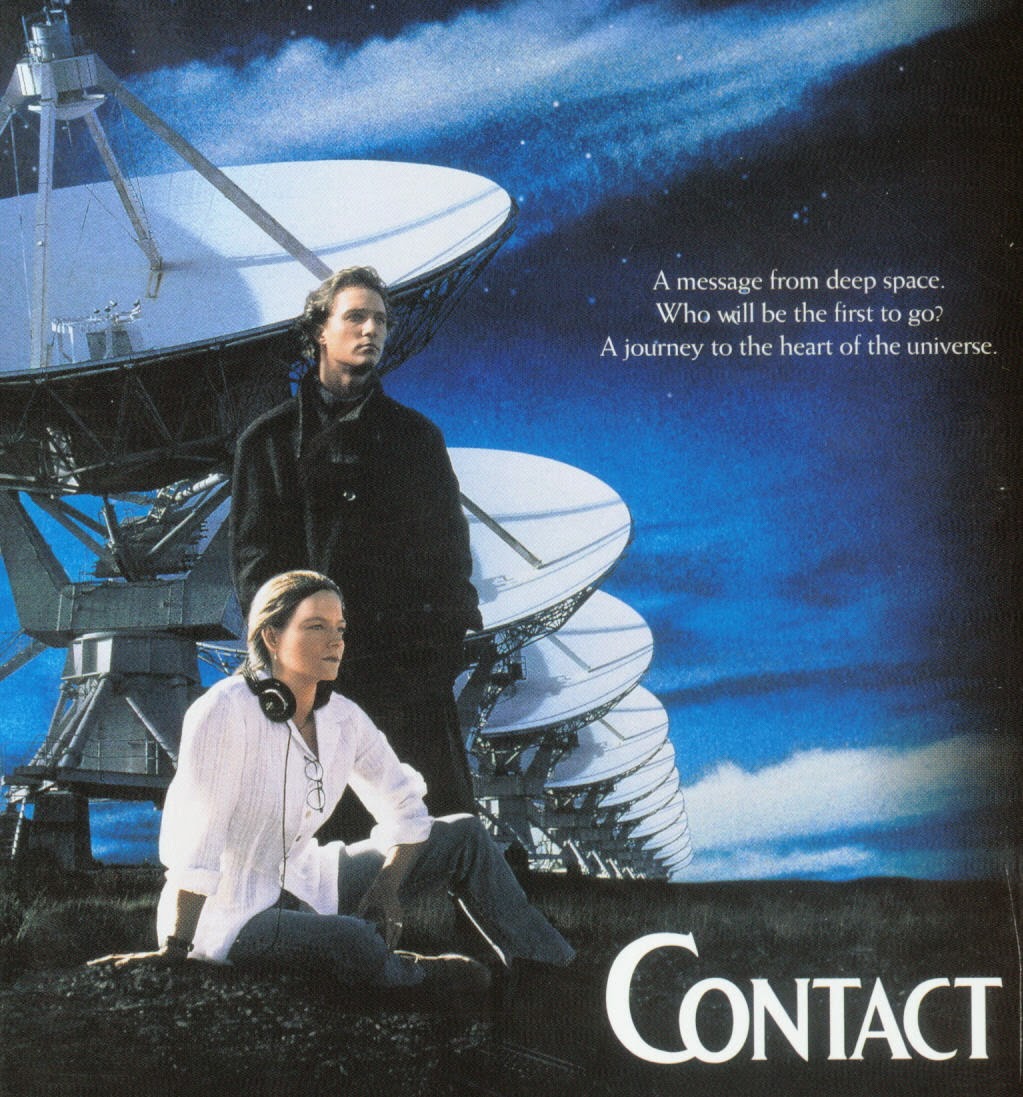
Image Source: Carl Sagan Contact

Topics: Commentary, Existentialism, First Contact, Sectarianism, SETI

"Man fears time, but time fears only the pyramids." Arab Proverb


Before the movie of the same name by the cast of Star Trek: The Next Generation, there was an episode using the same name - "First Contact." The implications were that the particular alien species had a lot invested in their traditions and customs; the introduction of another humanoid species outside of itself would profoundly change their self-concept, similar to early man thinking Earth being the center of the universe, and the scientific, Heliocentric corrections of Copernicus and Galileo being heresy. I alluded to this in the post Terms of Indifference, and it was definitely brought to fore in the movie Contact based on a novel by Carl Sagan, which originally started life as a stalled screenplay. We don't have to go warp drive or travel to other worlds to see this species sectarianism. Just the transition from our current Type 0 Kardashev Scale (or, Carl Sagan gave us 0.7) to a Type 1 civilization is daily fraught with regressive forces determined to look backwards fearing natural forward motion, science and knowledge. That would thus bring an end to their respective hegemony, as they would no longer have unquestionable basis to their authority over others. It is incredulous the pull of ignorance on species survival. The irony is they typically rail about this online (often, in all CAPS) with a platform created by science in many cases, in 140 characters or less. It may be why the stars are silent: Type 1 may be a hard gap to leap and Type 2 a rarity; sadly, intelligence maybe its own Entropy.
Read more…

WISE...

Image Source: Louisiana Tech University


Topics: Diversity, Diversity in Science, Economy, Engineering, Women in Science


Arizona: The Women in Engineering Program at the University of Arizona aims to increase interest and diversity in the fields of social and natural science, technology, engineering, mathematics, and medicine by offering a variety of outreach programs and student engagement opportunities. In doing so, we work to motivate students to enter careers in STEM fields and to support them along the way. At WISE we firmly believe that greater diversity produces better science and science that is better equipped to address some of the most pressing problems we face in the world today.

Stony Brook: The Women in Science and Engineering (WISE) Program seeks to increase the number of women in science, math and engineering fields through outreach, recruitment and retention efforts. Combining the vast resources of a major university with the close bonds of a small community, the WISE College Program enables undergraduate women to work closely with peers and faculty to form friendships and to achieve a solid background in their field. The WISE Precollege Program reaches out to local schools to inspire young women to choose to pursue science math and engineering degrees.

The WISE Program is multidimensional. Thank you for your interest in the program. We hope you find the information on this web site useful. If you would like additional information, please contact the WISE office.

UK: At WISE (Women in to Science and Engineering), our mission is to increase the gender balance in the UK’s STEM workforce, pushing the presence of female employees from 13% as it stands now, to 30% by 2020.

Our services are designed to build and sustain the pipeline of female talent in STEM from classroom to boardroom, boosting the talent pool to drive economic growth.

WISE, which has 30 years experience of inspiring girls to pursue STEM subjects, now incorporates the UKRC, which had a contract from the Government from 2004-12 to increase opportunities for women in science, engineering and technology through support services to business, education and women returners. The UKRC is now an independent Community Interest Company trading as WISE (company number 07533934).
Read more…

Diamond Nanosheets...


Topics: Consumer Electronics, Economy, Electrical Engineering, Jobs, Nanotechnology, Materials Science


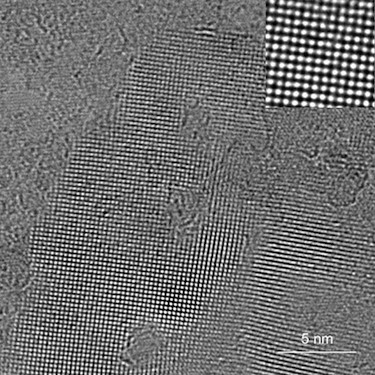
TECHNOLOGY REVIEW: Diamond films are among the most extraordinary materials on the planet. They are strong, transparent and they conduct heat well. They are biologically inert but can also be chemically functionalised by attaching molecules to their surface. What’s more, when doped, they become semiconductors and so can be used in electronic circuits.

So it’s no wonder that materials scientists are licking their lips at the prospect of incorporating this wonder material into more or less any device they can think of.

But there’s a problem. Diamond films have to be grown at high temperatures in an atmosphere of pure hydrogen, which is not compatible with the way other microdevices are made, such as silicon chips.

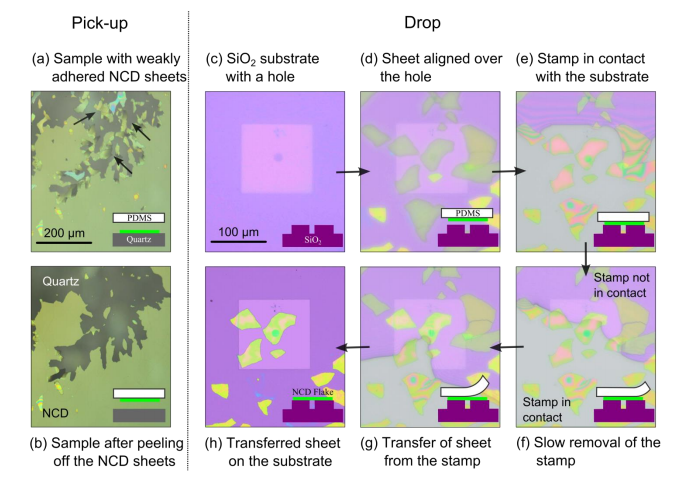
So a useful trick would be to have a way to make diamonds films in one place and then transfer them to another so that they can be placed onto chips and other devices.

Today, Venkatesh Seshan at the Kavli Institute of Nanoscience in The Netherlands and a few pals, say they have perfected a way to grow diamond films on a quartz substrate, separate the films and then pick them up and place them somewhere else.

The team begin by placing nanodiamond seed crystals on the quartz surface and heating it to over 500 degrees C in a hydrogen plasma atmosphere. The seeds then grow, creating a crystalline diamond surface up to 180 nanometres thick.

Physics arXiv: Pick-up and drop transfer of diamond nanosheets
V. Seshan, J.O. Island, R. van Leeuwen, W.J. Venstra, B.H. Schneider, S.D. Janssens, K. Haenen, E.J.R. Sudhölter, L.C.P.M. de Smet, H.S.J. van der Zant, G.A. Steele, A. Castellanos-Gomez

Read more…

Dr. Gertrude B. Elion...

Image Source: NobelPrize.org


Topics: Diversity, Diversity in Science, Medicine, Nobel Prize, Pharmacology, Women in Science


Note: though her doctorate was honorary, her life and contributions were extraordinary. She completed Masters work, and never married though had a full life as an aunt and researcher (and Nobel Laureate). You owe it to yourself to read her entire bio, which I excerpt below. Note 2: she was the daughter of immigrants.

The Nobel Prize in Physiology or Medicine 1988

Born: 23 January 1918, New York, NY, USA

Died: 21 February 1999, Chapel Hill, NC, USA

Affiliation at the time of the award: Wellcome Research Laboratories, Research Triangle Park, NC, USA

Prize motivation: "for their discoveries of important principles for drug treatment".

Prize share: James W. Black, Gertrude B. Elion and George H. Hitchings "for their discoveries of important principles for drug treatment".


I was born in New York City on a cold January night when the water pipes in our apartment froze and burst. Fortunately, my mother was in the hospital rather than at home at the time. My father emigrated from Lithuania to the United States at the age of 12. He received his higher education in New York City and graduated in 1914 from the New York University School of Dentistry. My mother came at the age of 14 from a part of Russia which, after the war, became Poland; she was only 19 when she was married to my father. My first seven years were spent in a large apartment in Manhattan where my father had his dental office, with our living quarters adjoining it.

My brother was born about six years after I was, and shortly thereafter we moved to the Bronx, which was then considered a suburb of New York City. There were still many open lots where children could play and large parks, including the Bronx Zoo, to which I was very much devoted. My brother and I had a happy childhood. We went to a public school within walking distance of our house. Our classrooms were generally quite crowded, but we received a good basic education.

I was a child with an insatiable thirst for knowledge and remember enjoying all of my courses almost equally. When it came time at the end of my high school career to choose a major in which to specialize I was in a quandary. One of the deciding factors may have been that my grandfather, whom I loved dearly, died of cancer when I was 15. I was highly motivated to do something that might eventually lead to a cure for this terrible disease. When I entered Hunter College in 1933, I decided to major in science and, in particular, chemistry.

By this time my father was not financially well-off since he, like many others, had invested heavily in the stock market, and in the crash of 1929 had gone into bankruptcy. Fortunately, he still had his profession and his loyal patients. Had it not been that Hunter College was a free college, and that my grades were good enough for me to enter it, I suspect I might never have received a higher education. My brother also was able to take advantage of a free higher education, going to the College of the City of New York where he studied physics and engineering.

"Gertrude B. Elion - Facts". Nobelprize.org. Nobel Media AB 2014. Web. 19 Mar 2015. http://www.nobelprize.org/nobel_prizes/medicine/laureates/1988/elion-facts.html

Read more…

An Eclipsing Friday...

Image Source: See "link" in following paragraph


Topics: Astronomy, Eclipse, Safety, Space


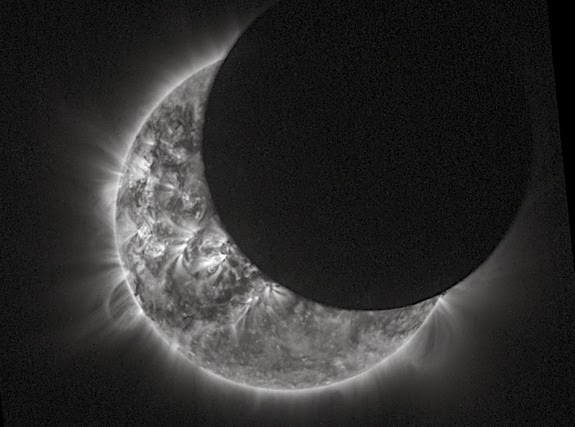
Please enjoy the Solar Eclipse safely from your vantage point. This link (also the source of the photo above) has a scientist explaining how to build a pinhole viewing box. I've used one with one of my undergrad professors at the observatory on the top floor of Marteena Hall. I can't overemphasize safety enough. If you're lucky to see it in person, protect the only eyes you'll ever own.

Since I'm neither at the Faroe Islands or Svalbard, I don't think we're going to see anything in New York. Besides: we have more snow in the forecast from "Ultima" for the first official day of Spring. This is one many hope the meteorologists got hopefully wrong! If I sound frustrated, ask any New Yorker in Manhattan, and give them some space in their reply (again, for your safety).

Slooh Community Observatory: The Total Solar Eclipse of 2015
Solar Eclipses: An Observer's Guide (Infographic)
Source SPACE.com: All about our solar system, outer space and exploration

Read more…

Women In STEM...

Image Source: [3] below


Topics: Diversity, Diversity in Science, Economy, Women in Science, Science, Research, STEM


Most STEM (science, technology, engineering, or math) fields are dominated by men. That makes these fields an excellent career choice for women!

STEM Careers Just Right for Many Women

Men outnumber women in most STEM careers. For example, just 17 percent of chemical engineers and 22 percent of environmental scientists are women. But that doesn't mean it's hard for women to get jobs in those fields. In fact, many companies want to hire and keep qualified women for STEM jobs.

There are challenges, but help is out there. If you're a woman considering a STEM field, don't be put off by some of the challenges you may face.

Challenge 1: Shortage of mentors for women in STEM fields.

- Solution 1: If you can't find a mentor in your organization, join a professional association.

Challenge 2: Lack of acceptance from coworkers and supervisors.

- Solution 2: Work for a company with female-friendly policies and programs.

Challenge 3: Coping with gender differences in the workplace.

- Solution 3: Educate yourself. [1]

1. Iseek.com: Women in STEM
2. US Department of Commerce, Economics and Statistics Administration:
Women in STEM: A Gender Gap to Innovation
3. White House Office of Science and Technology Policy: Women in STEM
4. Brain Pickings: Einstein's Advice to a Little Girl Who Wants to be a Scientist, Maria Popova

Read more…

General Relativity...

Image Source: MIT Open Course Ware - General Relativity


Topics: Black Holes, Einstein, Special Relativity, GPS, Gravity, General Relativity, Spacetime, Wormholes


The 100th anniversary of the General Theory of Relativity also happens to have coincided with Einstein's birthday and the American Nerd-inspired Pi Day last Saturday (I say American, because it works when you use the dating sequence 3-14-15, and breaks down if you use military or European dating formats: e.g. 14 March 15; 14.3.15). Star Trek abused the word "warp" ad nauseum to get their astronauts from one side of the galaxy to the other in record time to solve galactic issues before the ending credits. Space is still vast, and getting to even our own solar system's planets in a human lifetime will take something more than conventional chemical rockets and Newtonian momentum, hence NASA's concentration on breakthrough propulsion technologies up to and inclusive of warp drive. Quoting one of the articles whose link I give below:

In 1905, Albert Einstein determined that the laws of physics are the same for all non-accelerating observers, and that the speed of light in a vacuum was independent of the motion of all observers. This was the theory of special relativity. It introduced a new framework for all of physics and proposed new concepts of space and time.

Einstein then spent ten years trying to include acceleration in the theory and published his theory of general relativity in 1915. In it, he determined that massive objects cause a distortion in space-time, which is felt as gravity. [1]

It is our current, best description in modern physics of gravity, and along with its effects, our Global Positioning Systems in our cars and smart phones; the evolution of stars into Brown Dwarfs; White Dwarfs, Black Holes and the theoretical possibility of Wormholes. It has outlived Einstein and proven its usefulness time and again.

1. Space.com: Einstein's Theory of General Relativity, Nola Taylor Redd
2. Einstein-Online: General Relativity
3. Princeton University Press: Relativity: The Special and the General Theory
100th Anniversary edition, Edited by Hanoch Gutfreund & Jürgen Renn
4. Physics Central: Einstein's Relativity and Everyday Life, Clifford M. Will (think GPS)

Read more…

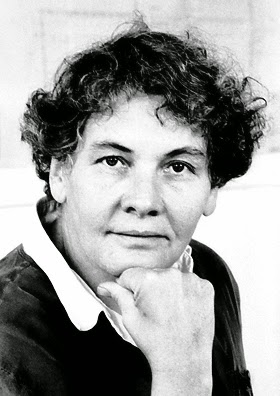
Dr. Christiane Nüsslein-Volhard,,,

Image Source: NobelPrize.org


Topics: Biology, Diversity in Science, Embryology, Genetics, Medicine, Physiology, Women in Science

The Nobel Prize in Physiology or Medicine 1995

Born: 20 October 1942, Magdeburg, Germany


Affiliation at the time of the award: Max-Planck-Institut für Entwicklungsbiologie, Tübingen, Federal Republic of Germany

Prize motivation: "for their discoveries concerning the genetic control of early embryonic development"

Field: developmental biology, embryology, genetics


Prize Share: Edward B. Lewis, Christiane Nüsslein-Volhard and Eric F. Wieschaus "for their discoveries concerning the genetic control of early embryonic development".

I am the second of five children. My father, Rolf Volhard, was an architect. He was the eighth of ten children of Franz Volhard, a professor of medicine in Frankfurt, and specialist for heart and kidney.

We lived in a flat in the south of Frankfurt, with a rather large garden, close to the forest. I had a happy childhood with many stimulation's and support from my parents who, in postwar times, when it was difficult to buy things, made children's books and toys for us. We had much freedom and we were encouraged by our parents to do interesting things. I remember my father showed much interest in what we did, and thereby had great influences on our performances, without being particularly ambitious (although good grades at school were more or less a matter of course).

"Christiane Nüsslein-Volhard - Facts". Nobelprize.org. Nobel Media AB 2014. Web. 18 Mar 2015. http://www.nobelprize.org/nobel_prizes/medicine/laureates/1995/nusslein-volhard-facts.html

Read more…

Nanowires and Supercapacitors...

Rear side of the new nanowire-based electrode. (Courtesy: Ashutosh Kumar Singh and Kalyan Mandal)


Topics: Economy, Jobs, Nanotechnology, Semiconductor Technology, STEM


A new type of electrode that could lead to the development of more efficient and lighter supercapacitors has been unveiled by researchers in India. The electrode has a new hybrid structure that is made from iron and nickel nanowires, and could be used to boost the capacitance, current density and charging/discharging rates of big capacitors used to store large amounts of electrical energy. The electrodes are inexpensive and environmentally friendly to produce, say the researchers, and could someday be used to make supercapacitors to power a range of devices, from mobile phones to electric cars.

Supercapacitors store energy by separating positive and negative charge through electrochemical reactions that involve the exchange of electrons and ions at the interfaces between two electrodes and an electrolyte. These devices combine the large-scale energy-storage properties of batteries with the rapid charging times and long lifespans of conventional capacitors. In principle, supercapacitors could be used to create electric cars that could be fully charged in minutes, and mobile phones that would charge in seconds. Today, however, a supercapacitor is much larger and heavier than a conventional battery that holds the same amount of energy.

Physics World: Nanowire-based electrode could lead to better supercapacitors, Ian Randall

Read more…

Ms. Jasmine Lawrence...

Image Source: Link below


Topics: Diversity, Computer Science, Economy, Jobs, Microsoft, Women in Science, XBOX


I happened to catch her story at the end of an OWN show: "Where Are They Now?" They had just finished an interview with Harry Wayne Casey, leader of the multicultural KC and the Sunshine Band (I'm severely dating myself).

What I found astonishing is not only does she have a degree in a STEM field and a thriving business she started BEFORE college; she seems to be enjoying herself and single-handed demolishing any stereotype of Nerds in any culture or gender. Catch her photos on her site in Galleries: Adventures and Travels provided below. We should all have so much fun!

Happy Saint Patrick's Day, by the way! Don't forget to wear something green.


A recent graduate of the College of Computing at Georgia Tech, Jasmine earned her bachelors degree in computer science with concentrations in devices and artificial intelligence. She is currently working at Microsoft as a Program Manager on the Xbox One Engineering team.

Additionally, Jasmine conducted research in the field of robotics at the Georgia Tech Healthcare Robotics Lab and the Robotics and Intelligent Machines Lab @ Georgia Tech. She was the 2012-2013 Ms. Georgia Tech, a proud executive leader of StartUp at Georgia Tech and a member of the National Society of Black Engineers. She is also a member of Omicron Delta Kappa, the national leadership honor society, and Upsilon Pi Epsilon, the international computing honor society. In her “free” time, Jasmine plays the harmonica, programs robots, and makes stained glass. She is also a poet, motivational speaker, tutor, mentor and an avid sports fan who loves to play basketball.

Official Site: JasmineLawrence.com

Read more…

He Did Not Faint...

Intel Science Talent Search first-place winner Michael Hofmann Winer’s research could have an impact on the electronics of the future. (Photo by Chris Ayers/Intel)


Topics: Education, Electronics, Intel, High School, Phonons, Physics, Superconductors


Michael Hofmann Winer is a physics phenom who has won awards and studied how fundamental quasi-particles of sound, called phonons, interact with electrons. His research could potentially be applied to complex electronic materials, such as superconductors.

But first he needs to finish his senior year at Montgomery Blair High School in Silver Spring, Md.

The 18-year-old’s work during two summer internships at the University of Maryland, College Park, flashed into the national spotlight last week, when he was honored as one of the country’s most-promising young science students — one of three top medalists in the prestigious Intel Science Talent Search competition.

“I think I’m as happy as I’ve ever been,” the Montgomery County student said after he won a $150,000 first-place prize for innovation, based on work he did in collaboration with U-Md. physics professor Victor Galitski and graduate student Justin Wilson.

Winer credited the math, science and computer science magnet program at Montgomery Blair as a difference-maker, too, as well as teacher James R. Schafer, whom he called “one of the best teachers in the universe.”

Schafer, in turn, said Winer is “certainly one of the best students I’ve ever taught.” Schafer said Winer’s talent goes beyond his “incredible” intellect.

I saw this on my Twitter feed, re-tweeted it and shared it also here. Michael alluded to almost fainting as the fact he won the award was announced, and the glare of the cameras on him almost got the best of him. I choked a little when he gave credit to his high school physics teacher (as a group, we rarely get any props). Montgomery Blair High School can be by some dismissed as a "ringer" for the award - 32 Intel finalist since 1999 - equates to two a year. But, as Dean Kamen (inventor of the Segway) states below:

Happy Saint Patrick's Day, by the way! Don't forget to wear something green.

Washington Post:
Maryland physics phenom ‘tried not to faint’ upon winning national award,
Donna St. George
DEKA Research: About Dean Kamen
Related Site: USFirst.org

Read more…

Dr. Linda B. Buck...

Image Source: NobelPrize.org


Topics: Biology, Diversity, Diversity in Science, Genetics, Neurophysiology, Women in Science

The Nobel Prize in Physiology or Medicine 2004

Born: 29 January 1947, Seattle, WA, USA

Affiliation at the time of the award: Fred Hutchinson Cancer Research Center, Seattle, WA, USA

Prize motivation: "for their discoveries of odorant receptors and the organization of the olfactory system"

Field: genetics, neurophysiology

Prize share: Richard Axel


Richard Axel and Linda B. Buck "for their discoveries of odorant receptors and the organization of the olfactory system"

I was surrounded by mountains, forests, and the sea. My mother was the daughter of Swedish immigrants who had come to the US in the late nineteenth century while my father's family had Irish roots on one side and ancestors extending back to the American Revolution on the other. I was the second of three children, all girls. My mother was a homemaker who was exceptionally kind and witty and loved word puzzles. My father was an electrical engineer who, at home, spent much of his time inventing things and building them in our basement. It may be that my parents' interest in puzzles and inventions planted the seeds for my future affinity for science, but I never imagined as a child that I would someday be a scientist.

During my childhood, I did the things that girls often do, such as playing with dolls. I was also curious and easily bored though, so I frequently embarked on what were to me new adventures. Aside from school and music lessons, my life was relatively unstructured and I was given considerable independence. I learned to appreciate music and beauty from my mother and my father taught me how to use power tools and build things. I spent a lot of time with my maternal grandmother, who told me magical stories about her girlhood in Sweden and, to my delight, taught me how to sew clothes for my dolls. I was fortunate to have wonderfully supportive parents who told me that I had the ability to do anything I wanted with my life. They taught me to think independently and to be critical of my own ideas, and they urged me to do something worthwhile with my life, in my mother's words, to "not settle for something mediocre". I realize now that I internalized those lessons and that they have influenced my work as a scientist.

"Linda B. Buck - Facts". Nobelprize.org. Nobel Media AB 2014. Web. 16 Mar 2015. http://www.nobelprize.org/nobel_prizes/medicine/laureates/2004/buck-facts.html

Read more…

3-D Eta Carinae...

Source: Technology Review

Topics: 3D Printing, Astrophysics, Computational Physics, NASA


TECHNOLOGY REVIEW: In 1843, a relatively unknown star in the constellation of Carina in the southern hemisphere suddenly erupted becoming the second brightest star in the sky after Sirius. This object, called Eta Carinae, gradually decreased in brightness until it faded from view entirely some 40 years later. Since then, it has varied in brightness in a rough a five-year cycle.

Eta Carinae is curious because this variation in brightness occurs over a wide range of wavelengths and timescales. In 1998, for example, it suddenly flared up and doubled in brightness.

The explosion in the 1840s left Eta Carinae surrounded by a spectacular cloud of dust known as the Homunculus Nebula. Astronomers have long known that this eruption did not destroy the star involved, which they thought must sit at the center of this cloud.

About 10 years ago, however, they discovered that this cloud contains two stars in a highly elliptical five-year orbit. This orbit, they decided, must be the cause of the periodic changes in brightness.

But exactly why Eta Carinae is so variable over such a wide range of wavelengths is something of a mystery. Today, Thomas Madura from the NASA Goddard Space Flight Centre in Greenbelt, Maryland, and a few pals provide a detailed insight into the nature of the star system using supercomputer simulations of the way they interact.

Physics arXiv:
3D Printing Meets Computational Astrophysics: Deciphering the Structure of Eta Carinae's Inner Colliding Winds
Thomas I. Madura, Nicola Clementel, Theodore R. Gull, Chael J.H. Kruip, Jan-Pieter Paardekooper

Read more…

Open Letter to S.A.E...

© 13 March 2015, the Griot Poet

Dear Sigma Alpha Epsilon (founded in the Deep South; University of Alabama; “true gentlemen”):

Some history: a mystery to you, I’m sure.

The “Divine Nine”: Alpha Phi Alpha (1906), Alpha Kappa Alpha (1908), Kappa Alpha Psi (1911), Omega Psi Phi (1911), Delta Sigma Theta (1913), Phi Beta Sigma (1914), Zeta Phi Beta (1920), Sigma Gamma Rho (1922) and Iota Phi Theta (1963)

Each were founded in the 20th Century,
Spanning the breath of Civil Rights history
From the lynching era, through Jim Crow to right before the Civil Rights (1964) and Voting Rights (1965) acts,
I know you lack the knowledge
As you and your kind spent your time in college
You had, and have had privileges, not frustrations
Without the threat of your rights being stretched at the neck
By a long noose,
Nor your women raped;
Nor your men burned and castrated;
Except by faux boogie men you created
In blockbuster “Birth of a Nation” silent movies
That shouted volumes of disdain at the freest labor
This nation has ever had
That would bankrupt it and the whole world system
If they ever tried to pay reparations

Many like my noble founders in Kappa Alpha Psi
Were the servants in your frat houses that waited your
Tables;
Scrubbed your bathrooms;
And cleaned your floors;
All the while planning their own version
Of Pan-Hellenism
Our founders knew
Education was our key
To uplift and prosperity

Our leaders were trained
In Robert’s Rules of Order
And parliamentary procedures
To eventually elevate some
To the front of the bus
And the front of movements
Like Rosa Parks (AKA); Dr. Maya Angelou (AKA); Dr. Martin Luther King, Jr. (Alpha); Ralph Abernathy (Kappa); Jesse Jackson (Omega)
That would and still is changing America for the better…
Your little chant: you had decades of practice with that,
Rap music didn’t fuel the venom we all heard,
You’re sorry: because before I-phones and YouTube
You would have never been caught
Big brother isn’t just watching you,
That video came from a disgusted brother
Of Sigma Alpha Epsilon
That whatever “ideals” you once taught
You completely jettisoned
In a fortnight of utter error
For the pleasure
Of slapping every African American
Across the face,
Just like 47 senators sending punk letters to Iranian Mullahs
To openly disrespect and deplore a sitting president
In support of perpetual war
Please counter now with “you use it too!”
We’re aware of that,
But yet, when our founders formed,
Their Pan-Hellenic
Respectability wasn’t just “politics,”
It was survival,
So, we have no songs to rival
The casual poison you at least had
For an impressive instance

ON BEAT

So, I repeat:
The “Divine Nine”: Alpha Phi Alpha (1906), Alpha Kappa Alpha (1908), Kappa Alpha Psi (1911), Omega Psi Phi (1911), Delta Sigma Theta (1913), Phi Beta Sigma (1914), Zeta Phi Beta (1920), Sigma Gamma Rho (1922) and Iota Phi Theta (1963)

Each were founded in the 20th Century,
Spanning the breath of Civil Rights history
From the lynching era, through Jim Crow to right before the Civil Rights (1964) and Voting Rights (1965) acts,
I already know you’re “lawyered up,” and will likely escape
The fate that canned a broadcaster at Univision
For daring to reference our lovely “let’s move” FLOTUS and “Planet of the Apes,”
You’ll be careful; measure your words;
And hope to God you’ve never again have to publically recant
And, no other turncoat brother of yours
Is present at your next racist chant!

An ironic motto...
Read more…

S.W.E...

Society of Women's Engineers - About


Topics: Diversity in Science, Engineering, Science, Women in Science


The Society of Women's Engineers was established in 1950, and has over 30,000 members. For more than six decades, SWE has given women engineers a unique place and voice within the engineering industry. Our organization is centered around a passion for our members' success and continues to evolve with the challenges and opportunities reflected in today's exciting engineering and technology specialties.

We invite you to explore the values, principles, and priorities that guide our initiatives and learn how together, WE can continue to make a lasting impact on the future.

Site: Society of Women's Engineers: Aspire - Advance - Achieve

Read more…