Reginald L. Goodwin's Posts (3123)

Sort by

36, or 42...

Intelligent%2BLife.PNG
A meme of past memes - seemed apropos.


Topics: Astrophysics, Humor, Science Fiction, SETI

Note: I use three sources for the commentary I've seen breathlessly displayed on the Internet speculating there may be 36 communicative (but, noticeably silent) civilizations in the Milky Way Galaxy. I grinned, and composed the combo meme above. Two words came to mind on my social media feed: click bait.

*****

The number 42 is, in The Hitchhiker's Guide to the Galaxy by Douglas Adams, the "Answer to the Ultimate Question of Life, the Universe, and Everything", calculated by an enormous supercomputer named Deep Thought over a period of 7.5 million years. Unfortunately, no one knows what the question is. Source: Wikipedia

*****

It's been a hundred years since Fermi, an icon of physics, was born (and nearly a half-century since he died). He's best remembered for building a working atomic reactor in a squash court. But in 1950, Fermi made a seemingly innocuous lunchtime remark that has caught and held the attention of every SETI researcher since. (How many luncheon quips have you made with similar consequence?)

The remark came while Fermi was discussing with his mealtime mates the possibility that many sophisticated societies populate the Galaxy. They thought it reasonable to assume that we have a lot of cosmic company. But somewhere between one sentence and the next, Fermi's supple brain realized that if this was true, it implied something profound. If there are really a lot of alien societies, then some of them might have spread out.

Fermi realized that any civilization with a modest amount of rocket technology and an immodest amount of imperial incentive could rapidly colonize the entire Galaxy. Within ten million years, every star system could be brought under the wing of empire. Ten million years may sound long, but in fact it's quite short compared with the age of the Galaxy, which is roughly ten thousand million years. Colonization of the Milky Way should be a quick exercise.

So what Fermi immediately realized was that the aliens have had more than enough time to pepper the Galaxy with their presence. But looking around, he didn't see any clear indication that they're out and about. This prompted Fermi to ask what was (to him) an obvious question: "where is everybody?"

SETI Institute: Fermi Paradox, Seth Shostak, Senior Astronomer

*****

How many intelligent alien civilizations are out there among the hundreds of billions of stars in the spiral arms of the Milky Way? According to a new calculation, the answer is 36.

That number assumes that life on Earth is more or less representative of the way that life evolves anywhere in the universe — on a rocky planet an appropriate distance away from a suitable star, after about 5 billion years. If that assumption is true, humanity may not exactly be alone in the galaxy, but any neighbors are probably too far away to ever meet.

On the other hand, that assumption that life everywhere will evolve on the same timeline as life on Earth is a huge one, said Seth Shostak, a senior astronomer at the SETI Institute in Mountain View, California, who was not involved in the new study. That means that the seeming precision of the calculations is misleading.

"If you relax those big, big assumptions, those numbers can be anything you want," Shostak told Live Science.

The question of whether humans are alone in the universe is a complete unknown, of course. But in 1961, astronomer Frank Drake introduced a way to think about the odds. Known as the Drake equation, this formulation rounds up the variables that determine whether or not humans are likely to find (or be found by) intelligent extraterrestrials: The average rate of star formation per year in the galaxy, the fraction of those stars with planets, the fraction of those planets that form an ecosystem, and the even smaller fraction that develop life. Next comes the fraction of life-bearing planets that give rise to intelligent life, as opposed to, say, alien algae. That is further divided into the fraction of intelligent extraterrestrial life that develops communication detectable from space (humans fit into this category, as humanity has been communicating with radio waves for about a century).

The final variable is the average length of time that communicating alien civilizations last. The Milky Way is about 14 billion years old. If most intelligent, communicating civilizations last, say, a few hundred years at most, the chances that Earthlings will overlap with their communications is measly at best.

Solving the Drake equation isn't possible, because the values of most of the variables are unknown. But University of Nottingham astrophysicist Christopher Conselice and his colleagues were interested in taking a stab at it with new data about star formation and the existence of exoplanets, or planets that circle other stars outside our own solar system. They published their findings June 15 in The Astrophysical Journal.

Are there really 36 alien civilizations out there? Well, maybe. Stephanie Pappas, Live Science

Read more…

Quantum Time...


weird_time_tunnel_cover_1024.jpg
"Weird Time Tunnel." Image Source Below.


Topics: Quantum Computer, Quantum Mechanics, Thermodynamics

It's easy to take time's arrow for granted - but the gears of physics actually work just as smoothly in reverse. Maybe that time machine is possible after all?

An experiment from 2019 shows just how much wiggle room we can expect when it comes to distinguishing the past from the future, at least on a quantum scale. It might not allow us to relive the 1960s, but it could help us better understand why not.

Researchers from Russia and the US teamed up to find a way to break, or at least bend, one of physics' most fundamental laws of energy.

The second law of thermodynamics is less a hard rule and more of a guiding principle for the Universe. It says hot things get colder over time as energy transforms and spreads out from areas where it's most intense.

It's a principle that explains why your coffee won't stay hot in a cold room, why it's easier to scramble an egg than unscramble it, and why nobody will ever let you patent a perpetual motion machine.

Virtually every other rule in physics can be flipped and still make sense. For example, you could zoom in on a game of pool, and a single collision between any two balls won't look weird if you happened to see it in reverse.

On the other hand, if you watched balls roll out of pockets and reform the starting pyramid, it would be a sobering experience. That's the second law at work for you.

Electrons aren't like tiny billiard balls, they're more akin to information that occupies a space. Their details are defined by something called the Schrödinger equation, which represents the possibilities of an electron's characteristics as a wave of chance.

Physicists Have Reversed Time on The Smallest Scale Using a Quantum Computer
Mike McCrae, Science Alert


Read more…

#ShutDownSTEM...

theytriedtoburyus-but-they-didnt-know-we-were-seeds-1200x796.jpg
Greek poet Dinos Christianopoulos


Topics: Civics, Civil Rights, Human Rights, LGBT Rights, Women's Rights

I participated in JSNN's version of #ShutDownSTEM yesterday. It was a discussion led by the Dean about the situation we all find ourselves in post the deaths of Ahmaund Aubrey, Breonna Taylor and George Floyd, laid to rest next to his mom in Houston, Texas.

It was a tentative meeting, thankfully from the Zoom participants extremely diverse. The Joint School of Nanoscience and Nanoengineering is by its construction diverse: Afghanistan, Brazil, Chad, India, Iran, Nigeria, Pakistan, Puerto Rico, Saudi Arabia, Sierra Leone and the United States represented in its student body and faculty. It's quite easy - at least, before the pandemic - to get lulled by the interactions that are often taken as routine, and that the entire country and world are doing exactly what you're doing.

On June 10, 2020, we will #ShutDownAcademia, #ShutDownSTEM, and #Strike4BlackLives.

In the wake of the most recent murders of Black people in the US, it is clear that white and other non-Black people have to step up and do the work to eradicate anti-Black racism. As members of the global academic and STEM communities, we have an enormous ethical obligation to stop doing “business as usual.” No matter where we physically live, we impact and are impacted by this moment in history.

Our responsibility starts with our role in society. In academia, our thoughts and words turn into new ways of knowing. Our research papers turn into media releases, books and legislation that reinforce anti-Black narratives. In STEM, we create technologies that affect every part of our society and are routinely weaponized against Black people.

Black academic and Black STEM professionals are hurting because they exist in and are attacked by institutional and systemic racism. Black people have been tirelessly working for change, alongside their Indigenous and People of Color allies. For Black academics and STEM professionals, #ShutDownAcademia and #ShutDownSTEM is a time to prioritize their needs— whether that is to rest, reflect, or to act— without incurring additional cumulative disadvantage.

Site: #ShutDownSTEM.com

I recalled my asking Mr. Tedford - my middle school science teacher - a question on the coefficient of linear expansion: I was answered with "no, you big dummy!" Upset, in tears, I relayed the encounter to my parents, who promptly made an appointment with Mr. Tedford and the principal at Mineral Springs Middle School. We got a sweaty apology, and I got all my questions answered the rest of that semester year.

I recalled my own interactions with a store detective at Kings Department Store in Winston-Salem, NC, 1976. I was body slammed and frisked while four white males robbed "Deputy Do Wrong" blind in the tennis shoe section. Despite my trying to bring this to his attention, he was convinced that "nigras steal" despite my objections and his lack of evidence.

I recalled asking a rhetorical question of the Brigade Commander: "what does it take to get to your rank" as a ninth grade, shy and impressed Neo ROTC cadet, answered with: "YOUR KIND will never get to this rank!" I did actually, three years later.The Ku Klux Klan (or, someone pretending to be them) left me a death threat: "don't show up for the Brigade Review (parade), nega, or we'll shoot your azz!" I showed up and commanded 180 cadets in formation in front of onlookers that included my parents and girlfriend at the time: anyone that spells that horribly, can't be serious or aim a gun! I'm sincerely glad I wasn't wrong.

These roadblocks are the moments that either break you, or make you, our Nietzsche ("that which does not kill us makes us stronger") Négritude.

Négritude:

The concept of Négritude emerged as the expression of a revolt against the historical situation of French colonialism and racism. The particular form taken by that revolt was the product of the encounter, in Paris, in the late 1920s, of three black students coming from different French colonies: Aimé Césaire (1913–2008) from Martinique, Léon Gontran Damas (1912–1978) from Guiana and Léopold Sédar Senghor (1906–2001) from Senegal. Being colonial subjects meant that they all belonged to people considered uncivilized, naturally in need of education and guidance from Europe, namely France. In addition, the memory of slavery was very vivid in Guiana and Martinique. Aimé Césaire and Léon Damas were already friends before they came to Paris in 1931.

Beyond the encounter between Africa and the French Caribbean Césaire, Senghor and Damas also discovered together the American movement of Harlem Renaissance. At the “salon”, in Paris, hosted by sisters from Martinique, Jane, Paulette and Andrée Nardal, they met many Black American writers, such as Langston Hughes or Claude McKay. With the writers of the Harlem Renaissance movement they found an expression of black pride, a consciousness of a culture, an affirmation of a distinct identity that was in sharp contrast to French assimilationism. In a word they were ready to proclaim the négritude of the “new Negro” to quote the title of the anthology of Harlem writers by Alain Locke which very much impressed Senghor and his friends (Vaillant 1990, 93–94).

Stanford Encyclopedia of Philosophy: Négritude

I didn't say any of the above stories, or relate our Zoom meeting to Négritude, but they are not very far behind me.

The deaths of Ahmaund Aubrey, Breonna Taylor and George Floyd sparked a Neo-Négritude, that instead of remaining indigenous has spread throughout the world. Most marches have been peaceful and multicultural, with a few knuckleheads looting. That's important, because to deconstruct white supremacy, we need the creators of it to do it. We also need certain public African American figures to get a little Négritude, get diagnosed for Stockholm Syndrome or enough sense to shut up such that they get out of the way of progress.

This is the minefield/mind-field blacks in STEM have to navigate. Teachers, counselors and what should be "role models" feel an almost instinctive, no: tribal obligation to reinforce the status quo. They will say hateful, hurtful, disappointing things to diminish you; to "keep you in your place." A cursory review of history had only the comfortable roles of the buck boy, mammy, sex slave and step-n-fetch for the African Diaspora. The system reinforces itself by backlash politics, cognitive dissonance and a propagandized, false narrative of history that makes the descendants of the original perpetrators "feel good." Like a membrane disturbed and a nerve throbbed, it responds with cold, robotic efficiency.

This time, it's different. We've taken time out from the orgy of violent shooting incidents our news would report and naval gaze on until the next shiny object; the next shooting. We just couldn't take a break from the 401 year orgy of knees-on-necks, even during a pandemic: it's endemic to the American experiment, that currently, is not giving the results posed by the original hypothesis.

"For we wrestle not against flesh and blood, but against principalities, against powers, against the rulers of the darkness of this world, against spiritual wickedness in high places." Ephesians 6:12

No truer words uttered at George Floyd's home going. He is NOT, however, a martyr:

1: a person who voluntarily suffers death as the penalty of witnessing to and refusing to renounce a religion 2: a person who sacrifices something of great value and especially life itself for the sake of principle

George Floyd is not a Messianic figure. He never wanted to be. He was a man, like all of us, with his flaws, horrible choices and sins. He was a man that like any man, can learn from his sins and seek redemption, if he so chose. He was a man that had a little brother and children that looked up to him. He was a man that wanted to breathe.

Perhaps, STEM has finally inhaled the stench of racism, and instead of spraying Febreze to mask the odor, found it finally, rancid. Perhaps it will exhale in meetings to come, solutions. This will take time. It will be worth the effort.

Read more…

"A Whole New Universe"...

d41586-020-01658-1_18045322.jpg
A Cryo-EM map of the protein apoferritin. Credit: Paul Emsley/MRC Laboratory of Molecular Biology


Topics: Biology, Cryogenic-Electron Microscopy, Materials Science, Nanotechnology

A game-changing technique for imaging molecules known as cryo-electron microscopy has produced its sharpest pictures yet — and, for the first time, discerned individual atoms in a protein.

By achieving atomic resolution using cryogenic-electron microscopy (cryo-EM), researchers will be able to understand, in unprecedented detail, the workings of proteins that cannot easily be examined by other imaging techniques, such as X-ray crystallography.

The breakthrough, reported by two laboratories late last month, cements cryo-EM’s position as the dominant tool for mapping the 3D shapes of proteins, say scientists. Ultimately, these structures will help researchers to understand how proteins work in health and disease, and lead to better drugs with fewer side effects.

“It’s really a milestone, that’s for sure. There’s really nothing to break anymore. This was the last resolution barrier,” says Holger Stark, a biochemist and electron microscopist at the Max Planck Institute for Biophysical Chemistry in Göttingen, Germany, who led one of the studies1. The other2 was led by Sjors Scheres and Radu Aricescu, structural biologists at the Medical Research Council Laboratory of Molecular Biology (MRC-LMB) in Cambridge, UK. Both were posted on the bioRxiv preprint server on 22 May.

“True ‘atomic resolution’ is a real milestone,” adds John Rubinstein, a structural biologist at the University of Toronto in Canada. Getting atomic-resolution structures of many proteins will still be a daunting task because of other challenges, such as a protein’s flexibility. "These preprints show where one can get to if those other limitations can be addressed,” he adds.

‘It opens up a whole new universe’: Revolutionary microscopy technique sees individual atoms for first time

Ewen Callaway, Nature

Read more…

Dragons and Dystopias...


Topics: African Americans, Diaspora, International Space Station, Octavia Butler, Science Fiction, Spaceflight

A casual search on this blog, it's not the first time I've invoked Octavia Butler as an observer of our times, and it likely won't be the last.


Octavia Butler’s tenth novel, “Parable of the Sower,” which was published in 1993, opens in Los Angeles in 2024. Global warming has brought drought and rising seawater. The middle class and working poor live in gated neighborhoods, where they fend off the homeless with guns and walls. Fresh water is scarce, as valuable as money. Pharmaceutical companies have created “smart drugs,” which boost mental performance, and “pyro,” a pill that gives those who take it sexual pleasure from arson. Fires are common. Police services are expensive, though few people trust the police. Public schools are being privatized, as are whole towns. In this atmosphere, a Presidential candidate named Christopher Donner is elected based on his promises to dismantle government programs and bring back jobs.


“Parable of the Sower” unfolds through the journal entries of its protagonist, a fifteen-year-old black girl named Lauren Oya Olamina, who lives with her family in one of the walled neighborhoods. “People have changed the climate of the world,” she observes. “Now they’re waiting for the old days to come back.” She places no hope in Donner, whom she views as “a symbol of the past to hold onto as we’re pushed into the future.” Instead, she equips herself to survive in that future. She practices her aim with BB guns. She collects maps and books on how Native Americans used plants. She develops a belief system of her own, a Darwinian religion she names Earthseed.

The sequel, “Parable of the Talents,” published in 1998, begins in 2032. By then, various forms of indentured servitude and slavery are common, facilitated by high-tech slave collars. The oppression of women has become extreme; those who express their opinion, “nags,” might have their tongues cut out. People are addicted not only to designer drugs but also to “dream masks,” which generate virtual fantasies as guided dreams, allowing wearers to submerge themselves in simpler, happier lives. News comes in the form of disks or “news bullets,” which “purport to tell us all we need to know in flashy pictures and quick, witty, verbal one-two punches. Twenty-five or thirty words are supposed to be enough in a news bullet to explain either a war or an unusual set of Christmas lights.” The Donner Administration has written off science, but a more immediate threat lurks: a violent movement is being whipped up by a new Presidential candidate, Andrew Steele Jarret, a Texas senator and religious zealot who is running on a platform to “make American great again.”

Octavia Butler's Prescient Vision of a Zealot Elected to "Make America Great Again," Abby Aguirre, New Yorker, 2017


In "Sower," one of the distinct things I recall is the juxtaposition between advancement and debasement; triumph and depravity. While civilization on Earth was practically going to shit in the novel, I remember from the novel, we discover microbial life on Mars, which is predicted to be the extraterrestrial life we'll likely discover on the red planet. The Moon Landing - that conspiracy theorists don't think happened, and likely won't think the next one led by commercial space vehicles isn't a forgery - occurred in 1969: it was the year after the Fair Housing Act and the assassinations of Martin Luther King, followed by the presidential candidate that announced the sad news, Robert F. Kennedy. It was the year the Original Star Trek was cancelled, "boldly going" into syndication, convention and science fiction mythology; a vison of us surviving to be our better angels. We were still in the Civil Rights Era, and fighting for the rights to be human. On that year, mankind walked on the moon, but specifically European men, as African American astronauts only appeared as extras along William Shatner and Leonard Nimoy, or in prosthetic makeup so you couldn't tell what culture they were from. Guy Bluford, Ron McNair and others had yet to appear on the scene, then and now a small selected group of explorers.


I watched the launch of SpaceX, marveling at its sleekness, benefiting from transistors and the march of Moore's law to the nanoscale. It was a day after riots for the deaths of George Floyd, Breonna Taylor and Ahmaund Aubrey. The scientists and technicians in Mission Control were wearing masks acknowledging the pandemic; the president* and vice president* were playing their "macho-tough-guy" shtick.

*: indicative of installed puppets by Putin.


Rockets, moon shots

Spend it on the have nots

Money, we make it

'Fore we see it you take it

Oh, make you wanna holler

The way they do my life

Make me wanna holler

The way they do my life

This ain't livin', this ain't livin'

No, no baby, this ain't livin'

No, no, no

Marvin Gaye, "Inner City Blues," Genius Lyrics


A rat done bit my sister Nell

With whitey on the moon

Her face and arms began to swell

And whitey's on the moon

I can't pay no doctor bills

But whitey's on the moon

Ten years from now I'll be payin' still

While whitey's on the moon

The man just upped my rent last night

Cause whitey's on the moon

No hot water, no toilets, no lights

But whitey's on the moon

Gil Scott-Heron, "Whitey on the Moon," Genius Lyrics


We can no longer afford to worship the god of hate or bow before the altar of retaliation. The oceans of history are made turbulent by the ever-rising tides of hate. And history is cluttered with the wreckage of nations and individuals that pursued this self-defeating path of hate. As Arnold Toynbee says:


Love is the ultimate force that makes for the saving choice of life and good against the damning choice of death and evil. Therefore the first hope in our inventory must be the hope that love is going to have the last word (unquote).

We are now faced with the fact, my friends, that tomorrow is today. We are confronted with the fierce urgency of now. In this unfolding conundrum of life and history, there is such a thing as being too late. Procrastination is still the thief of time. Life often leaves us standing bare, naked, and dejected with a lost opportunity. The tide in the affairs of men does not remain at flood -- it ebbs. We may cry out desperately for time to pause in her passage, but time is adamant to every plea and rushes on. Over the bleached bones and jumbled residues of numerous civilizations are written the pathetic words, "Too late." There is an invisible book of life that faithfully records our vigilance or our neglect. Omar Khayyam is right: "The moving finger writes, and having writ moves on."

We still have a choice today: nonviolent coexistence or violent co-annihilation.

Beyond Vietnam -- A Time to Break Silence, Martin Luther King, Jr., Riverside Church, NYC, April 4, 1967 (he would be assassinated April 4, 1968)


Poets in many spaces have earned the quaint acronym: "prophets of eternal truths." As prophets, Gaye, Heron and King made the same observation of their time, that it was obscene to attain such technological triumphs while letting income inequality, rampant militarism, racial unrest and societal disparity go as unchallenged as established on Plymouth Rock. Prophecy isn't prediction as much as it is warning: it is usually written as suggested course-correction, not inevitable conclusion.

A global empire was gotten initially with sugar cane and cotton, on land looted from First Nation peoples, the same who helped the colonists survive their first winter - they were repaid with near extinction. The land was looted from Mexicans, the theft memorialized in jingoism and sloganeering: "remember the Alamo." The land was cultivated by kidnapped peoples from the African continent. The looters wrote us all off as savages, uncivilized, unintelligent, rapists, drug dealers, animals, and took their sexual pleasures - heterosexually, homosexually and depraved pedophilia - with their captive property. Mulatto children typically worked in the master's house, but acknowledged their fathers like they acknowledged his white children: sir and ma'am, so ingrained Floyd used "I can't breath, sir" to the assassin sitting on his neck. Science moved forward during these years, a proof that it can advance even in the midst of a nation's depravity.

Sleek, Dragon SpaceX craft can dock with International Space Stations, while below cities burn in dystopia and a madman mean-girl tweets from the loo. As "comforter-in-chief," he is consistently missing in action, befitting a five-deferment draft dodger.

Read more…

The Talk (re-posted)...

IMG_0579.JPG


Topics: African Americans, History, Diaspora, Diversity in Science, Women in Science

Originally published February 27, 2017, during Black History Month. We are reeling from George Floyd, Breonna Taylor and Ahmaund Aubrey. "I can't breathe" isn't a cliche: it's a statement of continual trauma, perpetual PTSD from 1619 to present day. We can't breathe from the 82 black boys and men killed before, and now during a global pandemic. We can't breathe from armed gunman shouting at police and threatening lawmakers in Michigan, and unarmed, pissed off demonstrators getting maced, rubber bullets and flash bombed after a murder in the same state Philando Castile lost his life in for a concealed handgun licence. It is building a nation, but not taking part of its advantages fully. It is a relationship to a maniacal, misogynistic, patriarchal, racist, sociopathic system that is determined we nonwhite  "stay in our places" - pariah to the rest of the nation founded on genocide, kidnapping and domestic terrorism - in abject fear, all the while masking quite poorly their own stated, pseudoscientific conspiratorial fears of genetic annihilation. Since we all share the same planet, and I see no starships in orbital shipyards under construction, the only thing their inane fears may bring to apocalyptic destruction is the human species.


*****Re-post with additions*****


The talk is painful to do and painful still to recall. My talk was based on being slammed into a wall of plastic model cars and toys at King's Department Store (see: "Old Tapes" below).


My boys... didn't take the story well. Though ten years apart, their reactions were the same: they were angry, hurt, confused as to why such a thing could happen to their "Pop." Watching this again, in the modern context brought back painful memories:


Despite there and my tears, I had to deliver "the talk," the speech that transcends political party affiliations that every black parent has to relay to their children: fathers to sons; mothers to daughters; uncles and aunts to nieces and nephews; "Big Mommas," and Paw-Paws to grand and great-grandchildren. Despite their tears, my oldest son and his wife will have to deliver "the talk" to our granddaughter, now accustomed to a world in which daycare workers must wear masks; a world where she will likely be judged by the color of her skin, her gender and not the content of her character.


The Preamble to the US Constitution:


We the people of the United States, in order to form a more perfect union, establish justice, insure domestic tranquility, provide for the common defense, promote the general welfare, and secure the blessings of liberty to ourselves and our posterity, do ordain and establish this Constitution for the United States of America.


Posterity (noun): 1: the offspring of one progenitor to the furthest generation, 2: all future generations. Merriam-Webster


That's what "the talk" is about. It's probably the purist act of citizenship since 1865, as well as love. It says our children matter to "us"; that like most parents of any generation, we'd like to see them grow, mature and have a life of meaning and children themselves if they want. It does not sound like the realm, attitude or philosophy of thugs: it sounds like the realm of citizens. If indeed "all lives mattered," it would not be necessary.


This is the darker history of American exceptionalism. A segment of citizenry - be they democrats or republicans - must give a safety brief to their children for walking out the door into the dominant society to ensure their safe return. Because apparently, that's not guaranteed due to a preponderance of Melanin and an equal preponderance of the assumption guilty-while-black.


When the talk becomes a thing we discuss in history books, we'll be a free nation; we'll be America, the Beautiful, definitively.


I will consider my life a blessing to have my sons live full lives, and be allowed to do what I had to do with their Grandpa, Robert Harrison Goodwin after August 26, 1999, and their Grandma Mildred Dean Goodwin after May 7, 2009:

Father-Son.jpg


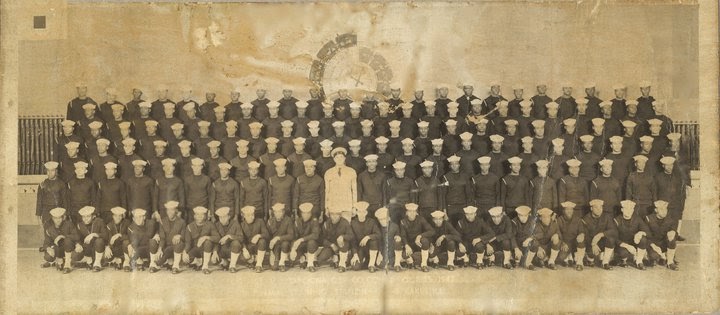
To Robert Harrison Goodwin (Pop/Grandpa), Third Class Petty Officer, United States Navy Veteran, World War II -my first martial arts instructor (boxing). I hope you like what your daughter-in-law and I have done with your grandsons (Real Estate/Civil Engineering), and now, your great-granddaughter. They are, after all, your posterity. We love you and mom always, "Chief."

Pop.jpg
Robert H. Goodwin is kneeling, lower left.

Griot Poet blog: "Old Tapes"
Read more…

Memorial Day 2020...

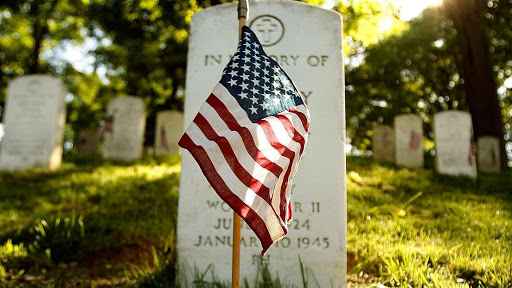
History_Memorial_Day_34766_SF_HD_1104x622-16x9.jpg
History.com

Topics: History, Politics

One of the earliest commemorations was organized by recently freed slaves.

As the Civil War neared its end, thousands of Union soldiers, held as prisoners of war, were herded into a series of hastily assembled camps in Charleston, South Carolina. Conditions at one camp, a former racetrack near the city’s Citadel, were so bad that more than 250 prisoners died from disease or exposure, and were buried in a mass grave behind the track’s grandstand.

Three weeks after the Confederate surrender, an unusual procession entered the former camp: On May 1, 1865, more than 1,000 recently freed slaves, accompanied by regiments of the U.S. Colored Troops (including the Massachusetts 54th Infantry) and a handful of white Charlestonians, gathered in the camp to consecrate a new, proper burial site for the Union dead. The group sang hymns, gave readings and distributed flowers around the cemetery, which they dedicated to the “Martyrs of the Race Course.”

The holiday’s “founder” had a long and distinguished career.

In May 1868, General John A. Logan, the commander-in-chief of the Union veterans’ group known as the Grand Army of the Republic, issued a decree that May 30 should become a nationwide day of commemoration for the more than 620,000 soldiers killed in the recently ended Civil War. On Decoration Day, as Logan dubbed it, Americans should lay flowers and decorate the graves of the war dead “whose bodies now lie in almost every city, village and hamlet churchyard in the land.”

According to legend, Logan chose May 30 because it was a rare day that didn’t fall on the anniversary of a Civil War battle, though some historians believe the date was selected to ensure that flowers across the country would be in full bloom.

After the war Logan, who had served as a U.S. congressman before resigning to rejoin the army, returned to his political career, eventually serving in both the House and Senate and was the unsuccessful Republican candidate for vice president in 1884. When he died two years later, Logan’s body laid in state in the rotunda of the United States Capitol, making him one of just 33 people to have received the honor. Today, Washington, D.C.’s Logan Circle and several townships across the country are named in honor of this champion of veterans and those killed in battle.

8 Things You May Not Know About Memorial Day (Updated), History.com Editors

Typically, we would be in a family gathering in Texas, barbecuing, if not for this pandemic. For African Americans, Memorial Day is not only the unofficial-official "First Day of Summer," it's a mini-family reunion, as many center around the immediate family, friends, ribs and fixings. Everyone typically watches the Wreath Laying at the Tomb of the Unknown Soldier, out of respect for the fallen, unnamed but not forgotten, regardless of political party.

That of course, isn't our current situation:

In one message retweeted by the president, John Stahl, a conservative who gathered only 3% of the vote in his bid to represent California's 52nd District in the House in 2012, called the 2016 Democratic presidential nominee, Clinton, a "skank."

In another message shared by Trump, Stahl aimed insulting gibes at Pelosi and Stacey Abrams, who narrowly lost the 2018 race for the governor's office in Georgia and is a contender for selection as Joe Biden's running mate in the 2020 presidential race.

Trump retweets a message calling Hillary Clinton a 'skank' and spreads sexist insults about other prominent female Democrats

Tom Porter, Business Insider

*****

President Donald Trump spent a day at the links Saturday at his Virginia golf course as the nation careened toward 100,000 deaths from COVID-19. It was his first time golfing since declaring the pandemic a national emergency.

The tee-time scenes couldn’t help but recall those times Trump slammed Barack Obama for golfing when he was in the White House during the Ebola outbreak — which killed two in the U.S.

Trump Used To Tee Off On Obama For Golfing During Ebola Outbreak That Killed 2 In America

Mary Papenfuss, Yahoo/HuffPost

Our current situation is having a septuagenarian adolescent, if comedian and Celebrity Apprentice show runner Noel Casler is heeded: a drug addict. One does not just crush Adderall to snort unless it is prescribed, usually for attention deficit disorder, or hyperactivity disorder. It explains the constant, unconscious sniffing at microphones. It explains why intelligence agencies are encouraged to keep presidential daily briefings "short, and without nuance." It explains why he demands briefings targeted towards brevity and "killer graphics." Coupled with raging malignant narcissism and the lucky birth into wealth and white male supremacy, he's bluffed his entire life, failed upwards to the highest office in the land where he's clearly out over his skis.


2020 as year three and one half under this lunatic is well beyond its expiration date.

Read more…

Salk, Sabin and the Sun...

Topics: Biology, COVID-19, History, Politics

On March 26, 1953, American medical researcher Dr. Jonas Salk announces on a national radio show that he has successfully tested a vaccine against poliomyelitis, the virus that causes the crippling disease of polio. In 1952—an epidemic year for polio—there were 58,000 new cases reported in the United States, and more than 3,000 died from the disease. For promising eventually to eradicate the disease, which is known as “infant paralysis” because it mainly affects children, Dr. Salk was celebrated as the great doctor-benefactor of his time.

Polio, a disease that has affected humanity throughout recorded history, attacks the nervous system and can cause varying degrees of paralysis. Since the virus is easily transmitted, epidemics were commonplace in the first decades of the 20th century. The first major polio epidemic in the United States occurred in Vermont in the summer of 1894, and by the 20th century thousands were affected every year. In the first decades of the 20th century, treatments were limited to quarantines and the infamous “iron lung,” a metal coffin-like contraption that aided respiration. Although children, and especially infants, were among the worst affected, adults were also often afflicted, including future president Franklin D. Roosevelt, who in 1921 was stricken with polio at the age of 39 and was left partially paralyzed. Roosevelt later transformed his estate in Warm Springs, Georgia, into a recovery retreat for polio victims and was instrumental in raising funds for polio-related research and the treatment of polio patients.

According to the link, the trials weren't without consequence:

In 1954, clinical trials using the Salk vaccine and a placebo began on nearly two million American schoolchildren. In April 1955, it was announced that the vaccine was effective and safe, and a nationwide inoculation campaign began. Shortly thereafter, tragedy struck in the Western and mid-Western United States, when more than 200,000 people were injected with a defective vaccine manufactured at Cutter Laboratories of Berkeley, California. Thousands of polio cases were reported, 200 children were left paralyzed and 10 died.

The Salk method - created in 1954 - is to inject inert forms of the virus into the bloodstream (made inactive with formaldehyde), then the body develops defenses, or antibodies against them, however it didn't prevent the virus from thriving in the intestines. His colleague, Dr. Sabin, injected an attenuated vaccine (1961), meaning it wasn't a fully inert strain so that the gut environment could be addresses. More here. The Sabin mostly eliminated Polio in the world, but the U.S. still uses the Salk method.

April 8, 1950, Mildred Dean married Robert H. Goodwin. Mom would earn an associates degree as a PN - practical nurse, and Pop worked for Hanes Dye and Finishing as an operator, under grueling conditions and few opportunities to promote until retirement. My big sister - in grade school at the time - would come along for the ride.

1954 - the year of the Polio vaccine, was also the date of Brown vs. Board of Education, where the Supreme Court reached a non-partisan, 9-0 decision, that education in America was separate and unequal.

1961 was the year the Sabin vaccine was created, and a couple who had been married twelve years got pregnant around Thanksgiving - I would be born August of 1962. I likely was beneficiary of the Sabin method at Kate Biting Hospital in Winston-Salem, NC, also the black hospital where my mother worked.

We cannot "patent the sun." But one can be grateful for the impact of invention by Dr. Salk and Dr. Sabin on the quality of life given to everyone in my generation, and forward, and African American parents wise enough to wait for it.

There will be a sunrise, past this moment.

Dr. Jonas Salk announces polio vaccine, History.com Editors

Read more…

Masks...

shutterstock_editorial_10639590i.jpg
People walk through Piazza Duomo in Milan on May 7th. Some restrictions were lifted this week in Italy.BY CARLO COZZOLI/SHUTTERSTOCK.


Topics: Biology, COVID-19, Mathematical Models

Though I likely look like an alarmist to some of my neighbors and most of Greensboro, I will be wearing masks for the duration of this pandemic and the release of a vaccine under hopefully, a more functional administration in 2021.

“I felt like this was pretty urgent,” said De Kai, who was born in St. Louis, and is the son of immigrants from China. “I saw the country where I grew up, where my family lives [now mostly in the Bay Area], about to face this pandemic without knowing much about something as simple as wearing a mask to protect themselves and others.” In part, this comes from a cultural difference between East Asia, where masks have been routinely worn for decades to fend off pollution and germs, and other parts of the world. This includes the U.S., where people are unaccustomed to wearing masks, and, in the past, have sometimes been insensitive, even stigmatizing East Asians, many of whom had chosen to wear them in public prior to the pandemic, and had continued the practice in the aftermath of the SARS and MERS outbreaks. (In part, this habit was meant to show other people that they were concerned about transmitting the disease—something we in the West would do well to emulate.)

De Kai’s solution, along with his team, was to build a computer forecasting model they call the masksim simulator. This allowed them to create scenarios of populations like those in Japan (that generally wear masks) and others (that generally don’t), and to compare what happens to infection rates over time. Masksim takes sophisticated programming used by epidemiologists to track outbreaks and pathogens like COVID-19, Ebola, and SARS, and blended this with other models that are used in artificial intelligence to take into account the role of chance, in this case the randomness and unpredictability, of human behavior—for instance, when a person who is infected decides to go to a beach. De Kai’s team have also added some original programming that takes into account mask-specific criteria, such as how effective certain masks are at blocking the invisible micro-droplets of moisture that spray out of our mouths when we exhale or speak, or our noses when we sneeze, which scientists believe are significant vectors for spreading the coronavirus.

If 80% of Americans Wore Masks, COVID-19 Infections Would Plummet, New Study Says, David Ewing Duncan, Vanity Fair

Here's the ArXiv preprint paper to review. It takes ninth grade reading comprehension. What you don't understand in terms can be discerned with a search engine.

What is not "exceptional," nor greatness is the threat of "getting beat up" (M. Signorile article) that an Austin man reported saying he felt simply complying with the simple, constitutional right of wearing a mask to protect others from the spread of a lethal virus. What is not "exceptional," nor greatness: threatening a sovereign state assembly in Minnesota with armed terrorists (that's the only word that comes to mind), and making a deal amounts to quid pro quo extortion! Nor is it normal Michigan State Rep. Sarah Anthony has to enlist armed citizens to protect her as she goes about her duties of governance.

The beginning of this four decade cluster fuck started with a simple phrase that became dogma and orthodoxy for republicans by their only patron saint, Ronald Reagan:

In his inaugural address after taking the oath of office on January 20, Ronald Reagan called upon Americans to "begin an era of national renewal." In response to the serious problems facing the country, both foreign and domestic, he asserted his familiar campaign phrase: "Government is not the solution to our problem, government is the problem." He hoped that America "will again be the exemplar of freedom and a beacon of hope for those who do not have freedom."

The Ronald Reagan Presidential Library & Museum

It has thus devolved to Orange Satan's comment by Stephen-lost-to-Jews-forever-Miller, noted by Dahlia Lithwick in Slate: “This American carnage stops right here and stops right now,” was simply the inauguration of the same; a preamble to depravity. It has devolved into the irony of lock down protesters spreading the very virus they travel hundreds of miles to protest: then, take their bodies and arms back home after not social distancing from possibly asymptomatic brethren to "hug grandma." It has been government by past midnight Tweet, ineptitude on steroids, bungled pandemic response, bullying threats, racist innuendo; stoked nationalism and xenophobia. Any outside observer would say "United States" is an oxymoron, led by a fucking moron. An electoral victory won't magically solve our problems. We'll be wearing masks for a while until we get an actual treatment protocol and vaccine. "Normal" is a relative term. We haven't gone back to walking loved ones to their planes, we haven't stopped taking off our shoes nor have we repented of invasive body scans since and after 9/11. We won't go back to "normal" anymore other than science fiction, where we can travel to the past, glorified or not.

At least the mask of "exceptionalism" has permanently been removed, replaced by red hats and armed terrorists. There is no room for doubt of our full depravity. My vote in November will be to end this, and Damnatio Memoriae: a fitting end to a narcissist.

Read more…

Touchless Print Scanning...

20ITL009_fingerprint-scanner_nch.jpg
Credit: N. Hanacek/NIST NIST evaluated several commercially available contactless fingerprint scanning technologies in its May 2020 report.


Topics: NIST, Optics, Research

The National Institute of Standards and Technology (NIST) has evaluated several commercially available contactless fingerprint scanning technologies, allowing users to compare their performance to conventional devices that require physical contact between a person’s fingers and the scanner.

The results of the study, published today as NIST Interagency Report (NISTIR) 8307: Interoperability Assessment 2019: Contactless-to-Contact Fingerprint Capture, show that devices requiring physical contact remain superior to contactless technology at matching scanned prints to images in a database. However, when contactless devices scan multiple fingers on a hand, it improves their performance. Contactless devices that scanned multiple fingers also seldom made “false positive” errors that incorrectly matched one person’s print with another’s record.

The publication updates NIST’s July 2018 study on contactless capture and is intended to assist organizations that use fingerprint-scanning technology.

“The report summarizes the state of the art of contactless fingerprint scanning,” said John Libert, one of the report’s authors. “It can help anyone interested in adopting contactless technology to evaluate the cost in performance they might pay by switching to contactless fingerprint capture.”

NIST Study Measures Performance Accuracy of Contactless Fingerprinting Tech

Read more…

Kondo Effect...

227888.jpg
Daniel Mazzone led the project to explore the mechanism that causes samarium sulphide to expand dramatically when cooled. Credit: Brookhaven National Laboratory


Topics: Materials Science, Quantum Mechanics, Research, Thermodynamics

Most metals expand when heated and contract when cooled. A few metals, however, do the opposite, exhibiting what’s known as negative thermal expansion (NTE). A team of researchers led by Ignace Jarrige and Daniel Mazzone of Brookhaven National Laboratory in the US has now found that in one such metal, yttrium-doped samarium sulphide (SmS), NTE is linked to a quantum many-body phenomenon called the Kondo effect. The work could make it possible to develop alloys in which positive and negative expansion cancel each other out, producing a composite material with a net-zero thermal expansion – a highly desirable trait for applications in aerospace and other areas of hi-tech manufacturing.

Even within the family of NTE materials, yttrium-doped SmS is an outlier, gradually expanding by up to 3% when cooled over a few hundred degrees. To better understand the mechanisms behind this “giant” NTE behavior, Mazzone and Jarrige employed X-ray diffraction and spectroscopy to investigate the material’s electronic properties.

The researchers carried out the first experiments at the Pair Distribution Function (PDF) beamline at Brookhaven’s National Synchrotron Light Source (II) (NSLS-II). They placed their SmS sample inside a liquid-helium cooled cryostat in the beam of the synchrotron X-rays and measured how the X-rays scattered off the electron clouds around the atomic ions. By tracking how these X-rays scatter, they identified the locations of the atoms in the crystal structure and the spacings between them.

“Our results show that, as the temperature drops, the atoms of this material move farther apart, causing the entire material to expand by up to 3% in volume,” says Milinda Abeykoon, the lead scientist on the PDF beamline.

Kondo effect induces giant negative thermal expansion, Belle Dumé, Physics World

Read more…


YULIA DROZDOVA/ALAMY STOCK VECTOR
 

Topics: History, Politics, Research, STEM


A crowd began to form at the train station in Pocatello, Idaho, around 5:15 am on Wednesday, 10 May 1950. Some 700 bleary-eyed townspeople had come to see the president and neither the day’s cold weather nor the hour would deter them. When the train chugged into town, President Harry Truman was standing on the rear platform, ready to greet the crowd. The trip to Pocatello was part of a whistle-stop tour of the northern US that took the president to numerous small towns dotting the railway.

Although Truman spent most of his time in Idaho addressing local agricultural and economic issues, in Pocatello, he talked to the crowd about science. Earlier that morning, as his train sped along the tracks, Truman had signed the National Science Foundation Act of 1950. It created the first federal agency devoted to supporting fundamental research and education across all scientific disciplines. Standing before a group of chilly Idahoans, Truman made a case for the importance of large-scale federal support for scientific research.

The story of NSF’s creation and early years of operation serves as an important window into the growth of postwar federal science policy. Science’s role in World War II had convinced many in the government that public support was needed for scientific research. Once open, NSF became an important site where debates over science policy, federal support for civilian research facilities, and federal support for education in STEM (science, technology, engineering, and mathematics) played out in postwar America.

NSF and postwar US Science, Emily Gibson, Physics Today

Read more…

Biff, Galileo and Gaslighting...


Topics: Civics, Civil Rights, COVID-19, Existentialism, Fascism, Human Rights

On April 12, 1633, chief inquisitor Father Vincenzo Maculani da Firenzuola, appointed by Pope Urban VIII, begins the inquisition of physicist and astronomer Galileo Galilei. Galileo was ordered to turn himself in to the Holy Office to begin trial for holding the belief that the Earth revolves around the Sun, which was deemed heretical by the Catholic Church. Standard practice demanded that the accused be imprisoned and secluded during the trial.

This was the second time that Galileo was in the hot seat for refusing to accept Church orthodoxy that the Earth was the immovable center of the universe: In 1616, he had been forbidden from holding or defending his beliefs. In the 1633 interrogation, Galileo denied that he “held” belief in the Copernican view but continued to write about the issue and evidence as a means of “discussion” rather than belief. The Church had decided the idea that the Sun moved around the Earth was an absolute fact of scripture that could not be disputed, despite the fact that scientists had known for centuries that the Earth was not the center of the universe.

Galileo is convicted of heresy, History.com

Authoritarians have a long history of defying science and reality. No one questions now that the Earth isn't the center of the solar system and our understanding of the universe has expanded since Galileo confirmed Copernican Heliocentric Theory. Modern authoritarians resort to pathological lying.

I've discussed Biff's proclivities here and here before. The video above is homage to him without invoking his hideous visage.

You look scared, Donald.

You should be.

A pandemic is problematic for you.

You can’t gaslight a pandemic.

You can’t bully it into compliance.

You can’t lie to it and hope it won’t run a fact check.

You can’t pay for its silence or promise immunity.

You can’t threaten its reelection bid if it breaks ranks.

You can’t fire it when it dissents from your ramblings.

You can’t impugn its character with baseless attacks.

You can’t fool it with talk about God.

You can’t bury it with FoxNews fluff pieces.

You can’t drown it in nationalism.

You can’t dismiss it with cries of fake news.

You can’t pardon it after it completes its assaults.

You can’t give it a demeaning nickname and hope to deflate it.

You can’t rage-Tweet it into exhaustion.

You Can’t Gaslight a Pandemic, Donald, John Pavlovitz, Stuff That Needs To Be Said

By golly, Biff damned sure is trying!

I wrote this on Facebook, May 8th:

He’s wrecked the economy like 1 of his casinos.

He sucks as a moral leader, or comforter-in-chief.

Expect Biff to go full Brown People-Chinese-Mexican-Muslim racist, because, why not?

May 8th was Friday. He managed to fulfill my predictions by Monday.

Like all authoritarians, fascists, Nazis and racists: facts don't matter. What matters is emotion, what a certain thing makes "the base" feel. Most of them, like Biff feel threatened by changing demographics. Fascists take advantage of disasters and chaos, as rampant confusion consolidates their power, and a pandemic is made-to-order. For his bewildered, gun-toting herd, it's like the last gasp of Archie Bunker. They're worried about 2042. I'm worried about Dr. Bright's ominous prediction of this being our "darkest winter." I'm worried about the Forbes article four years ago that capitalism MUST change, or humanity will starve itself to death eight years later in 2050. The so-called white majority becoming numerical minorities will be short-lived, and moot:

Corporate capitalism is committed to the relentless pursuit of growth, even if it ravages the planet and threatens human health.

We need to build a new system: one that will balance economic growth with sustainability and human flourishing.

Unless It Changes, Capitalism Will Starve Humanity By 2050, Drew Hansen, Forbes, 2016

In one of a number of revolts against colonial rule, in a corner of what is now Tanzania, the Maji Maji Rebellion sought to drive out German colonialists. The rebels were partly incited by a spirit medium who claimed to be possessed by a snake spirit and to have a “war medicine” that would turn German bullets into water. In one of the saddest and most surreal episodes in anti-colonial history, thousands of Africans who put their faith in this magic perished before German machine guns.

It has been axiomatic in anthropology since Bronislaw Malinowski’s seminal work in the early 20th century that people turn to magic when they feel powerless. Soldiers, for example, may repeatedly practice mastery of their weapons, but they know there is still a strong element of chance in whether they live or die in combat, and so they also pray, wear talismans, and develop superstitions about weapons, clothes, or routines that bring luck. In this spirit, the Maji Maji rebels—outgunned but unwilling to tolerate German occupation—put their faith in magic water, as well as their own martial skills, as they rose up.

COVID-19 and the Turn to Magical Thinking, Hugh Gusterson, Sapiens.org

I don't think it will matter what hue of human is in the numerical majority. This pandemic screams at us that capitalism as we practice it is out of balance with the globe we live on. This pandemic roars at us that all the magical-thinking-whistling-past-the-graveyard in the world won't will it away, nor will opening up too soon and assume callously only "brown people" will die. As much as I love Star Trek as nerd mythology, I'm not expecting a leap in physics, discovering warp drive, and leaving the planet for exciting Alpha Centauri tours. In 2050, I pretty much expect to be either 88, or ashes. I just didn't expect the rest of the world to be ashed with me.

It is, in a dark sense, a brute force way to end inequality, forever.

"Blessed are the meek, for they shall inherit the earth," Matthew 5:5.

I guess that doesn't necessarily have to mean Homo Sapiens.

Read more…

Group Screening...


Topics: Biology, COVID-19, Statistics

Unless there is widespread testing for COVID-19, experts warn, cases will surge as governments reopen more businesses and public spaces. But there is still a woeful shortage of diagnostic tests for coronavirus infections, because of unprecedented demand for chemicals and supplies. The U.S., for instance, does hundreds of thousands of tests a day, but that number is still far short of the millions of daily assays recommended for a safe return to normal.

Now dozens of researchers in the U.S., Israel and Germany are pursuing a strategy to dramatically increase diagnostic capacity: group tests. By pooling samples from many people into a few groups and evaluating pools rather than individuals, the scientists think they can use fewer tests on more people. This approach could lead to the faster detection of individuals who are unwitting carriers of the disease and an ability to quickly clear others who have not been infected. The strategy has been used in the past to successfully detect cases of HIV, chlamydia, malaria and influenza, and was originally conceived during World War II to test thousands of military personnel for syphilis.

“As long as we have no vaccine, we can only stop the transmission of the virus by testing and isolation of people who are infected,” says Sandra Ciesek, director of the Geothe University Frankfurt’s Institute of Medical Virology in Germany. In mid-February, she was among the first to report that people with no symptoms could spread the virus. Since then, Ciesek has been working on a pooled testing technique to identify asymptomatic carriers. The approach “is trying to do more with the same number of tests,” says Tomer Hertz, a computational immunologist at Ben-Gurion University of the Negev in Israel, who is also developing a batch-testing strategy. There is a caveat, though: as the prevalence of the infection in a community goes up, the ability to save resources through group testing goes down.

Coronavirus Test Shortages Trigger a New Strategy: Group Screening, Marla Broadfoot, Scientific American

Read more…

More Alike Than Different...


Topics: Astrophysics, Atomic Physics, Cosmology, Philosophy

We are more alike than different. The atoms in our bodies are the same forged in distant stars; Carl Sagan said we are "made of star stuff."

Then: we evolve under ultraviolet light at degree inclinations on the globe, thereby changing the prominence of Melanin in our epidurals. Due to war and conquests, we craft a narrative of what is godly, who is "divine" and who is deviant. Good and evil has a hue or light and darkness. And thus, we craft the seeds of our own self-destruction from ignorance, hubris, racism, snobbery and xenophobia.

Star stuff should be better behaved.

Read more…
Anna-Demming-4-May-2020.jpg
Next big thing:
Haifei Zhan and colleagues reckon that carbon nanothreads have a future in energy storage.
(Courtesy: Queensland University of Technology)


Topics: Applied Physics, Battery, Materials Science, Nanotechnology

Computational and theoretical studies of diamond-like carbon nanothreads suggest that they could provide an alternative to batteries by storing energy in a strained mechanical system. The team behind the research says that nanothread devices could power electronics and help with the shift towards renewable sources of energy.

The traditional go-to device for energy storage is the electrochemical battery, which predates even the widespread use of electricity. Despite centuries of technological progress and near ubiquitous use, batteries remain prone to the same inefficiencies and hazards as any device based on chemical reactions – sluggish reactions in the cold, the danger of explosion in the heat and the risk of toxic chemical leakages.

Another way of storing energy is to strain a material that then releases energy as it returns to its unstrained state. The strain could be linear like stretching and then launching a rubber band from your finger; or twisted, like a wind-up clock or toy. Over a decade ago, theoretical work done by researchers at the Massachusetts Institute of Technology suggested that strained chords made from carbon nanotubes could achieve impressive energy-storage densities, on account of the material’s unique  mechanical properties.

Diamond nanothreads could beat batteries for energy storage, theoretical study suggests

Anna Demmings, Physics World
Read more…

Going Forward...

Cleanroom%2BSelfie.jpg
At the former IBM research facility, Fishkill, NY


Topics: Civics, Civil Rights, COVID-19, Existentialism, Human Rights, Politics, Women's Rights


Note: Yesterday, eleven years ago, we lost mom before Mother's Day weekend - on a Thursday. Happy Mother's Day - love, "stink."


*****


This was my week of finals: Advanced Nano Systems Monday and Solid State Devices on Wednesday. The first was posted on Blackboard and had a set time to answer all questions, open-book and open notes. That took four hours. Wednesday, the exam was proctored on Zoom: 3 hours. I was completely and utterly wiped out. Now, I have to focus on my preliminary research proposal, meaning I'll be doing a lot of reading, summarizing and crafting the proposal in an NSF-style format suitable for publication. My committee will tear it to shreds. I'm expecting it. As such, I will take blogging breaks from time-to-time. Pursuing a Ph.D. in anything isn't trivial, and nanoengineering is by far not trivial, and is mentally and emotionally exhausting. It will be worth it, though.

The above is how I went to work at Motorola, Advanced Micro Devices and IBM in some capacity. Wearing the garments wasn't an "option." We were - as I stated in Protocols - protecting the product from our contact with the outside world.

Our "cleanrooms" are now our living rooms and we're protecting ourselves from the environment outside.

I'm bemused by the now popular label, "essential workers," as if these workers weren't essential before a pandemic showed just how essential they really are. Missing from the list are janitorial services, which is why I've always treated the cleaning person with the same respect I would afford an executive: one makes decisions about the company for typically investors; the other decides daily to clean our messes in the loo.

As of this posting, more than 40 states are starting to relax stay-in-place restrictions, not because of the Russian puppet concerned about re-election and avoiding prosecution from NY Attorney General Letitia James and SDNY, but democratic and republican governors are having a cash flow problem: it cannot flow if we're too concerned with "Life," followed by "Liberty and Pursuit of Happiness" to venture forth.

At best, we're looking at a year and a half to a vaccine. On the website The History of Vaccines: "Vaccine development is a long, complex process, often lasting 10-15 years and involving a combination of public and private involvement." It apparently has an exploratory stage, a pre-clinical stage, IND (investigative new drug) application; phases I - III vaccine trials, post-licensure monitoring of vaccines and VAERS: the vaccine adverse event reporting system, in case, ironically the "cure is worse than the disease."


Testing, shelter-in-place, contact tracing: This is how we can slowly open the economy safely and reduce infections/deaths. Tracing has a noble, brute-force history with smallpox. This is so we don't overwhelm the medical community while research pursues a vaccine or cure. Denmark, Germany, Finland and other European countries are opening, and safely for the most part. Mississippi halted their opening after a spike in infections; Florida and Texas will likely soon follow. Per capita tests per million citizens, we're now second to Italy and slightly ahead of South Korea, that have had 256 deaths ...total. It's both embarrassing and sickening to the soul.


(Suggested) extended protocols:

1. Vote November 3, 2020. Especially millennials. My open letter to millennials (Belief in Oneness) before the 2018 midterms preceded the takeover by the democrats, the prescient predictive power of Dr. Rachel Biticofer's modelling and the impeachment of the Russian ass(et). Democracy means "rule of the people." In short: give a shit.

2. Every building, particularly security guards will have to use body temperature infrared thermometers before allowing access. They're commercially available on Amazon. I posted the most expensive one, but there are other products listed. 99.9 degrees Fahrenheit or greater should be deemed a health hazard, and turned away.

3. Schools and manufacturing particularly are going to have to structure "A-B" days: MWF-A, TTh-B; MWF-B, TTh-A etc., where buildings are filled to 1/2 their capacity, controlling access with BTIR thermometers.

4. Schools especially are going to have to record lectures on YouTube if students are turned away; they're going to have to get a doctor's note to return to class.

5. Telecommuting has to be encouraged if possible at all. Zoom isn't going away.

6. Hotels, restaurants, movie theaters and sporting events are going to have to get used to 25-50% occupancy; financial targets will have to be adjusted.

7. The existence of for-profit prisons will have to be revisited. They are not efficacious. They're structured for high occupancy and recidivism, and hotbed for this or any pandemic's spread; so are meat-packing plants and nursing homes.

8. Get used to leaving home like this (showering when you return):

IML%2BProtocols.jpg

I'm assuming myself asymptomatic: masking protects Y-O-U from M-E. More of us doing this reduces the spread of the virus, while giving a break to emergency services and ventilators. It can be continued for the anti-vaxxer community that won't take a vaccine even if successfully going through trials. I know the history of this country with the Tuskegee experiment. It's lazy scholarship to continually resort to the worst human motivations in the midst of a crisis. Biologists have families, too.

My unfortunate conclusion is, we're going to be at this for a while, post this and any successive administrations' tenures, if we still have a functional republic: the jobs report will be at Depression-era levels; William Barr is pulverizing the rule of law as it's now apparently fine to lie to the F.B.I. after admitting to it twice under oath.

We're in the fight of our lives, and we're literally on our own.
Read more…

Ghoulish...

d3cc41778d05dec0371a69e29659f792.jpg
Image Source: Pinterest


Topics: Civics, Civil Rights, COVID-19, Existentialism, Fascism, Human Rights, Politics, Women's Rights

Ref: Leadership of Ghouls...October 26, 2018

Can make a Heav'n of Hell, a Hell of Heav'n.
What matter where, if I be still the same,
And what I should be, all but less then he
Whom Thunder hath made greater? Here at least
We shall be free; th' Almighty hath not built
Here for his envy, will not drive us hence:
Here we may reign secure, and in my choyce
To reign is worth ambition though in Hell:
Better to reign in Hell, then serve in Heav'n.
But wherefore let we then our faithful friends,
Th' associates and copartners of our loss
Lye thus astonisht on th' oblivious Pool,
And call them not to share with us their part
In this unhappy Mansion, or once more
With rallied Arms to try what may be yet
Regaind in Heav'n, or what more lost in Hell?


John Milton, "Paradise Lost," Book I, Lines 221-270

Blankets to First Nation peoples.

Colonial weaponizing of smallpox against Native Americans was first reported by 19th-century historian Francis Parkman, who came across correspondence in which Sir Jeffery Amherst, commander in chief of the British forces in North America in the early 1760s, had discussed its use with Col. Henry Bouquet, a subordinate on the western frontier during the French and Indian War.

Early American historian Elizabeth Fenn of the University of Colorado Boulder lays out her theory on what happened in her 2000 article in the Journal of American History. In the late spring of 1763, Delaware, Shawnee and Mingo warriors, inspired by Ottawa war leader Pontiac, laid siege to Fort Pitt, an outpost at the confluence of the Allegheny and Monongahela rivers in present-day downtown Pittsburgh.

The fort’s commander, Capt. Simeon Ecuyer, reported in a June 16 message to his superior, Philadelphia-based Col. Henry Bouquet, that the situation was dire, with local traders and colonists taking refuge inside the fort’s walls. Ecuyer wasn’t just afraid of his Native American adversaries. The fort’s hospital had patients with smallpox, and Ecuyer feared the disease might overwhelm the population inside the fort’s cramped confines.

Bouquet, in turn, passed along the news about the smallpox inside Fort Pitt to his own superior, Amherst, in a June 23 letter. In Amherst’s July 7 response, he cold-bloodedly saw an opportunity in the disease outbreak. “Could it not be contrived to Send the Small Pox among those Disaffected Tribes of Indians? We must, on this occasion, Use Every Stratagem in our power to Reduce them.”

Historian Philip Ranlet of Hunter College and author of a 2000 article on the smallpox blanket incident in Pennsylvania History: A Journal of Mid-Atlantic Studies, also casts doubt. “There is no evidence that the scheme worked,” Ranlet says. “The infection on the blankets was apparently old, so no one could catch smallpox from the blankets. Besides, the Indians just had smallpox—the smallpox that reached Fort Pitt had come from Indians—and anyone susceptible to smallpox had already had it.”

The most important indication that the scheme was a bust, Ranlet says, “is that Trent would have bragged in his journal if the scheme had worked. He is silent as to what happened.”

Even if it didn’t work, British officers’ willingness to contemplate using smallpox against the Indians was a sign of their callousness. “Even for that time period, it violated civilized notions of war,” says Kelton, who notes that disease “kills indiscriminately—it would kill women and children, not just warriors.”


Did Colonists Give Infected Blankets to Native Americans as Biological Warfare?
History.com


It is ghoulish:

- To attempt infection of peoples whose land you robbed from them.

- To offer blue states accept bankruptcy versus getting a bailout like the "too big to fail businesses and banks."

- To refuse W.H.O testing that would help flatten the curve in an obtuse effort to win re-election.

- For 26 million people to file unemployment in the richest country in the world.

- For the richest country in the world to be so bereft in the face of a pandemic.

- For its executive to be such a braying buffoon at propaganda "press" briefings where nothing is learned or useful.

- To try gaslighting a pandemic and suggest humans essentially ingest Lysol into their systems, guaranteeing this will kill them faster.

More particularly: we barely flinched when we snatched children from their parents; we barely blinked when we put those children in cages. We in Orwellian fashion wouldn't bring ourselves to call them what they really are: concentration camps, now a hot oven for the novel Coronavirus. It's better than Auschwitz or Dachau ovens and kind of "green." That too, is ghoulish.

Cannibalism is the act or practice of species eating the flesh or internal organs of their kind. In the story, scenes of ghouls eating ghouls and humans eating humans pass regularly as the narrative continues.[1][2]

Strictly speaking, one-eyed ghouls always have to cannibalize since they are forced to eat human or ghoul meat. In their case, however, only eating ghoul meat is typically treated as cannibalism.


Ghoul meat tastes disgusting to ghouls, but in contrast to other non-human nutrition, they are able to digest it. Continued cannibalization may trigger a mutation in Rc cells, resulting in turning them into kakujas.

Ultimately, the ghoul is like the pacman emoji in arcade video games: it gobbles until the energy balls are consumed. Ouruboros or cannibalistic ghoul, it consumes its own tail. The fictional monster then resorts to cannibalism - like polar bears impacted by climate change - when all resources and options are exhausted. Pacman and polar bear then wink out of existence.

Conservative columnist Max Boot famously coined the phrase "gang of Putin" in a Washington Post piece last year.

I prefer "ghoulish ossiferous party." You now know ghoul, and ossiferous relates to "sucking the flesh off bones." Both however, are apropos and fitting.
Read more…

Improving View...

A0496B2B-A142-484E-886D8B0E8B94822D_source.jpg
View of the Alpha Centauri system. The bright binary star Alpha Centauri AB lies at the upper left. The much fainter red dwarf star Proxima Centauri is barely discernible towards the lower right of the picture. Credit: Digitized Sky Survey 2; Acknowledgement: Davide De Martin and Mahdi Zamani


Topics: Astronomy, Astrophysics, Exoplanets, Space Exploration


Little is more enticing than the prospect of seeing alien worlds around other stars—and perhaps one day even closely studying their atmosphere and mapping their surface. Such observations are exceedingly difficult, of course. Although more than 4,000 exoplanets are now known, the vast majority of them are too distant and dim for our best telescopes to discern against the glare of their host star. Exoplanets near our solar system provide easier imaging opportunities, however. And no worlds are nearer to us than those thought to orbit the cool, faint red dwarf Proxima Centauri—the closest star to our sun at 4.2 light-years away.

In 2016 astronomers discovered the first known planet in this system: the roughly Earth-sized Proxima b. But because of its star-hugging 11-day orbit around Proxima Centauri, Proxima b is a poor candidate for imaging. Proxima c, by contrast, offers much better chances. Announced in 2019, based on somewhat circumstantial evidence, the planet remains unconfirmed. If real, it is estimated to be several times more massive than Earth—a so-called super Earth or mini Neptune—and to orbit Proxima Centauri at about 1.5 times the span between Earth and the sun. Its size and distance from its star make the world a tempting target for current and near-future exoplanet-imaging projects. Now, in a new preprint paper accepted for publication in the journal Astronomy & Astrophysics, some astronomers say they might—just might— have managed to see Proxima c for the first time.

“This planet is extremely interesting because Proxima is a star very close to the sun,” says Raffaele Gratton of the Astronomical Observatory of Padova in Italy, who is the study’s lead author. “The idea was that since this planet is [far] from the star, it is possible that it can be observed in direct imaging. We found a reasonable candidate that looks like we have really detected the planet.”


Astronomers May Have Captured the First Ever Image of Nearby Exoplanet Proxima C
Jonathan O'Callaghan, Scientific American

Read more…

Open University...


gradient_img.png


Topics: Applied Physics, Education, Internet, Nanotechnology, STEM


Today poignantly, is the 50th anniversary of Earth Day. Some of us celebrate in willing self-isolation; others wish a repeat of the 1918 Influenza Pandemic by callously campaigning for others to die for an economy so wrought with inequality it cannot handle it's centennial equivalent.

A disclaimer note: Though these are unique times to say the least, this is not a support for fully online STEM education, though there can be some. Science for the most part is done in-person. I hope this is a bridge until we get to that again. It's hard to Zoom a breadboard circuit design or a laboratory set up.

Worldwide demand is growing for effective STEM (science, technology, engineering, and mathematics) education that can produce workers with technical skills. Online classes—affordable, flexible, and accessible—can help meet that demand. Toward that goal, some countries have developed national online higher-education platforms, such as XuetangX in China and Swayam in India. In 2015 eight top Russian universities collaborated to create the National Platform of Open Education, or OpenEdu. Professors from highly ranked departments produced courses for the platform that could then be used, for a fee, by resource-constrained universities. The courses comply with national standards and enable universities to serve more students by reducing the cost per pupil.

A new study from Igor Chirikov at the University of California, Berkeley, and his collaborators at Stanford and Cornell Universities and the National Research University Higher School of Economics in Moscow investigates the effectiveness of the OpenEdu program. The researchers looked at two metrics—effectiveness of instruction and cost savings—and found that the platform was successful on both fronts.


Online STEM courses can rival their in-person analogues
Christine Middleton, Physics Today

Read more…