Reginald L. Goodwin's Posts (3123)

Sort by

ARM...

Source: Link below

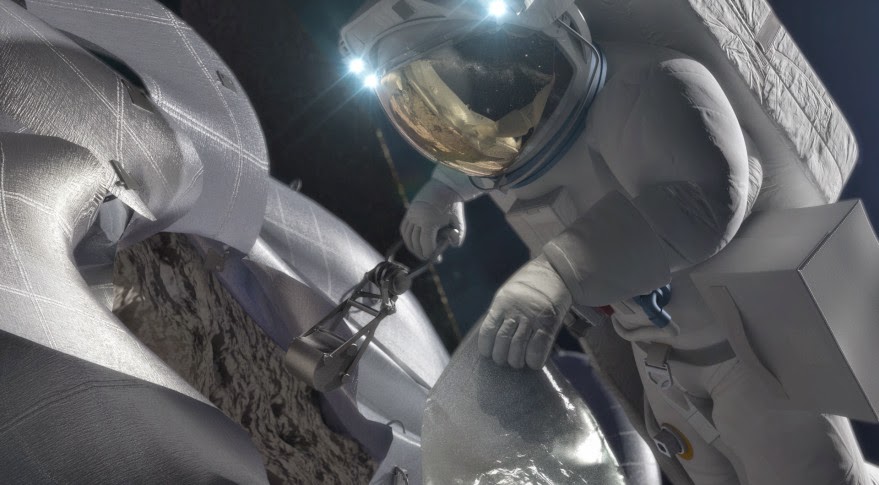
KENNEDY SPACE CENTER, Fla. — NASA will weigh several factors when it makes a Dec. 16 decision on a plan for its Asteroid Redirect Mission (ARM), including how well each option supports later human missions to Mars, according to the agency official who will make that decision.


In an interview here Dec. 1, NASA Associate Administrator Robert Lightfoot said he will use a “matrix” of variables when deciding between two options for carrying out the robotic portion of ARM.

In one approach, called simply Option A by NASA, a robotic spacecraft would shift the orbit of a small near-Earth asteroid, up to ten meters in diameter, into an orbit around the Moon. The alternative, Option B, would use a robotic spacecraft to grab a boulder a few meters across from a larger asteroid and move that into lunar orbit.

“One of the main things I’m looking for is the extensibility to a martian mission,” Lightfoot said. Hardware proposed for ARM under each option should also be applicable for missions to the moons of Mars or even the martian surface itself, he said. “I want to build as little ‘one-offs’ as we can.”

Another factor will be potential commercial partnership opportunities for the mission. That would include, Lightfoot said, “commercial entities coming in to either help us do this or even take advantage of it once we’ve done it.” Other major factors he said he will consider are the technical and budgetary risks of each option.


Spacenews.com:
NASA To Weigh Several Factors in Decision on Asteroid Mission Option, Jeff Foust

Read more…

The Bauer Mythos...

Image source: Forbes

“The United States participated actively and effectively in the negotiation of the Convention. It marks a significant step in the development during this century of international measures against torture and other inhuman treatment or punishment. Ratification of the Convention by the United States will clearly express United States opposition to torture, an abhorrent practice unfortunately still prevalent in the world today. The core provisions of the Convention establish a regime for international cooperation in the criminal prosecution of torturers relying on so-called ‘universal jurisdiction.’ Each State Party is required either to prosecute torturers who are found in its territory or to extradite them to other countries for prosecution.”


- Ronald Reagan, President of the United States, 1984

Address to the Nation upon signing the UN Convention on Torture

Read more…

The Boys' Club...

Source: Radio Nessebar

Shanley Kane is the founder and editor of the most interesting and original of new publications that cover technology: Model View Culture, a quarterly journal and media site that offers readers a remorseless feminist critique of Silicon Valley. The critical distance expressed by the publication’s articles, essays, and interviews, where the Valley’s most cherished beliefs and practices are derided and deconstructed, was honestly won: Kane worked for five years in operations, technical marketing, and developer relations at a number of infrastructure companies in the San Francisco Bay Area. Often frustrated by the unexamined assumptions of her industry and irritated by the incompetence of her managers, she began blogging about technology culture and management dysfunction at startups, which led to Model View Culture (the name is a play on a technology, familiar to software developers, used to create user interfaces), founded a year ago. She maintains a lively and often profane Twitter persona, where she caustically dismisses the arguments of the kinds of men who tried her patience when she worked for them, and generously amplifies the ideas of writers and thinkers she admires, mostly women and minorities. She spoke to MIT Technology Review’s editor-in-chief, Jason Pontin.


(Disclosure: MIT Technology Review subscribes to Model View Culture, as it subscribes to many other publications, and Jason Pontin once made a small contribution to support an issue of the journal.)


“We are not getting hired, and we are not getting promoted, and we are being systematically driven out of the industry.”


“In the upper levels of tech, you are generally dealing with white men who have been coddled their entire lives, and they have rarely encountered even mild criticism.”


MIT Technology Review: A Feminist Critique of Silicon Valley, Jason Pontin

Tomorrow: The Bauer Mythos

Read more…

Einstein's Dead Sea Scrolls...

Source: Link below

On the sexist treatment of Madame Curie (fellow Nobel Laureate):

The treatment to which Einstein referred included the fact that the French Academy of Sciences denied her application for a seat, possibly because of rumors that she was Jewish — or because she was having an affair with a married man, the physicist Paul Langevin.

“I am convinced that you consistently despise this rabble,” Einstein wrote, “whether it obsequiously lavishes respect on you or whether it attempts to satiate its lust for sensationalism!”

“Anyone who does not number among these reptiles,” he said of her critics, “is certainly happy, now as before, that we have such personages among us as you, and Langevin too, real people with whom one feels privileged to be in contact.”

Einstein concluded that “[i]f the rabble continues to occupy itself with you, then simply don’t read that hogwash, but rather leave it to the reptiles for whom it has been fabricated.”

On the discrimination against African Americans:

“Even among these there are prejudices of which I as a Jew am clearly conscious,” he continued, “but they are unimportant in comparison with the attitude of the ‘Whites’ toward their fellow-citizens of darker complexion, particularly toward Negroes. The more I feel an American, the more this situation pains me. I can escape the feeling of complicity in it only by speaking out.”

Einstein then addressed the complaints of those who have had “unfavorable experiences…living side by side with Negroes” which have led them to believe “[t]hey are not our equals in intelligence, sense of responsibility, reliability.”

“I am firmly convinced that whoever believes this suffers from a fatal misconception,” he wrote. “Your ancestors dragged these black people from their homes by force; and in the white man’s quest for wealth and an easy life they have been ruthlessly suppressed and exploited, degraded into slavery. The modern prejudice against Negroes is the result of the desire to maintain this unworthy condition.”

“The ancient Greeks also had slaves,” he wrote. “They were not Negroes but white men who had been taken captive in war. There could be no talk of racial differences. And yet Aristotle, one of the great Greek philosophers, declared slaves inferior beings who were justly subdued and deprived of their liberty. It is clear that he was enmeshed in a traditional prejudice from which, despite his extraordinary intellect, he could not free himself.”

The "Dead Sea Scrolls of Physics" online: Princeton Einstein Papers
#P4TC: Einstein

Read more…

Artificial Skin...

Source: Link below

Some high-tech prosthetic limbs can be controlled by their owners, using nerves, muscles, or even the brain. However, there’s no way for the wearer to tell if an object is scalding hot, or about to slip out of the appendage’s grasp.


Materials that detect heat, pressure, and moisture could help change this by adding sensory capabilities to prosthetics. A group of Korean and U.S. researchers have now developed a polymer designed to mimic the elastic and high-resolution sensory capabilities of real skin.


The polymer is infused with dense networks of sensors made of ultrathin gold and silicon. The normally brittle silicon is configured in serpentine shapes that can elongate to allow for stretchability. Details of the work are published today in the journal Nature Communications.


MIT Technology Review:
Artificial Skin That Senses, and Stretches, Like the Real Thing, David Talbot

Read more…

Nanobuds...

A nanobud consists of a tube of carbon atoms with a bud-like appendage.

Transparent films containing carbon nanobuds—molecular tubes of carbon with ball-like appendages—could turn just about any surface, regardless of its shape, into a touch sensor.


The films were developed by a Finnish startup, Canatu, and could be used to add touch controls to curved automobile consoles and dashboards, for example. The films are rugged and can be repeatedly bent around something as thin as the cord for your earbuds, so they could be handy for adding buttons to flexible devices.


Touch screens are usually made by overlaying a display screen with a transparent sheet of indium tin oxide. This material is brittle, however, and can’t be used on anything other than a flat surface. Individual carbon nanotubes have long been seen as a promising alternative because they conduct electricity so well. But carbon nanotubes have performed badly in touch screens due to poor electrical connections between different nanotubes. Carbon nanobuds are better because the ball-like appendages are particularly good at emitting electrons, which improves those electrical connections.


MIT Technology Review:
“Nanobuds” Could Turn Almost Any Surface Into a Touch Sensor, Kevin Bullis

Read more…

Unconventional Superconductors...


Top: Ripples extending down the chain of atoms breaks translational symmetry (like a checkerboard with black and white squares), which would cause extra spots in the diffraction pattern (shown as red dots in the underlying diffraction pattern). Bottom: Stretching along one direction breaks rotational symmetry but not translational symmetry (like a checkerboard with identical squares but stretched in one of the directions), causing no additional diffraction spots. The experiments proved that a new family of superconductors has the second type of electron density distribution, called a nematic. Credit: Ben Frandsen


A team of scientists from the U.S. Department of Energy's (DOE) Brookhaven National Laboratory, Columbia Engineering, Columbia Physics and Kyoto University has discovered an unusual form of electronic order in a new family of unconventional superconductors. The finding, described in the journal Nature Communications, establishes an unexpected connection between this new group of titanium-oxypnictide superconductors and the more familiar cuprates and iron-pnictides, providing scientists with a whole new family of materials from which they can gain deeper insights into the mysteries of high-temperature superconductivity.


A team of scientists from the U.S. Department of Energy's (DOE) Brookhaven National Laboratory, Columbia Engineering, Columbia Physics and Kyoto University has discovered an unusual form of electronic order in a new family of unconventional superconductors. The finding, described in the journal Nature Communications, establishes an unexpected connection between this new group of titanium-oxypnictide superconductors and the more familiar cuprates and iron-pnictides, providing scientists with a whole new family of materials from which they can gain deeper insights into the mysteries of high-temperature superconductivity.


Phys.org:
Unusual electronic state found in new class of unconventional superconductors

Read more…

Dumbbells and Detection Techniques...

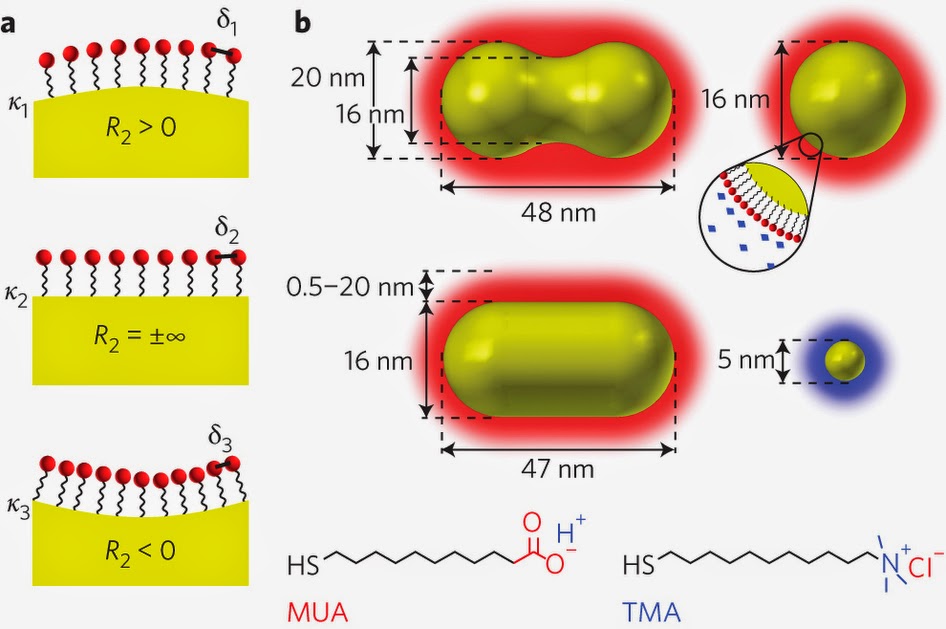
Figure 1: Nano-objects with varying curvatures, Nature

ARGONNE, Ill. – Like snowflakes, nanoparticles come in a wide variety of shapes and sizes. The geometry of a nanoparticle is often as influential as its chemical makeup in determining how it behaves, from its catalytic properties to its potential as a semiconductor component. 

Thanks to a new study from the U.S. Department of Energy’s (DOE) Argonne National Laboratory, researchers are closer to understanding the process by which nanoparticles made of more than one material – called heterostructured nanoparticles – form. This process, known as heterogeneous nucleation, is the same mechanism by which beads of condensation form on a windowpane.

Heterostructured nanoparticles can be used as catalysts and in advanced energy conversion and storage systems. Typically, these nanoparticles are created from tiny “seeds” of one material, on top of which another material is grown. In this study, the Argonne researchers noticed that the differences in the atomic arrangements of the two materials have a big impact on the shape of the resulting nanoparticle. [1]


ARGONNE, Ill. ― A team of researchers from the U.S. Department of Energy's Argonne National Laboratory and Ohio University have devised a powerful technique that simultaneously resolves the chemical characterization and topography of nanoscale materials down to the height of a single atom.

The technique combines synchrotron X-rays (SX) and scanning tunneling microscopy (STM). In experiments, the researchers used SX as a probe and a nanofabricated smart tip of a STM as a detector.

Using this technique, researchers detected the chemical fingerprint of individual nickel clusters on a copper surface at a two-nanometer (nm) lateral resolution, and at the ultimate single atom height sensitivity. By varying the photon energy, the researchers used the difference in photoabsorption cross sections for nickel and the copper substrate to chemically image a single-nickel nanocluster - thus opening the door to new opportunities for chemical imaging of nanoscale materials. Until now, a spatial limit of about only 10-nm was attainable, and the researchers would simultaneously sample a large sample area. The researchers have improved the spatial resolution to 2 nm. [2]


Argonne National Laboratories:
1. Atomic 'mismatch' creates nano 'dumbbells', Jared Sagoff
2. Powerful new technique simultaneously determines nanomaterials' chemical makeup, topography, Angela Hardin

Read more…

Broken Windows, Shattered Dreams...


Dear Mayor Bill de Blasio,


I share your concern as I as an African American father, have not one, but two sons that I am constantly concerned about.


The concern did not start with Eric Garner, nor Mike Brown, nor Jordan Davis, nor Trayvon Martin, nor Renesha McBride, nor Amadeu Diallo, nor Sean Bell, nor Jonathan Ferrell nor a host of others that have become the current bodies in a dark, efficient version, according the the Guardian, of high-tech lynching.


My concern started when I had an Afro - an impressive one, like your son's - when I was fourteen years old in Winston-Salem, NC.


I pulled out a pick to comb my Afro (had one then). It was one of those folding-handle jobs: one side red, the other green, Black Nationalist colors. I was too young to know that or how it mattered. What I was doing was fixing my “do,” getting my ‘fro right, looking at model cars and toys in King’s Department store as my mother shopped for clothes; reminiscing when this was my whole focus in the world.


He was big: bald receding hairline, hair on the sides like Larry of “Moe, Larry and Curly” but greasy and laid flat with flakes of dandruff. He had a pot belly lapping over his large belt buckle. I was a little over five feet tall and 110 lbs. He was over six feet and outweighed me by about 200 lbs.


“What you doing, boy?”


I was startled, and turned around. I was as respectable as my parents had taught me to be in situations like this: “Nothing,” I said, and turned away.


“What’s in your pocket?”


“My pick!” and frankly, that’s all that was in my pocket. This man, who hadn’t announced who he was or why I was getting the 4-1-1, was beyond annoying me.


“Up against the wall!” he barked.


The wall was again, a shelf of model cars and toys only kids would like. “This isn’t much of a wall,” I quipped.


I was grabbed by the throat and left arm, shoved hard into the toy shelves. An avalanche fell on my ‘fro denting my styling. At this point, I was in shock.


“Who are you, man!?”


“Store detective…” He flipped me like an omelet. I was being bodily frisked…against my will.


“I didn’t steal anything,” I said, “the only thing in my pockets is a pick you prick!”


“SHUT UP, boy: I knows nigras steal!” Source: Old Tapes


Welcome to America: this is the America Dr. Maya Angelou thought had "grown up" after the election of our first black president. This is the America that a representative from South Carolina in the seat of Congress shouts "you lie" disrespectfully during a State of the Union Address. This is an American congress that costs $24 billion in a government shutdown. This is a congress that used the fears of ISIS/ISIL and Ebola to win the midterms that has now "mysteriously" vanished from the news cycle.


This is also, the America where "Broken Windows" became the shared pseudo academic delusion and pursued public policy. It is the spiritual and literal father of "Stop and Frisk"; "Stand Your Ground."


Welcome to the America I have not escaped with extensive and ongoing training and a career in a STEM field - physics. Welcome to the America that causes my pulse to rise, my heart to skip beats when either son doesn't answer their cell phones. These are young men, mind you, that have never committed a crime; never had a record; never seen the inside of a jail cell, yet lately they, I, their mother are all guilty of "existing while black," which covers all the colloquialism bases. Our existence, over a long, painful history that IS America, is an indictment to the American Mythology of Exceptionalism. Every story, every bloodbath, every riot, every acquittal of our murders by citizens or the police only lessens my lifespan: I am constantly and consistently concerned to NOT become the next grieving parent!


Welcome sir, to my America as I, and your children will either witness or sadly experience it, and the ever-present fear of being a part of this darkly efficient, ever-repeating tragedy.


"Black Like Me," John Howard Griffin


"Invisible Man," Ralph Ellison


Read more…

A Golden Spike...

Image Source: Interesting Engineering

Having had the pleasure of lunch in San Antonio with a good friend and scientist I admire along with his wife Alicia and mine (Cassandra), Mark pointed out STEM is difficult, it takes effort to master it and good scientists are usually busy doing...GOOD science. Popular shows have their place in framing the importance of science in our daily affairs, but the best most of us can hope for is a general appreciation for that import, and a vision not to hinder its growth and continuance. 

We used to do great things.

Then, we gave voice to a warped skepticism; a clear evidence of the abhorred vacuum of nature being filled by the inexperienced, the uneducated: the loud, obnoxious nincompoops with a microphone and an audience of willfully ignorant malcontents that sadly: vote. In return for this political Baal worship, they are rewarded with policies against their, and the country's long term best interests.


There are some, still to this day, who doubt the moon landing ever happened. Never having lived during the era or too young to have witnessed it for themselves, their evidence are web articles of dubious expertise and sourcing; Internet videos that can be fabricated on laptops and uploaded to web sites NOW: neither sites, laptops or URLs existed during those days.

The technology we use today is a direct spin off from the space program. The integrated circuit was initially developed due to reducing rocket payloads. Newtonian physics is what we use at the moment to get satellites or astronauts into orbit. Our 238-year experiment in self-government seems to work on cartoon physics at the moment.

We've driven a golden spike into the trail leading inexorably into the future leading to the first manned landing on Mars; the mining of asteroids and Helium 3 on a moon base and more of us having the "Overlook Effect" as we become a space faring species. It will be a paradigm shift technologically, politically and sociologically. Only myopia, fear, draconian budget cuts, conspiratorial and magical thinking will drive us into another inexorable, tragic direction: back to tribalism, the caves and dissolution of the nation state.

We used to do great things. Maybe we can do it...again.
Read more…

Al-Jabr...

Image Source: Kevtak Algebra Readiness Classroom and Homework page

This reminds me of a student in one of my first math classes I taught at the high school level - Algebra 1 - stating emphatically he "didn't need math to be a mechanic." A visit to the web page for UTI, and that "troubleshooting" and electronic technology involves a considerable amount of math managed to refocus him successfully (the Pre-Calculus class was a bit older, and concentrated on graduating - I didn't need to do much "pep-talking").

A little history for perspective: we use it to balance chemical equations; the first high school physics you'll ever learn before you run into Calculus will be based on this foundation.

Image source: Famous Scientists

Muhammad al-Khwarizmi

Baghdad in the 9th century was a global center of culture and trade, a hub connecting India and China with the Mediterranean and Europe. It was a rich city, a center of learning, and scholars from all over the world would come to study at the House of Wisdom, a renowned library and academy where Muhammad al-Khwarizmi lived as a scholar.

Ideas traveled in consort with commerce along the roads of Baghdad, and al-Khwarizmi embodied the wide range of the city's global vision. The Muslim scholar expanded upon the work of Greco-Roman astronomers such as Ptolemy, created one of the oldest surviving treatises on the Jewish calendar and employed and popularized the Hindu number system of 1, 2, 3... (which, because of al-Khwarizmi's work, we now refer to as the Hindu-Arabic numeration).

But his most influential work dealt with methods to solve complete equations. In "The Compendious Book on Calculation by Completion and Balancing," al-Khwarizmi demonstrated how to simplify equations by adding or subtracting an identical quantity from both sides. For example, adding 4x to each side of 6x = 40 - 4x reveals that 10x = 40. This "act of completion" - al-jabr - gave mathematicians a new tool: algebra.

From Time, Special Editions: Great Scientists - The Geniuses, Eccentrics and Visionaries Who Transformed Our World, Mathematics, page 21.

And, in the spirit of irony as well as completion: x = 4 (today). Smiley Faces
Read more…

Wake Up, Jibo and Pepper...

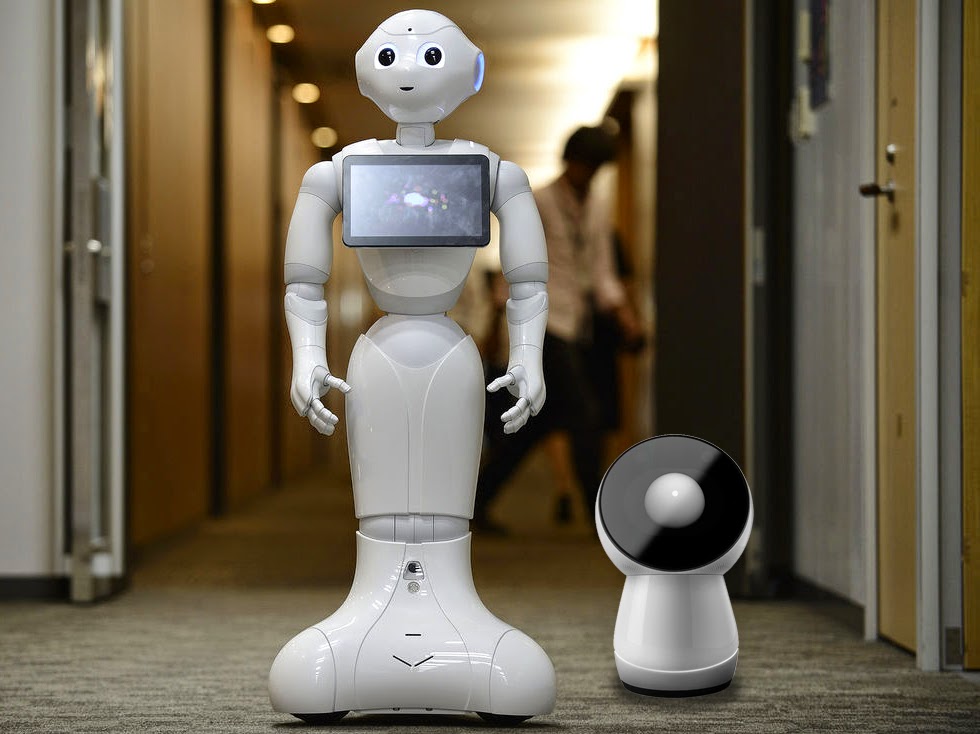
In case you're wondering, Pepper's on the left; Jibo on the right

While we slept, Rosie came into being.

I read the article about JIBO in an issue of Popular Mechanics on the way back to New York from Austin, Texas. An excerpt:

Breazeal stands a few feet from Jibo and says, in a voice only slightly different from the one she uses to talk to humans, "Wake up, Jibo."

Nothing.

Breazeal looks at the man.

"Wait," he says, adjusting, fiddling. "Hold on. Okay. Go ahead."

Again Breazeal looks at her robot and says with purpose and hope, "Wake up, Jibo."

The robot's round head twists on its base, a remarkably human wiggle. A white circle appears on its round screen, like an eye opening. In a voice like an animated movie character—cute, cheerful, but not treacly or grating—Jibo responds, "Hello, Cynthia!"

Pepper is our first C-3PO (fluent in 17 languages); associating JIBO naturally as R2-D2's progenitor. Pepper uniquely will be the first robot that can "read" our emotions and tailor it's conversation to you.

JIBO is apparently not an acronym, and looking up the definition online can vary from the profound to the profane. All of this, JIBO and Pepper will come with a price: that is the price of accepting something "new"; strange, different, without immediately fearing it for the sake of its uniqueness. It is that fear of technology that keeps us backwards, tribal and far behind than we ought to be. These are the things that occur while we sleep.


For a friend who has an acute interest in robotics: Parama Roy. Remember her name.


Beta Boston:
Robot startup Jibo unveils a multi-purpose 'social-bot' for the home
Scott Kirsner

IndieGoGo: JIBO, Worlds First Family Robot. 4,800 Pre-Sold!
(and, $2,287,609 raised in a $100,000 initial crowd-funding goal)

That's Really Possible:
Presenting our first real R2-D2 and C-3PO: JIBO and Pepper!
Glyn Taylor

Read more…

Bio Circuits...

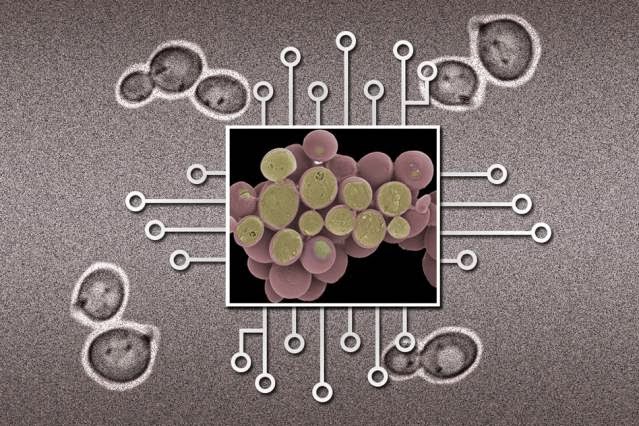
Illustration: Christine Daniloff/MIT (yeast cell images from National Institutes of Health)

Researchers have made great progress in recent years in the design and creation of biological circuits — systems that, like electronic circuits, can take a number of different inputs and deliver a particular kind of output. But while individual components of such biological circuits can have precise and predictable responses, those outcomes become less predictable as more such elements are combined.

A team of researchers at MIT has now come up with a way of greatly reducing that unpredictability, introducing a device that could ultimately allow such circuits to behave nearly as predictably as their electronic counterparts. The findings are published this week in the journal Nature Biotechnology, in a paper by associate professor of mechanical engineering Domitilla Del Vecchio and professor of biological engineering Ron Weiss.

The lead author of the paper is Deepak Mishra, an MIT graduate student in biological engineering. Other authors include recent master’s students Phillip Rivera in mechanical engineering and Allen Lin in electrical engineering and computer science.

MIT News: New device could make large biological circuits practical,
David L. Chandler

#P4TC: Bio-Computer

Read more…

Out of the Office...


As in past breaks, please enjoy all the previous posts.

Short observation of the announced Executive Action on Immigration Reform: Pass a bill. Yes, at 844 pages, Senate Bill 744 is a hefty thing, but that's why you hire staff to read it and give you the "Cliff Notes" summary. It would also help if the congress worked a sizable amount of a year like every other American. I don't expect the bill's current form to survive a House committee without amendments. Its form will naturally change.


That's politics: the art of compromise that through social media atomizing us into the very factions George Washington warned about in his 1796 Farewell Address has become lost. We've become tribal, "E pluribus unum" a quaint Latin phrase; "United States" oxymoron and national poetry, not reality.

We see, therefore, that war is not merely an act of policy but a true political instrument, a continuation of political intercourse carried on with other means. What remains peculiar to war is simply the peculiar nature of its means.

Chapter 1, Section 24, in the Princeton University Press translation (1976)

Variant translation: War is merely the continuation of politics by other means. Carl von Clausewitz, "On War," Source: Wikiquote

Horror vacui: "nature abhors a vacuum" and so does politics in this post "Citizens United" and McCutcheon oxymoronic era. We're making fascism inevitable and "rational"; Oligarchy a natural progression from our laziness as an electorate to be informed; to participate and to actually shape the agendas of the "collectivist conspiracy" also known as self-government.


Spending time with friends and family. Blogging will resume 3 December. Peace.
Read more…

Spidey and van der Waals...

Figure 2 from the paper

Three frames from a video (electronic supplementary material, movie S1) showing a 70 kg climber ascending a 3.7 m vertical glass surface using a synthetic adhesion system with degressive load-sharing and gecko-inspired adhesives. The time between (a) and (c) is about 90 s and includes six steps.


Geckos, when not shilling for insurance companies, are most known for their climbing abilities that let them scale walls effortlessly. Thanks to their biology, geckos have one major advantage over humans who want to move vertically: they are small, and their bodies are light, so their natural adhesive just has to be good, not great. But a team of scientists from Stanford University’s Department of Mechanical Engineering have now one-upped the gecko, creating a hand-sized adhesive surface that allows humans to vertically scale glass walls.


I don't plan on rock climbing sheer faces of office buildings any time soon, but the fact they've figured this out (without the proverbial radioactive genetically enhanced spider) is pretty neat!


Popular Science:
Scale a Glass Wall With Gecko-Inspired Adhesive on Your Hands, Kelsey D. Atherton

Royal Society Publishing:
Human climbing with efficiently scaled gecko-inspired dry adhesives
Elliot W. Hawkes, Eric V. Eason, David L. Christensen, Mark R. Cutkosky

Wikipedia:
van der Waals Force
van der Waals Equation

Read more…

3D Topological Insulator...

Purdue University's Yang Xu inspects devices made from topological insulators under a microscope before electrical measurements are made on the samples. (Courtesy: Purdue University/Ting-fung Chung)

Researchers in the US say that they have made the best 3D topological insulator to date. The material is called bismuth antimony tellurium selenide (BiSbTeSe2) and could be of fundamental importance for testing a number of condensed-matter and particle-physics theories. The material could also find use in spintronics devices and be used to build robust topological quantum bits (qubits) for quantum computers.


Topological insulators are materials that are electrical insulators in the bulk but can conduct electricity on their surface via special surface electronic states. "Most topological insulators made to date have not been completely insulating in the bulk, because of impurities (unintentionally introduced during material synthesis or processing) that doped the bulk and made it conducting," explains Yong Chen of Purdue University, who led the research. "Our topological insulator appears not to conduct at all in the bulk but does so only at its surface."


The researchers worked this out by measuring how thin flakes of BiSbTeSe2 of various thicknesses conducted electricity. They found that the conductance of different samples was almost independent of their thicknesses. Such behaviour is completely different to that seen in normal 3D materials, in which conductance is proportional to sample thickness.


Physics World: New 3D topological insulator is the nearest to perfection yet
#P4TC: Hopping To Open Bandgap

Read more…

A Democratic Technocracy...


Bernal Sphere interior, complete with California-style wine and cheese party, and human powered flight in the lower-gravity area near the axis. Painting by Rick Guidice courtesy of NASA. Source: National Space Society


A Democratic Technocracy I’d define as "a representative democratic republic of elected officials independent of outside financial interests with experience in and/or an appreciation of science, technology, engineering and mathematics (STEM) to effectively govern a nation and global economy exquisitely dependent on STEM."


More in the embed/link below as well as my observations of the movie "Interstellar."

Snarky Commentary 3 by Reginald L. Goodwin

Read more…
Source: Link below

Note: Dr. Holt represented New Jersey, but hey: we're close enough! Okay, he was actually a plasma physics person, but you get the drift. Go with the bit...

Rush Holt, a physicist, educator, and eight-term Democratic member of Congress, has been named the new CEO of AAAS (which publishes ScienceInsider). He will succeed Alan Leshner, a neuroscientist who is stepping down this winter after leading AAAS since 2001.


Holt, 66, has represented a New Jersey district since 1999, but in February announced he would not seek another term. Although not known for sponsoring legislation, Holt has earned kudos from both Republican and Democrat colleagues for being an effective, behind-the-scenes advocate for additional funding for research and science education. He was part of an unofficial, bipartisan “physics caucus” in Congress that, at its peak, totaled three members who held physics Ph.D.s.

Holt was a vocal—but often lone—advocate in Congress for reviving the Office of Technology Assessment, a well-regarded in-house think tank for legislators that Congress abolished when Republicans took control in 1995. He admitted that it was an uphill battle, but felt the fight was worth waging. “I would say that most members of Congress value science and respect scientists,” he told ScienceInsider in February. “But I don’t see more scientific thinking evidence-based, critical thinking.”

And now...there are none.

"We live in a society exquisitely dependent on science and technology, in which hardly anyone knows anything about science and technology." Carl Sagan


Science Mag: Rush Holt, physicist and congressman, to lead AAAS, Jeffrey Mervis

Tomorrow: A Democratic Technocracy

Read more…

LakeSim...

Source: Last link in third paragraph below

“The future belongs to those who believe in the beauty of their dreams.”
― Eleanor Roosevelt

“Life can only be understood backwards; but it must be lived forwards.”
― Søren Kierkegaard

A hundred years ago, one out of every five people lived in urban areas. By 2050, that number will balloon to over four out of five.


This rapid urbanization presents significant problems to the world. Even a modest annual population growth of three or five percent can mean thousands of new inhabitants, and each new resident will require energy, transportation, potable water, food and other infrastructure services that strain finite resources.


Researchers at the U.S. Department of Energy’s Argonne National Laboratory and the University of Chicago are developing tools that merge urban design with scientific analysis to improve the decision-making process associated with large-scale urban developments. One such tool, called LakeSim, has been prototyped with an initial focus on consumer-driven energy and transportation demand, through a partnership with the Chicago-based architectural and engineering design firm Skidmore, Owings & Merrill, Clean Energy Trust and developer McCaffery Interests. LakeSim began with the need to answer practical questions about urban design and planning, requiring a better understanding about the long-term impact of design decisions on energy and transportation demand for a 600-acre development project on Chicago’s South Side—the Chicago Lakeside Development project.
Chicago Lakeside : A technology infused community from McCaffery Interests on Vimeo.

More Videos: Chicago Lakeside Development Project
Argonne National Laboratories: Designing Future Cities, Justin H. S. Breaux

Read more…