Reginald L. Goodwin's Posts (3123)

Sort by

Truth, Post-Truth...

Image Source: Capital Hill Blue


Topics: Commentary, Politics, Research, Science, SETI


In our national mythology, we attribute all-wisdom, all-knowledge and all-prescience to the Founding Fathers. However, certain things they could not have predicted: an electorate made up of the plurality of voluntarily registered voters and not just property owners, the freedom of slaves and their rights as citizens, including the vote; women having the right to vote, an African American president, the removal of what used to be referred to as "bungholery" at least in spirit from the Uniform Code of Military Justice as well as public life; a credible female candidate of a national party and the Internet. Obviously crafting the First Amendment, they envisioned a free press and a public education system that would at least inform the citizenry. They had no concept of corporate conglomerates (or corporations), Nielsen Ratings, talk radio, created realities; the triangulation of church, state and echo chamber; social media or click-bait.

Post-Truth: ADJECTIVE


Relating to or denoting circumstances in which objective facts are less influential in shaping public opinion than appeals to emotion and personal belief:

‘in this era of post-truth politics, it's easy to cherry-pick data and come to whatever conclusion you desire’

‘some commentators have observed that we are living in a post-truth age’


NPR All Tech Considered:
We Tracked Down A Fake-News Creator In The Suburbs. Here's What We Learned

Read more…

Quantum Brain...

davidope for Quanta Magazine


Topics: Biology, Neuroscience, Quantum Computer, Quantum Mechanics


Note: With the exception of the historical links below, I don't have anything related to physics and Thanksgiving. Enjoy the food and links. Travel safe.

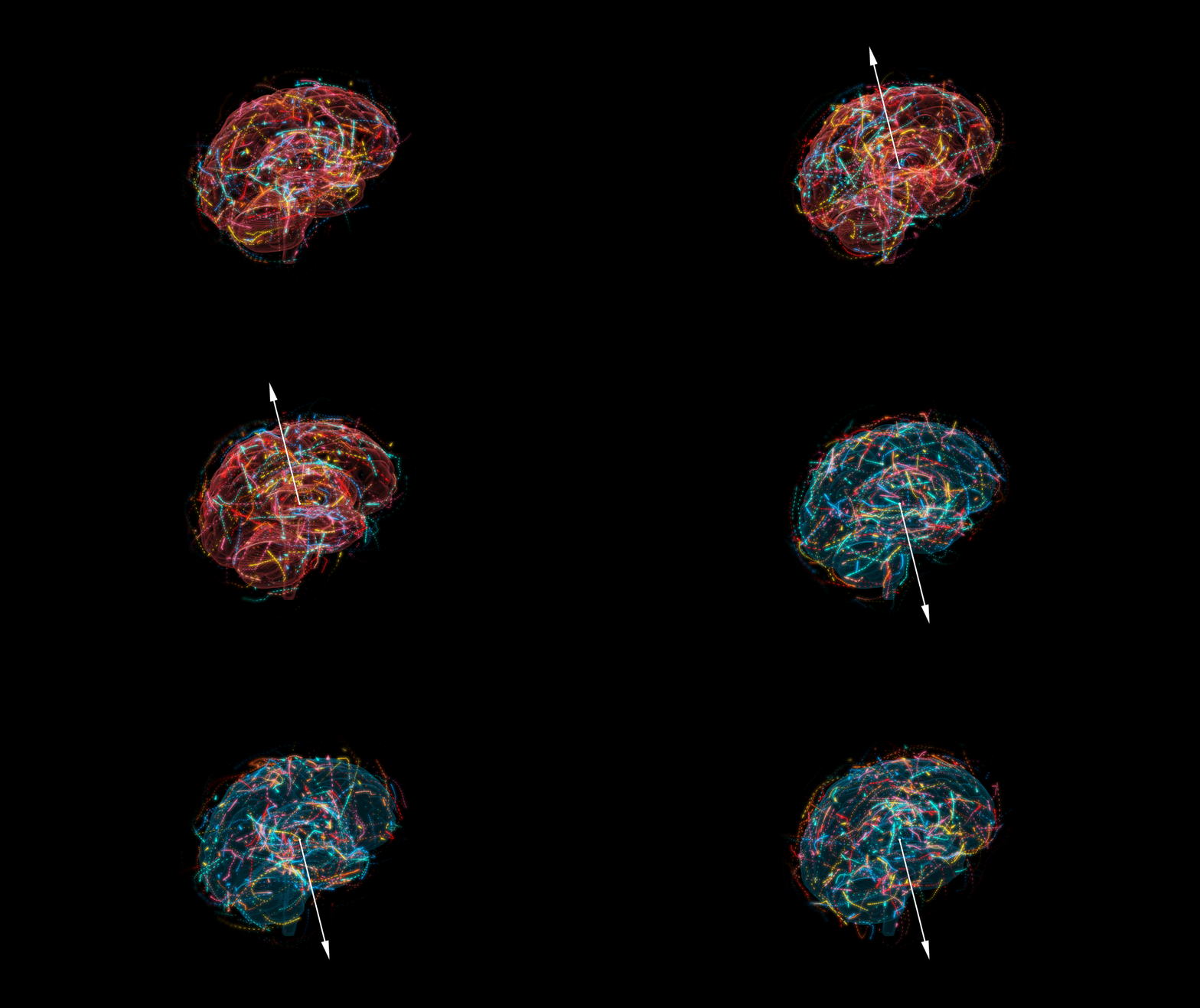
The mere mention of “quantum consciousness” makes most physicists cringe, as the phrase seems to evoke the vague, insipid musings of a New Age guru. But if a new hypothesis proves to be correct, quantum effects might indeed play some role in human cognition. Matthew Fisher, a physicist at the University of California, Santa Barbara, raised eyebrows late last year when he published a paper in Annals of Physics proposing that the nuclear spins of phosphorus atoms could serve as rudimentary “qubits” in the brain — which would essentially enable the brain to function like a quantum computer.

As recently as 10 years ago, Fisher’s hypothesis would have been dismissed by many as nonsense. Physicists have been burned by this sort of thing before, most notably in 1989, when Roger Penrose proposed that mysterious protein structures called “microtubules” played a role in human consciousness by exploiting quantum effects. Few researchers believe such a hypothesis plausible. Patricia Churchland, a neurophilosopher at the University of California, San Diego, memorably opined that one might as well invoke “pixie dust in the synapses” to explain human cognition.

Quanta Magazine: A New Spin on the Quantum Brain, Jennifer Ouellette

Completely unrelated to anything but the day:

Manataka American Indian Council on Thanksgiving
What Really Happened at the First Thanksgiving? The Wampanoag Side of the Tale
Gale Tourey Toensing

Read more…

Gravity on a Chip...

Diagram showing how a BEC (red dot) is created at the top of the chip. It then falls and is split into two BECs that take separate paths to the bottom of the chip. (Courtesy: S Abend/Phys. Rev. Lett.)

Topics: Bose-Einstein Condensate, Gravity, Nanotechnology, Quantum Mechanics, Semiconductor Technology

A new sensor that measures the local acceleration due to gravity using a Bose–Einstein condensate (BEC) of ultracold atoms has been made by physicists in Germany, the US and Canada. While the prototype device is not as accurate as commercial gravimeters, its makers say it could be made much smaller and much more accurate than existing devices.

Atoms can be used to measure the acceleration due to gravity by cooling a gas of them to near absolute zero and then dropping them along two different paths in an interferometer. The quantum interference that occurs when the paths converge at a detector provides a very good measure of gravity, with commercial atom interferometers able to measure the acceleration to within one part in 108. Such measurements are invaluable for geological exploration because the presence of certain minerals can be spotted by seeking tiny variations in gravity at the Earth's surface.

While these ultracold atom gravimeters are on a par with conventional absolute gravimeters based on macroscopic falling masses, their accuracy could be improved a lot by using a BEC. In a conventional atomic gravimeter, the ultracold atoms form a diffuse gas roughly a millimetre in size and a major cause of uncertainty is that the laser pulses used to control the atoms are not spatially uniform on that length scale. A BEC – formed by cooling a gas of atoms with integer spin until they condense into a single quantum state – reduces this uncertainty because it squeezes the atoms into a region that is about 100 times smaller.

Physics World: Gravity measured using a Bose–Einstein condensate on a chip
Hamish Johnston

Read more…

Sino Science...

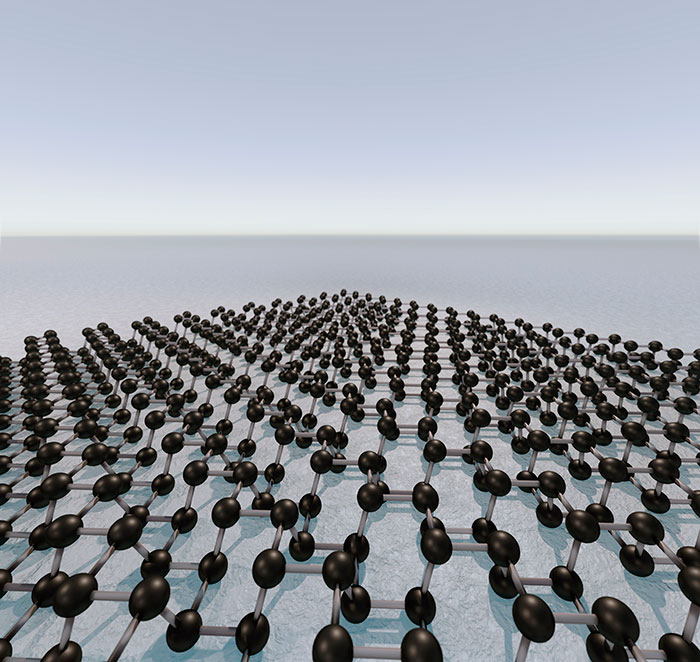
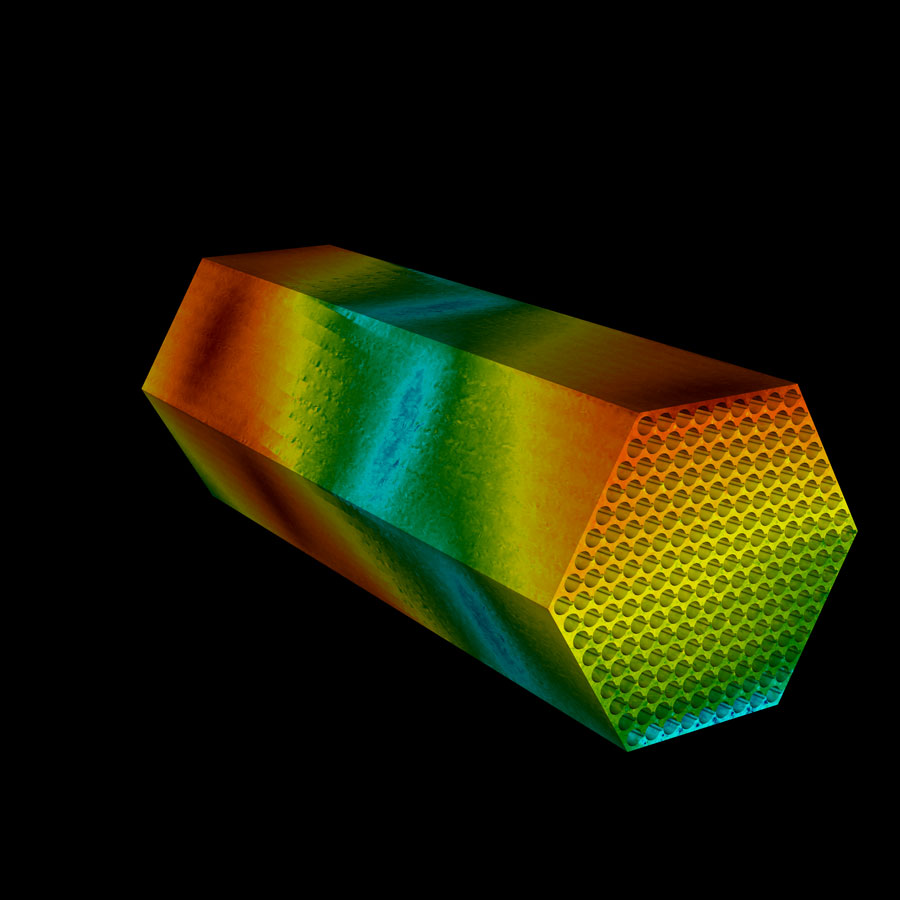
Phosphorene is a graphene-like material that is a hot research topic, according to a new study. (Courtesy: Robert Brook/Science Photo Library)


Topics: Dark Matter, Materials Science, Neutrinos, Research


China is performing "outstanding" research in a number of emerging scientific topics, putting the country's output on a par with the UK but still behind the US. That is the conclusion of a new study by the Chinese Academy of Sciences (CAS) and the scientific data company Clarivate Analytics. The Research Fronts 2016 annual report identifies 100 "hot" and 80 "emerging" research areas based on citation analysis of papers published in 2015.

The research areas – divided in various fields of science – reflect global interest in specific topics that have resulted in "core" journal articles. These articles are defined by an algorithm that takes into account, among other things, the time of publication and how frequently an article is cited by other papers in the same area. In physics, for instance, the hottest research pursuits last year included the detection of dark matter and experiments that measure neutrino oscillations. Research into properties and applications of black phosphorus – a 2D material also called phosphorene because of its similarity to graphene – was also identified. The study of topological materials called Weyl semimetals was also named as a hot topic in physics.

Six countries – China, France, Germany, Japan, UK and US – made the greatest contributions in the 180 research areas, according to the report. The US retained its leadership, with its researchers publishing core papers in 152 of the 180 areas, ranging from the hunt for dark matter to the health impact of electronic cigarettes. The UK, meanwhile, contributed core papers in 90 research topics, covering more areas than China's 68. However, China had top-cited papers among the core papers in 30 research areas, which is more than twice that of the UK. "China has a significant gap with the US, and fierce competition with the UK," the report says, adding it was likely that China would soon overtake the UK.

Physics World: China forges ahead in global research
Binglin Chen is a science writer based in Beijing

Read more…

Exascale Computing...

It takes increasingly powerful computing resources to perform more and more complex simulations of nuclear reactor fuel assemblies. This image shows the coolant-flow pressure distribution in a 217-pin wire-wrapped subassembly. (Image by Paul Fischer)


Topics: Computer Engineering, Computer Science, Research


The U.S. Department of Energy’s (DOE's) Exascale Computing Project (ECP) today announced that it has selected four co-design centers as part of a 4-year $48 million funding award. The first year is funded at $12 million, and is to be allocated evenly among the four award recipients.

The ECP is responsible for the planning, execution and delivery of technologies necessary for a capable exascale ecosystem to support the nation’s exascale imperative, including software, applications, hardware and early testbed platforms.

Exascale refers to computing systems at least 50 times faster than the nation’s most powerful supercomputers in use today.

According to Doug Kothe, ECP Director of Application Development: “Co-design lies at the heart of the Exascale Computing Project. ECP co-design, an intimate interchange of the best that hardware technologies, software technologies and applications have to offer each other, will be a catalyst for delivery of exascale-enabling science and engineering solutions for the U.S.”

Argonne National Laboratory:
Exascale Computing Project announces $48 million to establish four exascale co-design centers
Brian Grabowski

Read more…

Mirror, Mirror...

Leonard Nimoy (R.I.P.) as mirror universe Spock, "Mirror, Mirror," Star Trek, S2, E4


Topics: Holograms, Optical Physics, Quantum Mechanics, Star Trek


When you look in the mirror, the image you see looks a lot like you—not exactly the same, because when you raise your right hand, your mirror-self raises its left. What’s more, the mirror image is merely an assemblage of reflected light, without a physical body behind it. Despite these differences, you can see an important connection between you and your reflection.

This type of mirror relation is a familiar and powerful form of symmetry. We can say that a Valentine heart is symmetrical because the left side is a reflection of the right. But the symmetry of your mirror image is different and deeper. A heart is symmetrical because the left and right side happen to have a similar shape. The symmetry between you and your reflection is due to the laws of physics. The nature of light requires your reflection to be symmetrical to you. It is an example of a powerful and subtle type of symmetry known as duality.

The duality between particles and waves is a central part of quantum theory. Light is clearly a wave: It has a wavelength that determines its color, and light waves can interact with each other to produce things like lasers. Light is also clearly a particle: It interacts with atoms as discrete photons; a single photon can be deflected like a billiard ball. Particle-wave duality means that quantum objects like light have a symmetry between their particle and wave aspects. They are particles with wave properties and waves with particle properties. They are both, and they are neither. The power of quantum theory is that you don’t need to distinguish between particles and waves. They are simply quantum objects with a duality between their particle and wave natures.

Does that mean that the universe is a hologram? Not quite. It means there is a duality...

Nautilus: What It Means to Live in a Holographic Cosmos
Brian Koberlein is an astrophysicist and physics professor at Rochester Institute of Technology.

Read more…

Strange Numbers...

Xiaolin Zeng for Quanta Magazine
Particle collisions are somehow linked to mathematical “motives."

Topics: Large Hadron Collider, LHC, Particle Physics, Quantum Mechanics, Richard Feynman, Research

An unexpected connection has emerged between the results of physics experiments and an important, seemingly unrelated set of numbers in pure mathematics.

At the Large Hadron Collider in Geneva, physicists shoot protons around a 17-mile track and smash them together at nearly the speed of light. It’s one of the most finely tuned scientific experiments in the world, but when trying to make sense of the quantum debris, physicists begin with a strikingly simple tool called a Feynman diagram that’s not that different from how a child would depict the situation.

Feynman diagrams were devised by Richard Feynman in the 1940s. They feature lines representing elementary particles that converge at a vertex (which represents a collision) and then diverge from there to represent the pieces that emerge from the crash. Those lines either shoot off alone or converge again. The chain of collisions can be as long as a physicist dares to consider.

To that schematic physicists then add numbers, for the mass, momentum and direction of the particles involved. Then they begin a laborious accounting procedure — integrate these, add that, square this. The final result is a single number, called a Feynman probability, which quantifies the chance that the particle collision will play out as sketched.

“In some sense Feynman invented this diagram to encode complicated math as a bookkeeping device,” said Sergei Gukov, a theoretical physicist and mathematician at the California Institute of Technology.


Quanta Magazine: Strange Numbers Found in Particle Collisions

Read more…

Naked SMBH...

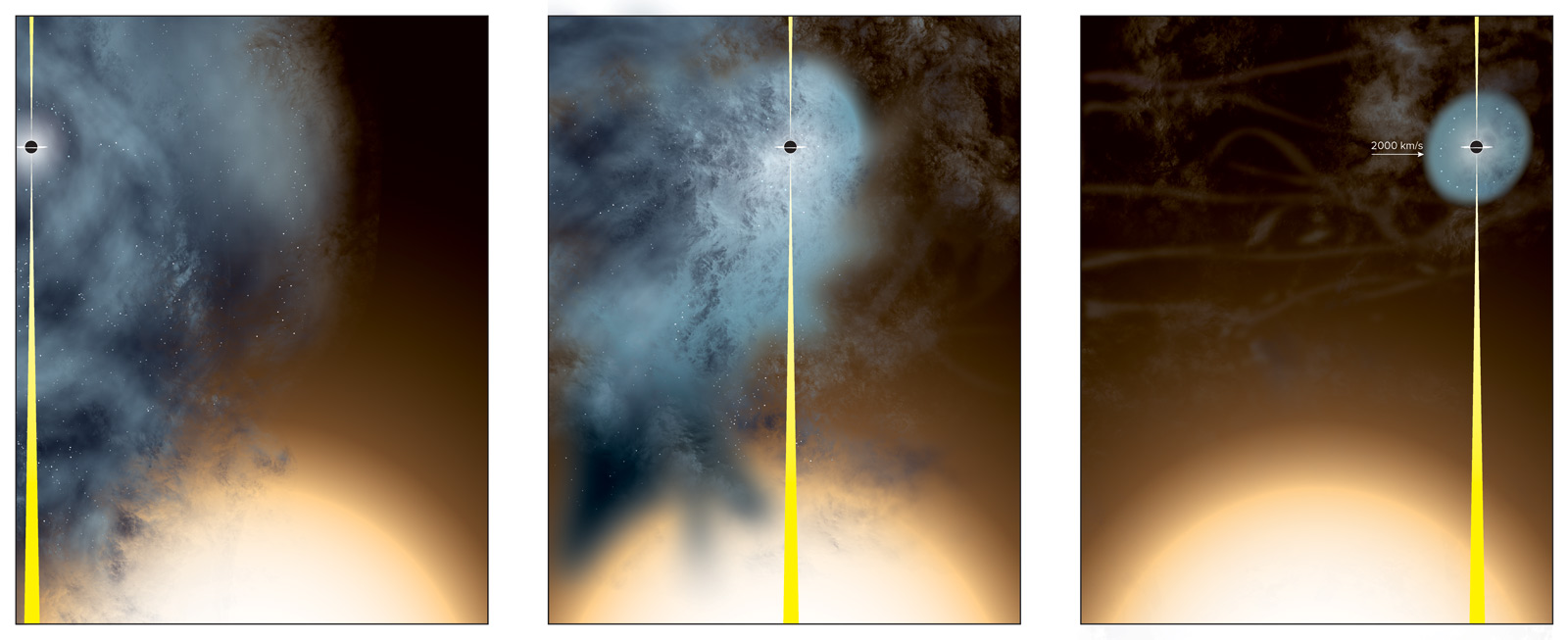
Artist's conception of how the "nearly naked" supermassive black hole originated.
Credit: Bill Saxton, NRAO/AUI/NSF.


Topics: Astronomy, Astrophysics, Black Holes, Cosmology


Astronomers using the super-sharp radio vision of the National Science Foundation's Very Long Baseline Array (VLBA) have found the shredded remains of a galaxy that passed through a larger galaxy, leaving only the smaller galaxy's nearly-naked supermassive black hole to emerge and speed away at more than 2,000 miles per second.

The galaxies are part of a cluster of galaxies more than 2 billion light-years from Earth. The close encounter, millions of years ago, stripped the smaller galaxy of nearly all its stars and gas. What remains is its black hole and a small galactic remnant only about 3,000 light-years across. For comparison, our Milky Way Galaxy is approximately 100,000 light-years across.

The discovery was made as part of a program to detect supermassive black holes, millions or billions of times more massive than the Sun, that are not at the centers of galaxies. Supermassive black holes reside at the centers of most galaxies. Large galaxies are thought to grow by devouring smaller companions. In such cases, the black holes of both are expected to orbit each other, eventually merging.

National Radio Astronomy Observatory:
Close Galactic Encounter Leaves "Nearly Naked" Supermassive Black Hole
Dave Finley, Public Information Officer

Read more…

Single Atom Magnifier...

Artist's impression of nanophotonics. Courtesy: NanoPhotonics Cambridge/Bart deNijs.


Topics: Nanotechnology, Optics, Picocavity


Researchers in the UK and Spain have succeeded in confining light to a volume smaller than the size of a single atom for the first time – a feat that seemed completely impossible even just a few years ago. The “picocavity”, which can be thought of as the world’s smallest magnifying glass, could be used to study how light and matter interact at tiny scales and even to observe individual chemical bonds forming and breaking between atoms. The cavity might also be used to make new optomechanical data storage devices in which information can be written and read by light and stored in the form of molecular vibrations.

For a long time, scientists thought that visible light could not be focused to less than half its wavelength – the so-called diffraction limit. In recent years, however, they have learnt how to use nanostructured metals like gold and silver that support surface plasmons (oscillations of electrons at the metal surface) to confine optical fields to much smaller than their wavelength.

Now, a team led by Jeremy Baumberg at Cambridge University in the UK has used highly conductive gold nanoparticles to make the world’s tiniest optical cavity. This cavity is so small that only a single atom can fit in it. “We will never do any better than this!” says Baumberg.

Nanotechweb: Picocavity confines light to smallest volume ever, Belle Dumé

Read more…

Plasmas Without Solenoids...

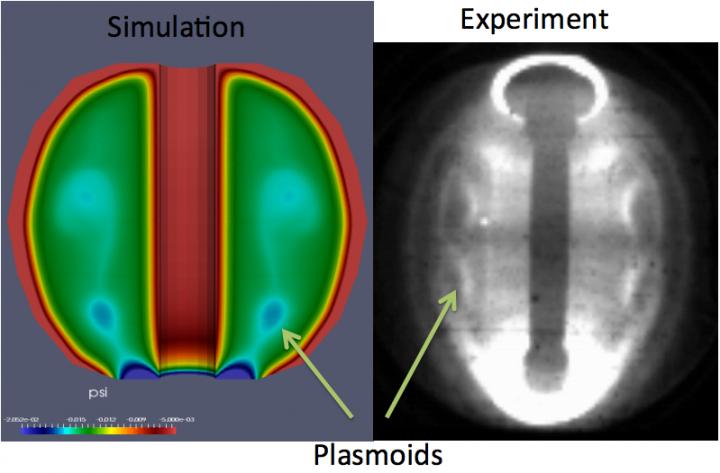
Left: Plasmoid formation in simulation of NSTX plasma during startup without solenoid. Right: Fast-camera image of NSTX plasma shows two discrete plasmoid-like structures. Credit: NSTX


Topics: Applied Physics, Nuclear Fusion, Plasma Physics, Research


The tokamak is an experimental chamber that holds a gas of energetic charged particles, plasma, for developing energy production from nuclear fusion. Most large tokamaks create the plasma with solenoids—large magnetic coils that wind down the center of the vessels and inject the current that starts the plasma and completes the magnetic field that holds the superhot gas in place. But future tokamaks must do without solenoids, which run in short pulses rather than for weeks or months at a time as commercial fusion power plants will have to do.

Recent computer simulations have suggested a novel method for launching the plasma without using solenoids. The simulation modeling shows the formation of distinct, current carrying magnetic structures called plasmoids that can initiate the plasma and complete the complex magnetic field.

Everything starts with magnetic field lines, or loops, that rise through an opening in the floor of the tokamak. As the field lines are electrically forced to expand into the vessel, a thin layer, or sheet, of electrical current can form. Through a process called magnetic reconnection, the sheet can break and form a series of ring-shaped plasmoids that are the magnetic equivalent to the bubble rings created by dolphins.

Phys.org: Launching fusion reactions without a central magnet, or solenoid

Read more…

Van Bullock...

Image Source: Unapologetically American


Topics: Civics, Civil Rights, Politics, Veterans Day


To my fellow veterans: happy Veteran's Day. I salute your Giri (Japanese): duty, obligation, honor to this nation.

Van Bullock (R.I.P.) was my ninth grade Social Studies Teacher. He was a short, stocky man with an impressive bearing and presence, white-haired mop hairdo kind of like Moe Howard of the Three Stooges in wire progressive lenses. It was 1976, our country's Bicentennial year, 8 years after the assassinations of Martin Luther King and Bobby Kennedy as the country tried mightily to build bridges in the place of previous De Jure and De Facto walls. Mr. Bullock's teaching technique was using stenciled notes he passed out to all of us, particularly me and Ve Pauling and lecturing with the fire of a camp meeting preacher. (Ve is my fraternity brother in Kappa Alpha Psi; he and I realized at A&T's homecoming - GHOE last month that we've known each other since the fifth grade, attending middle school, high school and college together.) It was pre-Cable Service; pre-24-hour entertainment and news; pre-Internet. It was three years before the first rap song - King Tim the III, Personality Jock, and the first rap album - The Sugar Hill Gang burst on the scene my junior year. Fashion for me centered around acne, Afros and Bell Bottoms. The distractions in class might have been an unannounced fart, a pretty girl next to you or a view outside the classroom window.

Van Bullock would lecture and captivate a crowd of 25 fourteen-year-old teens from view and girls that HAD the notes in front of us: we still took notes in the margins, on the back of each stenciled page. Tests were open book, open note and challenging: he expected great detail and essay answers. The name of the class was Social Studies, but what he was teaching was lessons of citizenship: Civics.

Civics (n): the study of the rights and duties of citizens and of how government works. Meridian-Webster online

Mr. Bullock was teaching Civics because he had the freedom to do so. He was not held to the standard of preparing students for a high-stakes standardized test because no such machination existed from the testing industrial complex. He did not have the pressure of "teaching to the test" with the wink-and-nod from Principal and Superintendent stating the party line that you were not to, knowing full well your end-of-year evaluation depended on how a teenager who's frontal lobe could misfire on the very DAY of that high-stakes exam, put his head down and take a nap...>_<

Van Bullock was teaching all of us, in a forced-bused integrated class in East Winston the rudimentary fundamentals of citizenship. Though forced, it exposed us beyond our cultures and expanded our tolerance, friendships and spheres of influence. We were learning - side-by-side - together. We looked different, we lived on different sides of town and if we attended worship centers probably had different perspectives on that as well. We could all agree that learning those building blocks to take on the responsibilities of the adulthood and the world we were all growing up into was important. We had classroom debates; mock elections: history came alive in that man's room! We learned (hopefully putting a few at ease), to make, change or ABOLISH a Constitutional Amendment it takes a 2/3 majority in both houses of congress (67 senators; 292 house members) and 3/4 of the states - 38 in our case - to ratify it in their legislatures. I tried to capture and emulate that magic every time I taught physics and math at Manor High School. Sometimes I was successful; sometimes I wasn't.

I assumed wrongly that this would always be the focus of our nation's education enterprise, preparing citizens for ownership of our federal republic.

I am sadly aware Mr. Bullock, quite clearly that it is not.
Read more…

Supersolids...

Electron snapshot: the probable position of the remaining helium electron after photoionization. (Courtesy: M Ossiander/ TUM, M Schultze/ MPQ)

Topics: Applied Physics, Bose-Einstein Condensate, Condensed Matter Physics, Materials Science

Fresh evidence for a new state of matter called a supersolid has been put forth by two independent teams of physicists. Supersolidity has been a controversial concept whereby some atoms in a solid material are able to form a superfluid at very low temperatures – allowing them to flow ghost-like through the solid without any resistance. While initial observations of supersolidity in solid helium-4 in the 2000s have since been explained in terms of more mundane physics, some physicists believe that supersolids should exist – at least in principle. Now, Wolfgang Ketterle and colleagues at the Massachusetts Institute of Technology in the US and Tilman Esslinger and colleagues of ETH Zürich in Switzerland have created supersolid analogues using ultracold atoms. Both systems comprise Bose–Einstein condensates (BEC), which are already superfluids. The teams used different optical techniques to make the atoms arrange themselves into crystalline structures of high and low density resembling a solid. They then showed that the atoms can flow freely through such crystals, while the regions of high and low density do not move. While these experiments involve dilute gases, rather than actual solids, both studies show that the supersolid state of matter is possible. Both experiments are described in preprints on arXiv.

Physics World: Have supersolids been seen at last? Hamish Johnston

Read more…

Atomtronics...

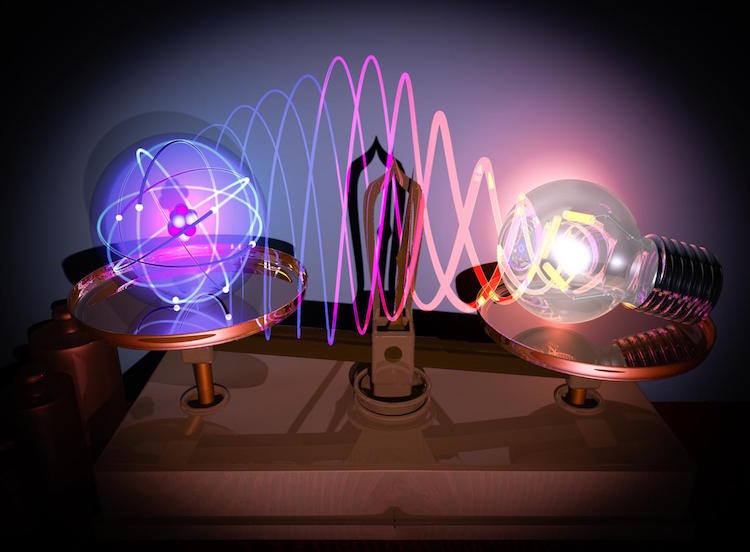
[Credit: C. Suplee/NIST]

Topics: Atomic Physics, Bose-Einstein Condensate, Diversity in Science, Nanotechnology, Quantum Mechanics, Semiconductor Technology, Women in Science

Gretchen Campbell describes the new and emerging field of atomtronics, which seeks to make circuit-like devices with extremely cold atoms.

When Gretchen Campbell entered graduate school in 2001, Bose-Einstein condensates (BECs) were still a novelty. Today, says Campbell, an atomic physicist at the Joint Quantum Institute (JQI) of the University of Maryland and the National Institute of Standards and Technology (NIST), researchers have moved beyond exploring the properties of these extremely cold collections of atoms, which behave like giant quantum waves. Instead, they’re using BECs as tools to study other kinds of physics. In Campbell’s field of atomtronics, for example, scientists are manipulating BECs with light to engineer systems that mimic transistors and other circuit components, or function as entirely new devices. The group she leads at the JQI has fabricated and studied a tiny ring of BEC intercepted in one spot by laser light that acts as a barrier for the atoms. Rotating this spot around the ring causes the system to behave like a superconducting quantum interference device, or SQUID, a sensitive detector of magnetic fields. Campbell, who initially wanted to be a vet, spoke with Physics about what attracted her to atomic physics and the many experiments that she’d like to try with ring-shaped BECs.
Image Source: Improved Isotope Enrichment, #P4TC


How do you describe atomtronics to someone outside of physics?


One of the properties of ultracold atoms is that they behave as a superfluid. People have proposed that it’s possible that we could use this superfluid behavior to create circuits, in which the atoms take the place of electrons. There have been some proposals to create analogs of conventional electronics. Others say, hey, let’s take advantage of the qualities of ultracold atoms that are distinct from electrons and see if we can make new types of devices and sensors.

What are these distinct qualities?


Since BECs behave as a superfluid, this means that if we create currents in our atomtronic circuits, they will persist, in much the same way that a superconducting current will persist in a loop of superconducting wire. Now, with BECs you have coherence, which you wouldn’t have in, say, a conventional electronic system. We also have the advantage that we can control the internal states of the atoms.
Image Source: NASA Cold Atom Laboratory, International Space Station

I take it there aren’t any practical atomtronics devices in existence yet?


Yeah, not at all.

If you had to guess, what do you think the first one might be?


I don’t really know. We’ve demonstrated a proof-of-principle rotation sensor: In our ring-shaped device, the current of the BEC will change when the rotating laser spot reaches a critical rotation rate. The rate associated with this transition will shift if the BEC itself experiences a rotational acceleration, so measuring the shift allows us to measure rotation. But because our device is so small—the rings are only 100 micrometers—it’s perhaps best suited for measuring changes in acceleration on a very small length scale. One always hopes that down the road there will be a practical application, but right now I’d say atomtronics is completely driven by fundamental physics.

APS Physics: Things You Can Do with a Loop of Cold Atoms, Jessica Thomas
Read more…

Lasers and Anti-Lasers...

Schematics above show light input (green) entering opposite ends of a single device. When the phase of light input 1 is faster than that of input 2 (left panel), the gain medium dominates, resulting in coherent amplification of the light, or a lasing mode. When the phase of light input 1 is slower than input 2 (right panel), the loss medium dominates, leading to coherent absorption of the input light beams, or an anti-lasing mode. Credit: Zi Jing Wong/UC Berkeley


Topics: Laser, Modern Physics, Optical Physics


Bringing opposing forces together in one place is as challenging as you would imagine it to be, but researchers in the field of optical science have done just that.

Scientists at the Department of Energy's Lawrence Berkeley National Laboratory (Berkeley Lab) have for the first time created a single device that acts as both a laser and an anti-laser, and they demonstrated these two opposite functions at a frequency within the telecommunications band.

Their findings, reported in a paper to be published Monday, Nov. 7, in the journal Nature Photonics, lay the groundwork for developing a new type of integrated device with the flexibility to operate as a laser, an amplifier, a modulator, and an absorber or detector.

"In a single optical cavity we achieved both coherent light amplification and absorption at the same frequency, a counterintuitive phenomenon because these two states fundamentally contradict each other," said study principal investigator Xiang Zhang, senior faculty scientist at Berkeley Lab's Materials Sciences Division. "This is important for high-speed modulation of light pulses in optical communication."

Phys.org:
Lasers + anti-lasers: Marriage opens door to development of single device with exceptional range of optical capabilities

Read more…

Solar Steam Generator...

Figure 1. A three-layer steam generator consists of a selective absorber insulated above with bubble wrap and below with polystyrene foam. Because conductive, convective, and radiative losses are suppressed, most of the solar heat captured by the absorber is channeled to a small slot where the absorber is in contact with water. (Adapted from ref. 1 .)

Citation: Phys. Today 69, 11, 17 (2016); http://dx.doi.org/10.1063/PT.3.3351


Topics: Climate Change, Global Warming, Green Energy, Green Tech, Solar Power


A combination of inexpensive materials collects and concentrates heat from the Sun.

Heating water to its boiling point is an important first step not only for preparing a cup of tea or a bowl of pasta, but for a range of applications fundamental to an industrial society, including distillation, sterilization, and power generation. In a solar economy, one could boil water with an electric heater powered by a photovoltaic cell. But it would be far more efficient to use solar energy to heat the water directly.

That’s manifestly possible. For decades solar steam turbines in wide-open sunny spaces have used arrays of mirrors to concentrate sunlight from a large area onto a small volume of water. But those mirrors are expensive: They must be precisely machined to focus light over several hundred meters, and they must be mounted on motors to track the Sun’s position in the sky. Because the motors require that a powerful source of electricity already be available, optical concentrating arrays aren’t suitable to smaller-scale or off-the-grid applications, such as sterilizing medical instruments in a clinic in the developing world.

Now MIT’s Gang Chen, George Ni, and their colleagues have demonstrated a different approach: concentrating not the Sun’s light but its heat.1 Because their steam generator consists entirely of commonly available materials—a conscious choice on their part—they estimate that per unit area, it could be built for just 1–3% of the cost of an array of motorized mirrors.

The device is sketched in figure 1. It works by absorbing solar energy over a large area but giving it nowhere to escape except through a small slot where the absorber is in contact with a reservoir of ambient-temperature water. If the absorption area is large enough and the contact area is small enough, the water is locally brought to a boil to release steam before the heat can diffuse out into the bulk liquid. The challenge, then, is to keep the absorber from losing too much heat to conduction, convection, and radiation. Normally—and not unfortunately—those losses prevent any object heated by unconcentrated sunlight from getting anywhere near 100 °C.

To limit conductive and convective losses, the researchers insulated the top and bottom of the absorbing layer. For the bottom layer, they used ordinary polystyrene foam, which also kept the device afloat. The choice of top layer was a bit more constrained, because they needed something optically transparent. So they tried bubble wrap. “I was surprised by how well the bubble wrap worked,” said Ni. “Most researchers are using high-performance materials, and here we were, testing out bubble wrap, which wasn’t designed for maximum optical clarity.” Indeed, the bubble wrap transmits only 80% of the light that hits it. But its insulation benefits far outweighed that modest optical inefficiency.

Physics Today: Solar steam generator needs no lenses or mirrors, Johanna L. Miller

Read more…

WMD and Proxies...

Image Source: Link below


Topics: Consumer Electronics, Economy, Internet of Things, Jobs, Mathematical Models


Data science in our interconnected world is beyond big, and becoming more so with the advent of the Internet of Things in consumer electronics.

However, it would be remiss to not know the genesis of big data in a 50s innovation by the banking industry: credit cards. They are the status symbols of "success," in reality just another bill to pay.

They are also a means companies use to screen potential hires despite their resumes, experience or in-person interview performance. It likely exacerbates the growing gap in income inequality. If some want to take us metaphorically back to the days of misogynistic Madmen, Fonzie and Chachi (Emmett Till and pre Rosa Parks), in many ways we're already there.

Credit scores are one of the formulas that determine our world. They often work against us, from job prospects to how long we’re on hold.

When I was little, I used to gaze at the traffic out the car window and study license plate numbers. I would reduce each one to its basic elements — the prime numbers that made it up. 45 = 3 x 3 x 5. That’s called factoring, and it was my favorite investigative pastime.

My love for math eventually became a passion. I went to math camp when I was 14 and came home clutching a Rubik’s Cube to my chest. Math provided a neat refuge from the messiness of the real world. It marched forward, its field of knowledge expanding relentlessly, proof by proof. And I could add to it. I majored in math in college and went on to get my Ph.D. Eventually, I became a tenure-track professor at Barnard College, which had a combined math department with Columbia College.

And then I made a big change. I quit my job and went to work as a quantitative analyst for D. E. Shaw, a leading hedge fund. In leaving academia for finance, I carried mathematics from abstract theory into practice. The operations we performed on numbers translated into trillions of dollars sloshing from one account to another. At first I was excited and amazed by working in this new laboratory, the global economy. But in the autumn of 2008, after I’d been there for a bit more than a year, it came crashing down.

The crash made it all too clear that mathematics, once my refuge, was not only deeply entangled in the world’s problems, but also fueling many of them. The housing crisis, the collapse of major financial institutions, the rise of unemployment — all aided and abetted by mathematicians wielding magic formulas. What’s more, thanks to the extraordinary powers I loved so much, math combined with technology to multiply the chaos and misfortune, adding efficiency and scale to systems that I now recognized as flawed.

If we had been clear-headed, we all would have taken a step back to figure out how math had been misused and how we could prevent a similar catastrophe in the future. But instead, in the wake of the crisis, new mathematical techniques were hotter than ever, and expanding into still more domains. They churned 24/7 through petabytes of information, much of it scraped from social media or e-commerce websites. And increasingly, they focused not on the movements of global financial markets but on human beings — on us. Mathematicians and statisticians were studying our desires, movements and spending power. They were predicting our trustworthiness and calculating our potential as students, workers, lovers, criminals.


Discovery Magazine: Weapons of Math Destruction, Cathy O'Neill

Read more…

IoT and Security...

Credit: Courtesy of BRAND X PICTURES


Topics: Computer Science, Consumer Electronics, Internet, Internet of Things


As someone who saw DARPANET evolve from a simple text only communication, to its first commercial applications in AOL,  Netscape to now, I've been a little worried that such gadgets would only give a pathway to hackers into our homes. One likely and sad scenario could be (out of spite and pure evil), some sociopath with a keyboard could set your thermostat to 100 degrees, whether or not realizing you have pets that could be compromised under such conditions the hours you're away from them at work. Not trying to depress holiday sales, but we really need to think this one through before the inevitable flurry of patches that will be pushed out in response to attacks.

With this year’s approaching holiday gift season the rapidly growing “Internet of Things” or IoT—which was exploited to help shut down parts of the Web this past Friday—is about to get a lot bigger, and fast. Christmas and Hanukkah wish lists are sure to be filled with smartwatches, fitness trackers, home-monitoring cameras and other wi-fi–connected gadgets that connect to the internet to upload photos, videos and workout details to the cloud. Unfortunately these devices are also vulnerable to viruses and other malicious software (malware) that can be used to turn them into virtual weapons without their owners’ consent or knowledge.

Last week’s distributed denial of service (DDoS) attacks—in which tens of millions of hacked devices were exploited to jam and take down internet computer servers—is an ominous sign for the Internet of Things. A DDoS is a cyber attack in which large numbers of devices are programmed to request access to the same Web site at the same time, creating data traffic bottlenecks that cut off access to the site. In this case the still-unknown attackers used malware known as “Mirai” to hack into devices whose passwords they could guess, because the owners either could not or did not change the devices’ default passwords.

The IoT is a vast and growing virtual universe that includes automobiles, medical devices, industrial systems and a growing number of consumer electronics devices. These include video game consoles, smart speakers such as the Amazon Echo and connected thermostats like the Nest, not to mention the smart home hubs and network routers that connect those devices to the internet and one another. Technology items have accounted for more than 73 percent of holiday gift spending in the U.S. each year for the past 15 years, according to the Consumer Technology Association. This year the CTA expects about 170 million people to buy presents that contribute to the IoT, and research and consulting firm Gartner predicts these networks will grow to encompass 50 billion devices worldwide by 2020. With Black Friday less than one month away it is unlikely makers of these devices will be able to patch the security flaws that opened the door to last week’s attack.

Scientific American: IoT Growing Faster Than the Ability to Defend It
Larry Greenemeier

Read more…

3D Acoustic Holograms...

The researchers designed a hologram that projects sound waves with an amplitude pattern shaped like the letter "A". The top images show the simulated field patterns of the amplitude of sound waves at three representative depths. The bottom row shows the actual experimental amplitudes recorded in an anechoic chamber. (Courtesy: Scientific Reports 6 35437)

Topics: Acoustic Physics, Electromagnetism, Holograms, Metamaterials

Researchers in the US have created a printed array of metamaterials that can produce passive 3D acoustic holograms from a simple sound source, such as a single speaker. The device is made up of 3D-printed Lego-like blocks that can be put together in different configurations. The researchers say that their method is cheaper and simpler than other techniques and that they expect it to "open a new realm of holographic acoustic wave manipulation".

A visual hologram manipulates electromagnetic waves in the visible part of the spectrum to create a 3D image. Because sound also travels in waves, it should be possible to create complex 3D fields of sound – acoustic holograms – in a similar way. While visual holograms can be made with physical structures that diffract light, it isn't so easy with sound due to a lack of materials with the required acoustic properties. Generally, acoustic holograms use a transducer array controlled by complex phase shifting electronics.

Physics World: Building-block metamaterials shape 3D acoustic holograms
Michael Allen is a science writer based in Bristol, UK
Read more…

Proxima Centauri b...

Breakthrough Starshot concept would use a giant Earth-based laser array to accelerate a space sail to a significant fraction of the speed of light. Destination: Proxima Centauri b? (Credit: Breakthrough Initiatives)
Image Source: Astronomy Magazine


Topics: Astronomy, Astrophysics, Exoplanets, Solar Sail, Space Exploration


The hunt for exoplanets has, in some ways, been about the hunt for an Earth-like planet - something warm where water could exist. Headlines tout each discovery as "the most Earth-like planet yet." Many of these planets are far away.

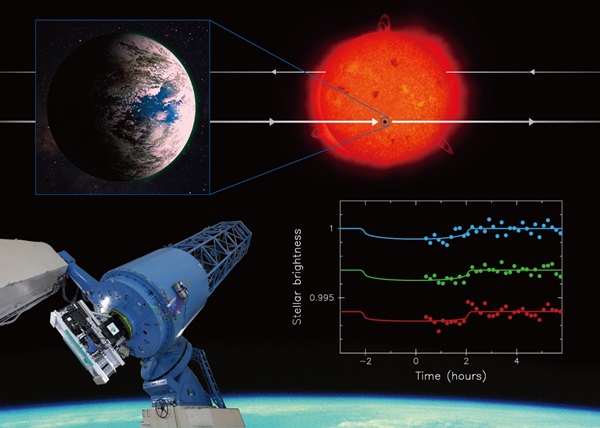
But a new discovery published August 24 in Nature hits closer to home, with an Earth-like planet in the habitable zone of a star. Whats more, that star is Proxima Centauri, only 4.24 light-years away. That means that there is no solar system that will be closer to Earth in our lifetimes.

And so far, the exoplanet, named Proxima Centauri b, is shaping up to be quite Earth-like, roughly the mass of our planet and in just the right place where, if it has an atmosphere, liquid water could exist on the surface.

This is as in our backyard as it gets.

Astronomy: The exoplanet next door
John Wenz is an associate editor at Astronomy magazine

Read more…

Happy Hallowing...

Mutant flies are scary things, as victims of The Fly can attest. Happy Hallowing!
20th Century Fox/The Kobal Collection at Art Resource, NY


Topics: Biology, Humor, Nobel Laureate, Nobel Prize, Science Fiction


During the whole of a dull, dark, and soundless day in the autumn of the year, when the clouds hung oppressively low in the heavens and the shades of evening drew on, a sense of insufferable gloom fell on geneticist Michael O’Connor. He was looking at decaying embryos of fruit flies in his lab that had mutations in genes known as disembodiment and ghost, mummy and haunted, shroud and phantom, spook and shadow. There was an iciness, a sinking, a sickening of the heart—an unredeemed dreariness of thought which no goading of the imagination could torture into aught of the sublime, when it came to him with a power that lies beyond our depth. “These are Halloween genes!” he declared, trembling at the realization that he had coined a catchy scientific phrase. And from that shadowy day forward in the late 1990s, so they have been known far and wide.

OK, that’s not exactly what happened, and apologies to Edgar Allan Poe. But O’Connor, who heads the genetics department at the University of Minnesota in Minneapolis did dub disembodiment, ghost, and their creepy, ghoulish kin “Halloween genes.” In what became an iconic image—in his lab at least—one of the postdocs, Marcela Chavez, drew a fly on a witch’s broom. A native Spanish speaker, Chavez remembers cracking everyone up at one lab meeting when a misspelling in her presentation read “Hallowing” genes.

The identification and naming of the genes themselves came out of a massive screen for mutants in the fly embryonic genome that led to the Nobel Prize in 1995. One of the winners, Ed Lewis, was a friend of O’Connor’s. “Ed was a big Halloween person,” O’Connor says. “He’d spend all year making his Halloween costumes.” A fan of Belgian surrealist René Magritte, Lewis would dress as characters from his paintings, including the man in a leopard print caveman garb holding a barbell in Perpetual Motion and the man with a birdcage chest and straw hat in The Therapist.

Science: A gory tale behind the origin of ‘Halloween genes’, Jon Cohen

Read more…