Reginald L. Goodwin's Posts (3126)

Sort by

Flexible Crystal...

Credit: University of Queensland
Topics: Consumer Electronics, Materials Science, Solid State Physics, Quasicrystal

Queensland researchers have shown that single crystals, typically thought of as brittle and inelastic, are flexible enough to be bent repeatedly and even tied in a knot.

Researchers from Queensland University of Technology (QUT) and The University of Queensland (UQ) determined and measured the structural mechanism behind the elasticity of the crystals down to the atomic level.

Their work, published in Nature Chemistry, opens the door for the use of flexible crystals in applications in industry and technology.

The research was led by ARC Future Fellows Associate Professor Jack Clegg in UQ's School of Chemistry and Molecular Biosciences and Associate Professor John McMurtrie in QUT's Science and Engineering Faculty.

Associate Professor McMurtrie said the results challenged conventional thinking about crystalline structures.

"Crystals are something we work with a lot – they're typically grown in small blocks, are hard and brittle, and when struck or bent they crack or shatter," he said.

"While it has previously been observed that some crystals could bend, this is the first study to examine the process in detail.

"We found that the crystals exhibit traditional characteristics of not only hard matter, but soft matter like nylon."

Bendable crystals tie current thinking in knots, Phys.org
Read more…

Diabolo...

Image Source: Link below
Topics: Geometry, Mathematics, Optical Physics

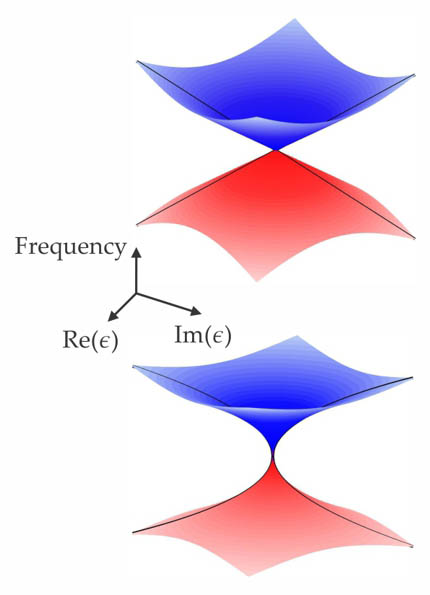
A ring-shaped optical cavity has degenerate resonant modes, because clockwise and anticlockwise waves resonate at the same frequencies. The degeneracy can be lifted, and the frequencies split, by a perturbation such as a physical rotation or the presence of a molecule or nanoparticle. Typically, the frequency splitting is proportional to the perturbation’s magnitude, as illustrated in the top panel of the figure for a hypothetical complex-valued perturbation ε (that is, one that can affect both the light’s frequency and its phase). Because the plot’s shape resembles a yo-yo-like toy called a diabolo, the degeneracy has been dubbed a diabolic point. The mode splitting around a diabolic point is the basis for optical gyroscopes, and it’s been explored for other sensing applications.

There’s another type of degeneracy, called an exceptional point, where not only do resonant frequencies coincide but their resonant modes do too. In the case of the ring resonator, inserting reflectors to scatter light from the anticlockwise mode into the clockwise mode (but not vice versa) creates an exceptional point with a single resonant mode, the clockwise-traveling wave. Perturbing the system splits that mode into two resonances, each with a small admixture of the anticlockwise wave, and the frequency splitting scales with the square root of the perturbation magnitude, as shown in the bottom panel.

Exceptional points make for exceptional sensorsAt just the right locations in parameter space, resonant frequencies are ultrasensitive to tiny changes.Johanna L. Miller, Physics Today
Read more…

Phase II Transitions...

Image Source: An article on LinkedIn by Linda Morales
Topics: Commentary, Education, Nanotechnology, STEM

In the post Transitions, I alluded to I might not be posting as regularly due to the rigors of graduate school. Well that rigor came last week and this week. I'm getting my footing on homework, collaboration and time management. The faculty, staff and student body here are the picture of diversity. I've literally met people from around the globe and not once have I repeated a country on our introductions. Ghana...Korea...Iran...Saudi Arabia...Sudan...Sweden...et al and each when I said I grew up in Winston-Salem (30 minutes west on I-40) and I'm an alumni of the university, they have without fail stated: "you came home."

I re-acclimated myself to the new F.D. Bluford Library. It's much larger with three floors, the top being the quietest place to study in. The librarians said I'd be there a lot, reading the papers my professors published in journals, of which they have a lot of from American, Indian, Chinese journals as well as from professional technical societies if memory serves. The old Bluford was renamed in honor of my Chancellor Edward Fort as a research and grant center. He's still around, and teaching as well as Dr. Casterlow (my karate and calculus instructor - retired) and Dr. Sandin, who's taught at A&T since 1968. He taught Dr. Ron McNair his first physics class, as he had taught mine. After 50 years of honorable and distinguished service, he'll retire next year.

One of the things I got over quickly was being an older graduate student. I saw some during graduate orientation that at least looked distinctly older than me. No one has made me feel uncomfortable, and the chair of the Nanoengineering Department said I wasn't his oldest student (I asked). He graduated a PhD last year at the ripe young age of 63. He's working as a director in industry. There's hope.

I've joined the Nano Energy group as my research area of concentration. I interviewed the principle investigators in that and the nano-wire/photonics group before I made my decision, both areas tempting and equally interesting. I felt energy was a good fit for my industry experience, science and social interests and my inclinations to do something that makes the world a better place.

I also share Dr. Cho's ambition of getting more African Americans into batteries and by extension STEM fields: the New York Times published an article stating even with Affirmative Action, African Americans, Hispanics/Latinos lag behind all other groups since I was an undergrad. I recall 1980 was supposedly the largest number of African American males attending colleges and universities, noted again by the New York Times in a 2002 related article, observing more sadly are inmates. I speculate the impacts of globalization, adolescent pregnancies and inadequate educational resources (see NYT article, second link) keeps societal stratification darkly and remarkably intact.

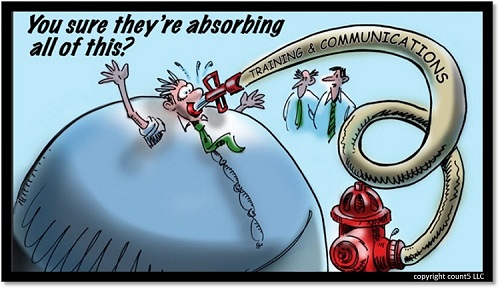
The JSNN (Joint School of Nanoscience and Nanoengineering) has a "nano-bus" they use to do K-12 outreach. It's a teaching requirement for PhD students (that can also be fulfilled by grading papers or teaching a class or lab), so I volunteered. I was respectfully declined as this is my first semester, and the graduate coordinator wants us to focus on setting a good foundation to be successful. After my fire hose days, I can see the importance. When it's appropriate (i.e., I've successfully managed time and the fire hose), and for reasons I hope I've made you understand, I'll be getting on that bus.
Read more…
Photograph of a sapphire wafer that is patterned with the photonic bandgap resonators used in this work. It shows two full devices and parts of four others. Before using them in experiments they are cut out of the array and wired up. The devices themselves are about 1 cm long. The serpentine structures are microwave Bragg mirrors and the straight lines of varying width at the center of each device are the microwave cavities. Courtesy: A Sigillito

Topics: Electromagnetism, Solid State Physics, Quantum Dots, Quantum Mechanics

Researchers at Princeton University and the Lawrence Berkeley National Laboratory have succeeded in controlling nuclear spins in silicon by purely electrical means. Until now, electronic or nuclear spins could only be manipulated through radio-frequency magnetic fields. The feat could help in the development of quantum processors based on nuclear spin qubits.

Classical computers store and process information as "bits" that can have one of two logic states ("0" or "1"), but quantum computers work on the principle that a quantum particle (such as an electron or atomic nucleus) can be in two states at the same time – "spin up" or "spin down". These two spin states represent a logical "1") or a "0", so N such particles –or quantum bits (qubits) – could be combined or "entangled" to represent 2N values simultaneously. This would lead to the parallel processing of information on a massive scale not possible with conventional computers.

In practice, it is difficult to make even the simplest quantum computer, however, because these quantum states are fragile and are easily destroyed. They are also difficult to control. For a qubit to work, it should thus be well isolated from its environment to preserve its quantum properties, and prevent "decoherence". At the same time it should be robust enough so that its state can be read out and manipulated. The intrinsic magnetic moment of an atomic core, or nuclear spin, is a good qubit candidate in this respect because it fulfills all of these criteria.

There is a problem, however, in that the magnetic moment of a nuclear spin is 10 billion times smaller than the moment of one bit of a modern hard drive, and it is almost impossible to detect, let alone manipulate, such a tiny signal.

Electric fields control nuclear spin qubits in silicon, Belle Dumé, Nanotechweb.org
Read more…

Solar Eclipse 2017...

Image Source: NASA.gov

Topics: Eclipse, NASA, Space, Space Exploration

The good news: The eclipse glasses I ordered from Amazon are on the approved NASA list (see Friday's post).

The bad news: They're not here yet. Luckily, I'm adept at returning their merchandise when they've flubbed the ball, and unless the US Postal Service comes through with a Lynn Swann diving save, I'm likely going to be viewing it from the links I planned below. Like I said, I'd rather have what's left of my eyesight the remainder of my life. Another (partial) eclipse if I'm so inclined is a plane ticket away.

Eclipse Live Stream
NASA TV’s - Eclipse Across America: Through the Eyes of NASA

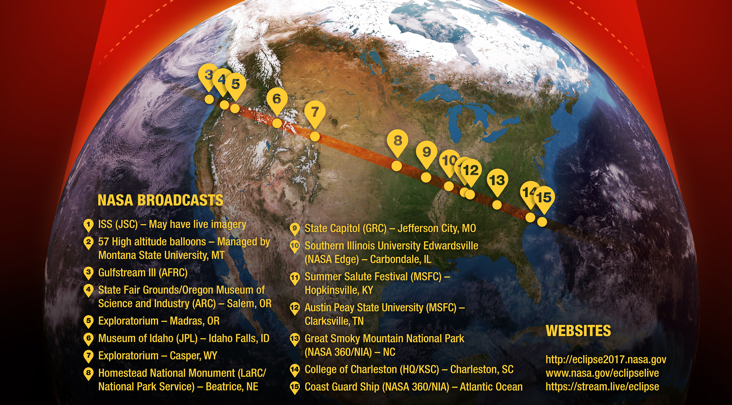
On Monday, Aug. 21, 2017 (today), a total eclipse will cross the entire United States, coast-to-coast, for the first time since 1918. If you can’t make it to the path of totality you can still safely view a partial eclipse and you can still enjoy totality through the eyes of NASA Television and NASA webcasts.

Viewers around the world will be provided a wealth of images captured before, during, and after the eclipse by 11 spacecraft, at least three NASA aircraft, more than 50 high-altitude balloons, and the astronauts aboard the International Space Station – each offering a unique vantage point for the celestial event.

NASA Television will air a four-hour show, Eclipse Across America: Through the Eyes of NASA, with unprecedented live video of the celestial event, along with coverage of activities in parks, libraries, stadiums, festivals and museums across the nation, and on social media.

Related links:

Eclipse Live, NASA.gov
Total Solar Eclipse 2017: Here Are the Best Live (Video) Streams, Sarah Lewin, Space.com

Read more…

Eclipse Caveats...

Image Source: See link [2] below

Topics: Astronomy, Astrophysics, Eclipse, Moon, NASA

Usually I do something about current events, but I will admit to you some exhaustion since Monday's Appomattox post and Tuesday's meltdown. The covers of the New Yorker (via The Hill), Time magazine and The Economist are apropos, on point and quite sad. It's not like we didn't see this coming. Americans sadly have a long inglorious history of denying reality.

I'm frankly retreating into science, hoping the rumors the nine rallies from his knuckle-dragging Troglodytes have all been canceled this weekend "due to terrorist fears." After this blubbering fool went accidentally viral, they really need a reset on the English language (and history) to look up the definition of "supremacy."

I've ordered my own glasses from Amazon, who gave a warning some of their third party suppliers didn't give documentation guaranteeing safety standards. [1] Ahem: Luckily, the glasses I ordered from Amazon are on the approved NASA list. [2] I'm posting a live stream tracker provided by NASA Monday for safer viewing, and if you happen to not be on the viewing path where you are.

Please look at the links below and govern yourselves accordingly and safely. This is a once-in-a-lifetime event if you're lucky to be in the path. Don't make it your last.


1. Amazon Is Warning People Not To Use Some Solar Eclipse Glasses That Were Sold On The Site, Leticia Miranda, consumer affairs reporter BuzzFeed News

2. Reputable Vendors of Solar Filters & Viewers, Solar Eclipse 2017, NASA

Read more…

The Right to Science...

Image Source: European Society of International Law, Vol 4, Issue 1 Editorial board: Anne van Aaken (editor-in-chief), Jutta Brunnée, Başak Çali, Jan Klabbers

Topics: Civil Rights, Human Rights, Science, Research

The right of all people to benefit from scientific progress is spurring new research by science and human rights practitioners and informing organizations how to secure those benefits, according to presenters at a AAAS Science and Human Rights Coalition Meeting, held July 27-28 in Washington.

The right to science is enshrined not only in the Universal Declaration of Human Rights adopted by the United Nations in 1948, but also in Article 15 of the International Covenant on Economic, Social and Cultural Rights, said Jessica Wyndham, interim director of the AAAS Scientific Responsibility, Human Rights and Law program and a coordinator of the Science and Human Rights Coalition.

The international provision requires governments to ensure the right of everyone “to enjoy the benefits of scientific progress and its applications, to conserve, develop and diffuse science, to respect the freedom indispensable for scientific research and to recognize the benefits of international contacts and cooperation in science,” Wyndham said. A total of 165 countries are party to the treaty, which the United States has signed but not ratified.

The right to science is the subject of a new report, “Giving Meaning to the Right to Science: A Global and Multidisciplinary Approach,” developed by AAAS’ Scientific Responsibility, Human Rights and Law Program and Science and Human Rights Coalition and released in conjunction with the meeting. The report can provide “a foundation for a shared understanding of the right to enjoy the benefits of scientific progress and its applications,” said Margaret Weigers Vitullo, director of academic and professional affairs at the American Sociological Association.

Human Rights Coalition Deepens Understanding of the Right to Science, Andrea Korte, AAAS
Read more…

3D Living Tissue...

Image of the 3-D droplet bioprinter, developed by the Bayley Research Group at Oxford, producing mm-sized tissues Credit: Sam Olof/ Alexander Graham
Topics: 3D Printing, Additive Manufacturing, Biology

Scientists at the University of Oxford have developed a new method to 3D-print laboratory- grown cells to form living structures.

The approach could revolutionize regenerative medicine, enabling the production of complex tissues and cartilage that would potentially support, repair or augment diseased and damaged areas of the body.

In research published in the journal Scientific Reports, an interdisciplinary team from the Department of Chemistry and the Department of Physiology, Anatomy and Genetics at Oxford and the Centre for Molecular Medicine at Bristol, demonstrated how a range of human and animal cells can be printed into high-resolution tissue constructs.

A confocal micrograph of an artificial tissue containing 2 populations human embryonic kidney cells (HEK-293T) printed in the form of an arborized structure within a cube Credit: Sam Olof / Alexander Graham

Interest in 3D printing living tissues has grown in recent years, but, developing an effective way to use the technology has been difficult, particularly since accurately controlling the position of cells in 3D is hard to do. They often move within printed structures and the soft scaffolding printed to support the cells can collapse on itself. As a result, it remains a challenge to print high-resolution living tissues.

A new method for the 3-D printing of living tissues, Alexander D. Graham et al. High-Resolution Patterned Cellular Constructs by Droplet-Based 3D Printing, Scientific Reports (2017). DOI: 10.1038/s41598-017-06358-x, Phys.org
Read more…

Sooner Than Expected...

Study: More than 6 million could die early from air pollution every year, Azadeh Ansari, CNN
Topics: Climate Change, Economy, Environment

Scientific American does give the report with some caveats, but as my title alludes, the Chinese - unlike the United States - is serious about addressing this national health issue. They will stumble, learn and eventually surpass us in a technical market we may find ourselves scrambling to catch up with them in. From the image above, I do understand Beijing's motivations.

BEIJING—As the United States reverses its climate policies, the world's top greenhouse gas emitter is in the midst of setting up a national carbon-trading system.

Chinese officials are preparing to launch an emissions market later this year that will cover roughly a quarter of the country's industrial CO2. Officials and nonprofit groups from the European Union, Australia and California have been advising the Chinese on their program design.

Expectations are tempered: Details of China's national system are still murky, but enough information has emerged that observers are skeptical it will be immediately comparable to existing programs, due to design features as well as the haste with which China is rolling it out.

"Initially, it's not going to be more robust than, say, California or RGGI or even some of the pilots," said Jeremy Schreifels, a visiting fellow at Resources for the Future who has been observing the market's evolution. He was referring to the Regional Greenhouse Gas Initiative covering nine Northeastern states.

China Is Preparing to Launch the World’s Biggest Carbon Market, Debra Kahn, Scientific American
Read more…

Appomattox Legacy...

Topics: Civics, Civil Rights, Commentary

Today is my 55th birthday. I start graduate classes today. I'd hoped to be in a better mood, an uplift from Friday's post.

Saturday, I watched the events in Charlottesville, Virginia unfold on national television. My wife cried even before the name of the victim run over by a coward was announced. I'm sure her as well as my own thoughts drifted to our adult sons. My nephew opined about his own son, not even a year old and the world he and his girlfriend have to prepare him for.

I'm studying an exciting STEM field (Nanoengineering), but I find the living at my particular artificial societal demarcation of humanity exhausting. No one can convince me this isn't a mental disorder; a mass hysteria born of the first African American being elected president of the republic in 232 years and the backlash encouraged by right/Reich wing web sites, talk radio and schlock television hosts on conservative outlets. Despite having their chaos agent in power, this madness continues unabated.

I will study HARD. I think it's the only thing that will keep me calm...and sane.

I could only think of the post for Appomattox (April 12, 2015). I think it is apropos for our current and continuing neurosis on division, expanded via FOGHORN by our current "chief executive*", an obvious accident of a bereft national knowledge of civics responsibility.

His response to the violence Saturday he encouraged during the campaign was weak and tepid. An obvious dolt at history, he's never heard the quote made famous by Malcolm X "the chickens have come home to roost," (and he wasn't the origin of it, just its more modern proponent) now a double entendre of karma and irony.

One would think he was concerned about how his words would be measured by the Klan and Neo Nazis, and could care less what the rest of his nation thinks.

"To be a Negro in this country and to be relatively conscious is to be in a rage almost all the time." - James A. Baldwin

*****
NATIONAL PARKS SERVICE
Topics: #BlackLivesMatter, Civil Rights, Human Rights, Dred Scott, Walter Scott

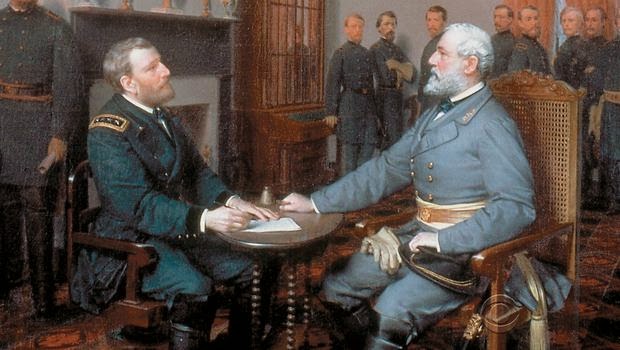
Thursday, 9 April was the Sesquicentennial, the 150 year anniversary of the South's official surrender to the North in the person of Generals Robert E. Lee to Ulysses S. Grant in Appomattox, Virginia. On the same date in 1947, Branch Rickey signed Jackie Robinson, making him the first African American to play in major league baseball; the first professional athlete of color in any sport at the time. He walked through a door first opened by Jesse Owens at the 1936 Olympic Games, invalidating Hitler's theories of Aryan athletic superiority.

Yesterday, Walter Scott was buried...murdered in the heart of the Confederacy, for a broken tail light.

Cliven Bundy - that $1.1 million dollar, artful, tax-dodging welfare queen, who actually through armed militia threatened US officials with armed insurrection - is still free.

Dred Scott - the man for whom the Supreme Court's most daft decision was the match spark for the Civil War (and apparently, the nomination of Abraham Lincoln as candidate to the-then radical/progressive republican party) - said in the opinion of Chief Justice Taft:

"In the opinion of the court, the legislation and histories of the times, and the language used in the Declaration of Independence, show, that neither the class of persons who had been imported as slaves, nor their descendants, whether they had become free or not, were then acknowledged as a part of the people, nor intended to be included in the general words used in that memorable instrument...They had for more than a century before been regarded as beings of an inferior order, and altogether unfit to associate with the white race, either in social or political relations; and so far inferior, that they had no rights which the white man was bound to respect; and that the negro might justly and lawfully be reduced to slavery for his benefit." [1]

Hauntingly, Dred Scott is buried just miles outside of Ferguson, Missouri.

From a similar, thoughtful article in The Atlantic: "It is easy to proclaim all souls equal in the sight of God,” wrote James Baldwin in 1956 as the Civil Rights Movement took hold in America; “it is hard to make men equal on earth in the sight of men." [2]

Since the election and reelection of President Obama, it's apparent we've never stopped fighting the Civil War. As publicly directed towards him, there is an obvious visceral disdain for the part of the American electorate that he, by existing embodies. There has been since his two terms an increase in highly motivated hate groups; hate crimes; the escalation in murders (example by this recent affront), luckily caught on a citizen's smart phone. Some would say the president has encouraged this. However, I posit that it's not his encouragement, it is his presence in the Presidential Mansion - renamed The White House after a visit to President Theodore Roosevelt by Booker T. Washington, and the national backlash it ensued [3] - that is so offensive to those that don't want their place in the social hierarchy disturbed (wanting "their country back"). From Trayvon Martin, Jordan Davis, Renisha McBride, Eric Garner and now Walter Scott: the Facebook meme below sums up the anger and frustration felt by citizens of this country. [4] It means we can never relax, never just "be." Even our genetic telomere lengths are shorter due to this stress.

Over time, the Civil War became the subject of great romanticization and sentimentalism in cultural memory. For veteran soldiers on both sides, reconciliation required time and the pressure of political imperatives imposed by the larger society on them and on the conflict’s memory. In the wake of this war, Americans faced a profound and all but impossible challenge of achieving two deeply contradictory goals—healing and justice. Healing took generations in many families, if it ever came at all. Justice was fiercely contested. It was not the same proposition for the freedmen and their children as it was for white Southerners, in the wake of their military, economic and psychological defeat. And in America, as much as it sometimes astonishes foreigners, the defeated in this civil war eventually came to control large elements of the event’s meaning, legacies, and policy implications, a reality wracked with irony and driven by the nation’s persistent racism. [2]

Walter Scott sprinted from the scene of a traffic stop, possibly thinking he was to be served for neglected child support payments. That is not worthy of an execution. He was shot in the back with the same regard as cattle at a slaughter shop; killing a mad dog fleeing. Considering that I am a US citizen that trained in a STEM field, an armed forces veteran (as Walter Scott); a MAN: I, nor my sons (the oldest also a veteran) should feel like this in our own country:

The "United" States of America: You cannot be united if you still support the slavery historically-generated "states rights" in everything from voting rights for African Americans; criminalizing a woman's right to choose, to same-sex marriage. The Ku Klux Klan; the John Birch Society; the Tea Party are the typical regressive reactionary responses to any fairness; any progress from the "lesser classes" that should "know their places." [5] We are becoming a byword; an oxymoron. The global economy we encouraged we're falling woefully behind. Technologically backpedaling, we are contesting Darwin and "Creation Science"; anti-vaccination activists to actual scientists; the Jesuit 6,000 year estimate to actual red shift measurement of the age of the universe; climate disruption that the Pentagon sees as an existential threat snowball poo-pooed as pseudo-controversy: our competition abroad has no equivalent analog - our inanity is being ignored for good reason. Like ancient Rome, we're bloated and over-extended; intensely tribal and superstitious; pseudo-scientific; withering from within. We are now a de facto Oligarchy, the only thing we're lacking is the final, deafening crash on the heaps of feudalism and anachronism. We could avoid it by an evolution in thought and policy; a new Appomattox that reinvigorates the republic, and takes this country forward: our viability as a nation is really in the long run, what matters for us all.

"We must learn to live together as brothers, or perish together as fools."
Dr. Martin Luther King, Jr.

1. This Day in Quotes: March 6, 1857, The Dred Scott Case2. The Atlantic: The Civil War Isn't Over, David W. Blight3. Slavery by Another Name: The Re-Enslavement of Black Americans from the Civil War to World War II, Douglas A. Blackmon4.
5. The Reactionary Mind: Conservatism from Edmund Burke to Sarah Palin, Corey Rubin
Read more…

Madness and Hiroshimas...

On August 6, 1945, 8.15 am, the uranium atom bomb exploded 580 meters above the city of Hiroshima with a blinding flash, creating a giant fireball and sending surface temperatures to 4,000-C. Fierce heat rays and radiation burst out in every direction, unleashing a high pressure shockwave, vaporizing tens of thousands of people and animals, melting buildings and streetcars, reducing a 400-year-old city to dust. [1]
Topics: Commentary, Existentialism, Politics

"Fire and fury"...that sounds tough until you denigrate 755 career diplomats an adversary expels in a retaliatory move for [them] interfering in our last election cycle. 755 professionals, their families...and children that will be displaced stateside just as schools are starting. It sounds strong, but when Kim Jong Un thinks it's crazy, it likely is. There will be no "cost savings" or reduction to any payroll, as unbeknownst to most of us, Moscow hasn't raised their flag above our capital (yet). It's an obvious dodge, diverting attention from the ongoing Russia investigation, "playing chicken" with extinction for an ego; the plot for a poorly scripted reality show we're all haplessly in.

We cannot continue "government by tweet and bluster." We cannot call ourselves a federal republic when our leader undermines his own citizens. We cannot continue as a nation, a PLANET or a species.

He was aptly described as a "chaos agent" during the primaries. He proves it daily.

The Atomic Bombings of Hiroshima and Nagasaki killed about 250.000 people and became the most dreadful slaughter of civilians in modern history. However, for many years there was a curious gap in the photographic records. Although the names of Hiroshima and Nagasaki were incised into our memories, there were few pictures to accompany them. Even today, the image in our minds is a mixture of devastated landscapes and shattered buildings. Shocking images of the ruins, but where were the victims?

The American occupation forces imposed strict censorship on Japan, prohibiting anything "that might, directly or by inference, disturb public tranquility" and used it to prohibit all pictures of the bombed cities. The pictures remained classified 'top secret' for many years. Some of the images have been published later by different means, but it's not usual to see them all together. This is the horror they didn't want us to see, and that we must NEVER forget: [1]

Image Source: [1]
Housewives and children were incinerated instantly or paralysed in their daily routines, their internal organs boiled and their bones charred into brittle charcoal. [1]

The atomic bombs dropped on Hiroshima and Nagasaki (6 and 9 August 1945) were the first of their kind. "Little Boy" and "Fat Man"+ were their code nicknames. If this "fire and fury" bluster sounds "familiar," it was likely borrowed from this far more presidential source. 45's impressive uncle likely explained a lot of things to the young millionaire, but his by now well known infamously short attention span, he likely missed a few salient points. Half-life+ is measured in thousands of years, for example. The current yield of thermonuclear versus atomic devices has been proposed to not be measured in mere TNT or megatons, but Hiroshimas.

The pictures above are vile, ugly and a reflection of a dark part of our national soul. "Hindsight being 20/20 vision," our actions may have tragically been utterly and arrogantly unnecessary. [2] We have danced on the edge of this scalpel for three generations that has been the background for a field known as dystopian science fiction, until Carl Sagan's salient warning now bears the hindsight of prophesy. [3] "Duck and cover" drills have become a part of our history of gallows humor, as currently our two malignant narcissistic* heads of state act like prepubescent boys, comparing the size of their phallus symbols, erect and ejaculating like pyromaniacs over the fires of Armageddon. A universe as well as what's left of the Earth will go on.

Humanity: it's been a good run.

1. Hiroshima, the pictures they didn't want you to see, Fogonazas2. The Bomb Didn’t Beat Japan … Stalin Did - Have 70 years of nuclear policy been based on a lie? Ward Wilson, Foreign Policy3. “We've arranged a global civilization in which most crucial elements profoundly depend on science and technology. We have also arranged things so that almost no one understands science and technology. This is a prescription for disaster. We might get away with it for a while, but sooner or later this combustible mixture of ignorance and power is going to blow up in our faces.” Carl Sagan, The Demon-Haunted World - Science as a Candle in the Dark.

Related links:

How Do Nuclear Weapons Work? Union of Concerned Scientists*Malignant Narcissism: Collision of Two Personality Disorders, Rhonda Freeman Ph.D., NeuroSagacity, Psychology Today [Note: since I am not a psychiatric professional, this is not breaking the "Goldwater rule." I am merely a citizen observing the obvious.]No One Should Have Sole Authority to Launch a Nuclear Attack, by the editors of Scientific American, Policy & EthicsPowerful Pictures Show What Nuclear ‘Fire and Fury’ Really Looks Like, Rachel Brown, National GeographicTrump Doubles Down on Threats Against North Korea as Nuclear Tensions Escalate, Peter Baker, New York Times

#P4TC:

Catharsis... March 31, 2013M.A.D... July 20, 2014+Half-Life... August 5, 2016The Minutes... January 30, 2017The Physics of Doomsday... July 24, 2017
Read more…

Milky Way and Einstein...

This artist’s rendition shows the orbits of stars circling the supermassive black hole (blue halo) at the Milky Way’s center. A close analysis suggests the stars’ orbits are showing subtle effects predicted by Einstein’s theory of general relativity. Credit: ESO/M. Parsa/L. Calçada
Topics: Astrophysics, Black Holes, Einstein, General Relativity, Gravity

A giant star near the center of our galaxy hints, once again, that Albert Einstein was correct about gravity.

A group of astronomers in Germany and the Czech Republic observed three stars in a cluster near the supermassive black hole at the center of the Milky Way galaxy. Using data from the Very Large Telescope in Chile, among others, the researchers tracked how the stars moved as they went around the monster black hole.

One of the stars, called S2, showed slight deviations in its orbit that might indicate relativistic effects, scientists said. If the observations are confirmed, then it shows that Einstein's theory of general relativity holds even under extreme conditions — in gravity fields produced by objects like the galactic center's black hole, which contains the mass of 4 million suns. General relativity says that massive objects bend the space around them, causing other objects to deviate from straight lines they would follow absent any forces on them.

Closest Supermassive Black Hole Tests Einstein’s Relativity, Jesse Emspak, SPACE.com and Scientific American
Read more…

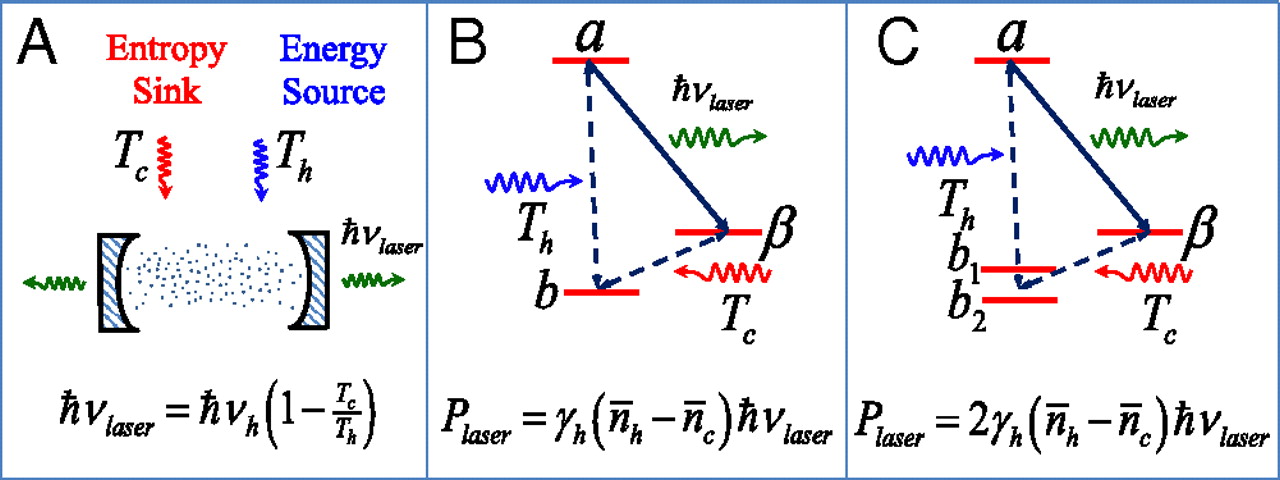
Quantum Engines and Entropy...

Image Source: Proceedings of the National Academy of Sciences 
Topics: Modern Physics, Quantum Mechanics, Thermodynamics

ABSTRACT
Two testable schemes for quantum heat engines are investigated under the quantization framework of noncommutative (NC) quantum mechanics (QM). By identifying the phenomenological connection between the phase-space NC driving parameters and an effective external magnetic field, the NC effects on the efficiency coefficient, N, of quantum engines can be quantified for two different cycles: an isomagnetic one and an isoenergetic one. In addition, paying a special attention to the quantum Carnot cycle, one notices that the inclusion of NC effects does not affect the maximal (Carnot) efficiency, NC, ratifying the robustness of the second law of thermodynamics.

Quantum engines and the range of the second law of thermodynamics in the noncommutative phase-spaceJonas F. G. Santos, Alex E. Bernardini, Physics arXiv
Read more…

B-Doped Q-Carbon Superconductors...

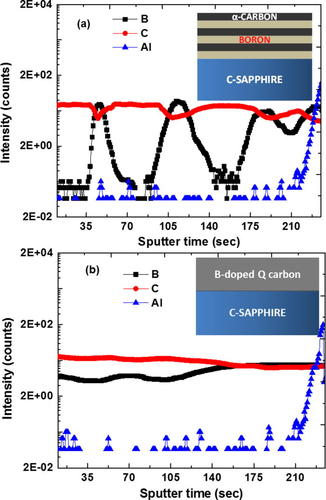
FIG. 1. SIMS profiles of (a) as-deposited boron and carbon layers with the inset showing a schematic of the alternating layers of amorphous carbon and boron deposited on c-sapphire using the pulsed laser deposition technique and (b) pulsed laser annealed (B-doped Q-carbon) thin films with the inset showing a schematic of B-doped amorphous Q-carbon formed on c-sapphire.

Topics: Condensed Matter Physics, Materials Science, Solid State Physics, Superconductors

ABSTRACT
Following a brief report on high-temperature superconductivity in B-doped Q-carbon [Bhaumik et al., ACS Nano 11(6), 5351–5357 (2017)], we present detailed structure-property correlations to understand the origin of superconductivity in strongly bonded lightweight materials and methods to further enhance the superconducting transition temperature (Tc). Nanosecond melting of carbon in a super undercooled state and rapid quenching result in a strongly bonded unique phase of B-doped Q-carbon. The temperature-dependent resistivity and magnetic susceptibility measurements demonstrate type II superconductivity in this material with a transition temperature of 36.0 ± 0.5 K and an upper critical field of 5.4 T at ∼0 K. It has also been shown that in B-doped Q-carbon, the upper critical magnetic field (Hc2(T)) follows Hc2(0) [1-(T/Tc)2.1] temperature dependence and is consistent with the Bardeen–Cooper–Schrieffer formalism. In the present study, B-doped Q-carbon thin films are formed on sapphire substrates by employing pulsed laser annealing (PLA) using a nanosecond excimer laser. This process involves the rapid quenching of highly undercooled melt of homogenously mixed B and C. Through the structure-property correlation measurements in B-doped Q-carbon, we estimate a higher electronic density of states near the Fermi level. Higher density of states near the Fermi-level along with higher Debye temperature and phonon frequency are responsible for the enhanced Tc. As a result of rapid melting and quenching, we can achieve 17.0 ± 1.0 or higher atomic % of B in the electrically active sites of Q-carbon which leads to the formation of shallow electronic states near the valence band maximum. From the critical current density versus field moments, the value of critical current density (Jc (2T)) in B-doped Q-carbon at 21 K is calculated as 4.3 × 107 A cm−2, which indicates that this novel material can be used for the persistent mode of operation in MRI and nuclear magnetic resonance applications. This discovery of high-temperature superconductivity in B-doped amorphous Q-carbon shows that the non-equilibrium synthesis technique using the super undercooling process can be used to fabricate materials with greatly enhanced physical properties.

A novel high-temperature carbon-based superconductor: B-doped Q-carbonAnagh Bhaumik1, Ritesh Sachan1,2, and Jagdish Narayan1,a)Journal of Applied Physics 122, 045301 (2017); doi: http://dx.doi.org/10.1063/1.4994787
Read more…

Nanotomography...

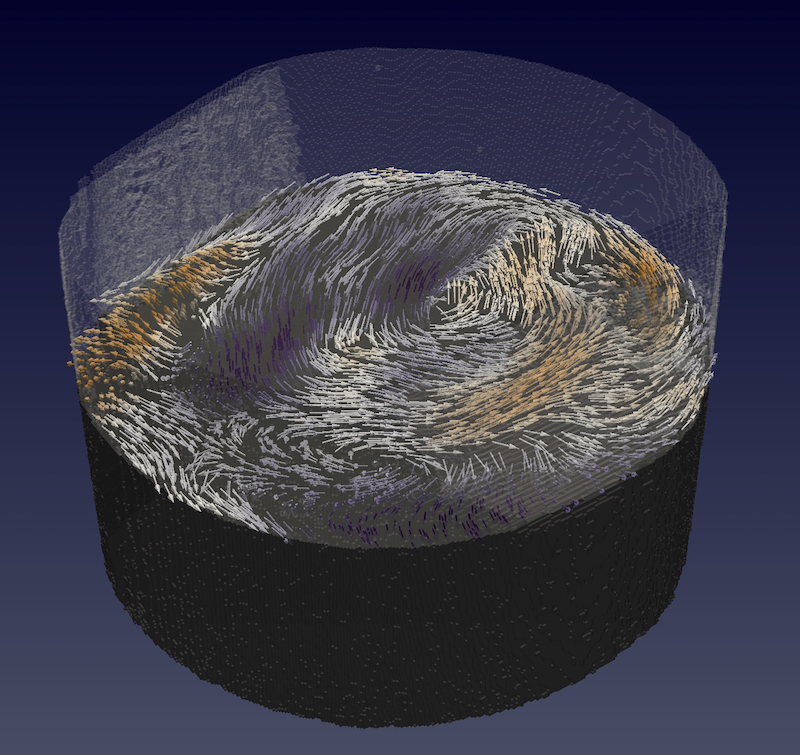
A vertical slice of the internal magnetic structure of a sample section. The sample is 0.005 millimetres (5 microns) in diameter and the section shown here is 0.0036 millimetres (3.6 microns) high. The internal magnetic structure is represented by arrows for a vertical slice within it. In addition, the colour of the arrows indicates whether they are pointing towards (orange) or away from the viewer (purple). Graphics and text: Paul Scherrer Institute/Claire Donnelly
Topics: Atomic Force Microscopy, Atomic Physics, Electromagnetism, Optical Physics, Nanotechnology

Thanks to a technique called hard X-ray magnetic tomography, researchers at the Paul Scherrer Institute (PSI) in Switzerland, the ETH Zurich and the University of Glasgow have succeeded in imaging the magnetization in 3D bulk-like magnets and observe features down to just 100 nm. In particular, they have observed structures known as Bloch points, which were predicted theoretically more than 50 years ago but never actually seen in an experiment until now. The new work could help us better understand the relationship between the magnetic structure and the behaviour and performance of bulk magnets, and so improve the everyday applications in which they are employed.

“Although it was possible to image the arrangement of magnetic moments in 3D before now in films of up to around 200 nm thick using soft X-rays and electrons, it was not possible to study the internal micromagnetic structure of larger, bulk, systems,” explains team member Claire Donnelly of the PSI. “In general, it is not possible to slice down a magnet to investigate its structure because the magnetic configuration will change accordingly. Scientists have tried to overcome this problem in the past using neutron magnetic imaging, but they were only able to achieve a spatial resolution of tens to hundreds of microns using this approach.

“In our new work, we are able to study the internal magnetization within a micron-sized system with 100 nm spatial resolution and observe micromagnetic details within the bulk for the first time.”

The researchers, led by Laura Heyderman, imaged the internal magnetic structure of a micron-sized pillar made of the magnetic material gadolinium-cobalt using hard X-ray magnetic tomography, a technique developed at PSI during the course of this study. “We had to make a number of advances in developing this method,” explains Donnelly. ‘First, we developed hard X-ray magnetic imaging with nanoscale magnetic resolution (this work was published last year). Hard X-rays have a much higher energy than soft X-rays and thus a much larger penetration depth, which allows us to study thicker samples with high spatial resolution.

X-ray nanotomography reveals 3D magnetization structures, Belle Dumé, Nanotechweb.org
Read more…

Borrowed Stuff...

A pair of nearby galaxies where "intergalactic transfer" may be happening. (Fred Herrmann)
Topics: Astronomy, Astrophysics, Cosmology

EVANSTON - In a first-of-its-kind analysis, Northwestern University astrophysicists have discovered that, contrary to previously standard lore, up to half of the matter in our Milky Way galaxy may come from distant galaxies. As a result, each one of us may be made in part from extragalactic matter.

Using supercomputer simulations, the research team found a major and unexpected new mode for how galaxies, including our own Milky Way, acquired their matter: intergalactic transfer. The simulations show that supernova explosions eject copious amounts of gas from galaxies, which causes atoms to be transported from one galaxy to another via powerful galactic winds. Intergalactic transfer is a newly identified phenomenon, which simulations indicate will be critical for understanding how galaxies evolve.

“Given how much of the matter out of which we formed may have come from other galaxies, we could consider ourselves space travelers or extragalactic immigrants,” said Daniel Anglés-Alcázar, a postdoctoral fellow in Northwestern’s astrophysics center, CIERA (Center for Interdisciplinary Exploration and Research in Astrophysics), who led the study. “It is likely that much of the Milky Way’s matter was in other galaxies before it was kicked out by a powerful wind, traveled across intergalactic space and eventually found its new home in the Milky Way.”

Milky Way’s origins are not what they seem, Megan Fellman, Northwestern University
Read more…

Tagging...

Conceptual illustration by Yuen Yiu, staff writer Image credits: zhouxuan12345678 via flickr/CC BY-SA 2.0
Topics: Biology, Biophysics, Biotechnology, Consumer Electronics, Nanotechnology

Electronics small enough to fit inside cells may one day help scientists track individual cells and monitor their behavior in real time, a new study finds. These new devices could help analyze diseases from their origins in single cells, researchers said.

The new electronics are microscopic radio-frequency identification tags, which are essentially bar codes that can be read from a distance.

An RFID tag usually consists of an antenna connected to a microchip. A nearby reader known as a transceiver can emit electromagnetic signals at the tags, and the tags can respond with what data it has stored, such as its identity, when and where it was made, how to best store and handle it, and so on. Many RFID tags do not have batteries -- instead, they rely on the energy in the signals from the transceivers.

These tags are already being used in many applications today, including key cards, toll passes, library books and many other items, but the typical RFID tags are millimeters to centimeters in size. The new microscopic tags in comparison are only 22 microns wide each, or roughly one-fifth the average diameter of a human hair, making them the smallest known RFID tags, the researchers said. They detailed their findings online July 26 in the journal Physical Review Applied.

Tiny Electronic Tags Could Fit Inside Cells, Charles Q. Choi, Inside Science
Read more…

Photoresist-Free...

A true-colour image containing around 8 × 10⁵ RGB subpixels directly photopatterned using Cs2N3– capped quantum dots. Scale bar, 5 mm. Courtesy: D Talapin
Topics: Applied Physics,  Nanotechnology, Optical Physics, Semiconductor Technology, Quantum Dots, Quantum Mechanics

Photolithography is an important manufacturing process widely used in the semiconductor industry that employs photoresists (usually made from polymers) whose solubility change when illuminated with ultraviolet light. Although it is precise and can generate patterns with nanoscale resolution, it is limited in that it cannot easily pattern nanomaterials such as quantum dots (which are increasingly being used in flat-panel displays, for example). A new photoresist-free technique, developed by researchers at the University of Chicago and the Argonne National Laboratory, both in Illinois in the US, could help overcome this problem.

“Our new technique, dubbed DOLFIN (for Direct Optical Lithography of Functional Inorganic Nanomaterials) can be used to optically pattern a variety of inorganic materials, including metals, semiconductors, catalysts and magnetic materials without using photoresists,” explains team leader Dmitri Talapin. “No residual polymer-based impurities are present in the patterned layers, which means that they have good electronic and optical properties. Indeed, their conductivity, carrier mobility, dielectric and luminescence properties are on a par with those of state-of-the-art solution-processed materials.”

DOLFIN involves first preparing patternable materials in the form of nanoparticles with the desired size and shape. Next, the surface of these nanoparticles is decorated with special molecules designed to decompose when they are illuminated with UV light.

Optical lithography goes photoresist-free, Belle Dumé, Nanotechweb.org
Read more…

Aiming at Einstein...

Images Source: Link below

Topics: Astrophysics, Black Holes, Einstein, General Relativity, Diversity in Science, Women in Science

If you cast an observational lasso into the center of the Milky Way galaxy and pull it closed, you will find a dense, dark lump: a mass totaling some four million suns, crammed into a space no wider than twice Pluto’s orbit in our solar system.

In recent years, astronomers have come to agree that inside this region is a supermassive black hole, and that similar black holes lurk at the cores of nearly all other galaxies as well. And for those revelations, they give a lot of credit to Andrea Ghez.

Since 1995, Ghez, an astrophysicist at the University of California, Los Angeles, has used the W.M. Keck telescope on Mauna Kea in Hawaii to see fine details at the center of the galaxy. The observations that Ghez has made of stars racing around the Milky Way’s core (alongside those of rival Reinhard Genzel, an astrophysicist at the Max Planck Institute for Astrophysics in Garching, Germany) have proven to most astronomers that the central object can be nothing but a black hole. But to be able to see these fine details, Ghez had to become a pioneering user of adaptive optics, a technology that measures distortions in the atmosphere and then adjusts the telescope in real time to cancel out those fluctuations. The technique produces images that look as if they were taken under the calmest possible skies.

In Ghez’s mind, new discoveries require that scientists take risks. “If you have a new idea, the thing you are going to encounter first and foremost is ‘no, you can’t do it,’” she said. “I can’t tell you how many times in the course of this project I have been told ‘this won’t work.’” Her first proposal to image the galactic center was turned down; two decades later, Ghez, now 52, has received a MacArthur Fellowship, among other awards, and was the first woman to receive a Crafoord Prize from the Royal Swedish Academy of Sciences.

Black-Hole Hunter Takes Aim at Einstein, Joshua Sokol, Quanta Magazine

Read more…

Workplace Bias...

The Women in Astronomy IV conference was held in Austin, Texas, following the American Astronomical Society meeting in June. Credit: J. Hellerman, NRAO/AUI/NSF
Topics: Astronomy, Diversity, Diversity in Science, Women in Science

Unfortunately, even in STEM fields you primarily run into two types of individuals: assholes and servants.

The assholes are driven and cutthroat. They'll promote in industry and likely discover a few things of wide commercial use. They also don't lend much in light of human interactions as to its efficacy (meeting a few, you'd rather NOT). A few of them being selfish and self-serving become Ayn Rand wealthy (their patron saint), feeling their callousness and viciousness rewarded.

The servants title is not meant as a pejorative: they are both "in the world and of the world" and look at ways for their love of STEM to be spread beyond themselves to improve it - a kind of tech evangelism. Many are active in outside organizations* that share that passion. Unlike the former, you won't feel soiled after meeting us, and you might want to contact us again.

I'd seen this guy (before his self-destructed demise) in specials on the Science Channel:

One of the biggest names in astronomy resigned his professorship at the University of California at Berkeley on Wednesday over the fallout from a damning investigation into his conduct with female students. The news demonstrates that not even star scholars enjoy impunity when it comes to sexual harassment, but in the end it was Geoff Marcy’s fellow scientists -- not the Berkeley administration -- who forced him out. Source: Inside Higher Education

What I'm about to describe I call the "Jedi mind trick": the best way to keep a particular group out of a STEM field and keep it predominately privileged is to make conditions uncomfortable for others the majority consider "outside." One direct way is propositioning for a date or physical contact without consent. A few snide remarks (e.g. under the breath into their collar - "black lives matter" when the conversation was on a work-related technical problem - they shrink when challenged with simply "what did you mean by that?"); quiet when someone walks in a room (for no reason), an overly aggressive challenge to the results of an experiment or research proposal can make anyone doubt their ability to complete the dream of a PhD.

It is ironic that feelings that I've experienced now has data behind it, and workplace bias extends to an area society has deemed too "Spock-like" to have systemic issues. Over time, you develop coping mechanisms and support systems* outside of your work that makes it more endurable. One of the things you realize quickly as a person of color is the world is full of assholes. Love what you do, take DEEP breaths and power through the bullshit. Most importantly, above all: DON'T QUIT. That's what they want you to do.

“Nolite te bastardes carborundorum. Don't let the bastards grind you down.” Margaret Atwood, "The Handmaid's Tale."

Further inaction on bias can only be seen clearly under one glaring banner: cowardice.

*****

Christina Richey is not a crier. But she went home and sobbed when she saw the results of an online survey she had co-organized on workplace harassment. For the astrophysicist and past chair of the American Astronomical Society’s Committee on the Status of Women in Astronomy, the data put numbers on the stories she’d been hearing for years. And the numbers revealed that harassment in her field was even more prevalent than she had realized.

“I’d heard about issues, mostly gender based, and also race based,” says Richey. But, she adds, the members and leaders of the astronomy and planetary science community would often brush off the stories as anecdotal. That led her and colleagues to run an online survey in early 2015—months before the Geoffrey Marcy harassment scandal broke. Their results appear in the July issue of the Journal of Geophysical Research: Planets.

In their survey, the researchers posed 39 questions about verbal and physical harassment, including sexual harassment and comments about ability, masculinity, femininity, race, and religion. Volunteers reported their observations and experiences from the preceding five years. A total of 474 people took part in the survey. The researchers analyzed the responses by gender, race, and career stage.

A whopping 88% of respondents reported hearing negative language from peers, and about 52% had heard such language from their supervisors. Some 39% reported experiencing verbal harassment, and 9% said they had been physically harassed. “It doesn’t have to be directed at you,” Richey says. “Just hearing comments can be isolating.”

White women and women of color experienced verbal harassment related to gender nearly equally (43% and 44%, respectively). In addition, 35% of women of color experienced verbal harassment related to their race. The report says women of color are at “double jeopardy” for harassment.

Both white women and women of color reported higher frequencies (about 13% and 18%, respectively) than did men of skipping classes, meetings, fieldwork, or other professional events because of feeling unsafe. Men of color (6%) skipped such events for that reason more often than did white men (1%).

Widespread harassment reported in astronomer survey, Toni Felder, Physics Today

*Related links:

National Science Foundation: Science and Engineering DoctoratesNational Society of Black EngineersNational Society of Black PhysicistsNational Society of Hispanic PhysicistsSociety of Hispanic Professional EngineersSociety of Women EngineersWomen In Science and Engineering
Read more…